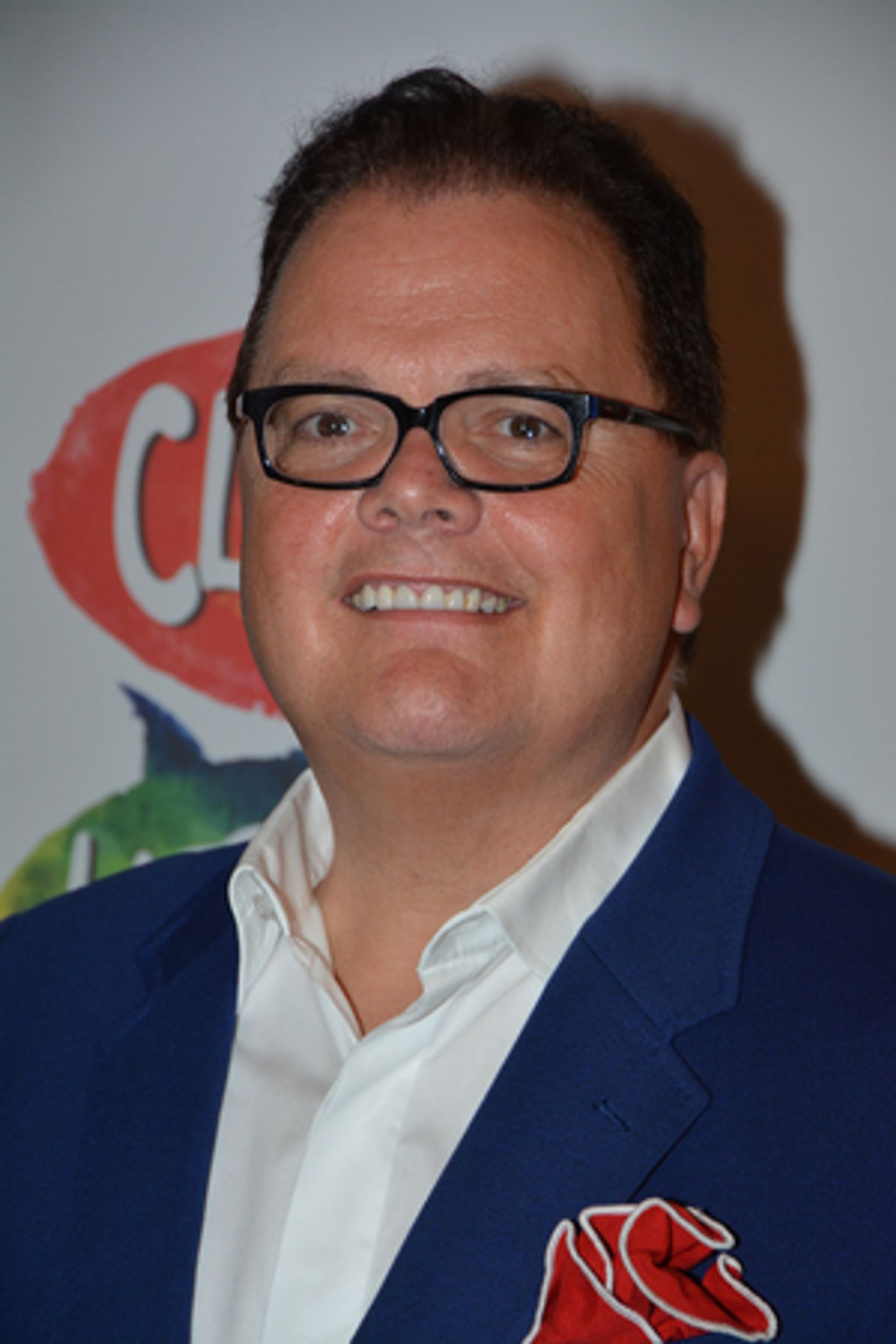
A playwright's dream is to make an impact on the world in their present day, and for future generations. Very few get to see their work done in the way they intended it, because, once they pass on their story to directors and producers, new interpretations and visions get mixed in, along with the other variables of theater, such as the design of the space, or limited access to materials and skilled crew. Rarely does anything in life go exactly as we would like.
Fortunately, there is a revolutionary stage design, built in 360 degrees with a rotating mechanism, which is allowing new stories to come to life and old works a chance to fulfill their initial purpose. You can read more about this innovative technology in my interview with the mastermind behind it all, HERE.
Arthur Laurents, writer of so many iconic Broadway shows, desired his musical West Side Story to be experienced with, not only your ears to listen to the beautiful music, or your eyes to appreciate the intricate dances, but your heart. To feel emotion as if you are included in the story - because you are. West Side Story is about all of us. And there is no one who understands that better than the man Arthur mentored for 30 years, the man who directed 11 of his shows, and whom he considered as a son: David Saint. David has been upholding the late Arthur's integrity for years, but this is the first time he is able to present West Side Story the way Arthur had always dreamed it.
I had the pleasure of meeting David in Japan during the opening of this incredible, and timeless show, which is running in English at the IHI StageAround Tokyo theater, now through October 27th, 2019. The Japanese cast will take over in 3 seasons from November 6th, 2019 - January 13th, 2020. Tickets and information can be found HERE.
Larisa: I understand you have a long history with Japan...
DAVID: I have a longer history with Arthur Laurents and West Side Story. I mean, Arthur was sort of like my father; my mentor, and my father in many ways. We knew each other 30 years. And I directed 11 of his shows. The last 9 new shows he wrote, I directed, and I directed with him the West Side Story on Broadway and the Gypsy on Broadway. So he wanted me to learn first hand with him every scene, every line, what he intended by it, what he meant by it. And he wanted to leave it all in my hands. So I am the one who now makes the decisions.
So I've just finished working on the movie of West Side Story with Steven Spielberg, which has been fantastic! And Spielberg is so nice. My biggest work on the movie has been working with Tony Kushner. He has written the screenplay, adapted. And, you know it's funny, because the first movie [starring Natalie Wood as Maria] was such a huge success. But Arthur and Leonard Bernstein didn't really like the movie, even though it was a huge hit, because they thought it was softened and sanitized, and for a lot of reasons they didn't like it. There weren't real latinos playing the latinos, etc. Hollywood didn't care about that stuff.
But now, the new movie is very, very strict about all that, and Tony Kushner has been adapting it, and I've had to work with him in being able to tell him what Arthur thought was important, what was crucial to this piece, and what wasn't. And people are often surprised because they usually think, 'oh every word must have been crucial to Arthur,' but, no, that's not true. He wanted the message of the piece and the truth of the pieces to be represented correctly. If little changes are made here or there, that doesn't matter to him. That's like the frosting on the cake. He wanted the cake.
And so Tony has made some changes to the movie's screenplay, but THIS production [at IHI StageAround Tokyo]... I've directed many productions of West Side Story, including opening Tokyu Theater Orb in 2012 with West Side Story. But that was a traditional West Side Story. THIS is a whole new ball game. And that's why I'm so excited to do it! Because I saw [the first production in the world to ever play on the patented 360 degree stage] Soldier of Orange in Amsterdam before I decided, "Yes, I want to do this." And then I came here [to Tokyo, Japan] and saw the [IHI StageAround Tokyo] theater here, and it just blew my mind! And I thought the possibilities are endless where I could take this.
So, basically, I sat at my dining room table for months with a lazy susan, and putting different ideas of where different sets could be. Because the audience rotates, so I had to come up with ideas of where, for example, the big final scene where a main character gets killed, would be the most appropriate. And I live in west side New York, so I thought Central Park's Angel of Desfiada Fountain, to me, has always been so powerful and poignant. She's the angel of healing and comfort for those who have lost, and I thought, "How perfect that would be."
So we have the set designer Anna Louizos, who is first rate, unbelievable, the sets are crazy good on this. We've created the whole of Central Park. But that's just one of 12 different sets! There are so many sets in this show, I've never seen anything like it, or the way the mechanism works. So this has been a dream come true. For me, I spent the past year planning this, seeing it in my head, but to finally see it up there, actually happening... it's breathtaking. Larisa: What is your opinion on technology...DAVID: In Japan? Unbelievably good! The best! Our builders from Kanai-san, his shops built this. Over 200 people worked on building this. The craftsmanship is so solid, it's better than Broadway! It really is. It's the best craftsmanship and attention to detail that I could possibly imagine! I mean, if I had trees, for instance, in a Broadway show. You'd have the front flat, and the back would be flat, and they would just be painted, and the base would be glued on. These you can go touch them, the bark, the roots, the ivy growing on the outside, the real branches and leaves, I mean you think you're in Central Park. It's crazy!
Larisa: I like to ask people if they have ever been to the dollar store in Japan!DAVID: Yes! Exactly! Because in New York what you have in a dollar store is junk! Half of the actors here already have these beautiful chopsticks, and beautiful fans, and when I ask, "Where did you get that?" They say the dollar store! Larisa: And they're not gonna break after one use! So what's your opinion on the DVD debate? Some people feel that Broadway shows or musicals shouldn't be recorded, because it's all meant to be experienced live. But there are some people who can't get to the theaters, so the DVDs allow them a chance to see a show they never would have gotten a chance to see. Does selling DVDs hurt ticket sales, or help promote the industry?DAVID: There's a difference. It depends on what you're asking. They have the live shows on television now, for instance, Sound of Music and Peter Pan.
Those shows were broadcasted live from a studio, without in-house audiences. David explained that he knows the producers well, and became frustrated with their decision to not include an audience based on the fact that the point of the endeavor was to share with people at home.DAVID: I said what's missing is the energy, the biochemical feedback from an audience. It's not just about hearing applause. The actors know when the audience is feeding into what they're doing. So when a musical number ends and there's just silence, and you go to a commercial break, the air feels empty to me. The best one I thought was Grease, done by Tommy Kail, because they built sound stages and had a real audience. But even that had something missing.
I guess, my answer is yes, I think it's a good idea because there are people who want to see Broadway shows, and it's a way of getting the shows out there. Not everybody can go to Broadway, and not everyone can even get to a theater near their city that does Broadway caliber shows, or touring productions. So, I guess it's a good thing, but nothing will ever replace the electricity of real life.I mean, different things happen every night. We had a dancer injured two nights ago, so last night, our first preview, an understudy had to go on. And that performance changed the energy. Because by one person going in, all the other actors energies are changed, and that audience witnessed something no other audience will. So I guess my answer is, yes, I think it's a good idea, but it will NEVER replace the real thing.
Larisa: What do you want or hope the Japanese audiences will get from this production?DAVID: Well, since I've done it in Japan before, I've had several Japanese people come up to me before and say, "This is our story." They were an older married couple, and I thought, "Oh? This is a New York story, why do you say that?" And they said, "Because, back in the late 50s early 60s, our villages were feuding, and they wouldn't allow us to marry. So there was this tension, but seeing the movie in 1961 made us say, 'Let's do it!' And we eloped."
So I think the message is what Arthur always said, it was the most important thing he said: You can sum up a show in one sentence. For West Side Story, he said it is the struggle to love in a world of bigotry and violence. That's the whole story. And every single character in the show has that mission, and that struggle. And on the first day of rehearsal, I said to each actor: I want each one of you to keep looking at the home you need to create, and your role in it. Try to find that place where you feel safe. "Somewhere," our song.
"Anybodys" is the fantastic character that Arthur wrote WAY ahead of its time. Actresses say to me, so am I a lesbian? I said to Arthur, "What did you mean?" He said "No! She is a man born in a woman's body! That's not a lesbian." And now, of course, in America right now it's all about Cis man or Cis woman, or Trans. And she [Anybodys] really is a Trans. And as Arthur said, if she were from a wealthier class, because she's in a poor ghetto, and if it were later than 1956, she would have had a sex change. She wants to be a man. And that's a big difference from a lesbian. But Arthur knew that back in the 1950s!
So to your question about my hope, I'm not even hoping, I'm certain, that the Japanese audience will get what they should get from it. Which is this universal truth, and it doesn't matter where you live. Again, that point is going to be seen. I made a gesture in this production that I've never done before. A visual gesture, I'm not going to tell you what it is, but it's at the very end of the show, and I could tell it worked last night because people gasped and then cried all around.
Larisa: Oh no, I didn't bring my tissues!
WEST SIDE STORY is presented by TBS
and is playing at IHI StageAround Tokyo
in Tokyo, Japan through January 2020