Q&A: Playwrights Natalie Margolin & Julia Randall’s Share How Their New Plays Are Reaching, Supporting & Inpirising Women
Natalie Margolin’s ALL NIGHTER and Julia Randall’s DILARIA Are Attracting Young Audiences
 Click for Tickets
The news hasn’t been great for female playwrights as of late, but lost in the dire media rotation is that some of the most buzzed-about commercial productions in recent memory are by women under 40. Kimberly Belflower’s John Proctor is the Villain continues to be in the black on a weekly basis on Broadway, despite original star Sadie Sink’s departure. And two off-Broadway shows—Natalie Margolin’s All Nighter and Julia Randall’s Dilaria—managed to attract young audiences to stories about female friendship.
“Seeing a full house full of predominantly young women was so moving to me and also profound,” Margolin, whose show closed on May 18 after an extension and a recast, said. “That’s why I wanted to write in the first place—to write for my peers.”
Both shows managed the perfect balance of marketing, publicity, casting, and word of mouth that enabled them to bring people to the theater that wouldn’t ordinarily come. “I think it's really lucky that there were three plays on at the same time about young women—the plays inspire each other and word of mouth,” explained Randall, whose three-person play runs through August 8. “And it helps that we have a really hot guy in our cast [The Summer I Turned Pretty’s Christopher Briney]. That always helps.”
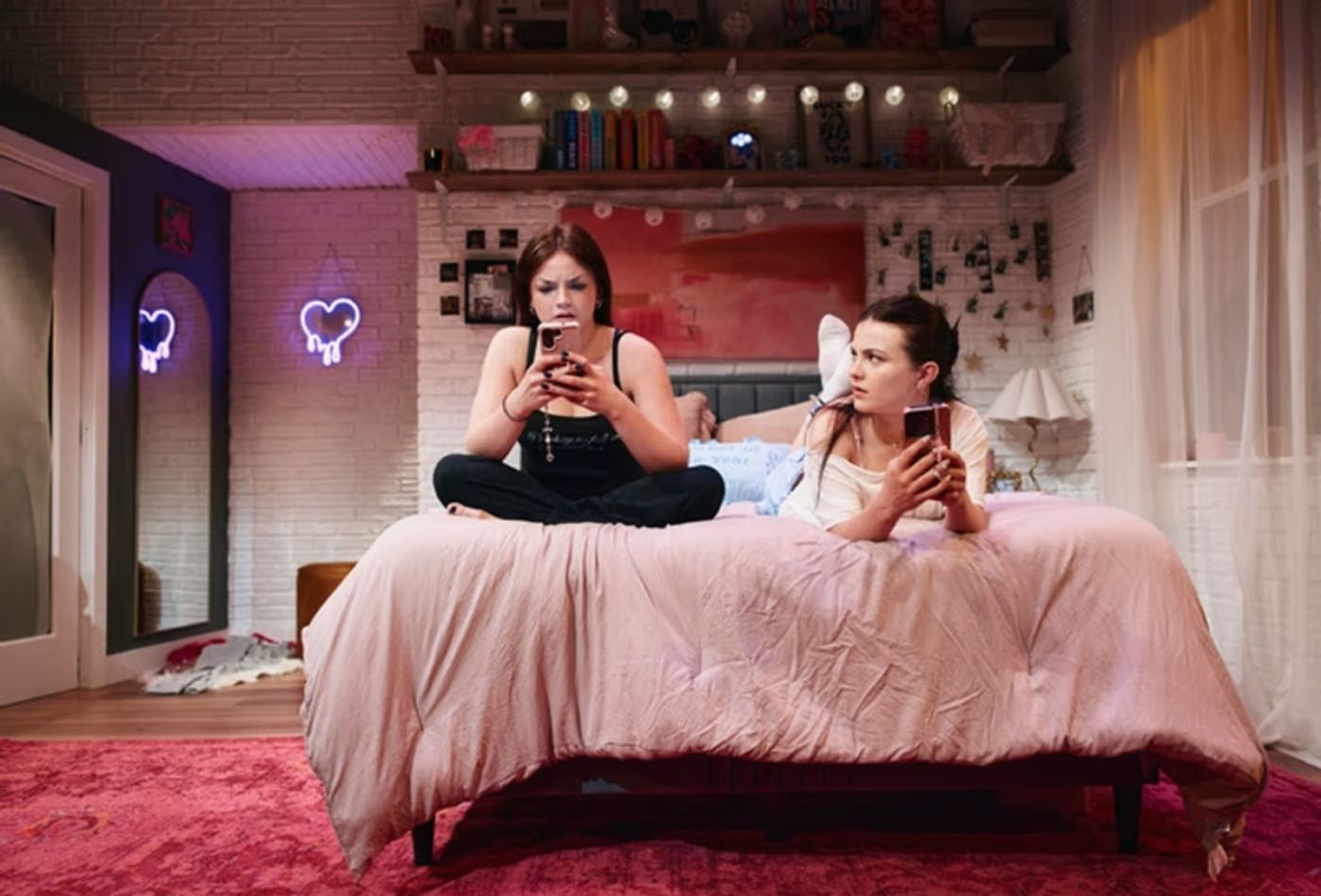
An audience member sitting in the theater for these plays might see one as a continuation of another. They even share a replacement actress, Tessa Albertson. All Nighter is a play focusing on the dynamics of an all-female friend group getting ready to leave college and enter the real world. Dilaria centers primarily on the relationship between two college friends, Dilaria and Georgia, who both moved to New York after graduation. Briney, the only male actor in either play, has a relationship with Dilaria, but that relationship is auxiliary to the play’s core one, which is between the two young women. Both plays are unabashedly about women’s psyches—how the characters feel about themselves and how their relationships alter those feelings.
“I hope what is going on with [these shows] inspires and incites more, elevating the work of young women to be put on bigger stages more and more,” Margolin said. “I think the theater can inherently think of the stakes of young women as being sort of small, and I really am very against that notion. I'm like: ‘Why is it small when a woman comes of age and it's always big when a man comes of age?’”
In this interview, Margolin and Randall, who did not know each other previously, discussed what drew them to write about the bond between women, how important it was to work with female directors, what they think it took to get their work to the stage, and more.

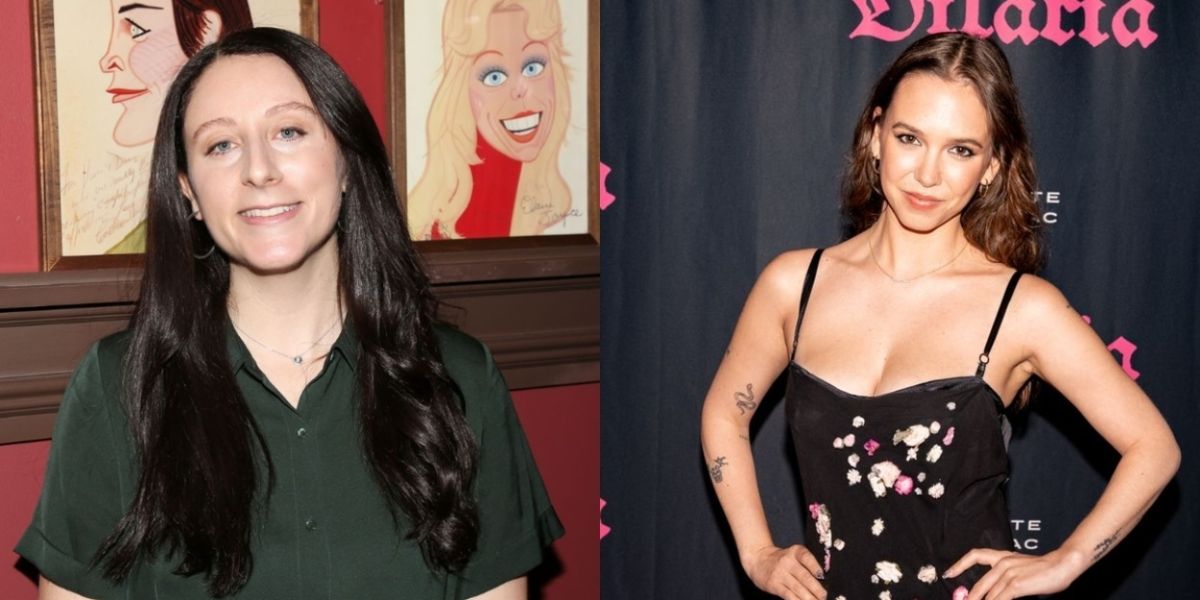
and Julia Randall
Both of your plays show the dark side of female friendship. What inspired you to want to dig into that?
Natalie: I think female friendship to me is something that is so fascinating and inherently complex and full of joy and brightness. And also, to kind of capture it truthfully, there really often is like this insidious or dark underbelly to it. With All Nighter, what I was really interested in is examining like what it is to be in a really tight knit group of friends that are all women. What the cost is of like constantly pursuing togetherness and unity. There's something sometimes about the way women fight that can be really subtle, but deeply harmful. And that examination felt really ripe and rich. What's the cost of being in a group? When I first wrote All Nighter, I was like, this is a pure comedy. Then it's actually extremely dark. It's also really fun. Both things have to live side by side. The truth sits in the middle of both those things.
Julia: Yeah, I completely agree with that. I've never been part of a group of friends that's entirely women or even really a group of friends. I think female friendships can be really overwhelming because you rely on each other a lot for emotional support. Women are so smart, so they also know how to use that emotional support against you if they need to. Whereas like with guys, they're idiots. So they don't know how to. I had a girl say something to me in front of my boyfriend, and I was like, “Can you believe that?” And he was like, “What'd she say?” He didn't get that she was trying to ruin me because it was so subtle… I've had so many friendships that completely imploded because of 10 million subtle things we've said to each other.
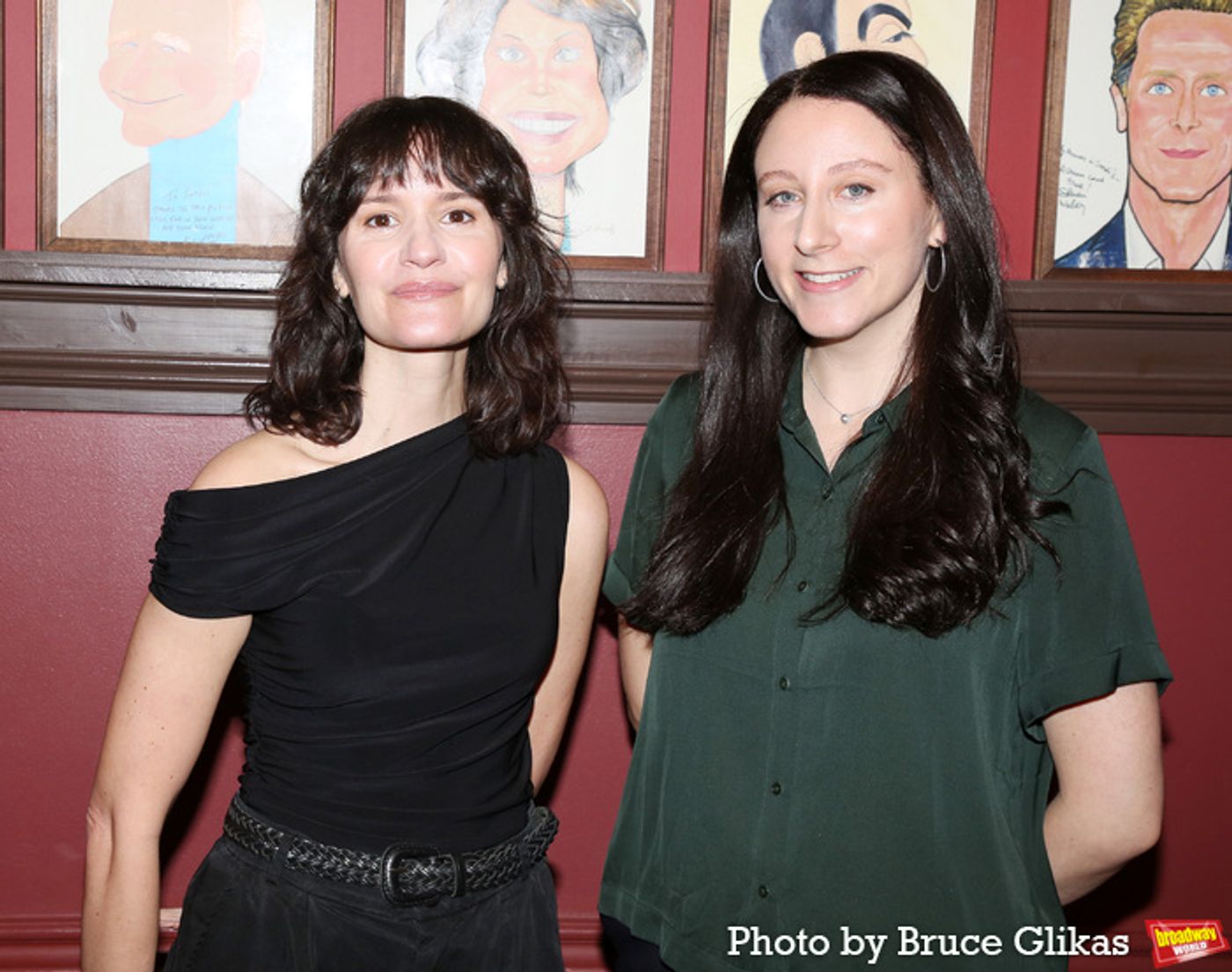
Playwright Natalie Margolin
Natalie, in your play, there are so many relationships that it’s hard to tell at the start if everyone is damaged. Whereas I think, Julia, your play right away, you know both of the women have problems.
Julia: I think with a friend group, it's so easy to be horrible behind someone's back. [In All Nighter,] I loved all the little side conversations people were having about each other. Whereas when it's just two people, it's like you're either going to say it to their face or not at all.
Natalie: Totally. I tried to keep it all at one table at a certain point as a challenge, but I think it's actually just not true to how a group functions. It's so important what they say when people leave. It's not even them trying to be mean to each other. It's just like moments of connection where they end up analyzing and talking about the person who just left in a way that's ultimately harmful.
You both worked with female directors on your shows, whereas we’ve all certainly seen plays about women by women where the director is a man. How important do you think it was to work with women in the development of these plays?
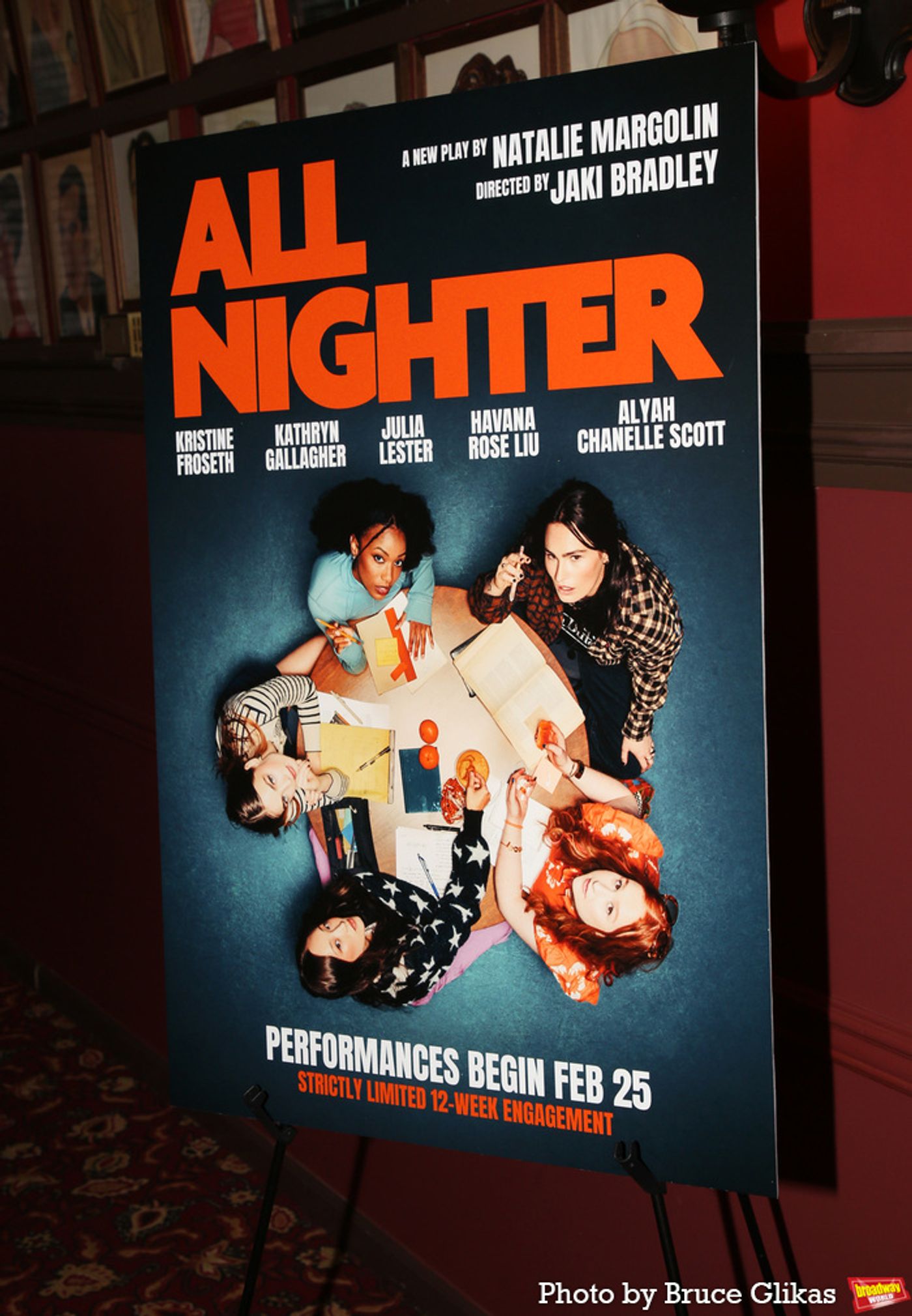
Natalie: To me it was extremely important. I had the privilege of developing with a few different directors who all happened to be women, and all of them have touched the play in a beautiful way. Jaki Bradley, who directed the production, and I developed the play with for like two years. She had this certainty about these girls. She had such clarity about why the play mattered and understood all these girls and had such kindness and grace and interest in all of them.
I think each play requires its own cocktail of collaborators. It always felt important to me that All Nighter was brought to life by a woman in that seat. Just given the story we were telling.
Julia: I had a similar experience. In terms of the sense of humor of the play lines themselves, I think any gender or a person of any age could understand it. But the closeness of female friendship, the unspokenness of it, I really needed someone that could inherently understand that. I felt like it had to be a woman in this particular case. But my other play was directed by a man. I just think for something that the main theme is a female bond, there's no one else that's going to get it. It's like we have this secret code.
Yeah, it’s not that a man cannot direct a play by a woman or about women’s issues, but I see some plays and wonder about how line readings or physical interactions would have been different if a woman had directed the piece.
Natalie: It is important who is shepherding it on stage and what their level of understanding or temperament is. Again, each play requires its own cocktail. But for All Nighter, it's diving deep into female relationships, and I wanted someone who knows that to their core.
Julia: Completely agree. Me and my director were complete polar opposites. I'm really crazy and unhinged and vulgar. She's more composed. And that actually ended up working really well for the rehearsal room because it's like we formed this very bizarre friendship based on our two opposite personalities. It works really well to have one female perspective and a different female perspective.
Natalie: That’s important to name too—there isn't one female perspective. That's why it's good we have more and more stories by women from all backgrounds, all races, all identities. There's so many different female perspectives that I think we haven't seen prioritized on stage enough in general. Jaki, my director, has a different temperament to I. I don't know if it's like the same combo that you just described, but like we definitely had a balancing act with each other. You don't want like someone that's like the same as you, you want someone that's going to push and come in with like a different texture.
 You’re both fairly young to have such high-profile shows. I want to recognize that you both come from a privileged place in a way. Natalie, I know All Nighter was produced by one of your high school best friends, Ben Platt, and starred your longtime friend, Kathryn Gallagher. Julia, you come from a famous background. [Her father, award-winning actor Tony Randall, died when she was young. Her mother, Heather Harlan, is a former Board President of New York Theatre Workshop.] But it’s not easy to get produced no matter who you are or know. What advice would you give to other playwrights?
Julia: I definitely came from a privileged background in the sense that if anything went wrong, I know I'd be safe; not everyone who moves to New York can say that. But I faced a lot of rejection up until this play. And I think what made this play happen was I didn't give a fuck what anyone else thought about it. If someone didn't like it, I didn't try to write something that I thought someone else would find funny. I wrote things that I found funny and things that I thought were important. I think people ultimately resonate with that because if it's important to you, it's important to them. I see movies all the time where I'm like: “Why was this even written? For who?” Because it doesn't feel like it was written out of passion. So I think my advice would be just write something you're passionate about. You can't control who's going to produce it or not. All safety net aside, you do have to have something you really want to say.
Natalie: Belief is so important. My first play, which I was many years ago, called The Power of Punctuation, was my senior thesis at Kenyon. It happened to be a female director, all female cast. Two years later in New York, we were like, we're going to put up the play.
I grew up in LA and went to high school with a lot of people that were involved in the entertainment industry. My parents were not in the industry and I didn't come directly from any line in that way… That first play I did with all of my college friends and we raised money on an Indiegogo and just had that like crazy idea of we're getting the play up and we're getting it done. I think theater is so hard and grueling. It's not a given no matter where you come from, that your work will get put up.
With All Nighter, I had been working on the play for six years it had been through a lot of different development. And I got to this place last spring where I just had this feeling of I have to get it up. Ben, who's a dear, dear friend of mine, was like: “I want to help you get it up.” And I was like, I’m going to say “yes.” And, yes, I have the privilege of being able to say “yes” to someone who's, like, incredibly talented and capable. But the common thread, I think Julia is speaking to as well, is the inner sense of like, I have to get up and I'm going to figure out a way how. It doesn’t have to be large scale. But start to build community around your work, do living room reads, reach out to friends, just, build community around the play.
Julia: I completely agree. No matter how many people you know, it doesn't guarantee that your play will get put up. In the same vein, it doesn't guarantee that anyone will come to see it. It has to be good. This industry is really, really hard. And if you have someone like a friend or like a parent's friend that believes in you and like, wants to help you, you should absolutely take it. No one does anything in this industry to be nice. There's no room to just produce someone's show to be nice. There are so many people that would absolutely give anything to have something put up. It's so rare. Surrounding yourself with people that want to invest in you and believe in everything you do is so invaluable. And stop chasing the assholes that turn you down.
Believing in yourself and promoting yourself is something that a lot of young playwrights, particularly women, struggle with.
Julia: Yeah, couldn't agree more. It's really hard to not be apologetic. When people are like: “I really want to come see the show.” I'm a woman raised in a misogynistic society, so of course I want to be like: “Oh my god, no, you don't have to.” But it's attraction more than it is promotion. When you’re presenting something that is attractive, people will want to be close to it. I try not to be anything that I’m not. I’m not going to go on Instagram and pretend to be this little angel because that's not what I am. I think just the truer you are to yourself, the more people want to get to know that.
Natalie: I think that muscle of advocating for yourself is so important in trying to get your work up too. Just being really comfortable with who you are and why you want to make what you want to make. It's not easy.
Julia: And trust that people are going to respond. I think something that's really helped me is believing that other people will believe in me. I think if you have this mindset that no one's going to like it, then probably they won't. I think is it almost tricking yourself into being like, “I'm the shit and everyone should love it.” Then people want to be close to something that has a lot of belief in itself.
Questions and answers edited for length.