Exclusive: What Happens When the Great Teachers Are Gone?
Helen Hayden reflects on carrying Broadway’s classical legacy forward.
What happens when your mentors disappear? How do you honor serious classical training in an industry that’s shifting so rapidly toward digital performance and social media? It's a question that actress, writer, and filmmaker Helen Hayden has found herself asking recently. An alumna of Circle In the Square Theatre School (and Vice President on the Executive Board of its Alumni Association), she is sharing how she finds herself continuing to work as an actor while also carrying forward the Circle legacy.
When I walked into my first class at Circle in the Square Theatre School, I had no idea I was stepping into the final chapter of a particular kind of training. Like many young actors, I had grown up performing on the small-town stages of my youth, dreaming of a future beneath the lights of New York City. I’d heard whispers that the most serious actors studied at a few hallowed conservatories on or near Broadway, and so, with little more than ambition and two polished monologues, I went.
On the day of my audition, Theodore Mann, co-founder of Circle in the Square and a pioneering force in American theatre, decided he was in the mood for some entertainment. Ted’s career spanned six decades, during which he produced and directed over 200 plays, championing both classical revivals and bold new works that reshaped American drama. That afternoon, he strolled into the building just in time to catch a terrified candidate - me - launch into Rosalind’s sharp-tongued rebuke of Silvius. When I finished, Ted beamed. He offered praise I’ve never forgotten and, much to the dismay of Colin O’Leary, then Artistic Director, who preferred the decorum of formal acceptance letters, Ted took my hand and started singing “See You in September”. The moment remains on of the happiest moments of my life.
Fourteen years have passed since that day, and while my career has been far from a fairytale, I’ve had the chance to work with every major studio and streamer, to collaborate with mentors and heroes and to appear in Emmy-winning series and number-one films. Those experiences have meant the world to me. But the artistic experience I treasure most - the one that has carried me through the giddy highs and perilous lows of this profession - is my training at Circle.
For two years, I was stretched, shaped, challenged, and awakened to the deeper meaning of dedicating oneself to the craft of acting. We studied Shakespeare’s canon, aligned and opened our bodies with the Alexander technique and dance, and inhabited the moody realms of Chekov. Upstairs, Godspell was roaring on the MainStage, with Uzo Aruba and Lindsay Mendez tearing through our basement hallways between cues. Time didn’t seem to exist down there - there were no windows, no sense of seasons, - only the constant immersion in our work, and in ourselves.
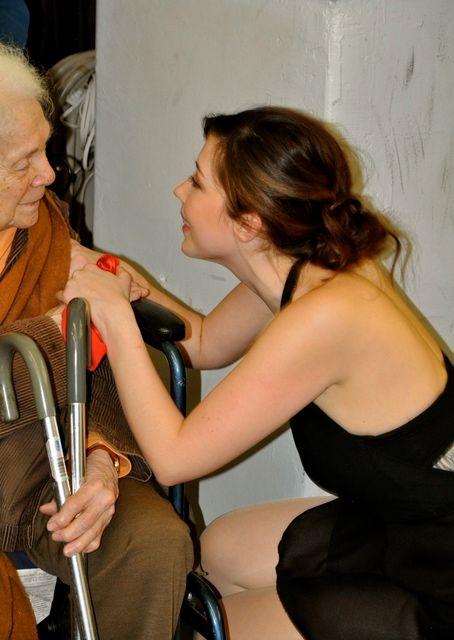
Our acting technique was guided by two towering figure: Therese Hayden (not relation, though she loved to joke otherwise) and Jacqueline Brookes, 92 and 82 years old at the time. Therese - Terry, to us - was not only one of the first female producers on Broadway, but widely with discovering a young, unknown James Dean. Her analysis could be brutal, but her brilliance was unmatched. Jacqueline - Jackie, as we knew her - was a student of Stella Adler’s who brought decades of Broadway, film, and television experience to bear in her teaching. Her insights as to how how we enter character and facilitate our artistic transformations were truly genius.
Across the hall, we faced our folios, and the fire, of our Shakespeare teacher, Edward Berkeley. Though modest in height, Ed was a giant in classical theatre. A Tony-nominated director and opera visionary, he illuminated and and refined generations of actors at Circle, Julliard, Princeton and beyond. His demand was simple and fierce: honor the text. Honor the Bard.
And then there was room 102.
To alumni, it’s an infamous space. At it’s helm was the singular, incomparable, Alan Langdon. His reputation among students borders on myth. Viola Davis - Oscar winner, Julliard graduate, and fellow Circle alum - called Alan “the absolute greatest [teacher] I’ve ever had” in her memoir Finding Me. I doubt I will ever meet another human who took acting as seriously as Alan did. Many days, he would remind us that Stella Adler once said “An actor’s job is to give birth to a human soul”. For Alan, that wasn’t metaphor. It was instruction.
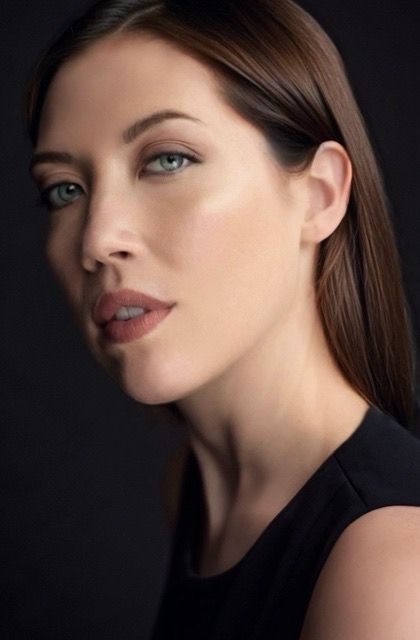 He insisted there was no such thing as good or bad in our craft - only true or false. And just felt we might have offered up some truth, he would sit quietly, legs crossed, and ask “How is your relationship to your heat source going?” It sounds absurd until you realize that he meant it, and that it mattered. Every detail mattered. Every part of your character’s world had to be lived.
In my final year, I was cast as Arkadina in The Seagull, a role that remains one of the greatest honors of my life. The production was directed by Alan and it would be the final time he would direct that play.
The Seagull wasn’t just part of the curriculum, it was a portal and landscape through we were transformed. Alan had second-year students spend the entire year studying it. For him, it wasn’t just a Chekhov play, it was the play. Being cast as his leading lady felt like more than a role, it felt like being anointed.
Alan Langdon was my artistic father, and he has now passed.
So have Therese Hayden. Jacqueline Brooks. Edward Berkeley. Theodore Mann. And most recently, his co-founder Paul Libin.
With each loss, I felt personal grief. These were not just instructors - they were mentors, friends, spiritual guides. They devoted themselves to us, their students, with tireless generosity and a sacred reverence for the work.
Then one day, it hit me: they were all gone.
And with that came a sobering realization: their legacy would now only live through us. Through me.
 That understanding awakened something in me I hadn’t expected - something deeper than ambition. A call to something more enduring than a career milestone. It didn’t just remind what kind of actor I was made to be, but to ask what kind of artist I wanted to become in this community.
We’re living through a rapidly shifting industry. Casting can happen overnight. Social media metrics influence who gets the part. Studios move faster, cheaper, louder, often at the expense of depth and process. This isn’t a lament; it’s simply the reality of change. Art is a living thing, and the landscape will always evolve. But in this evolution, I believe we risk losing something essential: technique, discipline, and soul.
My teachers didn’t just pass on methods, they handed down a worldview. One in which the actor’s responsibility isn’t merely to perform, but to investigate, to excavate, to serve the truth of humanity with everything they have.
I never thought I’d become a teacher or a mentor, certainly not the soon or at this point in my own journey. I’m still auditioning, still reaching, still on set. But grief transforms us. The loss of my teachers reshaped my heart. It opened a space for something unexpected: a feeling of responsibility to somehow preserve and pass on what I was given.
This isn’t nostalgia. There is no such thing as going backward, in life or in art. I believe deeply that legacy and evolution can and should co-exist. We study the masters not to mimic them, but to discover what is possible. We don’t visit the Sistine Chapel to live in the past. We go to be reminded of what human hands are capable of.
In our world - theatre and cinematic arts - the same is true. The sacredness of the rehearsal room, the rigor of text analysis, and the discipline of vocal work should not become relics. They are foundational. They steady us when of the set or the dressing room swirls around us. They give us the technique and tools to speak truth through our characters. And they are not stumbled upon. An unwavering commitment to one’s objective and performance is forged in a fire of dedication. In hours. In months. In years.
This, perhaps above all else, is what I now wish to share. Not as someone who has mastered the craft, but as someone, unwittingly albeit, entrusted with a torch of artistry and craftsmanship. The teachers who handed it to me may be gone, but the fire must not be.