


Interview: Michelle Britton And Adrienne Shearer of DANCING LESSONS at Lionwoman Productions
Arts can heal, and this show will let you know how!
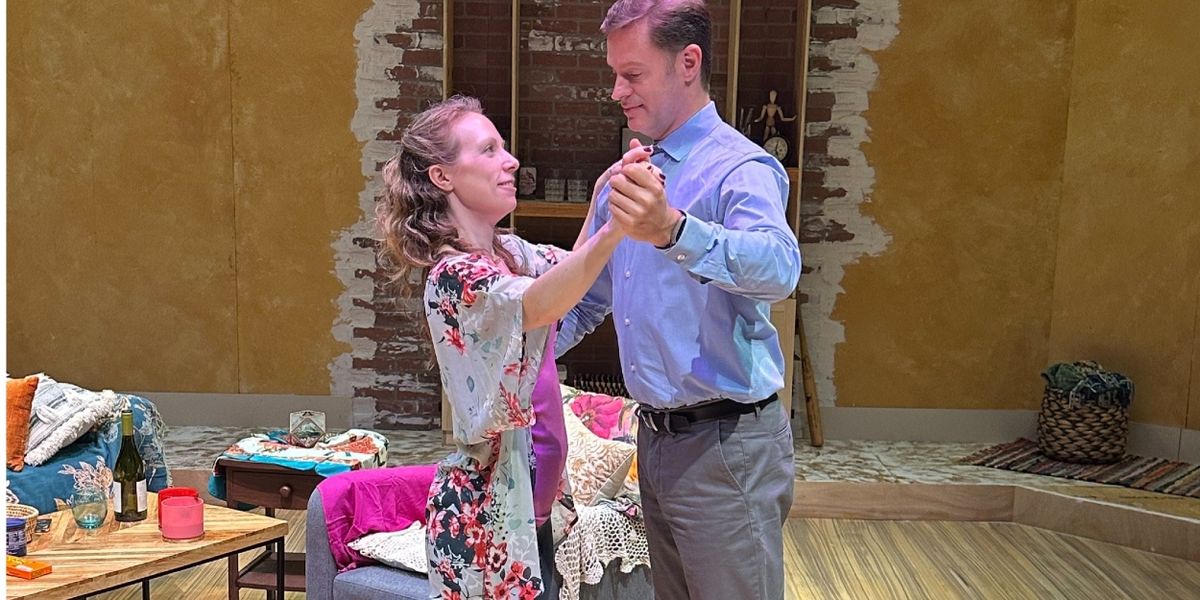
This week, the second production from Lionwoman Productions opens at the MATCH: DANCING LESSONS by Mark St. Germain. Broadway World writer Brett Cullum got a chance to talk with director Michelle Britton and choreographer and cast member Adrienne Shearer about the play and their plans for it. The show runs through September 21st. It stars Katrina Ellsworth and Brad Goertz, two of Houston’s best actors.
Brett Cullum: Tell me a little bit about your Lionwoman Productions show this year. What is Dancing Lessons about?
Michelle Britton: It's about a man with Asperger's and his, what I like to say, his dogged determination to learn to dance, because he has a very public, potentially horrifying public event coming up, an awards dinner. And so he seeks out someone to teach him to dance, and he's pegged to this former Broadway dancer who, as it turns out, is now disabled. It’s beautiful, it's joyous, it's hard, because we get to walk in his world, and learn more about what it is to be somebody on the spectrum who has to navigate a world that really doesn't accommodate that. And then it's also, I think, this is my tagline, I think it's about, when it comes to normal, we're all on the spectrum. It really is about how both of them have these huge struggles in their life, and they attempt to connect as human beings, and there's a tremendous amount of power in connecting with another human being, and it can be very healing.
Brett Cullum: And it's not at all what I was expecting, because I just thought it'd be like, SHALL WE DANCE? It sounds much deeper and much more resonant, so I am glad, and it obviously makes sense. Last year, you did PLAYHOUSE CREATURES, which was a large ensemble, but this looks more intimate. So, a small cast this time, only three people, is that right? Adrienne, are you in it?
Michelle Britton: Adrienne actually appears in it. I don't want to say too much, but it's a… you'll love it when you see it, the way we've incorporated her expertise and her artistry. She does have her own theater and professionally helps assess people on the spectrum, and also with special needs. I don't need to talk too much about that; she can talk about her work. But there's this beautiful affinity or sync between these two things, the ability for dance to help heal. And movement, and people that are on the spectrum in particular, that's what this play is about. Adrienne is part of how we've crafted this show to show how dance can heal.
Brett Cullum: Well, Adrienne, tell me a little bit about your work and how you came to be associated with Lionwoman Productions.
Adrienne Shearer: Yes, so I met Michelle recently at a movement workshop, and she asked if I'm a dancer, and expressed that she was looking for a dancer and choreographer for this upcoming production. It was really fate that brought us together, having no idea of my background with the autistic population. So, I have been serving the autistic population as an adaptive arts specialist and educator since 2014. And in 2019, I founded Alliance Theater, which is a neurodivergent Houston-based theater. We produce issue-based shows. And, we serve adults, primarily on the autism spectrum, but we have a little bit of everybody. And, the reason I started Alliance is because I saw a need for training in the arts for autistic individuals who are incredibly talented, and just needed a platform, just needed somebody to give them that opportunity. When I first began my work with the autistic population back in 2014, it was at a little middle school. I had six middle school boys, and I was not sure what to do, to be honest. I had never worked with a population before, and I was given a set of goals for each student, social goals that they had to meet. Having a BA in theater, I thought, “Well, let's put on a show, because I know how to do that.” Magic things started happening. They started developing empathy and learning how to express that empathy. And learning how to understand these characters that they were playing, feeling more confident, feeling more themselves. And really empowered. And so, we started meeting these social goals through the power of theater, dance, and movement. When I saw that, I was hooked, and I haven't looked back since.
Brett Cullum: It's a testament. The arts really are something a little bit more than just entertaining people. I think it is a lot about healing people and making them more confident and willing to do more. It is about communicating in different ways, through movement. You've got two actors in this. You've got Katrina Ellsworth and Brad Goertz, who are two of my favorite actors in Houston. How did you cast this? And do either of them have any dance experience before they came in? Because I'm not aware of it. Katrina usually plays in large dramas, and Brad sometimes is in musicals, but I think of him as a singer rather than a hoofer.
Michelle Britton: Well, both of them move well, but Katrina is a Pilates instructor, and so there's an alignment of some of her skills. I wanted to go more in-depth in the rehearsal process, so we expanded it. We had a longer rehearsal process, we used improv, we used Lab and Movement again with my friend Jamie Garner, who's now based in Australia, so she did a series of Zoom workshops with us, and she's going to take one more look for us. I worked again with Deborah Hope on intimacy. And the actors have expressed delight in these “additional skills I can add to my skill set,” because I've always been an actor first, so creating an actor-friendly rehearsal process is a goal for me. I don't do everything right, but this has been a creative highlight in my life, I gotta say. The collaborators I have. I know Brad and Katrina, personally, and I love their work. I did hold auditions. And they ended up being the best match, and actually, you know, if for one reason or another they couldn't have worked out, there were other great people that I could have cast, but it's not just about what they deliver on stage, it's how they are, how they behave professionally. The grace that they allow when some cue goes wrong, or we have to start over yet again on a light thing, or whatever. They understand the process, and they're with you. They signed on, and they have automatically brought their passion and their expertise, and it's been a true collaboration, because whatever I envisioned in my head has changed substantively, not in the vision, but in how it's realized. I'm very grateful for the humbleness to be open to these incredible voices that are saying, “Hey, what if we did it this way?” They get it. They understand where I want to go with the show.
And then collaborating with Adrienne. God, all I had to do was describe. Well, I'm thinking something, and a lot of it was tryout, because what she is doing in the show is kind of a takeoff. She's not, we haven't changed any dialogue or anything, but she really is realizing some emotional situations for us, and like I said, helping us understand the power of dance to connect you to another human being. I would just give her a suggestion, or say, “Well, it's kind of like this,” and then she'd come back with this amazing wow moment! It's been easy. It's like, you can order art. It's delivered to you by this powerful, powerful woman. So, yeah, it's been a really good collaboration.
Adrienne Shearer: For me, it's really been a wonderful experience. I haven't been on stage since 2018, because I've been so devoted to running things over at Alliance, so it was so nice to have you come to me with this project, especially concerning a subject I'm so very passionate about. One of the things that I've loved about the experience is how open you are as a director to collaboration, and just thinking so outside the box, and willing to try several different things, and experiment in different ways. The rest of the crew has been that way as well, so gracious. Very humble, and it's just been a wonderful experience.
Michelle Britton: It really is a hallmark of the brand I want to bring with Lionwoman, is we make it actor-friendly, and we make it about people first. So, every time I come back to that, it helps inform me about a particular decision here, there, or yonder. It goes without saying we want to treat you fairly and all this kind of stuff. I do think it's kind of a niche idea to say, “No, I'm really not interested in doing theater just for the sake of theater. I really want it to be a people-first experience,” and I want the audience to walk away feeling great about the show they just saw, and really opening their hearts maybe a little bit more. This show is definitely for, I would say, neurotypical people. It's to give you a walk that most of us do not take, so you get to find out a lot more. And we've made it a bit Experiential. We've made it experiential for the audience, in a good way.
Brett Cullum: Well, I'm looking forward to it. Obviously, September 11th through the 21st at the MATCH! Which match auditorium are you in?
Michelle Britton: One. It’s a beautiful, small space.
Brett Cullum: Oh, but it's the intimate space, and it's great, and they have good air conditioning. Especially this time of year. Oh my gosh.
Photo from Tina Berry featuring Katrina Ellsworth and Brad Goertz

|
Jesus Christ Superstar Deluxe Theatre (8/14-8/17) |
|
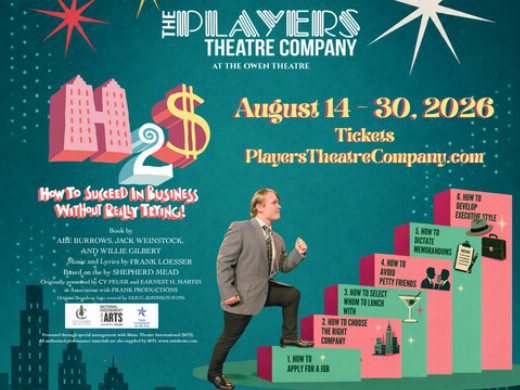
How to Succeed in Business Without Really Trying The Owen Theater (8/14-8/30) |

|
Anarkali Reimagined Luxtrium (10/22-10/25) PHOTOS |

|
Ride the Cyclone HITS Theatre (8/15-8/15) |

|
Ride the Cyclone HITS Theatre (8/16-8/16) |
|
Sweat Theatre Southwest (2/19-3/13) |

|
Come from Away Stages (9/18-10/18) |
|
Wicked Hobby Center for the Performing Arts (6/23-7/25) |
|
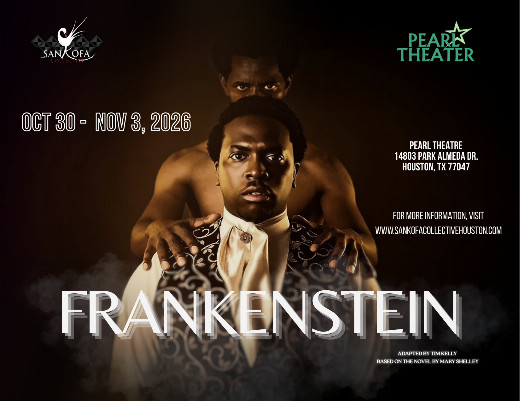
Frankenstein Pearl Theatre (10/30-11/02) |
|
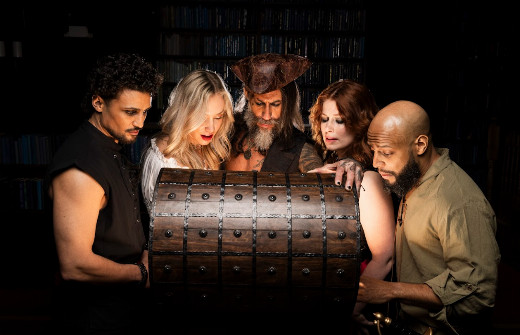
Drunk Pirates Emerald Theatre (5/14-9/19) |