
Review: FORGING AN AMERICAN MUSICAL IDENTITY at Carnegie Hall
The American Symphony Orchestra leads off America 250
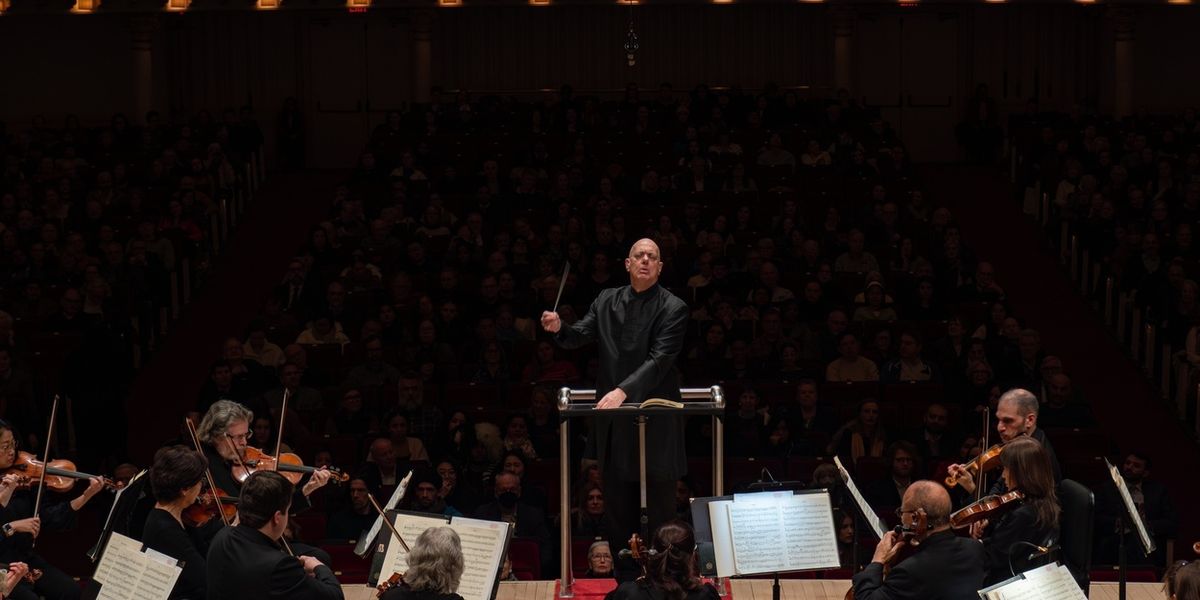
2026 is giving new life to musicians all over the United States. The 250th anniversary of the Declaration of Independence seems to propose the question: exactly what constitutes an “American” sound. As the subtitle of this concert states, we needed to “forge an American Music Identity”. While it isn’t a new concept, this musical shot in the arm has given impetus to new performances of old “chestnuts” as well as new compositions.
Attention must be paid to the past in this anniversary year. Leon Botstein has specialized in finding compositions of little-known and unknown composers and has his orchestra(s) give them an airing. His American Symphony Orchestra was the vehicle of choice for this recent concert and conveyed the music in a truly committed manner. Although he (and we) are to understand that not everything coming from the pen of a given composer is a pearl, whatever it is it’s almost always worth a listen. Or almost always.
This was the theme of the evening’s festivities. The concert was bracketed by two large scale works. The first, by Dudley Buck (1839-1909) was the Festival Overture on the American National Air (1879). The air became the melody to what we know as “The Star Spangled Banner” which became the National Anthem in 1931. In Buck’s hands it structurally became a theme followed by variations. It was not only orchestrated but also utilized a full chorus. At times so over-orchestrated that the music threatened to overwhelm the choral ensemble, it truly came across as a confused, mishmash of a piece. The choir sang beautifully when it could be heard at all.
A group of spirituals arranged by the well-known composer, arranger, and singer Harry T. Burleigh (1866-1949) was next on the program. The stunning mezzo-soprano J’Nai Bridges delivered all of them in her warm expressive voice. She was particularly effective in her “duet” with the delicate harp accompaniment of “Swing Low, Sweet Chariot”. However, here too the mostly heavy orchestration of these meaningful songs almost swallowed even her magnificent instrument.
With the performance of Richard Wagner’s Grosser Festmarsch (American Centennial March), the audience was “treated” to some second-rate music by a usually first-rate composer. Wagner himself didn’t like his own composition. It made an already lengthy concert even longer. Well-played, of course. The ASO is a fine, tight ensemble. Was the piece worth their effort and the audience’s patience? That is highly debatable.
The final piece took up the entire second half. George Frederick Bristow (1825-1898) composed his Symphony No. 5, Op.62 “Niagara” (1893 text by Charles Walker Lord). This derivative and wandering work had moments of real beauty. Some of this was contributed by the tenor Freddie Ballentine (what a career he is going to have!) bass Alan Williams, mezzo J’Nai ‘Bridges, and soprano Anna Thompson. Ballentine’s voice rang out strong and clear in Carnegie Hall, as did the voices of the other soloists. Bristow’s variations on “Long Time Ago” provided a nostalgic element to this interesting and varied concert.
Sign up for all the news on the Fall season, discounts & more...
|
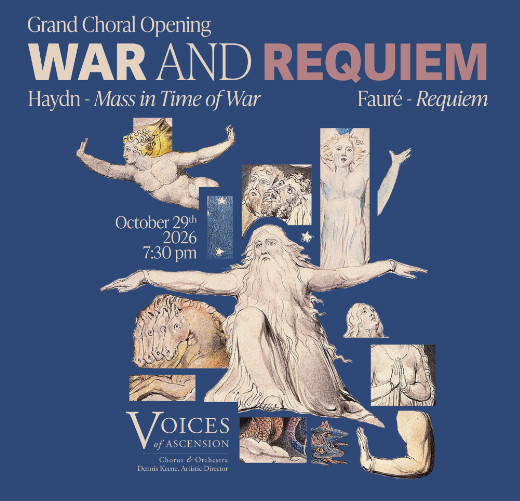
Grand Choral Opening: War & Requiem Church of the Ascension (10/29-10/29) |
|
American Composers Orchestra: Hello, America: We Gather Here at Carnegie Hall Carnegie Hall (10/27-10/27) |

|
NYFOS Next: This Now Naked Life The Theater at 150 W 17th Street (11/15-11/15) |
|
Carnegie Hall Presents: Santiago Cañón-Valencia and Victor Santiago Asuncion Carnegie Hall (11/10-11/10) |
|
American Composers Orchestra: New Virtuoso: Low End Theory at Carnegie Hall Carnegie Hall (3/18-3/18) |
|
NYFOS Next: A Perfect Rose: Dorothy Parker Songs The Theater at 150 W 17th Street (9/27-9/27) |
|
New York Festival of Song: First-Name Basis New York Festival of Song: First-Name Basis (10/20-10/20) |

Reader Reviews
To post a comment, you must register and login.