


Review: BBC PROMS: SHOSTAKOVICH’S ‘LADY MACBETH’, Royal Albert Hall
The English National Opera and the BBC Philharmonic joined forces to present a semi-staged version of this four-act opera

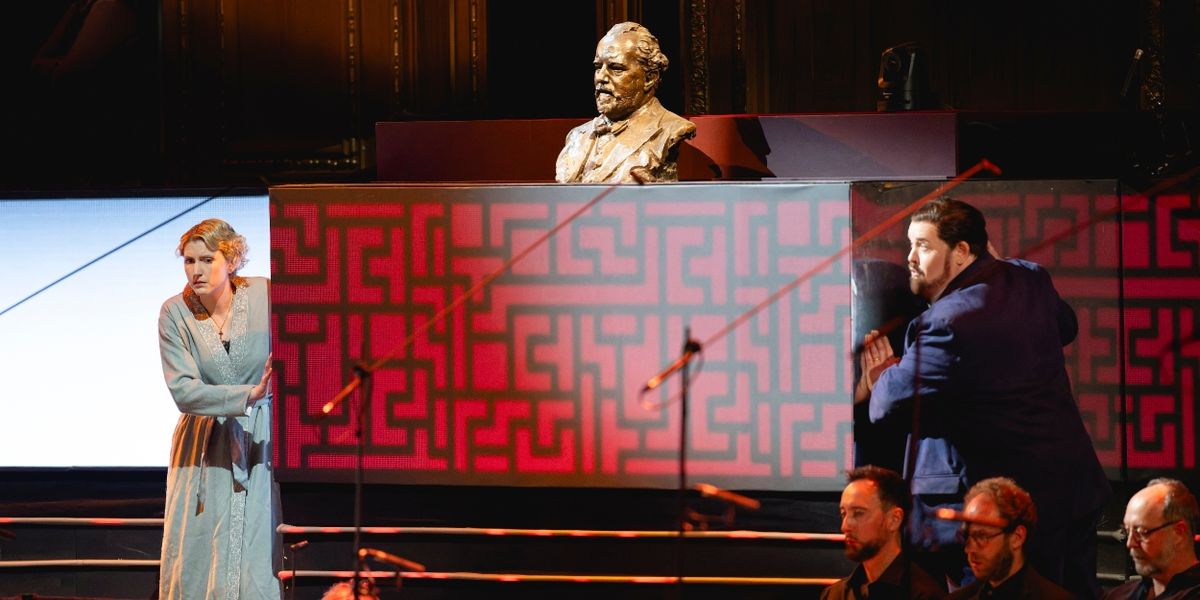
 Written between 1930 and 1932, The Lady Macbeth of the Mtensk District was first performed in 1934 - and received a scathing write-up in the Pravda newspaper in 1936, due to its graphic sexual violence and murderous female lead. Whilst it alludes to Shakespeare’s infamous character, the opera is actually based on Nikolai Leskov’s novella of the same name; it also inspired William Oldroyd’s 2016 film starring Florence Pugh, whose screenplay was written by Alice Birch.
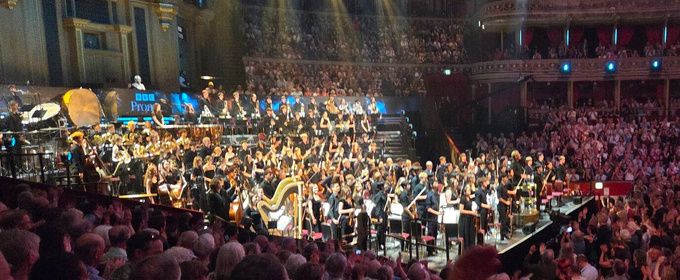
For this Proms performance, the BBC Philharmonic Orchestra (led by Zoë Beyers) was joined by the English National Opera’s Chorus and Brass section, as well as the BBC Singers. The conductor was John Storgårds, and multiple soloists made an appearance - including Amanda Majeski as Katerina, Nicky Spence as Sergey, and Brindley Sherratt as Boris (and Ghost of Boris).
.jpg?format=auto&width=1400)
The ENO try to make opera more accessible in various ways, one of which is by nearly always performing in English and ensuring surtitles are projected above the stage. Whilst this does theoretically give English speakers more of a chance of being able to understand what’s going on without having to read for the entire performance, in reality it doesn’t always work; in this particular performance, some of the soloists were better than others at both enunciating and projecting - this meant that the surtitles were in play more often than one would hope.
My personal preference is for operas to be performed in their original language, as translations often disrupt the natural flow of the melody line, and this can become distracting. This often did seem to be the case during this Proms performance, with the singers desperately trying to fit all of the syllables in over the music - I will caveat this, however, by stating that this was my first time hearing the opera, so this could well be the effect Shostakovich and Alexander Preys were hoping for when they wrote it.
David Pountney’s translation confirmed that this wasn’t a Prom for all the family; as well as some scenes of a sexual nature, there was plenty of choice language throughout. Possibly a few too many references to Katerina being “like a bitch on heat” for me - as with anything, balance is key when you consider the effect of the words being employed.
.jpg?format=auto&width=1400)
Such power came from the orchestra that the more theatrical elements at times felt unnecessary, as the strings soared and the brass made its presence felt. It’s quite a curious opera in many ways; overwhelmingly tragic and dark, but with odd little moments of lightness - both in the musical themes and the odd bit of comic relief. The BBC Philharmonic Orchestra were adept in their performance, making the individual little quirks shine as well as demonstrating a dedication to the big picture.
Amanda Majeski stood out as the Lady Macbeth figure, Katerina Lvovna Ismailova, with heart-rending vocals, perfectly articulating the tragic narrative from start to finish. It’s a role that could be exaggerated in One Direction or another, but Majeski managed to tread a fine line whilst also showcasing some superb singing.
This Prom was a truly excellent way to continue marking the 50th anniversary of Shostakovich’s death, with its universal themes and a thrilling score filling the Royal Albert Hall on an almost-autumn evening.
The BBC Proms run at the Royal Albert Hall until 13 September
Photo credits: Andy Paradise
Reader Reviews
To post a comment, you must register and login.