


Interview: Kirsten Greenidge Brings the Laughs to DAUGHTER OF THE REGIMENT
Boston Lyric Opera production runs through May 3 at Emerson Colonial Theatre.
Playwright Kirsten Greenidge is used to telling stories through her dramas like her Obie Award-winning “Milk Like Sugar,” and “Our Daughters, Like Pillars,” and “The Luck of the Irish.” All three –produced locally by The Huntington –have elements of humor but are not straight-out comedies.
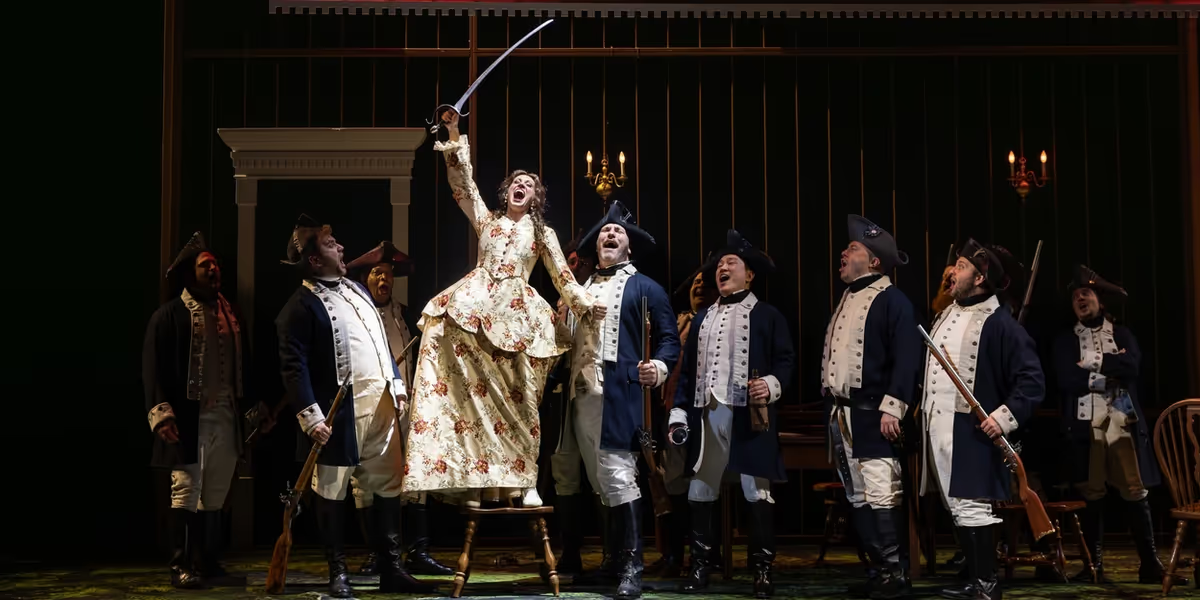
With her latest assignment, however, writing English dialogue for Boston Lyric Opera’s new production of Gaetano Donizetti’s opera “Daughter of the Regiment” – playing four performances, April 24 to May 3, at the Emerson Colonial Theatre – the writer is stirring up the humor, history, and romance of the BLO reimagining of the opera, which moves the story from Napoleonic wartime to American Revolution-era Massachusetts through the true stories of revolutionary women like Deborah Sampson and Phillis Wheatley.
Conducted by Kelly Kuo, directed by John de los Santos, and performed in English based on the G. Schirmer translation by Ruth & Thomas Martin, as revised by de los Santos, “Daughter of the Regiment” is part of BLO’s ongoing “Voices of Revolution” initiative, which rediscovers stories of America’s birth by lifting both iconic and overlooked voices in an effort to celebrate the country’s history, its present day, and its future. The cast features Brenda Rae, Spencer Britten, Kenneth Kellogg, Sandra Piques Eddy, Angela Yam, Neal Ferreira, and Devon Russo.
In Greenidge’s libretto, Marie, a Revolutionary-era Massachusetts baby abandoned beneath a Liberty Tree and then discovered and raised by a ragtag militia, has grown into a fiercely independent young woman, devoted to the regiment she calls family and inspired by the revolutionary ideals taking hold around her. When she falls in love with Tonio, a devoted outsider eager to prove himself worthy, their romance unfolds against the backdrop of war, political upheaval, and the fight for American independence.
Marie’s world is upended when the aristocratic Widow Birkenfeld arrives with her attendant, Hortensia, and reveals herself as Marie’s long-lost relative, insisting she leave the regiment behind for a life of refinement in Boston. Torn between duty and desire, Marie is thrust into a world of social expectations, secret identities, and arranged marriage. As truths come to light, including revelations about her parentage and the motives of those around her, Marie must choose between the life she has and the life she wants.
Inspired in part by the true story of Sampson, the Bay State woman who disguised herself as a soldier during the Revolutionary War, and infused with the spirit and words of Wheatley, who upon her release from slavery became the first African American woman to publish a poetry anthology, Greenidge’s adaptation infuses the opera with local history and contemporary wit – creating a patriotic, laugh-filled tribute to the revolutionary spirit that helped define Boston and the nation.
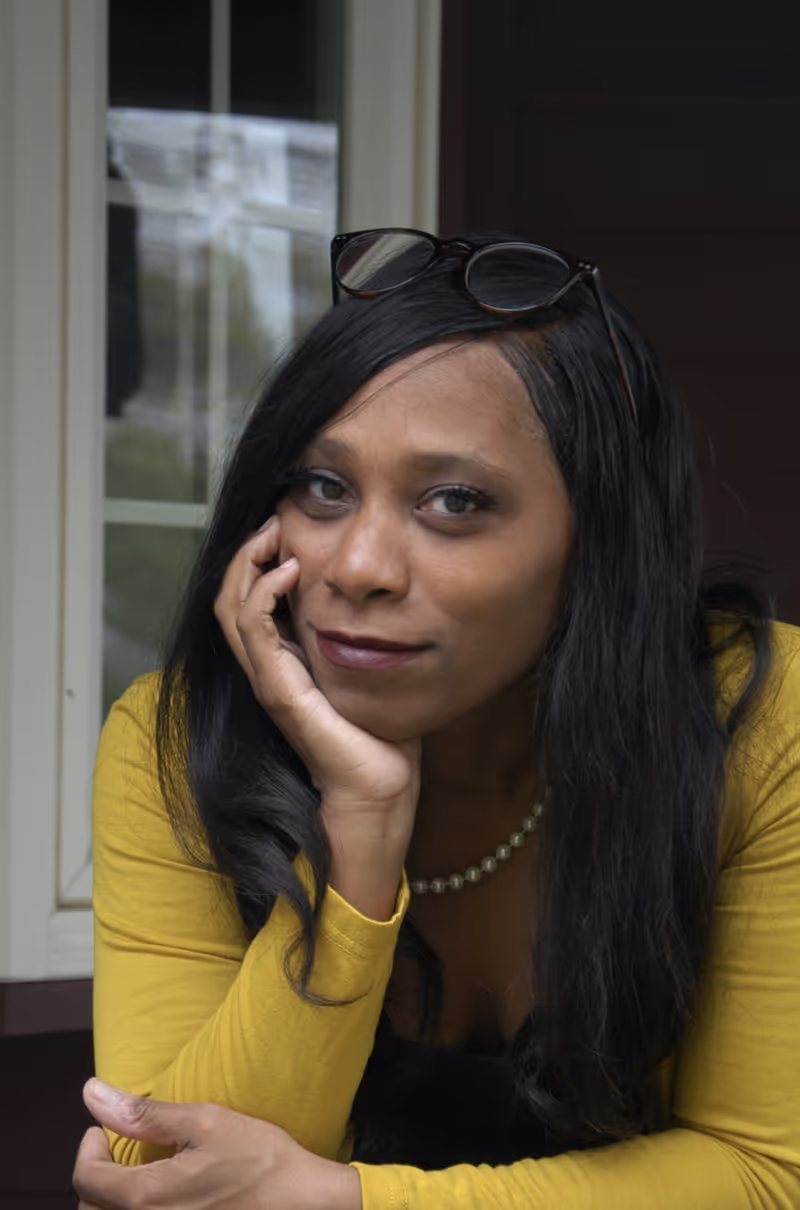 A graduate of Arlington High School, Greenidge – who also wrote the libretto adaptation for BLO’s 2024 production of Joseph Bologne’s “The Anonymous Lover,” subsequently presented at Opera Philadelphia in 2025 – attended Cambridge Friends School, studied U.S. history at Wesleyan University, and did her graduate work at the University of Iowa. A onetime Huntington Playwriting Fellow and presently artist-in-residence at Boston’s Company One Theatre, Greenidge has won Obie, PEN/America Laura Pels, and Sundance Time Warner awards for her plays, which include “Splendor,” “Bossa Nova,” “The Gibson Girl,” and “Rust.” Greenidge is currently director of the School of Theatre and an associate professor at Boston University.
By Zoom recently from her home in Westborough, Greenidge discussed “Daughter of the Regiment” and more.
What was it like working with the BLO on a piece that incorporates so much of American history?
John de los Santos, the director, translated the lyrics from the original French and I created English dialogue. This is John’s third time working on “Daughter of the Regiment” and there are things in the story we’re doing that he got really excited about. His imagination is wonderful, so delicious. With this script, he knew he wanted full-on Boston colonial history. In our first meetings, he asked, “Have you heard of “Johnny Tremain?” I said yes, everyone here reads “Johnny Tremain,” or at least everyone from my generation read it in 6th or 7th grade.
Then he got very interested in the Liberty Tree, and that was something that I didn’t know as much about. It stood where the theater district now meets Chinatown, and John was very excited about that and about how the tree became a symbol where colonists standing up to the British government would pin notes. Other towns designated trees in their town centers as Liberty Trees as well. And we wanted that to be part of “Daughter of the Regiment.” From the first meeting with John, I could see how his imagination was firing. Deborah Sampson was someone we knew should be included and I also became interested in Phillis Wheatley, whose poetry influenced the colonists.
Did I hear that you’re surprised by how much you’re enjoying BLO writing assignments like this one?
I think what I’ve been surprised by is that this is my second opera with Boston Lyric Opera that centers on comedy. And that my writing can be funny. My job was to update the language so that a present-day audience could enjoy it. My directive from the BLO was to be funny, and writing with that in mind still felt different to me.
There is definite humor in some of your plays, so what makes your ability to write comedy so surprising to you?
As a writer for a live stage performance, you’re hoping, obviously, to elicit a response from an audience. I love it when my plays make people laugh, but I also love it when people are moved in other ways. I think I’ve been surprised how much I just like that my writing can be a foundation to push the jokes farther and faster. That’s exciting to me, and a little bit surprising.
Would you also like to write books for serious operas?
Yes, probably, because I am really enjoying working with BLO. I think what I’m loving or enamored by right now is that the spoken dialogue is, obviously, not the main reason why opera audiences are going to see it, so my mechanical brain is excited by the words being the link to get us to the next song.
But they aren’t the thing. So there is an ease, not as in it’s easy to do, but an ease and a breath, like, whew, I’m going to let the music do its thing and my job is just to enhance and make sure it’s getting there.
Are you drawn to musical theater?
I think so, because as I’ve been working on this, I’ve also been working on my first musical as the book writer, so I’ve been able to draw on what I’m learning in that setting and apply it to this one. The music and lyrics are being written by someone else so I’ve been able to really think about how my writing will get us to the songs, which is what people really are there to see and hear when they go to a show in the musical theater genre.
What more can you tell me about that show?
It’s called “Shelter.” The book and lyrics are by composer-lyricist and performer Crystal Monee Hall, who’s new to this but not new to theater, and it’s influenced by and drawn from the journalism of Lauren Sandler, who is a Cambridge native. Lauren worked in a Brooklyn, N.Y., women’s shelter and wrote a book about homelessness and a woman in the first year of her child’s life, so we’re drawing on her notes from that project and putting them into a musical form.
When might audiences be able to see “Shelter”?
It’s being produced by a commercial company called FourthWall Theatrical, which takes properties and develops them into musicals, so the hope is that they will find a home for it in the next few years. We’re still working on that.
Does it have humor in it?
It does – yes!
Photo caption: Marie (Brenda Rae, on chair) rallies the newly uniformed soldiers in Boston Lyric Opera’s “Daughter of the Regiment.” Photo by Nile Scott Studios. Head shot of Kirsten Greenidge by Katia Nigro.
Prefer BroadwayWorld in Google Search?
Add us as a preferred source so our stories show up more often in Top Stories and Google’s AI answers — for you.


Sign up for all the news on the Fall season, discounts & more...
|
Bat Boy: The Musical Umbrella Arts (9/25-11/08) |
|
Brian Henson's Puppet Up! Boch Center Shubert Theatre (9/27-9/27) |
|
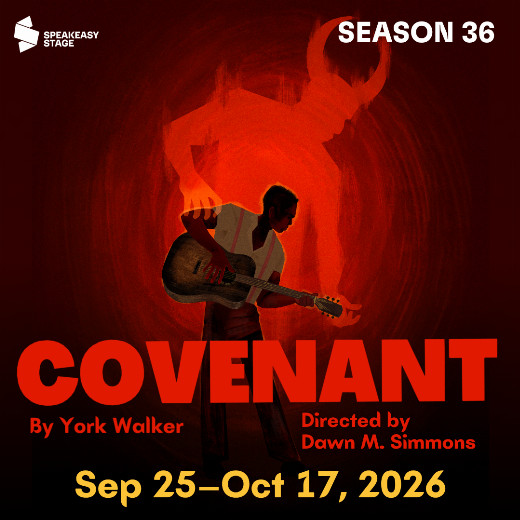
Covenant SpeakEasy Stage Company (9/25-10/17) |
|
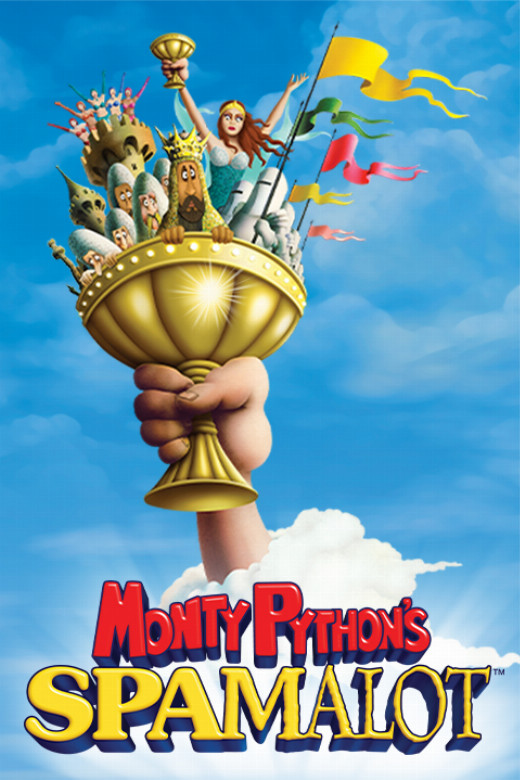
Monty Python's SPAMALOT Boch Center Wang Theatre (10/06-10/11) |
|
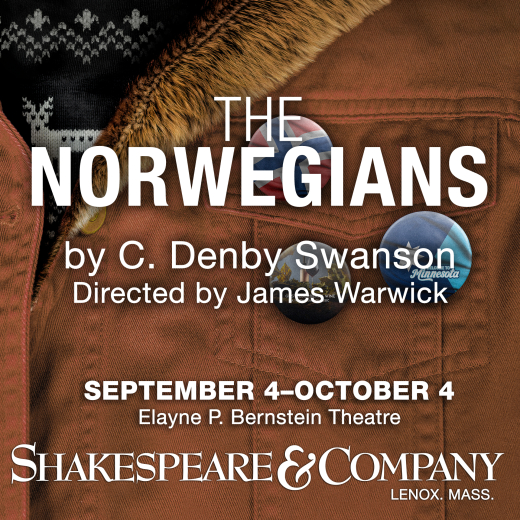
The Norwegians Elayne P. Bernstein Theatre (9/04-10/04) |

|
An evening with LaChanze Berklee Performance Center (11/01-11/01) |
|
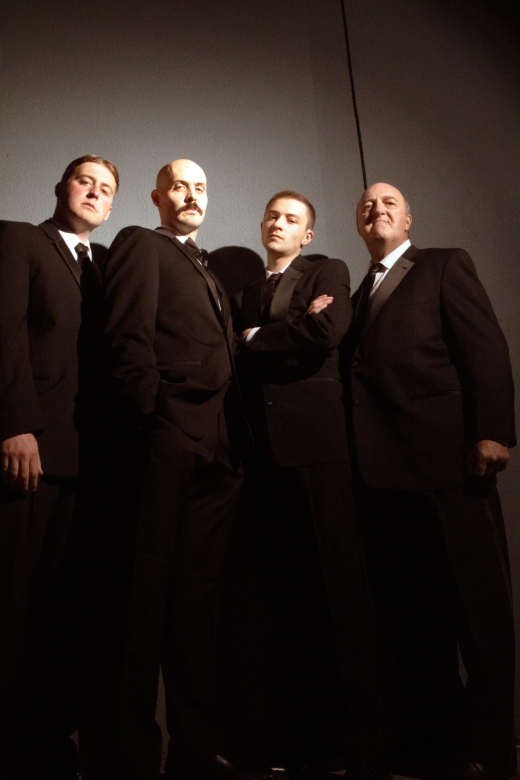
BOUNCERS by John Godber The Modern Theatre (10/01-10/24) |

|
This Is Your Song: The Elton John Songbook Norton Singers (10/02-10/03) |
|
Unorthodox Huntington Theatre (5/06-6/06) |
|
Rachel Sumner and Travelling Light at Harmony on the Green Harmony on the Green (5/01-5/01) |
