


Interview: David Payne Talks CHURCHILL
One-man show about Winston Churchill plays Calderwood Pavilion through October 12
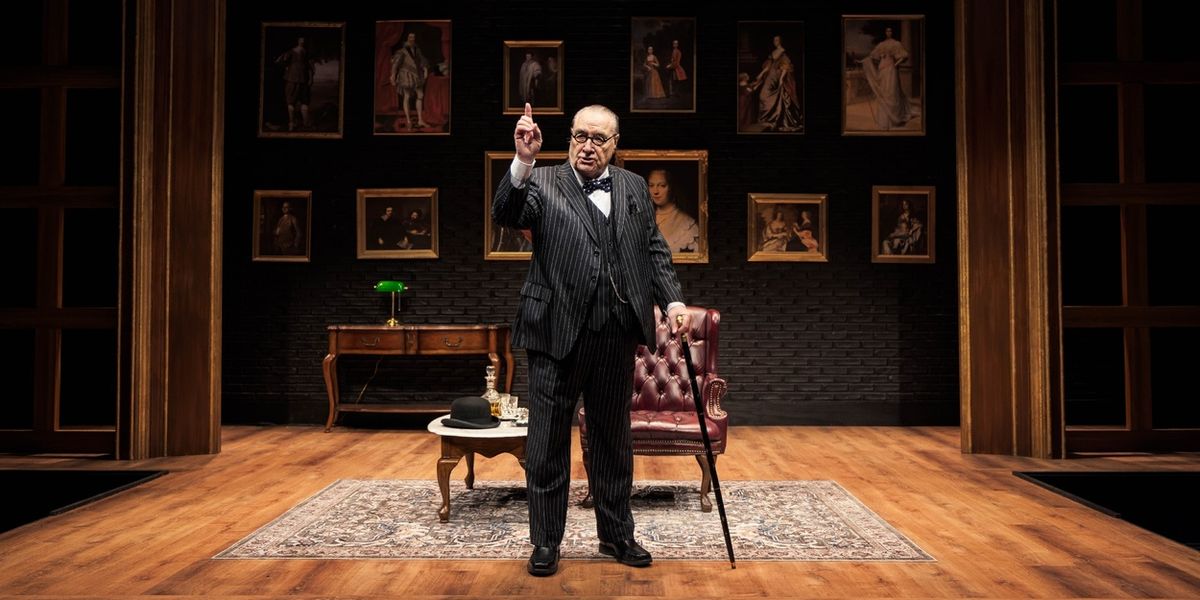
Winston Churchill was one of the 20th century’s towering political figures – a British statesman, military officer, and prime minister of the United Kingdom during World War II in 1940–45, and again in 1951–55, who spent over six decades as a member of the British parliament.
Some 60 years after his death, Churchill remains a major and disputed figure in world history. He is venerated by many as the man who defeated the Nazis and saved Britain in its darkest hour, but condemned by some as an imperialist and a racist.
 Winner of the 1953 Nobel Prize in Literature "for his mastery of historical and biographical description as well as for brilliant oratory in defending exalted human values,” Churchill - who served in both the Liberal and Conservative wings of Parliament - has enjoyed a renaissance of sorts in the past several years, which have seen him played by Brendan Gleeson in the 2009 HBO film “Into the Storm,” which won Gleeson the Primetime Emmy Award for Outstanding Lead Actor in a Miniseries or a Movie; in two 2017 feature films, by Brian Cox in “Churchill” and Gary Oldman in “The Darkest Hour,” for which Oldman won the Academy Award for Best Actor; and by John Lithgow in the Netflix series “The Crown,” earning Lithgow an Emmy Award as Outstanding Supporting Actor in a Drama Series.
For the past few years, the cigar-smoking statesman has also been played by British actor David Payne in “Churchill,” a touring one-man stage production, being presented by Emery Entertainment at the Calderwood Pavilion at the Boston Center for the Arts, through October 12.
Created by Payne, also known for portraying writer C.S. Lewis in various touring productions, the show takes place in England in 1963, when a historic celebration is underway that will see U.S. president John F. Kennedy bestow honorary United States citizenship on the former prime minister. Churchill was unable to be present for the White House ceremony, but his formidable spirit takes center stage in the play. Payne calls upon his subject’s famed wit and captivating speech-making as he reminisces about battles waged, leaders encountered, and the two women who had perhaps the greatest influence on his long life – his beloved wife Clementine and his young sovereign, Queen Elizabeth II.
Payne’s career as an actor was not predestined. Indeed, he studied to be an engineer. He liked numbers, planning, strategy, order, and structure, so any career in the arts was far from his thinking as a youth growing up in South London. Yet after just a few years as a structural engineer, Payne was drawn into the music and entertainment business. With two partners, he formed a company that encompassed a record label, publishing, event promotion, a magazine, and artist management.
Payne was still in the music business in the 1990s when he was asked to come to the U.S. and run a British record label’s operations here. He was just wrapping up his contract and considering whether to make the trip back to the U.K. when he came across a flier advertising auditions to play C.S. Lewis in a play called “Shadowlands.” Payne landed the role of Lewis in that original play and has since played Lewis more than 1,000 times, in a variety of performances in the U.K., U.S., and Canada. Three years ago, he added the role of Winston Churchill to his repertoire.
On Zoom recently from his home on England’s south coast, Payne spoke about “Churchill” and more.
Before portraying him, what connection, if any, did you feel to Winston Churchill?
Well, I grew up with Winston Churchill. I was born in 1942, so he was a significant person in all of our lives. He was always there, as it were. There was always news about him.
I think he was a hero to all of us in so many ways, because of the Second World War and his leadership of our country. He’s one of those people who are important in your life not necessarily because you meet them but because they’re there.
Were your early thoughts of him favorable?
I definitely admired him. Of course, I didn’t know all the details about his previous life then. What I knew about Winston Churchill was that he helped us through the war, and he had a significant impact on our lives. I remember watching Queen Elizabeth II’s coronation, and Winston was there, and, and for the first few years of her reign, he was prime minister. So my view of him was positive.
Does this play explore any of the chinks in his armor?
There are chinks in the sense that he’s talking about himself. He’s giving a potted history of his life to a group of Americans, and so he’s willing to talk about the things that influenced him, he’s willing to talk about the issues that he had problems with in his own life. These included how he hated his childhood, how his parents were distant from him, although he loved them. He speaks very honestly about that. He also talks about his successes and his failures. He particularly speaks about the biggest failure of his life.
What did Churchill consider the greatest failure of his life?
As First Lord of the Admiralty, he led the failed Battle of Gallipoli, which took place during the First World War, and made him almost a pariah when he was demoted back to Major by Conservative Party MPs.
Does he acknowledge the impact this had on him?
He reflects on that and he’s very honest that, for him, it brought great shame. It was something he grieved over. And we get to see that as he talks about it. The audience can feel it, and I can, too.
That could have finished him right there. What do you think inspired him to keep going?
He could have been done for sure, but Winston had this sort of attitude, which could be summed up by one of his expressions, “We keep buggering on.”
What do you want the audience to think about this show?
I want them to go away saying, “I think I’ve just met Churchill.” Because, firstly, there are not many people, past or present, willing to stand up and say, well, here’s where I made a big mistake. They talk about their successes, not their failures. But those failures are part of their history. And of course, Churchill wasn’t perfect, but who is perfect? We change over time. And I want people just to say, oh, you know what, ‘Churchill changed over time.”
Has this piece changed over time? If so, how does that work?
Last night in bed, I was awake for an hour thinking about something in the show, and I thought, you know, I’m going to change that. So I did, in bed – I didn’t wake my wife, I didn’t use my voice – but I made the change in my head. And so Boston audiences are going to hear something about Churchill that nobody else has heard in the many performances I’ve done up until now.
When I tour with a show like this, part of my life is spent tweaking it. But by continuously tweaking, I don’t mean just doing it for the sake of doing it. That’s wasting your time. But if you sit there and you think, hmm, that would actually be better said that way, or I actually think I should have put that in – if you are open to doing that, the show remains alive.
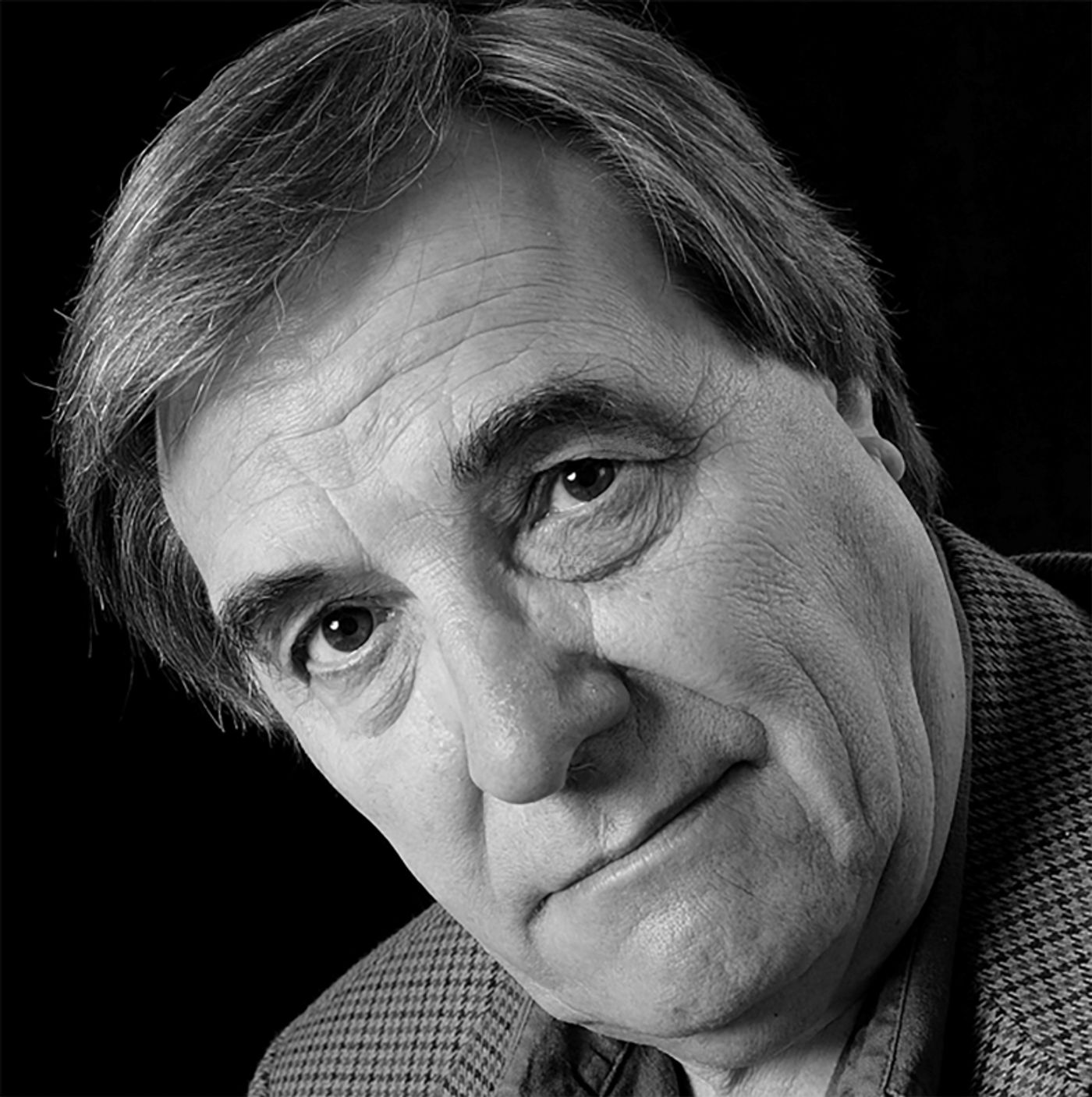
Photo caption: At top, David Payne in a scene from the Emery Entertainment production of “Churchill.” At left, head shot of David Payne.. Photos courtesy of Emery Entertainment.


|
Rendezvous with Rachel Revere™ Vokes Theatre (8/30-8/30) |
|
John Cameron Mitchell: Hedwig 25th Anniversary Movie Tour Boch Center (10/01-10/01) |
|
School of Rock Firehouse Center for the Arts (8/21-9/06) |

|
Alchemy: Classical Meets Jazz Cape Cod Chamber Music Festival (8/14-8/14) |

|
Alchemy: Classical Meets Jazz Cape Cod Chamber Music Festival (8/13-8/13) |

|
The Barber of Seville Preview Concert Boston Synagogue (8/10-8/10) |
|
Gunhild Carling at City Winery Boston City Winery Boston (9/16-9/16) |

|
Therapy Gecko Live Arts at the Armory (8/30-8/30) |
|
Alfred Hitchcock's North by Northwest Huntington Theatre (1/21-2/07) |
|
The Barber of Seville by G. Rossini with Boston Summer Opera & Horizon Ensemble Boston Synagogue (8/23-8/23) |