


Review: MURDER ON THE ORIENT EXPRESS at Alabama Shakespeare Festival
A fine production of a languid script
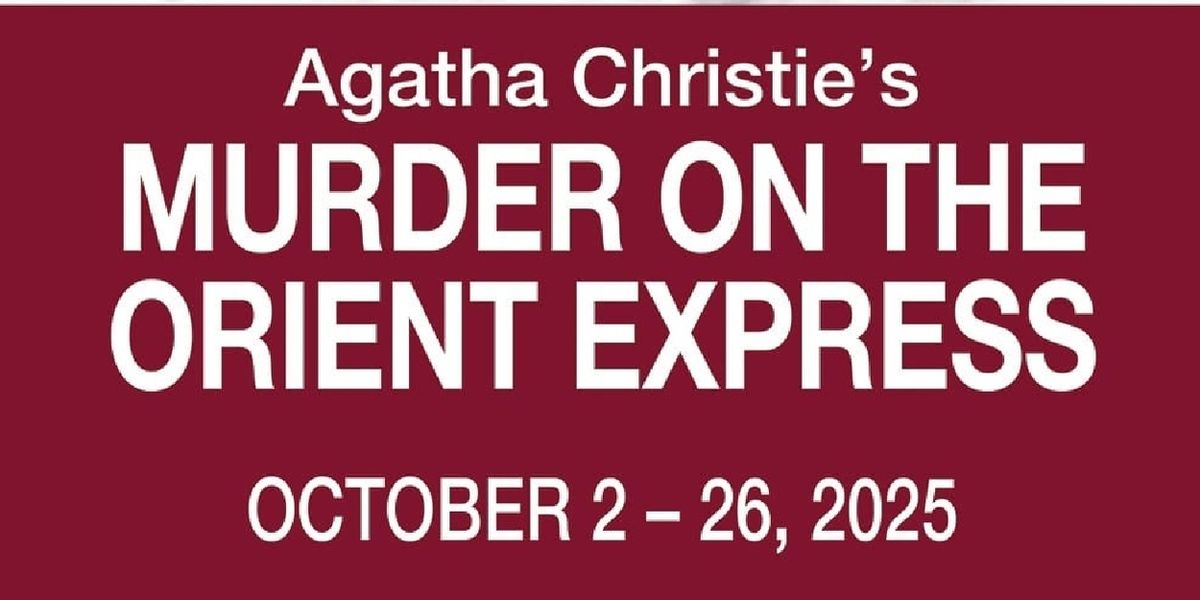
MONTGOMERY, ALABAMA — For over 90 years, Agatha Christie's Murder on the Orient Express has captivated audiences with its exotic location, eccentric collection of suspects, and ingenious solution. At the center of it all is Christie's beloved detective, Hercule Poirot. Playwright Ken Ludwig has adapted this classic novel for the stage, which is the first production of the 2025-2026 season at the Alabama Shakespeare Festival.
The biggest problem with Murder on the Orient Express is its script. To fit all the plot and clues into two hours, there is little room for anything else. The first third of the play consists characters regurgitating exposition; after the murder occurs, all the dialogue exists almost entirely of plot points and clues. As a result, there is no room for character development and little time to amplify the moody atmosphere that Christie establishes so well in the book.
It is not clear what is gained by adapting Murder on the Orient Express for the stage, beyond a few jokes that Ludwig has added. Christie wrote plays (most famously The Mousetrap), including two that featured Poirot. It seems that if Murder on the Orient Express were well suited for live theatre, Agatha Christie would have adapted it herself. Yet, she didn't in the 41 years between its publication and her death. What does Ludwig know that Christie didn't?
With this script as its foundation, there are inherent limits to what a production of Murder on the Orient Express can achieve. Within those bounds, the Alabama Shakespeare Festival has created the best possible production. Director Quin Gresham (in his debut as a director at the Festival) handles the long talky scenes well, and the show moves quickly. Gresham's most notable directorial innovation is the use of projections (designed by Kylee Loera) and voiceovers to stage the play's prologue. It is the only time when Gresham gets to do anything besides wrangle his actors, and he takes advantage of the moment to create a strong opening and establish the intrigue of the story.
Chris Mixon stars as Hercule Poirot, and he manages the role well. Mixon is comfortable as a leading actor, and he naturally grabs the audience's attention without being showy or overtly theatrical. Spending two hours with Mixon's Poirot is rather pleasant. Unfortunately, Ludwig wrote Poirot as a vanilla clone of Sherlock Holmes, and little of Poirot's eccentricities and unique personality traits are shown in the play. Mixon's talent is wasted in the role. I know because I have seen him give better performances in roles that give him more to do than talk and move a plot forward.
The rest of the cast is doing the best they can within the confides of the script. Everyone portrays their one-dimensional character well, but it does not require Equity-level talent to play these roles. Jean McCormick plays the most memorable character, an eccentric American socialite named Mrs. Hubbard. Her exaggerated mannerisms and the character's marital history were the source of much of the play's comic relief. As Mary Debenham and Colonel Arbuthnot, Cassia Thompson and Max Monnig are burdened with an embryotic romantic subplot in which their characters' relationship is hindered by Arbuthnot's need for a divorce. They do fine as a generic couple, but I can't help but wonder how they would handle meatier roles that deal with forbidden love. During their scenes I was mentally casting them in Aida and Romeo and Juliet.
Visually, the greatest achievement in this production of Murder on the Orient Express is the set designed by Stephen Gifford. The main set consists of two train cars and part of a conductor's car connected together. As the action changes location, the set moves like a real train so that the focus of the action is almost always at center stage. The set is opulently decorated, and its luxury does the most to establish the elegant setting for a grisly murder. It is a bit confining, though, because the train cars are only about eight feet wide, and this severely restricts the amount of stage space the actors can perform in. But it is not Gifford's fault that almost the entire play takes place on a train.
Jared Sayeg's lighting design also contributes to the mood of the play, especially when the body is discovered and in the climactic scene where Poirot solves the crime. Sayeg's use of color and contrasts in brightness is an effective at these critical moments.
The strategy to "praise the locals and blame the playwright" is sometimes a copout for theatre critics. But for the Alabama Shakespeare Festival's production of Murder on the Orient Express, it applies. The acting is fine, and the directing gets the job done. The technical designs are wonderful. The only mistake anyone made was choosing Ken Ludwig's script to produce. The best reasons to see Murder on the Orient Express is the lovely designs, to revisit (or become acquainted with) the plot, and to enjoy a play in the spooky season that doesn't rely on ghosts and witches.

|
The 25th Annual Putnam County Spelling Bee Theatre Tuscaloosa (2/19-2/28) |
|
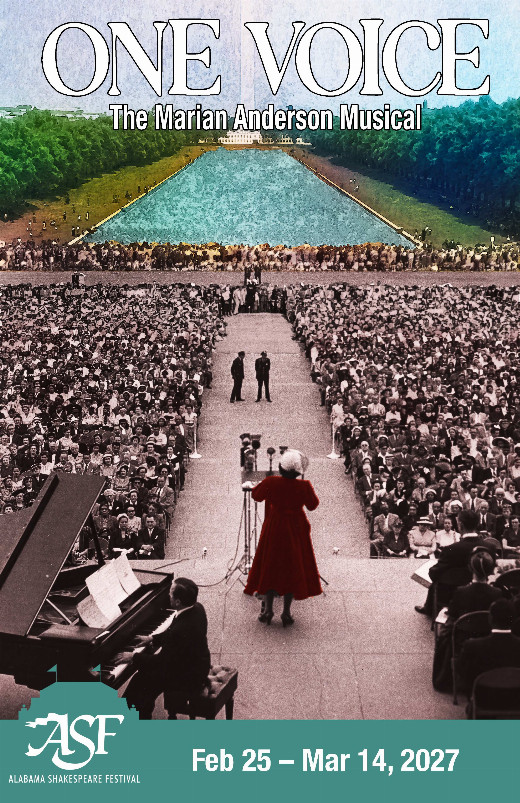
One Voice The Marian Anderson Musical Alabama Shakespeare Festival (2/25-3/14) |

|
The Great Gatsby Citadel Theatre (10/31-11/22) |

|
Box Seats: When A Woman''s Fed Up Saenger Theatre Mobile (9/20-9/20) |
|
Hamilton (Angelica Company) Birmingham Jefferson Convention Complex [Concert Hall] (9/22-9/27) |

|
The Rocket Men Alabama Shakespeare Festival (5/13-5/30) |

|
Home For The Holidays by Michael Walker & Josh Levine Theatre Tuscaloosa (12/11-12/20) |
|
Mamma Mia! Birmingham Jefferson Convention Complex [Concert Hall] (11/17-11/22) |
|
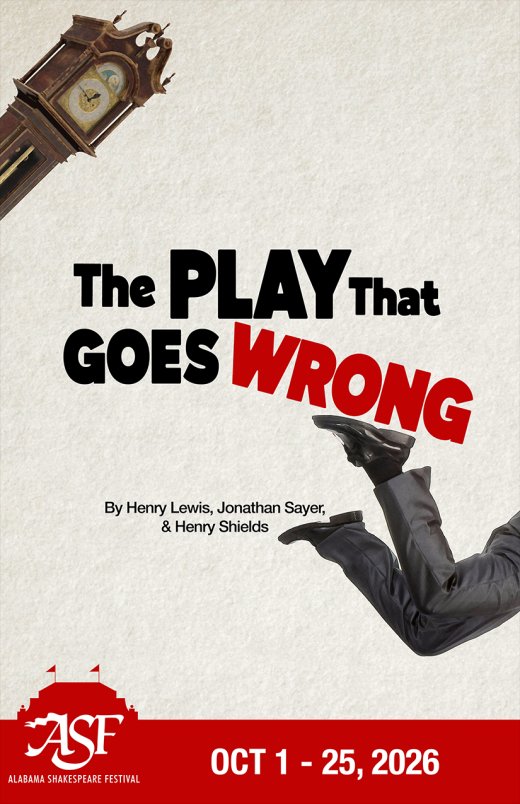
The Play That Goes Wrong Alabama Shakespeare Festival (10/01-10/25) |
|
Arsenic and Old Lace South Jackson Performing Arts Center (10/01-10/04) |

Reader Reviews
To post a comment, you must register and login.