She Believed She Could: Angelica Chéri Becomes Broadway's Most Wanted
Chéri talks theatre origins and bringing family lore to Broadway.
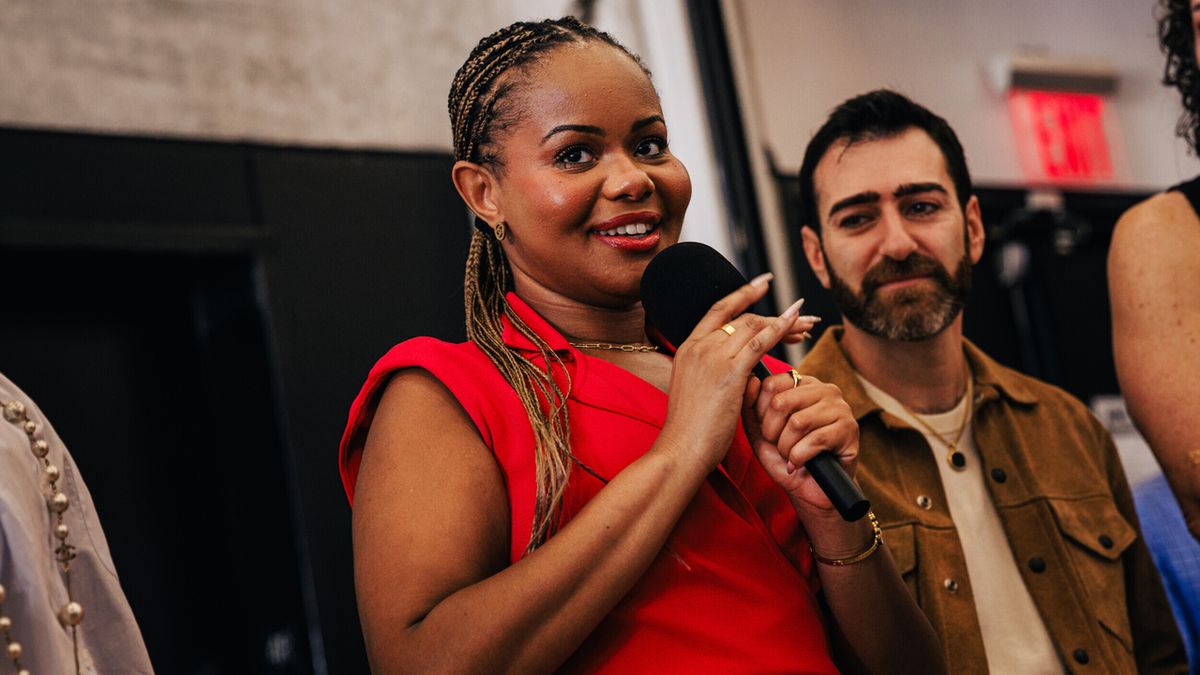
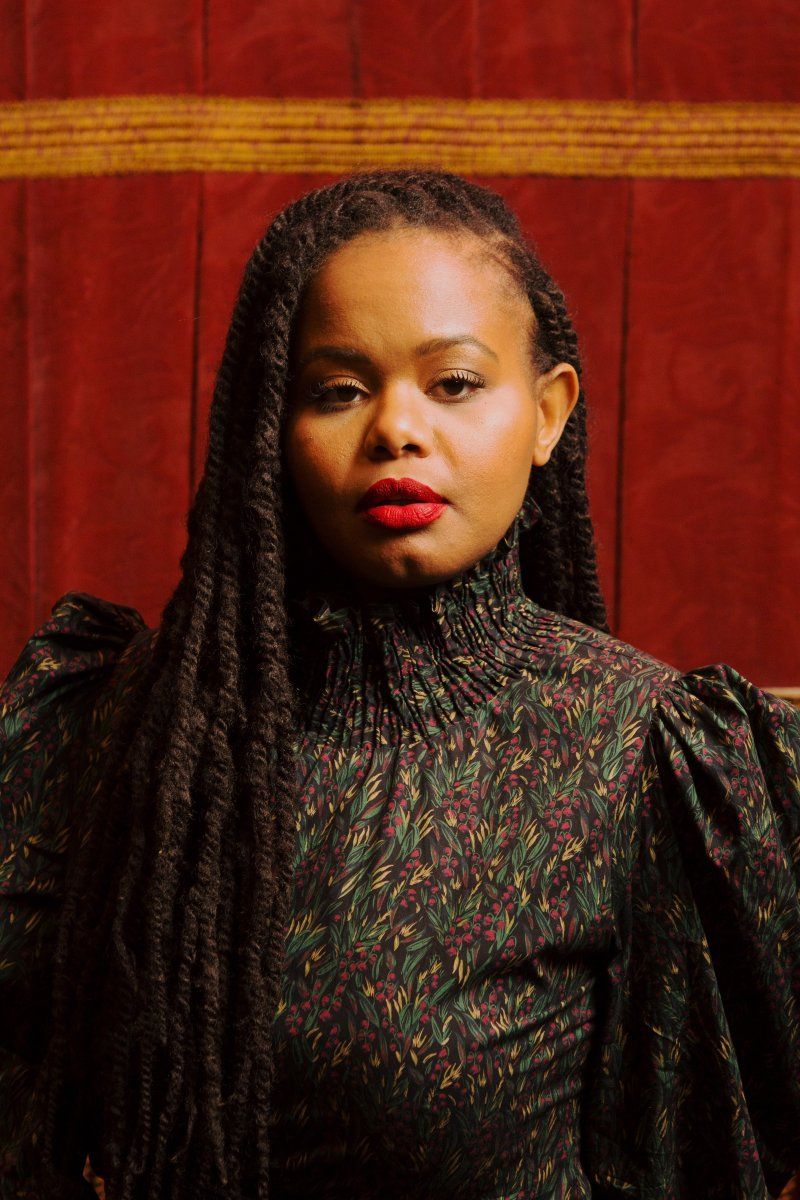
Most of us have heard some maybe-true, maybe-exaggerated stories about our families’ histories. For playwright and lyricist Angelica Chéri, those incredible, stranger-than-fiction tales turned into a breakout hit and a Broadway debut.
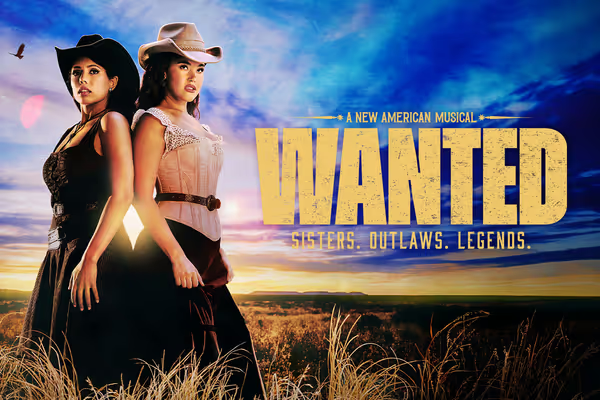
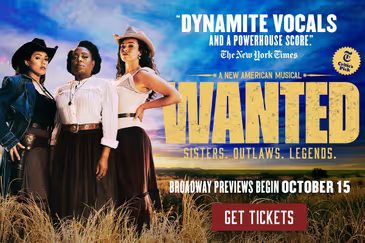
Wanted, which Chéri wrote alongside composer Ross Baum, is inspired by her family’s stories about her great-great aunts Mary and Martha Clarke, two white-passing Black sisters who became outlaws in the 1890s. It’s been the work of over a decade, starting as a grad-school thesis musical and morphing into today’s version.
“Certain pieces of [the show] existed 12 years ago, some from six weeks ago!” she says. As they work through the process of mounting the show for Broadway, Chéri explains how she and Baum (and their collaborators) evaluate each moment. “Is it still as relevant and inevitable as it was before, and if not, what else can it be? That’s my favorite writing exercise: ‘what’s the thing I haven’t said yet?’”
Like so many of us, Chéri can pinpoint the exact moment that introduced her to the magic of theatre – and the teacher responsible.
“I was about 11 years old, in Mrs. Landon’s advanced drama class, and I performed a monologue from Julius Caesar, and I was just like ‘Yep, this is my happy place!’” she recalls. By the time she was 14, she had written her first play (and produced it by age 16), and her passion – or, as she puts it, a vocation – for telling stories has never dwindled.
(And, yes, Mrs. Landon already has tickets to see Wanted!)
In high school, Chéri remembers reading a pair of August Wilson plays that inspired her to become a playwright, because his language-driven approach “sounds like conversations I’ve heard in my family.” She also names Maya Angelou — whose story she’s working on for another stage project — as a key inspiration, connecting the underlying themes of Wanted (“You cannot overcome oppression by becoming an oppressor yourself. Violence will not end violence.”) with Angelou’s poem “A Brave and Startling Truth,” among others.
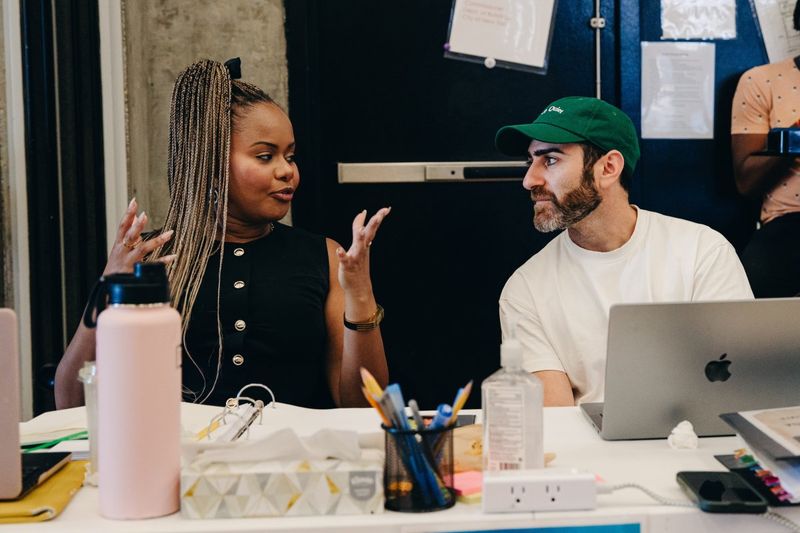
For Chéri, intentionality is the name of the game, and it’s what helps her stay focused in the midst of high-pressure creative processes. Her days start with prayer, centering, and tea, before taking the time to put together the day’s look. It’s about more than just style and self-expression.
“I spend so much time pouring outward, looking and listening and seeing and commenting, being the vessel through which the story is traveling, but I don’t always spend that time centering myself. So I think it’s important to start with a formal, nonverbal conversation with myself and my body,” she reflects.
Wanted has evolved creatively, as any work of art will, but, as Chéri points out, it’s a very different world today — especially when it comes to conversations about race in America — than it was in 2014, when the piece was first developed.
“When we first started, [it felt like] there was never a more relevant time to write this show. We usually skip right from emancipation to the Civil Rights era, but there’s 100 years of history that shaped the way our country is constructed now, and we just don’t often talk about it from a historical perspective.” Now, after a decade-plus of heightened tensions and injustices broadcast live, she muses that it’s perhaps more relevant than ever.
“It’s as if the nation is begging for us to tell this story, especially thinking about the erasure of history and censorship. The volume has just been turned up, and that’s allowed us to really look at the themes of the show and bring a lot of things that have been latent up to the surface in a way that’s really exciting and dynamic.”
That duality of detailed storytelling and deep themes is a hallmark of Chéri’s work, which she describes as “macro context for stakes that resonate on a micro level, where the interpersonal mimics the global.” As a writer, she finds herself drawn to characters whose ability or wound is both their driving force and their point of weakness.
“I love thinking about legacy, and lineage, and passion and romance!” she says. “Nothing is as destabilizing as romance. Or money, or power. And our show’s got all three!” She’s especially proud of the final scenes (and songs) of Act 1, where “no matter what your background, or your perspective on the history, or even today’s political climate, there’s no way you can’t be in this moment and not be moved.”
The same drive and spirit that underpin Chéri’s work are also at the center of her advice for up-and-coming artists, especially writers.
“Go for it! Get as many resources as you can, and absorb as much as you can,” she says. Formal education may not be the right path for everyone, she notes, but there are many other ways to learn and grow as an artist. The key is, as she says, “You only get better at writing by writing. It waits for you; it doesn’t happen without you. Even once you get started, just keep going. You have to become a long-distance runner in your mind. But it’s worth it.”
Lightning Round
What’s on your playlist or watchlist right now? “I’m rewatching Heroes on Netflix! One of the greatest series of all time, in my opinion. And endless episodes of Beat Bobby Flay! I wanna watch him fricassee those potatoes. It’s just healing! And then I’m just walking down the street listening to Hans Zimmer’s score for Interstellar. It just feels like your feet are lifting off the ground.”
Pre-rehearsal must-have: “My tea!”
If you were a performer, which Wanted character would you play? “Oh, I’m definitely Flo!”
If you could master one other area of theatre, what would it be? “I’d be a composer. I learn a lot from Ross!”
What do you want people to know about Wanted? “Wanted is for everyone. This is an American tale about our American history and our American future.”

Sign up for all the news on the Fall season, discounts & more...
Powered by

|