


Review: OSCAR Is Ballet's Next Chapter
At New York City Center, The Australian Ballet and choreographer Christopher Wheeldon deliver an immersive, emotional new blueprint for ballet.
 Click for Tickets
David Hallberg last stood on the New York City Center stage as a dancer, giving his farewell performance to an empty house during the COVID-19 pandemic. This week he returned as artistic director of The Australian Ballet, which is in America for the first time in 15 years with Oscar, a new story ballet that premiered in 2024.
On opening night October 9th, Hallberg told the audience his focus is “spiriting the next generation of artists in this artform.” It’s an order that sounds simple but is difficult in practice, especially in ballet, where new and next and profitable and artistic are not always in cohesion. In Oscar, the company takes that discord and brings it into stunning harmony. Choreographer Christopher Wheeldon, composer Joby Talbot and Hallberg’s leadership have created a blueprint for the modern storytelling ballet where beautiful and skillful execution is not enough. Instead, Oscar is a powerful, deeply immersive and innovative way into the art form.
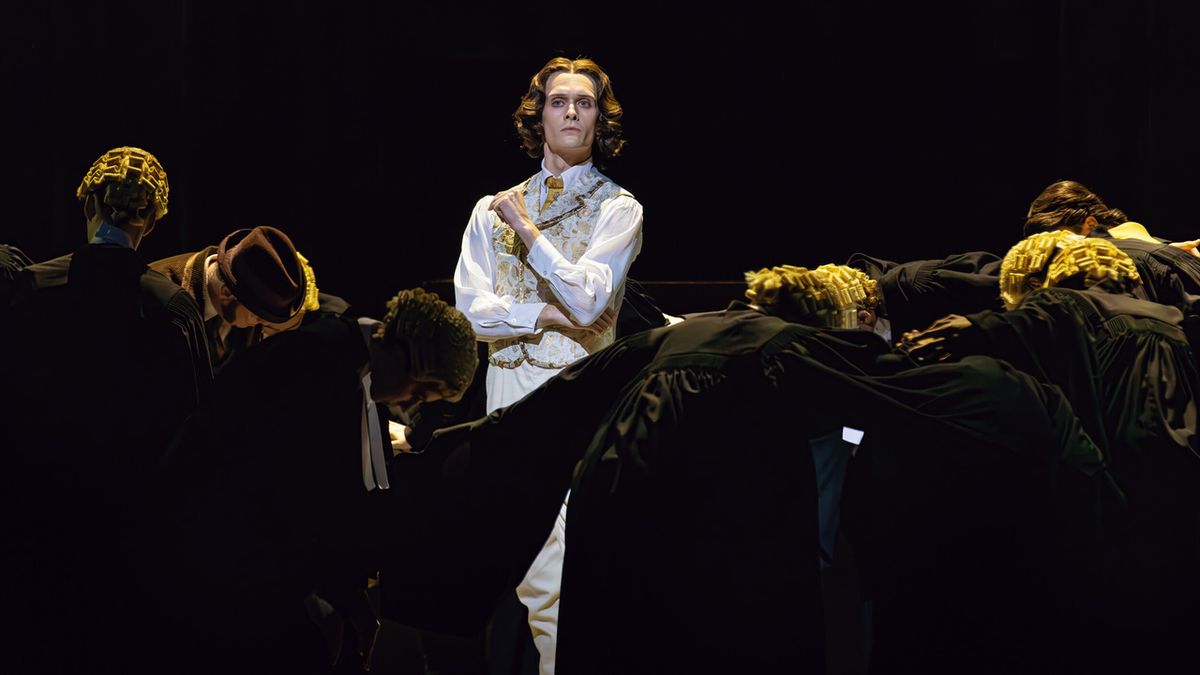
In 1895 England, Oscar Wilde sits imprisoned for “gross indecency” and revisits the glittering world he once inhabited: his fame, his love affairs, his downfall. Elements of The Nightingale and the Rose and The Picture of Dorian Gray weave through the story, building a richly layered portrait of the artist from shimmering sets, elegant costumes and remarkably theatrical dancers.
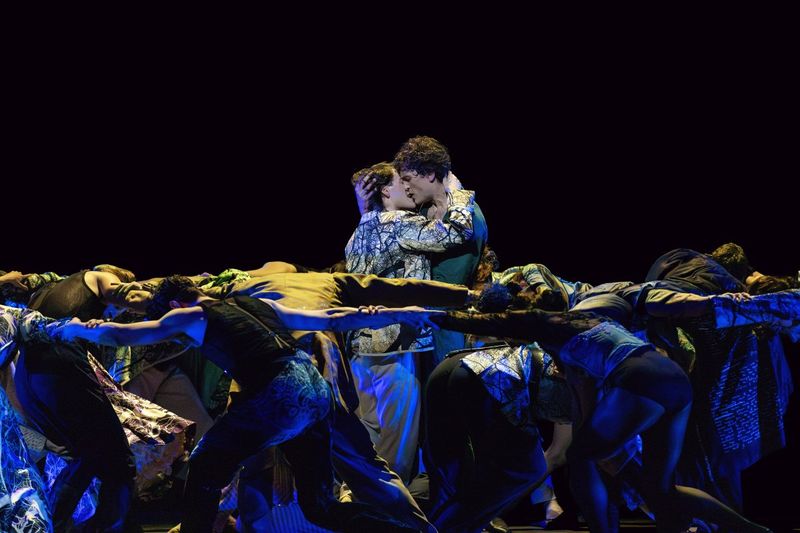
No creative impulse was spared, and yet the production is not cluttered. Every set change, costume and flick of the wrist is dedicated to the story, and the audience is transported: in a 19th-century courthouse, on trial for how they love, or an opulent evening with London high society. A bar scene is a selling point of the show. Wilde, his lovers and the ensemble launch into a Les Misérables-style “Master of the House” number, and two dancers in drag are so technically impressive and characteristically perfect that they become the thing to talk about.
The addition of a narrator, too often a cheap ploy to push the plot, here serves as an unobtrusive anchor. Even without the synopsis in the program, the dancers are so honest in how a single step translates to character that the emotional journey stays clear, even in scenes where distortion is the point.
Jill Ogai is captivating as the Nightingale, and whether intended or not, she becomes the heart of the show. Her bird-like grace never reads as fragile, and her downfall, though inevitable and known, is acutely devastating. Jett Ramsay as Robbie Ross and Adam Elmes as Lord Alfred “Bosie” are intimate and heartfelt as Wilde’s lovers, setting new standards for partnering, with one dancer beginning where the other ends. Jarryd Madden’s Wilde is comical and sensitive, a cohesive portrait of the original figure. Frustratingly, Wilde has no solo where dance drives his storytelling. Madden, a great actor, emotes through most scenes while others dance around him.
.jpeg?format=auto&width=800)
Wheeldon’s choreography is innovative without flash. There are no stunts to artificially wow the audience, just intricate, vibrant movement, and his ensemble work moves the story rather than just filling the stage. His choreography for the Nightingale and Dorian Gray is a standout. It pairs perfectly with Talbot’s score, played live by the 48-piece Orchestra of St. Luke’s. Richly cinematic and propulsive, not unlike the underscoring of a black-and-white thriller, the score pushes the plot as capably as anything on stage.
Jean-Marc Puissant’s stage and costume design is where the ballet takes shape: waistcoats in every color, headpieces fashioned to resemble a Nightingale’s beak, Gilded Age opulence at full tilt. Then come the stark prison cells and militaristic homogeneity, and the world turns grayscale. The emotional climax arrives in delightful shadow work while chaos abounds. The immersion slips only in short spurts, such as when the ensemble huddles in gowns of typewritten letters, holding tree branches, or when a digital, blinking moon rises creepily over the stage.
Some characters are neglected. Wilde’s wife, Constance, is beautiful and forgettable in both what she dances and how her storyline develops. It is unclear whether she mourns her husband’s affairs or embraces them, whether she is distraught that he is imprisoned or that she is alone. Many realities could be true, and none is delivered with any force.
Still, Oscar is the future of ballet, one where integrated storytelling demands that every choice serve a purpose and artistry expands beyond technical mastery.
Oscar runs through October 11 at New York City Center. Tickets start at $45.
Sign up for all the news on the Fall season, discounts & more...







Reader Reviews
To post a comment, you must register and login.