


Review: Bullock, Woods and Hanick Are Anything but ORDINARY THINGS at NY's 92nd Street Y
Call it a "Lieder concert-plus" with its numerous surprises
Lieder (‘art song’ in German) concerts are frequently rather staid events, during which the audience politely sits on its hands until the performer has finished with a particular rendition of a work by Strauss or Mahler or Schubert, etc. Sometimes it’s a work that the performer is known for; other times, it’s simply something gorgeous that we’re grateful to hear.
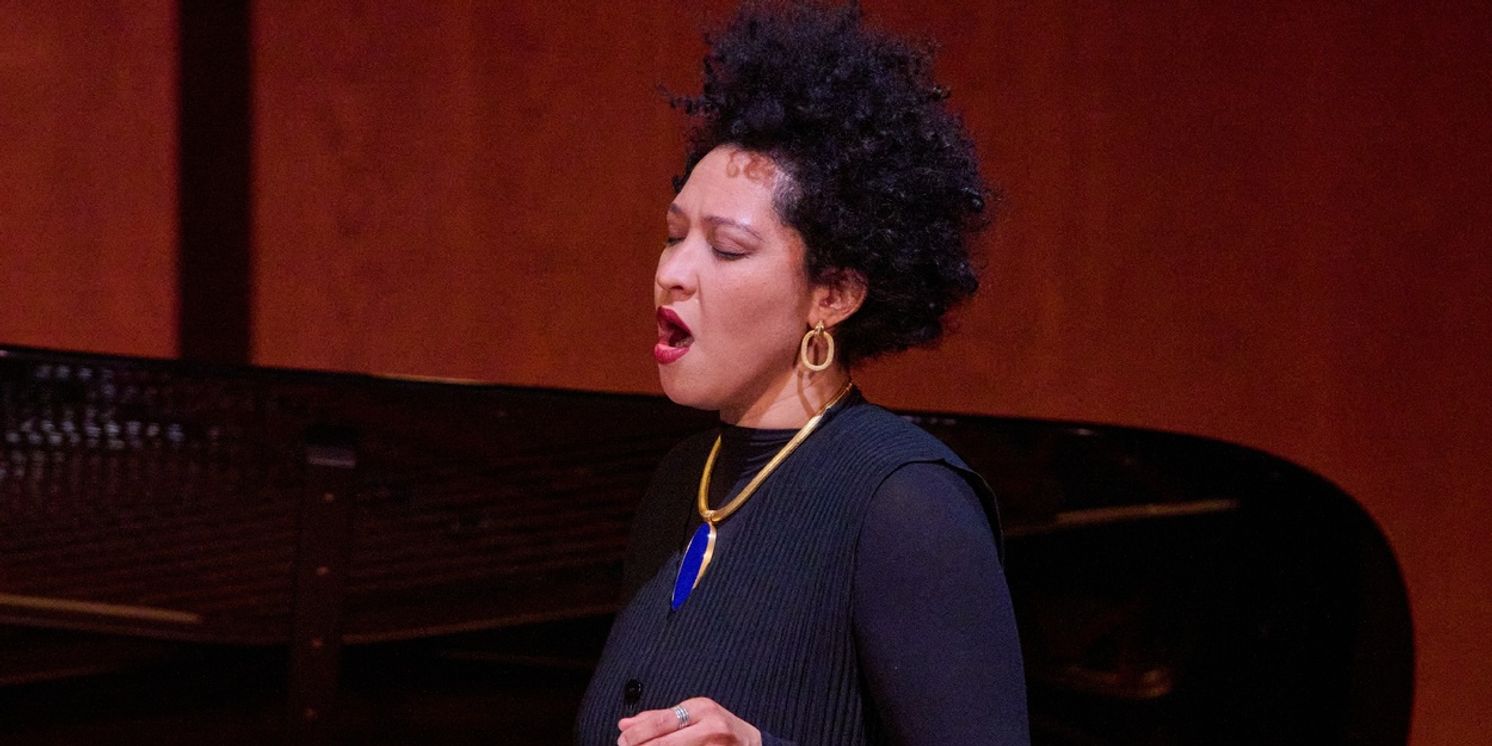
The audience at New York’s 92nd Street Y the other night was certainly happy to be at a recital, “From Ordinary Things,” by the trio of soprano Julia Bullock, with her colleagues Seth Parler Wood on cello and pianist Conor Hanick. But there was almost nothing traditional about the proceedings, save for a sumptuous song by Ravel, “Nahandove” (during which Bullock sounded most mezzo-like, as she often does).
The concert, part of a tour by the three musicians, which looked at “identity, hope, unrequited love and more,” according to the program, began with an a capella song by Nina Simone—a favorite singer/composer of Bullock’s, with text by William Waring Cuney—that was rapturously simple and simply rapturous, thoughtful and cool.
Later, she returned to Simone, who Bullock considers “one of the greatest interpreters of art songs," with her “Four Women.” Poignant, yet strong in its approach, the piece has a percussive quality that harkens back to its jazzy original, in this transcription by Jeremy Siskind.
The trio turned to Pulitzer Prize winner Tania Leon, with a pair of songs, including a New York premiere. “Oh, Jemanja,” from Leon’s “Scourge of Hyacinths,” had a text based on a play by Nigerian writer Wole Soyinka. It showed off the range of Bullock’s voice, growing more forceful towards the end, with the plangent sound of Woods on the cello and often twinkling of Hanick’s piano.
The other Leon song was a world premiere in the trio’s tour and, here, it was a local debut, “Bling Bling Blues” from a commission by the Y, with text by Kevin Young. Leon’s music was wise in tone, and the instrumentalists brought this out in their delivery, with its jazzy undertones for both cello and piano in the clear and thoughtful piece.
Though I had been drawn to the concert by Bullock, the highlight for me was the George Walker Sonata for Cello and Piano, wonderfully played by Woods and Hanick. I was unfamiliar with Walker (who was the first Black composer to win the Pulitzer, in 1996), so I was greatly excited to be introduced to his music.
The 1957 work is quite accessible, though dissonance unexpectedly creeps into the score. I found myself drawn to the forceful presence of Woods, as he jumped about the fingerboard, with the use of double-stops and pizzicato amid the sometimes-clamorous piano work of Hanick.
No one could accuse the concert of not being varied in tone. Bullock also sang “Drei Lieder” (Three Songs) by American expat Robert Owens (who lived in Germany for most of his life) in a translation the singer--currently based in Munich--did herself. Increasingly urgent in tone, the songs were written for mezzo, which showed off a part of the singer’s voice that I find particularly arresting, notably in the melancholy third piece, “I Travel Silently by Coach.”
Rather surprisingly, I found the most familiar part of the program the least interesting, though I’m not quite sure why this was. But even when I found them less appealing, they remained a fascinating part of the evening.
It consisted of songs either written by or arranged by Andre Previn for Leontyne Price: “It’s Good to Have You Near Again,” by Previn and his then-wife, Dory; the Gershwins’ “Love Walked In”; the Rodgers & Hart “Nobodys’ Heart Belongs to Me”; and Previn’s “Shelter” from “Four Songs for Soprano, Cello and Piano,” with text by Toni Morrison. All were originally arranged by Previn and transcribed by Jeremy Siskind, often with a charming jazzy element to them.
Caption: Julia Bullock
Credit: Joseph Sinnott
Reader Reviews
Videos