Metrograph to Present DON'T PLAY WITH FIRE: THE FILMS OF TSUI HARK Series
The lineup includes ONCE UPON A TIME IN CHINA, THE BLADE, and A BETTER TOMORROW III: LOVE AND DEATH IN SAIGON.
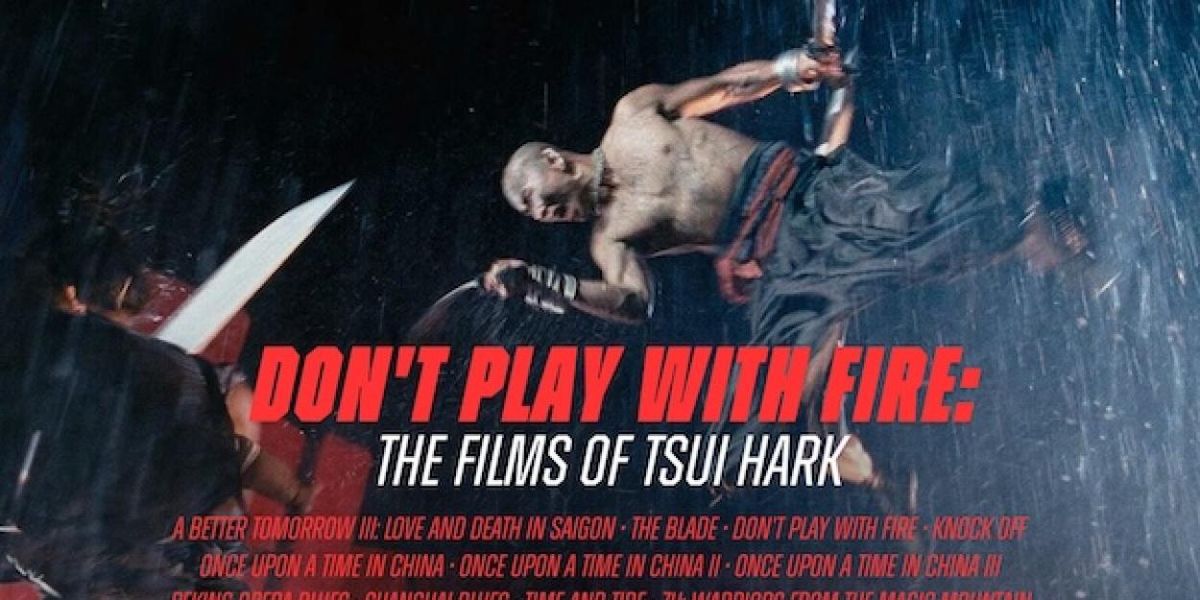
On the occasion of the upcoming run of Tsui Hark's Don't Play with Fire opening on September 11, Metrograph presents Don't Play with Fire: The Films of Tsui Hark, a selection of titles offering a survey of a filmmaker celebrated for his career, beginning September 4 at Metrograph In Theater.
As director, producer, and creative engine of both the influential Cinema City Enterprises and Film Workshop production companies, Tsui Hark has led many lives. He contributed crucially to codifying the 'gun fu' genre in the A Better Tomorrow trilogy (helming the third picture) and to reviving the moribund wuxia in his Once Upon a Time in China I–III; he brought Hollywood FX to Hong Kong with his Gods and Monsters epic Zu: Warriors from the Magic Mountain and, with a little help from Jean-Claude Van Damme, took a couple cracks at the English-language market himself. Before any of this, Tsui was among the most fearsome figures associated with the Hong Kong New Wave, his third film, Don't Play with Fire (aka Dangerous Encounters of the First Kind), a surly snarl of adolescent animus sliced to ribbons by shaken-up local censors. To accompany the run of the last-named film, newly restored with all its feral rage intact, the series celebrates the many facets of a fecund, frantically brilliant cineaste.
Don't Play with Fire: The Films of Tsui Hark runs from September 4 to October 18, with select encore screenings to follow.
Series Titles
A Better Tomorrow III: Love and Death in Saigon
The Blade
Don't Play with Fire
Knock Off
Once Upon a Time in China
Once Upon a Time in China II
Once Upon a Time in China III
Peking Opera Blues
Shanghai Blues
Time and Tide
Zu: Warriors from the Magic Mountain
A Better Tomorrow III: Love and Death in Saigon (1989, 105 min, 4K DCP)
Taking over the reins from John Woo, Saigon-born series producer Tsui had a homecoming of sorts with this anxiety-riddled, squib-drenched 1974-set prequel, which shows us A Better Tomorrow protagonist Mark, in his younger and more vulnerable years, running guns into war- and warlord-torn Vietnam. Chow Yun-Fat slides back into Mark's iconic duster like a second skin, Tony Leung Ka-fai enters the franchise as Mark's cousin, brother-in-arms, and romantic foil, and Anita Mui is in fine fettle as the hardened black marketeer who melts both of their hearts. A lividly angry and downright apocalyptic ending to the trilogy, practically reeking of spent shells and fresh-spilled blood.
The Blade (1995, 105 min, 4K DCP)
Tsui's masterful tribute to the martial arts films he grew up with, paying homage in particular to Chang Cheh's 1967 wuxia landmark The One-Armed Swordsman, The Blade tells the tale of a blacksmith (Vincent Zhao) at a foundry specializing in sword manufacture who, on learning the identity of his father's killer—tatted-up bad man Hung Yan-yan—sets out to see justice done. A dervish-like work of phantasmagoric action filmmaking that boasts rapid cutting, berserk camera movement, insanely intricate choreography, smothering closer-than-close-ups, and compositions splashed with theatrical gels. Tsui has never been anyone's idea of a minimalist, but The Blade is what you get when he's really firing on all cylinders: euphoric sensory overload.
Don't Play with Fire (1980, 97 min, DCP)
Tsui's outraged and outrageous third feature is a raw, tormented howl of hopeless rebellion that follows a trio of endorphin-addicted, bomb-planting teen nihilists as they get themselves involved with Triad thugs, gun runners, and—most perilous of all—a young woman (Chen-chi Lin) with a penchant for torturing small animals. Shredded by Hong Kong censors who blanched at its bloody-mindedness and its employment of shocking images from the city's 1967 riots, Don't Play with Fire (aka Dangerous Encounters of the First Kind) can be seen in a new restoration supervised by the director himself. An open provocation to anarchic upheaval, the blistering heat of its anti-establishment rage undiminished through the years. A Cult Epics release.
Knock Off (1998, 91 min, 35mm)
Tsui's second and last English-language film, reuniting him with the star of his 1997 Double Team and favorite of Hong Kongers making forays into Hollywood, Jean-Claude Van Damme. In Hong Kong arranging a fashion show for 'V-Six' jeans, unscrupulous designer JCVD and partner Rob Schneider discover their product has been swapped with cheap fakes, and follow the trail of counterfeit denim into intrigues involving the Russian mob, a CIA base inside a Buddha statue, exploding nanobombs hidden in jean studs, and a lot of thunderous roundhouse kicks. While Tsui embraces the silliness of the setup, he's a serious filmmaker working with consistent thematic motifs, here creating a world of false fronts where nothing is as it seems.
Once Upon a Time in China (1991, 134 min, DCP)
The film that, as much as any other, led to a wuxia renaissance in the 1990s, the first entry in Tsui's epic—to-date comprising six features and a television series—introduces Jet Li to the role of Wong Fei-hung, master of Chinese medicine and Hung Ga martial arts. (A folk hero with a real-life analogue, Wong has appeared as a character in well over 100 films.) In a late Qing dynasty Foshan, in a Middle Kingdom splintered between factions and victimized by British and American interests, Wong faces off against an array of challengers while suppressing his budding infatuation with '13th Aunt' Rosamund Kwan. Showstopping set pieces come fast and furious en route to a shoot-the-works shipboard finale; a monumental work of kinetic cinema.
Once Upon a Time in China II (1992, 112 min, DCP)
No one wields a 'Scope frame with quite the same flexibility and dynamism as Hark, and the spectacular, Sergio Leone–inspired Once Upon a Time in China II shows Hark at his most inspired, keeping up with the human whirlwind that is Jet Li, here returning to the role of physician, martial artist, and 19th-century Cantonese folk hero Wong Fei-hung. Traveling to Canton for a medical conference, Wong finds a city in chaos, with the anti-western White Lotus Cult seeking to snuff out foreign influence by any means necessary, and government forces—including officer Donnie Yen—resorting to violent measures against Dr. Sun Yat-sen's republican revolutionaries. Unrelenting, utterly dazzling, pedal-to-the-metal action cinema.
Once Upon a Time in China III (1993, 111 min, DCP)
In Jet Li's third outing as the legendary Wong Fei-hung, master of both inflicting pain and relieving it, Wong and Rosamund Kwan's '13th Aunt' travel from Foshan to Beijing to meet with his father, there finding preparations underway for a colorful competition to crown a 'Lion Dance King' and learning of a plot to assassinate statesman and court favorite Li Hongzhang. With leadership at home slipping into self-involved venality and foreign powers licking their chops at the prospect of dividing China up amongst themselves, Wong will have to hold the line one more time—and as one has come to expect of the series, the results are nothing short of spectacular.
Peking Opera Blues (1986, 104 min, 4K DCP)
Set in the newly established, vulnerable Republican China of 1913, Peking Opera Blues is a fizzily exuberant, chaotically colorful espionage thriller/screwball romance/slapstick social satire/costume drama pageant that bends genres and genders at will, wending together the stories of three irrepressible female protagonists—played by Sally Yeh, Brigitte Lin, and Cherie Chung, respectively here as a would-be star of the all-male Peking Opera stage, a warlord's headstrong daughter, and a courtesan who's copped a case of stolen jewels. Frenetic, filled with whiplash-inducing tonal shifts, frightfully enjoyable and, in the opinion of Quentin Tarantino, 'one of the greatest films ever made.'
Shanghai Blues (1984, 103 min, 4K DCP)
Beginning against the backdrop of the Second Sino-Japanese War, Tsui's kinetic, ultra-stylish screwball comedy/historical romance/backstage musical—beautifully restored for the occasion of its 40th anniversary—is one of the most zestily entertaining and exuberantly colorful works of 1980s Hong Kong cinema. Kenny Bee's nightclub clown and would-be songwriter meets-cute with chanteuse Sylvia Chang under a bridge during a 1937 bombing raid and the two make plans to find each other 10 years later, only to have their reunion in devastated postwar Shanghai elaborately and often hilariously complicated by intervening fate. An incredibly tender and terribly funny film, with Cantopop diva Sally Yeh giving a particularly inspired turn as Chang's scatterbrained roommate.
Celebrating its 40th anniversary, this 4K restoration comes with new dialect dubbing and improved English subtitles. The 4K restoration of Shanghai Blues was supervised from the original negative by Tsui Hark with L'Immagine Ritrovata, and the soundtrack was remixed by One Cool Sound.
Time and Tide (2000, 113 min, 35mm)
Back in Hong Kong after taking his shot at conquering Hollywood, Tsui returned home with both barrels blazing, producing this high-strung action melodrama about a cash-strapped expectant father (Nicholas Tse) who joins the bodyguard service of his uncle (Anthony Wong) in order to make ends meet, only to discover—along with co-worker Wu Bai—a criminal conspiracy with international implications. Triad machinations, attempted assassinations, and top-tier stunt work courtesy choreographer Hung Yan-yan make Time and Tide essential viewing for any enthusiast of go-for-broke Hong Kong action.
Zu: Warriors from the Magic Mountain (1983, 98 min, DCP)
Blood Demons, psychedelic lighting, cutting-edge special effects courtesy imported Hollywood technicians, head-lopping flying swords, physics-defying wire stunts, two Sammo Hungs, and Brigitte Lin a vision of frigid majesty as an imperious Ice Queen—Hark's brazen, eye-popping Tang Dynasty–set action-fantasy bonanza has a little bit of everything, and was one of the first wuxia to make a splash on the other side of the Pacific, an admitted influence on John Carpenter's Hong Kong action-indebted Big Trouble in Little China (1986). The baroquely intricate plot involves a mystic mission into the mountains of Western China in search of legendary twin swords, while Hark himself is on a mission to see how much gonzo action he can fit into a single movie—one that's breezily accomplished.
Prefer BroadwayWorld in Google Search?
Add us as a preferred source so our stories show up more often in Top Stories and Google’s AI answers — for you.
Sign up for all the news on the Fall season, discounts & more...
.jpg?format=auto&width=300)