
Interview: Vanessa Durón on Directing a World Between the Living and the Dead with BLUE MARIGOLD
The TuYo Theatre production runs through May 3 at Bayfront Charter High School
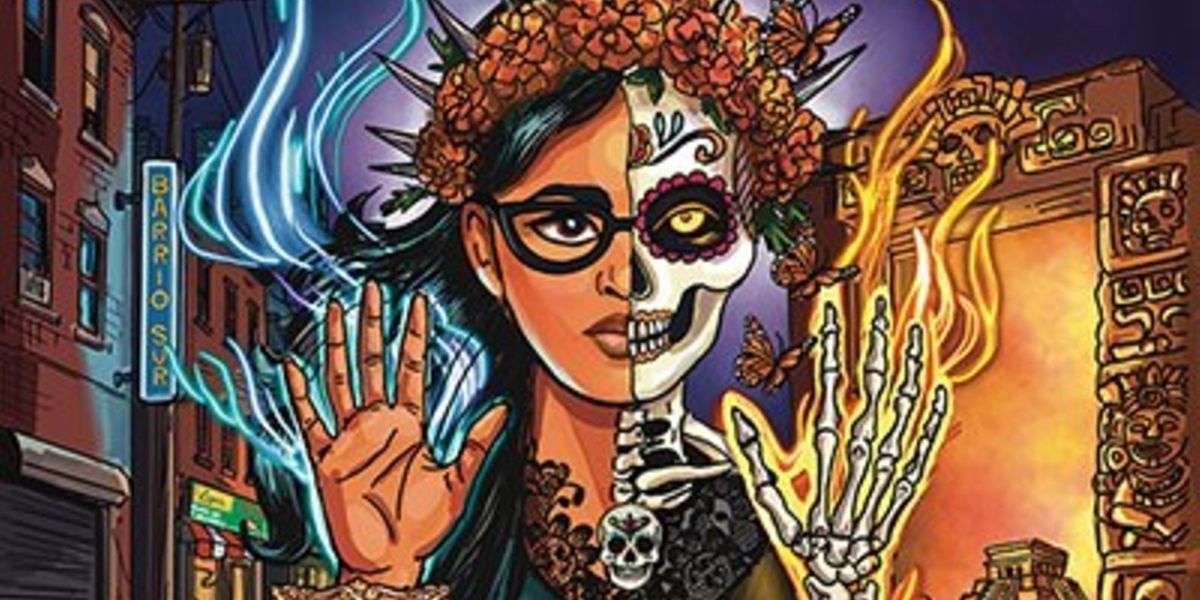
What does it look like to stage a story that moves between the living world and the Mexica Land of the Dead, while centering a Mexican-American teenager discovering her own power?
Blue Marigold by Mabelle Reynoso, directed by Vanessa Durón, is a magical-realist coming-of-age play following Sammy Flores as she is pulled between two worlds—one shaped by grief and myth, and another grounded in the pressures of poverty, gentrification, and environmental injustice. Commissioned as part of the BIPOC Superhero Project, the TuYo Theatre production reimagines heroism through the lens of youth of color and the power of cultural legacy.
BroadwayWorld spoke with San Diego-based director and Co-Artistic Director of Aftershock Collective Vanessa Durón, known for work that centers community, culture, and contemporary lived experience, about shaping the production. Her directing credits include Cry It Out (MOXIE Theatre), Sapience (MOXIE Theatre), Cats Can’t Eat Yarn (Riot Productions), and Becoming the Ethical Slut (San Diego Fringe Festival). Blue Marigold runs April 25–May 3 at Bayfront Charter High School.
.jpg?format=auto&width=1400)
(Photo courtesy of the artist)
What first stood out to you in the script that made you want to stage it?
How rich it is in culture. We don’t often see ourselves on stage or get to experience our culture without talking about oppression. Mabelle’s plays paint our culture as an invitation to experience it. She writes us as doctors, business owners, and superheroes. She writes who we are and not what people think we are. I think it’s important for our people to know we are superheroes.
The play moves between realism and magical realism quite fluidly—how did you approach shaping those transitions in staging, pacing, and tone?
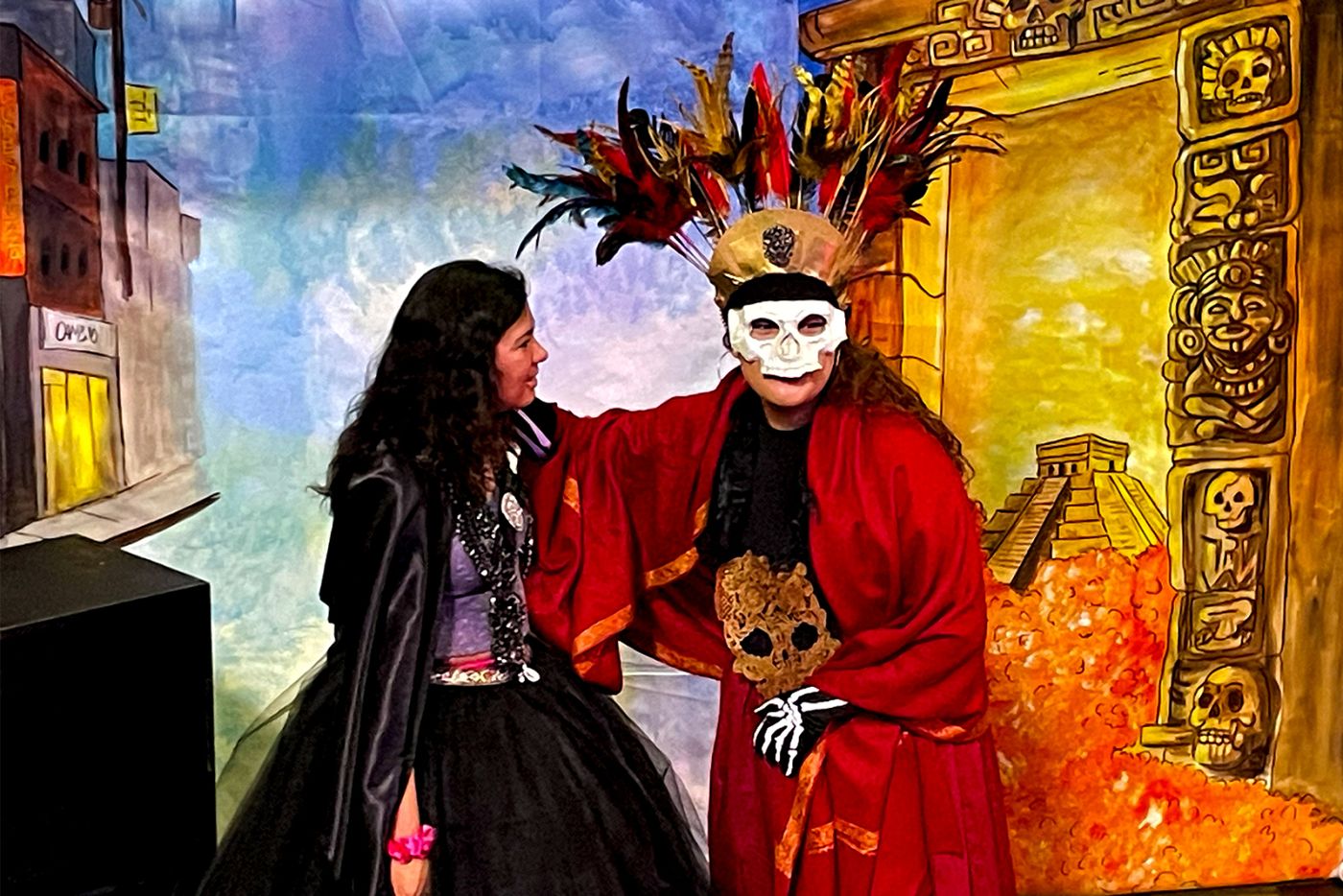
Both worlds are such an important and prominent part of Sammy’s life. I wanted to make sure that was shown in the staging and the spacing, but I also wanted the audience to know that both worlds were starting to collide. So I knew that I had to make the underworld look and feel different in the lighting, movement, and sound from the world that Sammy was actually living in. I also wanted the audience to know that both worlds are important, and therefore whenever the underworld shows up it kind of takes over wherever Sammy is. It’s like the underworld doesn’t care where you are in life—when it’s time for it to show up, it’s going to show up, whether it be at school or in her room. I also wanted to make sure that Sammy was not scared by her other side but more curious, especially since so many of us can relate. We also have characters who move between worlds, and I wanted them to guide those transitions.
Sammy exists between two worlds, how did you work with design (space, movement, lighting) to bring this story to life on stage?
When the underworld shows up in Sammy’s life it is often a little bit darker, a little bit more mysterious. The sounds are different from her normal life. The lighting and sound had to be a focal point in those worlds. The noises and lighting that we see in the underworld are definitely different—they are echoes, they are faster, they are deeper.
As part of the BIPOC Superhero Project, the play reimagines what a “superhero” can be—how do Sammy’s powers challenge or expand traditional ideas of heroism?
Well first of all we have to understand that being a teenager is challenging in itself, and then you throw in all of these other elements like superpowers that can make you feel like you’re awkward or weird or don’t belong. I wanted her to be excited about her powers. I wanted her to accept the awkwardness that she obtained as a person.
It’s important for a) adolescents Sammy’s age to understand that it’s okay to be different, b) young women like Sammy’s age to understand that they are powerful, and c) young women to understand that you can be a superhero no matter what culture or where you come from. Traditionally superheroes are not from our culture, and so it was exciting to me to see someone who looked like me when I was 15 years old. Having a character like Sammy challenges the norm that we see in movies and stages.
This is also very much a coming-of-age story—what do you hope young audiences, especially those navigating similar pressures, take away from Sammy’s journey?
Growing up is hard. There are so many changes happening around you as you grow up, not just from school but family life and friends. It’s so hard to navigate all of that. What I would hope young audience members take away from this is that growing up is a journey, but it is a journey that you don’t have to take alone. Being different is wonderful; being different is what makes the world amazing. Accepting who you are is the most important thing. I also want young audiences to understand that you have so much more power within yourself than you think, and that they are seen and loved.
Be curious, find what you love, and be awkward and unique.
Anything else you’d like to add?
I hope that Blue Marigold brings joy to audiences the way it did to me. I hope our culture, our people are proud when they see it. I’m so grateful that I had such amazing artists that put this together—artists that love the story they’re telling. Without them this couldn’t happen, so thank you to the actors, designers, and the playwright.

Videos

|
The Most Happy Fella North Coast Repertory Theatre (6/03-6/28) |

|
The Rise and Fall of Little Voice Tenth Avenue Arts Center (6/11-7/03) |
|
2026 Night Nation Run - San Jose, CA PayPal Park (9/05-9/05) |

|
The Marriage of Figaro Bornemann Theatre (8/28-8/30) |

|
Junie B. Jones Jr. Sweetwater Community Church - White Chapel (7/28-8/01) |

|
The Monsters La Jolla Playhouse (6/02-6/28) |

|
SPRING AWAKENING A Musical - Norris Performing Arts Center - Presented by FINE ARTS NETWORK THEATER COMPANY (6/19-6/28) |

|
OnWord Theatre Presents Air Quote Mike OnWord Theatre (6/27-6/27) |

|
Mamma Mia! Civic Theatre- San Diego (6/15-6/20) |

|
WAR + Malo | Music in the Park Plaza de Cesar Chavez (7/26-7/26) |
| VIEW ALL SHOWS ADD A SHOW | |