Interview: Mary Zimmerman on Her Off-Broadway Return Directing GIULIA: THE POISON QUEEN OF PALERMO
Giulia runs at PAC NYC through August 2.
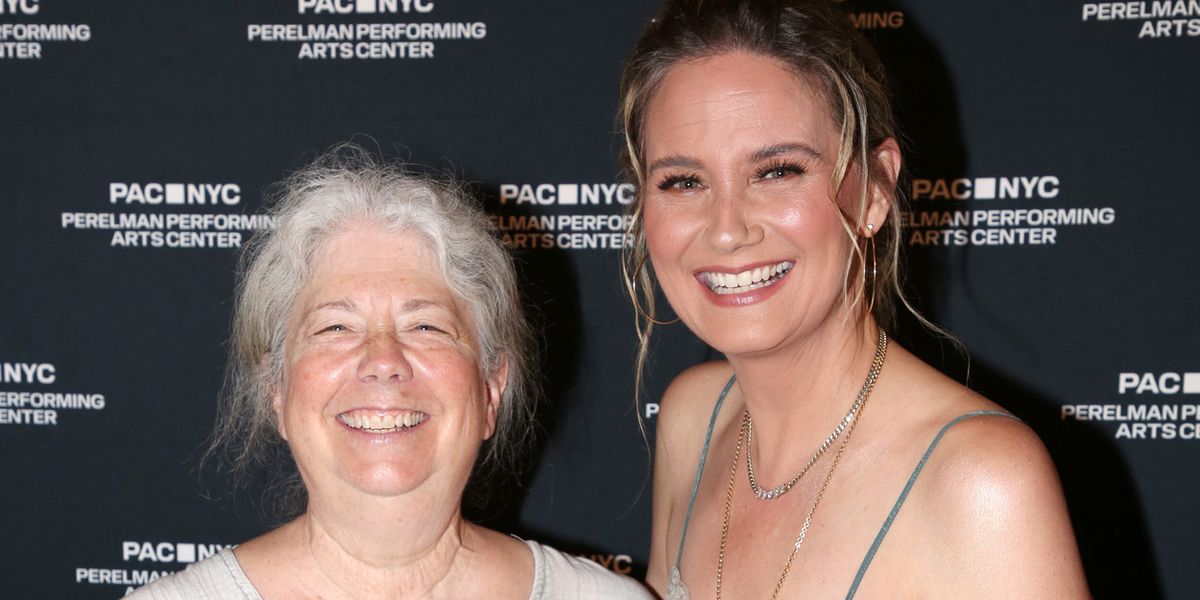
It has been over twenty years since Mary Zimmerman directed a show off or on Broadway. She is quick to note she has been in New York City during that timeframe—she directed several operas for the Metropolitan Opera—but that doesn’t make it any less notable that she is back off-Broadway, directing Jennifer Nettles’ Giulia: The Poison Queen of Palermo, a rare new musical helmed by the MacArthur Fellowship recipient.
“I have very high ambitions for every show I do artistically, but I didn't grow up with that longing to be here,” said the Illinois-based director, whose involvement in her local community includes being an Artistic Associate of Goodman Theatre, a member of Lookingglass Theatre Company and a Professor of Performance Studies at Northwestern University. “I mean, I love working in New York. It's really fun. But my home is my home, and I am very rooted there. It's hard to talk about this because you don't want to insult New Yorkers by intimating that perhaps not every human being on earth will kill themselves if they don't get to have their artistic life here. But that was not part of the equation for me.”
However, there is no doubt that Zimmerman has made a splash when she is here. She is one of only six women to win the Best Direction of a Play Tony Award and she won it for her Broadway debut, Metamorphoses. Zimmerman herself adapted Ovid’s myths for that show, which was primarily staged in a pool. After a sold out run off-Broadway, it transferred to Broadway in 2002. By the time it closed in 2003, it returned 140% of its investment. It still plays all over the world.
Zimmerman is best known for adaptations of classical texts such as Metamorphoses, which she described to me as “the core” of what she does. Shortly after that show closed on Broadway, she was back off-Broadway with The Notebooks of Leonardo da Vinci, a theatrical adaptation of the words of the legendary Italian scientist, inventor and artist. Her later adaptations haven’t played in the city, but they include The Matchbox Magic Flute, The Steadfast Tin Soldier, Treasure Island, The Jungle Book (adapted from the Disney movie and the original story), The White Snake and Argonautika. (It should be noted she had a few NYC credits before Metamorphoses, including an Arabian Nights adaptation for Manhattan Theatre Club.)
“A lot of those old works I do, there is not a conspiracy of English teachers that's keeping them around,” she stated. “If they were dull, if they had nothing to say to us, they would have faded away into obscurity. But they're about things that kind of don't change, i.e., that we have to die, that our life isn't entirely in our control, that accidents happen, things happen, there's forced change in our life, which is what Metamorphoses is all about. They perpetually speak to us.”
Many of her works are done with the Metamorphoses design team: Scenic Designer Daniel Ostling, Costume Designer Mara Blumenfeld and Lighting Designer T. J. Gerckens. Therefore, there is often a distinctive look to them. An ethereal beauty that seems built into her adaptations.
Ostling and Gerckens are back for Giulia. All three worked on the prior traditional musicals I’ve seen from Zimmerman—The Jungle Book and Guys and Dolls.
When she directs properties that are not her own, Zimmerman said that she must be drawn to the property first.
“People don't really know this, but if they want me to come direct, they should just make an offer of some interesting play,” she said.
But, after that offer, she looks to bring in her team, including designers she works with and also (though not applicable in the case of Giulia) frequently actors that are in her ensembles. She also looks for a challenge. Zimmerman likes to be tested. When asked what the challenge was with Giulia, she speaks about the process leading up to this production.
Zimmerman entered the Giulia equation a little over a year ago. Nettles, who also stars, had been working on the musical for many years—there had even been developmental stagings with a different director. But there was still much work to come.
“Jen had several versions of the script and way more music than you could fit into an evening,” explained Zimmerman. “Working closely with her on that was a challenge and an unexpected pleasure. I didn't know how it would be working on someone else's script and helping them figure it out or whatever. I just haven't really played that role before. I would never have guessed I would have liked that and I liked it tremendously.”
The preparation also involved a trip to Palermo. Zimmerman is well known for wanting to immerse herself in a given culture before mounting a show. Her trips include India for The Jungle Book and Scotland for the opera Lucia di Lammermoor.
“On my deathbed, those will be some of my just most wonderful memories,” she said. “We really meet 24 hours a day, like that's all we're talking about. It's like this extended meeting on the show. They've been well worth it, all of them, on every level.”
In Palermo, she was struck by how many churches there are. She noted in conversation that the show “has a lot to do with the Catholic Church and its patriarchal ways and sort of domineering ways in the past,” and seeing just how many churches there were was “proof positive” of the influence of the Catholic Church in that area.
“There was this very obscure church,” she said. “There was a large oil painting of Saint Jerome. And there's this Cardinale figure in the play that's very important and he looked like that. I figured it was Saint Jerome because it had the lion, but the lion looked so malevolent, not like the lion is usually pictured. It looked extremely devilish. And I kind of conceived this character of the little devil, which haunts the show. So that was one of the really important places we went. It’s all up there, that entire trip, just distilled.”
In terms of the production itself, Zimmerman said more than once that as she is getting older, the process of putting on a show is getting more exhausting. But she still loves it. The day of first rehearsal she said she got out in Times Square—they rehearsed at New 42 Studios—and the heat and the noise made her question why she left her “leafy green suburb” and her dog, but any doubts were quickly erased when she began working with the cast. As is her practice, she staged it quickly, within two weeks, and everything else just added onto that. She gave them the basics and they built off those.
“There are some people in this cast that are just bliss to work with, and Jennifer's one of them,” she gushed. “They just are so generative and such lovers of the form of theater itself. We've had a great time. It describes itself as a story of power, murder and betrayal and it is, but it also has humor in it. It has quite a lively staging; it's not moribund. I think people will enjoy it.”
Giulia runs at PAC NYC through August 2.
Prefer BroadwayWorld in Google Search?
Add us as a preferred source so our stories show up more often in Top Stories and Google’s AI answers — for you.

Sign up for all the news on the Fall season, discounts & more...
|
Powered by

|
.jpg?format=auto&width=300)