Interview: Jacob Ryan Smith, Caroline Pernick, and Tinashe Kajese-Bolden On the World Premiere of LIKE FATHER at the Alliance Theatre
The musical’s co-writers and director discuss bringing their true-crime coming-of-age story home to Atlanta, running through November 15, 2026 on the Hertz Stage.
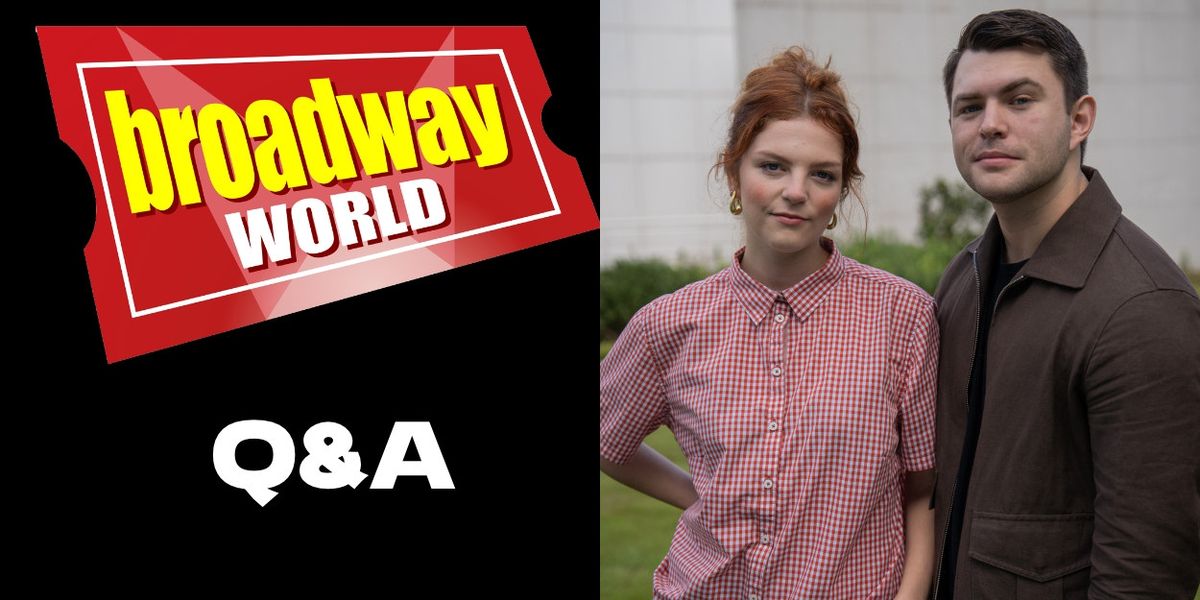
The Alliance Theatre presents the world premiere of LIKE FATHER, a coming-of-age musical set against America’s true-crime obsession, running through November 15, 2026 on the Hertz Stage, with opening night on Friday, October 16. Bold, audacious, and unlike anything else on stage this fall, LIKE FATHER is the must-see theatrical event of Atlanta’s season. Created by Jacob Ryan Smith, with book, music, and lyrics by Smith and Caroline Pernick, the show follows seventeen-year-old Chris, who moves in with her estranged mother, Michelle, and stepfather, Ben, after her father’s arrest. When a hit true-crime podcast exposes their family’s disturbing past to the world, they are forced to face the truth of what brought them together, or risk being undone by its consequences. Driven by a bold folk-pop score, the musical explores legacy, identity, and the cost of obsession.
Directing is Tinashe Kajese-Bolden, the Alliance’s Jennings Hertz Artistic Director and a Princess Grace Award recipient, whose premieres include FURLOUGH’S PARADISE, FORSYTH COUNTY IS FLOODING, and THE PREACHER’S WIFE. The cast features Sophie Pollono as Chris, Charity Angél Dawson as Lillian Clarke, Hannah Elless as Michelle, Benjamin H. Moore as Ben, Frankie Rodriguez as Trevor, and Billy Harrigan Tighe as John Grady.
Smith, an Atlanta native named one of Theatrely’s “Visionary Theatre Makers Poised for a Meteoric Rise,” and Pernick, an award-winning songwriter recently seen Off-Broadway in A WALK ON THE MOON, have developed the show over four and a half years. LIKE FATHER won the inaugural Open Jar Musical Shark Tank, was a semifinalist at the Eugene O’Neill New Music Theater Festival, and released THE BLOODY GOOD EP featuring Ramin Karimloo, Eleri Ward, James Monroe Iglehart, and more ahead of its premiere. With a fearless score and a premise you won’t stop thinking about, this is a new musical not to be missed, and one destined for a life far beyond Atlanta.
BroadwayWorld spoke with Smith, Pernick, and Kajese-Bolden about the spark behind the show, bringing it home to Georgia, and resisting the temptation to let the sensational become the story.
What was the spark that led you to tell a coming-of-age story through the lens of America’s true-crime obsession?
SMITH & PERNICK: There’s so much excitement and uncertainty that comes with the age of 17. It’s right when you’re maturing into being an adult, finding your own autonomy, and forming your own morality system. True crime often feels like a world of black and white on the outside (there is a culprit and there is a victim), but the deeper you get into the genre, the clearer it becomes that humans are complex and their insecurities and fear oftentimes drive them into making dangerous and violent mistakes. The opportunity to fuse that world with a coming-of-age narrative allowed us to push our story into a thrilling grey area of human experience, one that we hope every person in the audience will have a different feeling about.
How did the collaboration between the two of you as co-writers evolve, and how did you divide the work on book, music, and lyrics?
PERNICK: Jake and I come to this piece with two very different approaches to writing and two very different artistic voices that complement each other in ways we couldn’t have imagined when we first began our collaboration. We were newly friends when Jake pitched the idea of LIKE FATHER to me, and I was in no way planning to write a musical any time soon. As primarily an actor and songwriter, I was agreeing to step into a role that was completely new to me, and that has meant finding my identity as a theater writer alongside our finding the identity of LIKE FATHER as a piece.
As the show has grown, it has become less and less easy to point to specific songs, scenes, plot points, or jokes, and say where one or the other of us took the lead. We know when a moment needs to be initiated from one of our voices. If we’re trying to write a vaudevillian group number, Jake will get his hands on it first. If we’re writing a folk song, then I’ll take the first pass. But the magic comes from the next step: the layer that gets added when that classic Broadway showstopper has its lyrics polished by someone coming from an indie music lens, or an acoustic folk song gets re-arranged by someone pulling from a well of musical theater composing context. That dichotomy is what our show is all about.
Jacob, what does it mean to you personally to bring this world premiere home to Atlanta, where you grew up?
SMITH: I am very proud to come from Georgia, and to me, this show acts like a love-note to the state of Georgia in a lot of different ways. The narrative takes place in Dahlonega, GA, and we are producing its world premiere at my hometown regional theater in Atlanta. As we take the proper steps to get this show seen all over the world, I get to hold the fact that we built it in my home state. Eventually, I expect it’ll feel like we’re bringing a little slice of my hometown everywhere we go.
Tinashe, what qualities in the script and score convinced you this was the right project to direct at the Alliance?
KAJESE-BOLDEN: I was immediately drawn to the audacity of the idea! A coming-of-age musical about the daughter of a serial killer? That’s a pretty extraordinary invitation into a story. But what really captured my imagination was the deeply human question underneath that provocative premise: How do we separate who we are from where we come from? And what happens when the person who taught you what love feels like is also capable of unimaginable cruelty?
I love theater that refuses to let us settle into easy answers. LIKE FATHER has this wonderful collision of irreverent humor, psychological suspense, and an incredibly vulnerable family story. And the music is fearless. It can be funny, seductive, unsettling, and then suddenly break your heart. The score doesn’t simply accompany the storytelling; it takes us into emotional and psychological territory that dialogue alone couldn’t reach.
As a director, that’s irresistible to me. I want to make theater that surprises us, that takes big formal risks while remaining fiercely connected to the humanity of its characters. This piece gives us the opportunity to do both.
Tinashe, as Artistic Director, what made you want to champion LIKE FATHER specifically for the Alliance’s Hertz Stage?
KAJESE-BOLDEN: One of the things I believe fiercely is that being a national theater rooted in Atlanta means we have a responsibility to help shape the future of American theater, not simply present work that’s already been made elsewhere. And that means taking chances on artists and ideas before anyone knows exactly what they might become.
LIKE FATHER was conceived by an Atlanta artist, Jacob Ryan Smith, and there’s something particularly meaningful about bringing that imagination home and giving it the resources, collaborators, and creative ambition of a world premiere.
And I love the delicious contradiction of putting a musical with such a big, cinematic imagination into the intimacy of the Hertz Stage. There’s nowhere to hide in that space! Rather than seeing intimacy as a limitation, we’ve embraced it as an opportunity to reinvent the scale of the storytelling.
I want the Alliance to be known as a theater that dares! A place where artists are encouraged to pursue the ideas that feel a little impossible, and where audiences come expecting to discover something they haven’t experienced before. LIKE FATHER feels very much like that kind of dare.
The show has gone through workshops, readings, and even a concept EP with artists like Ramin Karimloo and Eleri Ward. How did that process shape the final version of the show?
SMITH & PERNICK: Our world premiere production at the Alliance is a product of every artist who has touched every iteration of this piece. Over the last four and a half years, we have had the privilege of working with some of the most incredible minds in our field who have each challenged, inspired, and encouraged this show to be the best it can be. It truly takes a village.
How has hearing the songs performed and received by audiences influenced any rewrites or changes to the show?
SMITH & PERNICK: We have changed a lot in previews based off of audience feedback and continue to learn from how people react to a brand new story with brand new music. This is not the end of our development, it’s just the beginning.
What were the biggest challenges in balancing the darker themes of the show, legacy, identity, and infamy, with the emotional core of a family story?
SMITH & PERNICK: Humans don’t often actually indulge in all the discomfort that life brings us; we fight tooth and nail to feel in control. Our show tackles some incredibly difficult stuff, but our protagonist comes at the world with humor and a fervor for knowledge and life. We hope that as we dive into the deep end of true crime’s seedy underbelly, audiences will feel the push and pull of the narrative, and that each time they feel like they’re about to cry, we hit them with a cathartic laugh that lets them feel fully human.
KAJESE-BOLDEN: I think the greatest challenge has been resisting the temptation to let the sensational nature of the story become the story itself.
We live in a culture that has an almost insatiable appetite for true crime. We consume these stories as entertainment, sometimes forgetting that behind every headline are actual human beings whose lives have been irrevocably changed. The musical is interested in that contradiction, but it also implicates us as an audience. Why are we so fascinated? What are we looking for? And when does curiosity become consumption?
For me, the emotional center has always been Chris. Here’s a seventeen-year-old girl who has lost the person she loved most in the world, not because he died, but because everything she believed about him has been shattered. And the really complicated thing is that her love for him doesn’t simply disappear. How could it? He was her father. That contradiction is where the real drama lives.
We’ve worked to ensure that the suspense, humor, and theatricality never come at the expense of that emotional truth. In fact, I think the darker and more heightened the world becomes, the more fiercely we need to protect the humanity of the people inside it.
I don’t want audiences to watch Chris from a safe distance. I want them to recognize something of themselves in her: the longing to belong, the fear of being defined by someone else’s choices, the extraordinary courage it takes to trust another person.
And I think that’s what allows the show to be both thrilling and unexpectedly tender. The horror may bring us into the theater, but it’s the humanity that stays with us.
Tinashe, how are you approaching the visual and tonal world of the show, given its true-crime backdrop and musical theatre format?
KAJESE-BOLDEN: We’ve been exploring a world where memory, imagination, and reality are constantly colliding. A seemingly ordinary suburban home can become a psychological nightmare. A podcast can explode into a spectacle. A father can be both a cherished memory and a terrifying presence in the same moment.
I’m particularly interested in how cinematic storytelling can live inside the theatrical imagination. Film can cut instantly between locations, perspectives, and states of consciousness. In the theater, we get to make those transformations happen right before your eyes. We’ve embraced movement, a revolving stage, projections, light, and sound as active storytelling partners, allowing spaces to transform and scenes to bleed into one another.
But the most exciting thing for me is the contrast. We can create something visually explosive and then strip everything away until all that remains is a young woman trying to find the courage to speak to her mother.
Tonally, the show walks a fascinating tightrope. It’s wickedly funny, at times outrageous, deeply unsettling, and ultimately full of heart. I don’t want to smooth those contradictions out. I want to lean into them, because life rarely gives us the courtesy of experiencing one emotion at a time.
And ultimately, every theatrical choice has to bring us closer to the characters. The spectacle should never be more interesting than the human being standing inside it. That’s the challenge, and the joy, of directing this piece.
What do you each hope audiences take away from LIKE FATHER after seeing it on the Hertz Stage?
SMITH & PERNICK: At the core of our show, we ask the question: “How can two contradictory things both be true?” We hope our audiences leave closer to an answer to that question, and even if it remains as elusive as it still is to us, we hope they feel brave enough to sit with the uncertainty.
KAJESE-BOLDEN: I hope audiences are surprised by how much they feel.
I think people may come expecting a dark, provocative musical about a serial killer, and they’ll certainly get suspense, humor, and some wonderfully audacious theatrical moments. But I hope what catches them off guard is how they come to care about these imperfect people trying to find their way toward one another.
I want them to leave exhilarated by the theatrical experience, still wrestling with some of its questions, but ultimately feeling a little more hopeful about our capacity to change, to love, and to write our own futures.
LIKE FATHER runs through November 15, 2026 on the Alliance Theatre’s Hertz Stage in Atlanta. For tickets and information, visit alliancetheatre.org.
Sign up for all the news on the Fall season, discounts & more...