


REVIEW: Agatha Christie’s AND THEN THERE WERE NONE is Classic and Comic Murder Mystery
The show runs through June 1.
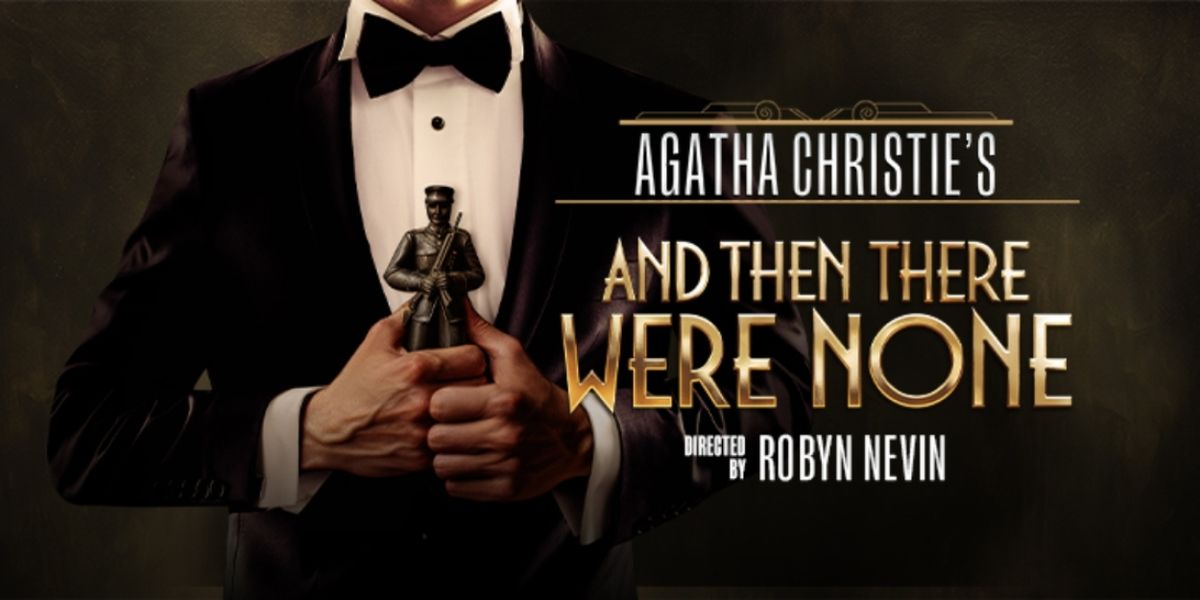
Robyn Nevin (Director) brings another of Agatha Christie’s murder mysteries to the Sydney stage with And Then There Were None. First performed in 1943, Christie, the “Queen of Crime” adapted her own “Golden Age” of detective fiction novel, incorporating a few ‘audience pleasing’ tweeks but this production incorporates Kevin Elyot’s restoration of the novel’s resolution to the stage show.
.jpg?format=auto&width=1400) Framed around a 1869 Minstrel song, the premise of And Then There Were None, is that seven house guests and three “hired help” are trapped on a private island off the coast of Devon, England. The upper middle-class ensemble have each been invited to a weekend party by the property’s owners, Mr and Mrs Owen. As a message makes it to the isolated Soldier Island which has no phone contact and no boat berthed onsite, the gathering discover that the Owens have been unavoidably delayed but they should enjoy the hospitality of the Butler and Housekeeper, Mr and Mrs Rogers (Grant Piro and Christen O’Leary). It is only when the assembled ten hear an unusual gramophone record that claims that all ten inhabitants are guilty of murder, that they start to question the identity of their hosts, who no one has ever seen before, the butler, housekeeper and Personal Assistant Vera Claythorne (Mia Morrissey) being engaged via an agency with no direct contact with the Owens. With no way of leaving the island, the party gradually reduces over the weekend leading to a mystery of mass murder following the macabre poem that apparently dominates the living room.
Framed around a 1869 Minstrel song, the premise of And Then There Were None, is that seven house guests and three “hired help” are trapped on a private island off the coast of Devon, England. The upper middle-class ensemble have each been invited to a weekend party by the property’s owners, Mr and Mrs Owen. As a message makes it to the isolated Soldier Island which has no phone contact and no boat berthed onsite, the gathering discover that the Owens have been unavoidably delayed but they should enjoy the hospitality of the Butler and Housekeeper, Mr and Mrs Rogers (Grant Piro and Christen O’Leary). It is only when the assembled ten hear an unusual gramophone record that claims that all ten inhabitants are guilty of murder, that they start to question the identity of their hosts, who no one has ever seen before, the butler, housekeeper and Personal Assistant Vera Claythorne (Mia Morrissey) being engaged via an agency with no direct contact with the Owens. With no way of leaving the island, the party gradually reduces over the weekend leading to a mystery of mass murder following the macabre poem that apparently dominates the living room.
.jpg?format=auto&width=1400) The entire work plays out in the living area of a large modernist home that is understood to be perched on an inhospitable island so set and Costume Designer Dale Ferguson, inspired by architect Richard Neutra, has created a set that conveys a sense of minimalism paired with extreme wealth with large windows overlooking a terrace which has nothing more than a pair of Adirondack chairs. The neutral colours and simple lines of a large corner couch that sits below floor to ceiling windows allow the focus to remain on the performers who are dressed in the late 1930’s styles that easily convey each character’s energy. Trudy Dalgleish’s lighting helps reinforce the passage of time, from bright sunlight through the windows to the need to resort to candles when the fuel for the generator runs out.
The entire work plays out in the living area of a large modernist home that is understood to be perched on an inhospitable island so set and Costume Designer Dale Ferguson, inspired by architect Richard Neutra, has created a set that conveys a sense of minimalism paired with extreme wealth with large windows overlooking a terrace which has nothing more than a pair of Adirondack chairs. The neutral colours and simple lines of a large corner couch that sits below floor to ceiling windows allow the focus to remain on the performers who are dressed in the late 1930’s styles that easily convey each character’s energy. Trudy Dalgleish’s lighting helps reinforce the passage of time, from bright sunlight through the windows to the need to resort to candles when the fuel for the generator runs out.
.jpg?format=auto&width=1400) Nevin presents the work as a blend of “classic” period drama and comedy. Between the text and the direction, the performance has the older style more stilted delivery when compared to contemporary drama styles that lean more into a natural realism. Whilst this settled gradually through the performance, the rigidity does play into the comedy of the work. The key moments of each character’s story where they confess to the crimes they have been accused of are delivered with an honesty though so that it is clear that the level of understanding of their own culpability shown with some that still believe they were innocent and others accept the accusation.
Nevin presents the work as a blend of “classic” period drama and comedy. Between the text and the direction, the performance has the older style more stilted delivery when compared to contemporary drama styles that lean more into a natural realism. Whilst this settled gradually through the performance, the rigidity does play into the comedy of the work. The key moments of each character’s story where they confess to the crimes they have been accused of are delivered with an honesty though so that it is clear that the level of understanding of their own culpability shown with some that still believe they were innocent and others accept the accusation.
.jpg?format=auto&width=1400) For fans of Agatha Christie’s style of mysteries, this is a good opportunity to see the best selling mystery novel on stage. For those that engage in more contemporary drama and mystery, this work is an exercise in presenting a period piece in terms of the source material and the artistic choices made in bringing the novel to the 21st century stage.
For fans of Agatha Christie’s style of mysteries, this is a good opportunity to see the best selling mystery novel on stage. For those that engage in more contemporary drama and mystery, this work is an exercise in presenting a period piece in terms of the source material and the artistic choices made in bringing the novel to the 21st century stage.
Photos: Jeff Busby
.jpg?format=auto&width=1400)
|
Rigoletto Joan Sutherland Theatre, Sydney Opera House (7/21-8/21) |

|
Dixon and Daughters by Deborah Bruce Old Fitz Theatre (9/18-10/03) |
|
I Love Your Faces: The Don Lane Story Jetty Memorial Theatre (9/05-9/05) |
|
The Merry Widow Joan Sutherland Theatre, Sydney Opera House (7/08-8/18) |

|
Carousel Foundry Theatre (10/15-10/17) |

|
Beetlejuice the Musical Capitol Theatre, Sydney (11/21-1/10) |
|
Moulin Rouge! The Musical (Australia) Sydney Lyric Theatre (3/09-4/04) |

|
Weddings and Parties Over Coffee St Finbar’s Catholic Church (8/16-8/16) |

|
Captain Corelli's Mandolin Genesian Theatre (9/04-10/10) |
|
Good Company Entertainment Presents: The Big Chillout Saraton Theatre (10/11-10/11) |