


Interview: Michael Hirsch Discusses the Future of South Bay Musical Theatre
South Bay Musical Theatre's Executive Director shares his vision for the future of the company
For more than six decades, South Bay Musical Theatre (SBMT) has been a beloved fixture of the local performing arts community, entertaining generations of audiences and providing countless opportunities for artists throughout the South Bay. Originally established as the Federated Drama Group before becoming Saratoga Drama Group and eventually South Bay Musical Theatre, the company has grown into a local favorite, known for its ambitious productions, talented performers, and commitment to keeping musical theatre alive in Silicon Valley.
Now, SBMT is looking toward an exciting new chapter. With plans to expand its mainstage season, introduce youth theatre education, experiment with new forms of live entertainment, and strengthen partnerships with neighboring arts organizations, the longtime company is preparing to evolve beyond its traditional programming.
Leading these efforts is Executive Director Michael Hirsch, who has been very transparent about the challenges facing community theatre, from rising production costs to the loss of longstanding organizations like West Valley Light Opera (WVLO). Through a series of public updates, Hirsch has outlined a vision for what he calls a "modern performing arts company," one that embraces new audiences and opportunities while preserving the community connections that have sustained SBMT for decades.
I recently had the opportunity to speak with Hirsch about the company's future, the importance of collaboration, and some exciting new initiatives that could reshape the South Bay theatre landscape.
You've written pretty openly over the last few months about wanting SBMT to evolve into what you call a "modern performing arts company." When you use that phrase, what does that look like to you?
A few years ago, when I was board chair of SBMT, we asked that exact same question. We came up with a number of ideas and started exploring what that might mean, but based on the staffing we had and where we were financially, we weren't able to make much progress.
Now that we're fully staffed again, we've had an opportunity to reflect on what we need to become. If theatres are closing everywhere, then something probably needs to change.
One of the biggest things is resilience. How do we diversify our revenue? The revenue we're currently getting comes primarily from musical theatre, and those productions have gotten much more expensive. This season, I don't think we're doing a single show with a budget under $100,000.
Musical theatre has the most upside, but it also has the highest potential downside. So we're looking at how we can diversify our programming and create additional revenue streams.
We also want to provide more opportunities for people to participate. Maybe you're not a singer or a particularly strong dancer, but you love acting. We want to have something for you.
Education is another major priority. There are so many young people we want to provide opportunities for, especially because that pipeline was disrupted during the pandemic. We've been working to repair it ever since.
Then there's the larger arts ecosystem. If we're strong and we help other arts organizations become strong, that benefits the entire community.
We're currently in a position of strength where we can invest in the future we want. I presented these ideas to the board, and they decided that, yes, we're going to take this on.
One of the biggest announcements was the possibility of producing plays. For a company with "Musical Theatre" literally in its name, how far are you interested in stretching what an SBMT production can be?
I'm interested in five key areas: resilience, community, developing the next generation, strengthening the ecosystem, and creating opportunities.
Those goals can translate into many different initiatives. Expanding our season makes sense for several reasons, and diversifying what we produce does as well.
Let's use plays as an example. Plays are significantly less expensive to produce. The rights cost less, rehearsal time is generally shorter, and you don't need a full orchestra. For our musicals, we always have a full live orchestra.
But I've also been analyzing theatre companies over the past year and a half, and plays generally have lower attendance. So we have to balance that with the number of performances we offer.
If we produce something that costs less, there's less financial risk associated with it, and we're able to provide more opportunities for people to participate.
We're not going to jump blindly into any of these ideas. Each one is a pilot. We'll test it, see how it performs, make adjustments, and continue from there.
You've cited the loss of West Valley Light Opera as an example of how fragile the local theatre ecosystem can be. What lessons did you take away from seeing a company with such a long history close, and how has that influenced your decisions for SBMT?
West Valley Light Opera was only a year or two younger than SBMT, I believe. SBMT was originally the Federated Drama Group, then Saratoga Drama Group, before becoming South Bay Musical Theatre.
Both companies were part of the Saratoga Civic Theater from the beginning. The entire history of that building is tied to these two organizations.
We operated independently, but we shared so many of the same people. I always liked to say there was a healthy rivalry because we were all striving to do our best.
When it became clear that something wasn't right and WVLO might not continue, I immediately started thinking about what that would mean for the community.
We had year-round theatre here in the South Bay. I wanted to figure out how we could fill some of that gap or engage other local organizations so there would always be something happening.
I've also tried to be very transparent with SBMT. I write articles explaining our finances, where we spend our money, what we're doing for the community, and where I think we should go next. I invite people to respond.
When WVLO closed, there was grief, but there was also an outpouring of people asking how they could help.
We're experiencing all the goodwill that WVLO and other local arts organizations created over the years, and we're trying to be responsible stewards of that goodwill as we take theatre into the next generation.
We take that responsibility very seriously.
SBMT is planning to launch a youth theatre education program next summer, something you've said audiences have requested for years. What do you hope will distinguish your program from other youth theatre opportunities already available in the Bay Area?
There's more demand than there are instructors and infrastructure available to satisfy it.
We've heard from people for years who wish we offered something like this. They're impressed with the talent we put onstage, and sometimes their local schools don't have the resources to provide that same level of instruction.
So first and foremost, we're responding to a real need.
We've posted a position for a Director of Education and have already started receiving a lot of applications.
We have a plan for what the program could look like, but I don't want to finalize it until we've hired someone and can incorporate their expertise and input.
We're excited to get that person in place and begin moving forward.
Something else that caught my attention was "Tabletop Theatre." That sounds very different from what people traditionally associate with SBMT. What exactly is it, and how do you see it bringing new audiences into the company?
It's a new form of theatrical entertainment that combines elements people love about games, particularly role-playing games, with everything theatre has to offer.
The vision is to have actors live onstage, with a game master guiding them through a narrative-driven experience.
The actors will be playing characters, but not in the way you would see in a traditional play or musical. They'll generally be seated at tables while the game master takes them through the story, although there may be some surprises along the way.
We'll also have live musicians improvising throughout the evening, just as the actors are improvising. And we'll have the production values you'd expect from theatre, including lighting, sound, and audience engagement.
Every performance will tell a complete story, so you can attend just one and have a satisfying experience. But some performances will also connect to a larger campaign, rewarding audiences who attend multiple installments.
We're planning eight performances to begin with. The first two will be standalone stories, one on Halloween and another on December 26. Then, beginning in January, we'll have six evenings that form an ongoing narrative.
We're hoping to attract younger audiences who enjoy things like Critical Role, Dimension 20, and The Twenty-Sided Tavern.
If you're familiar with those kinds of experiences, you'll feel right at home, but we'll have some surprises because everything is happening live.
You've also talked about partnerships and resource-sharing between arts organizations, including the possibility of eventual co-productions. Sometimes local theatre companies are competing for the same audiences, performers, and resources. Do you think that mindset needs to change for Bay Area theatre to remain sustainable?
Of the five priorities I've outlined, this one is number five, simply because it's the one I have the least control over.
There are so many ways we can benefit from sharing talent, knowledge, resources, and advocacy efforts. I'm going to continue pursuing those opportunities because I think they make sense for everyone involved.
We've already had some success.
I've been part of joint advocacy efforts to get the performing arts payroll fund reinstated, which did happen, and we'll be applying for that again.
We've also participated in Bay Area Theatre Week and regional Arts Month campaigns.
Right now, we have an agreement with Palo Alto Players and Silicon Valley Shakespeare for reciprocal resource-sharing. That allows us to share costumes, scenery, and props. We'll see how that goes, and if it's successful, we'd like to expand that network.
We've also been doing cross-promotional work with approximately 19 other arts organizations, just to help lift each other up.
And I probably have another 10 or 15 ideas for things we could be doing together.
Over time, I'll keep asking myself, "Can I get another one done? Can I get another one done?"
We'll keep chipping away at these opportunities and hopefully continue finding little wins that allow us all to work together.
All this expansion comes at a time when producing theatre is becoming increasingly expensive. You've been very transparent with audiences about rising production costs and ticket-price increases. How do you balance the desire to grow with making sure SBMT doesn't expand faster than it can sustainably support?
That's a great question, and it was actually the exact question the board asked me.
Are we doing too much? Can we effectively manage the infrastructure we're talking about? Do we have the capacity to execute all these initiatives?
Those were some of the things we discussed, and that's why we've prioritized them the way we have.
Number one is expanding the season. That's our core competency. It's what we do, and it's the thing we know best how to grow. So we're starting there.
Next is the education program. We know there's a need, and we believe we can be successful if we deliver on it. We're trying to bring in great teachers and meet a need that people have already expressed. We're not trying to invent something nobody has asked for.
Then we have to experiment and innovate. We need to bring in new audiences, and one way to do that is through immersive theatre, tabletop theatre, and other new ideas where there's a lot of passion and interest from younger people.
I'm also working with the City of Saratoga. I've submitted several proposals regarding venue management because I'd very much like to help other organizations put on productions.
If we can lower costs and bring in groups that reflect the interests and demographics of Saratoga and the surrounding South Bay, I want to do that.
These proposals are going before the City Council in November, so I'll have an update on how that goes.
Lastly, there's partnership and resource-sharing. That's at the bottom of the priority list, even though it's very important, simply because it depends on whether it's a good time for another theatre company to collaborate with us.
I can only control that so much.
I have one fun question to wrap things up. You're the Executive Director of SBMT, but you're also a performer yourself. If you could manifest your dream production for the company—whether that's something you'd perform in, direct, or simply help bring to life—what show would you choose?
If we're talking about the show that means the most to me, it would absolutely be Sunday in the Park with George.
I'm probably getting too old now, but I would love, love, love to do that show.
It's pretty much my all-time favorite musical. Visually, the messages, the music—it's just very complete and satisfying for me.
And then, if I wanted to do something ridiculously fun, I'd probably choose something crazy like Return to the Forbidden Planet.
Something that's just pure fun. So maybe one of those two!
Sign up for all the news on the Fall season, discounts & more...

|
The Madness of Lady Bright Venue: iMPACt Center for Art & Dance (10/16-10/25) |

|
Gutenberg! The Musical! Hillbarn Theatre (10/08-11/01) |
|
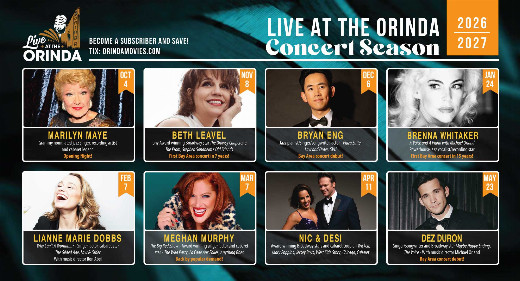
Live At the Orinda - 2026/2027 Concert Season Orinda Theatre (9/22-5/23) |
|
Rebecca Kaplan: How to Act Normal Mr Bing's (10/16-10/16) |

|
Brian Copeland in 'Not a Genuine Black Man' - BENEFIT for CHRS Marines Memorial Theatre (11/21-11/21) |

|
Good Night, Oscar Hillbarn Theatre (3/04-3/28) |

|
Dream Hou$e City Lights Theater Company (5/13-6/06) |
|
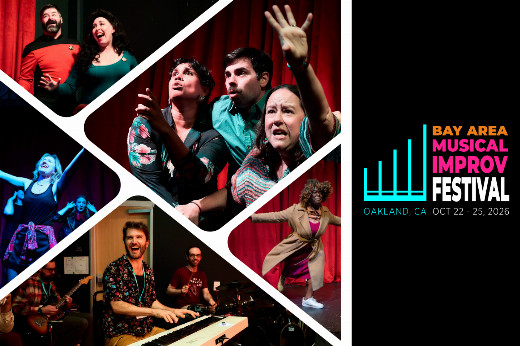
Bay Area Musical Improv Festival - Sunday 3:30PM Show All Out Comedy (10/25-10/25) |
|
Shrek the Musical Berkeley Playhouse (5/21-6/20) |

|
Tether After Dark Oasis SF (10/20-10/20) |
