


Review: SAN DIEGO OPERA'S PAGLIACCI at San Diego Civic Theater
Voices, Orchestra and Chorus Excell
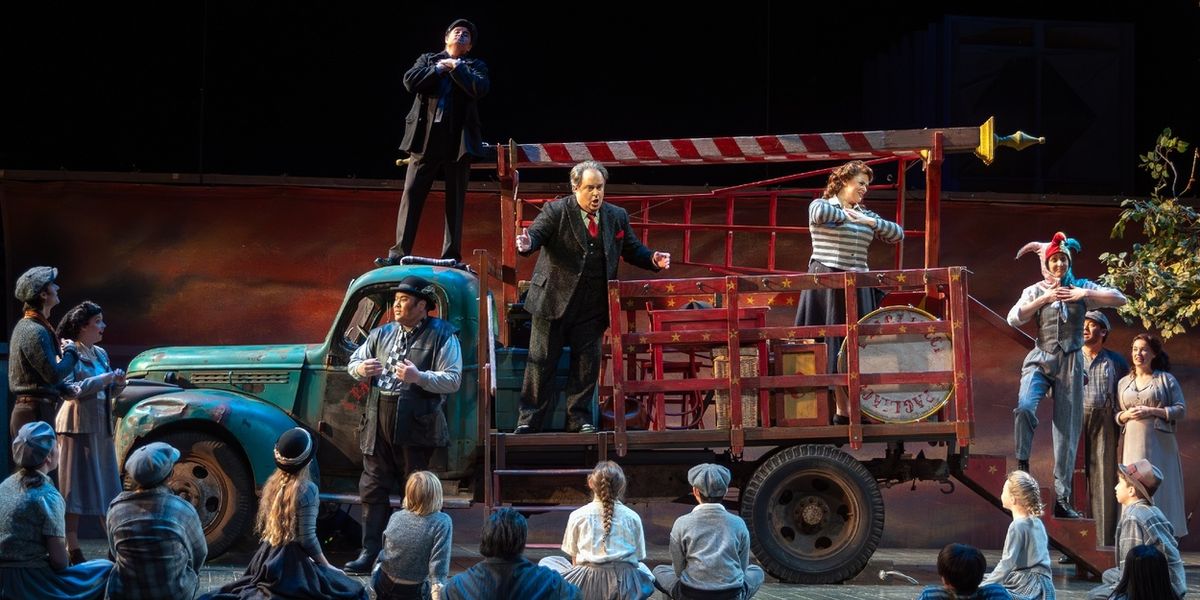
San Diego Opera opened its 2025-26 season on a Halloween night with an appropriately disturbing opera about a murderous clown. Its unsavory plot hasn’t kept Ruggero Leoncavallo’s Pagliacci from becoming one of opera’s most popular creations. The reasons for its success? A can’t-wait-for-it tenor aria, lushly romantic melodies, Puccini-worthy orchestration and a winning mix of operatic voices atop that horror movie plot.
Written in 1892, Pagliacci will have had more than 40 productions worldwide in 2025. San Diego Opera’s was a worthy entry thanks to all involved, especially the hall-filling voices, the always dependable San Diego Symphony Orchestra led by the company’s Principal Conductor Yves Abel, and the San Diego Opera chorus led by chorus master Bruce Stasyna.
Pagliacci features a play-within-a-play. A somberly clad Tonio (sung by baritone Kidon Choi) opens the opera with a prologue describing the tragedy to come. Choi’s strong, deep baritone was an ominous beginning.
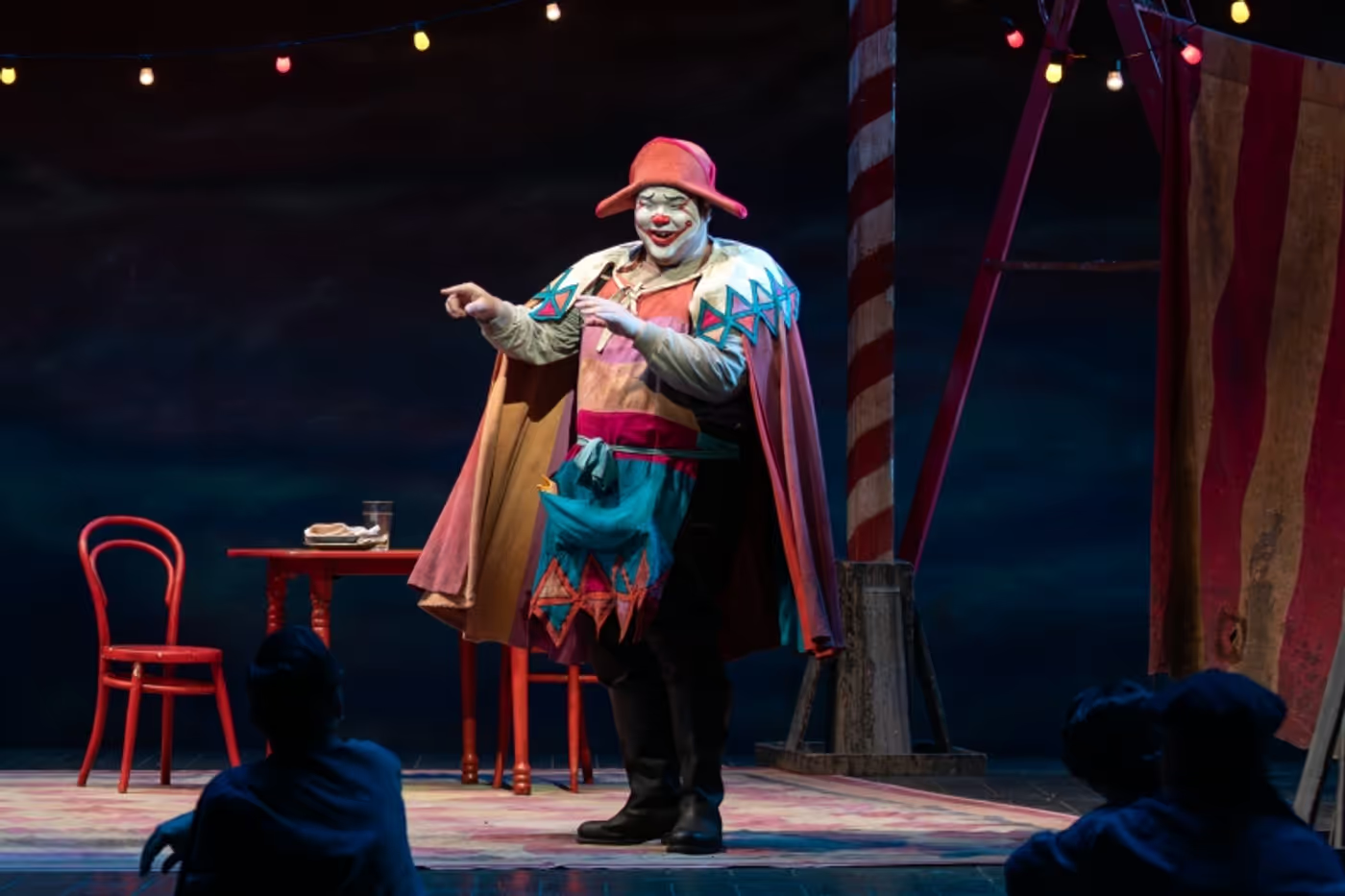
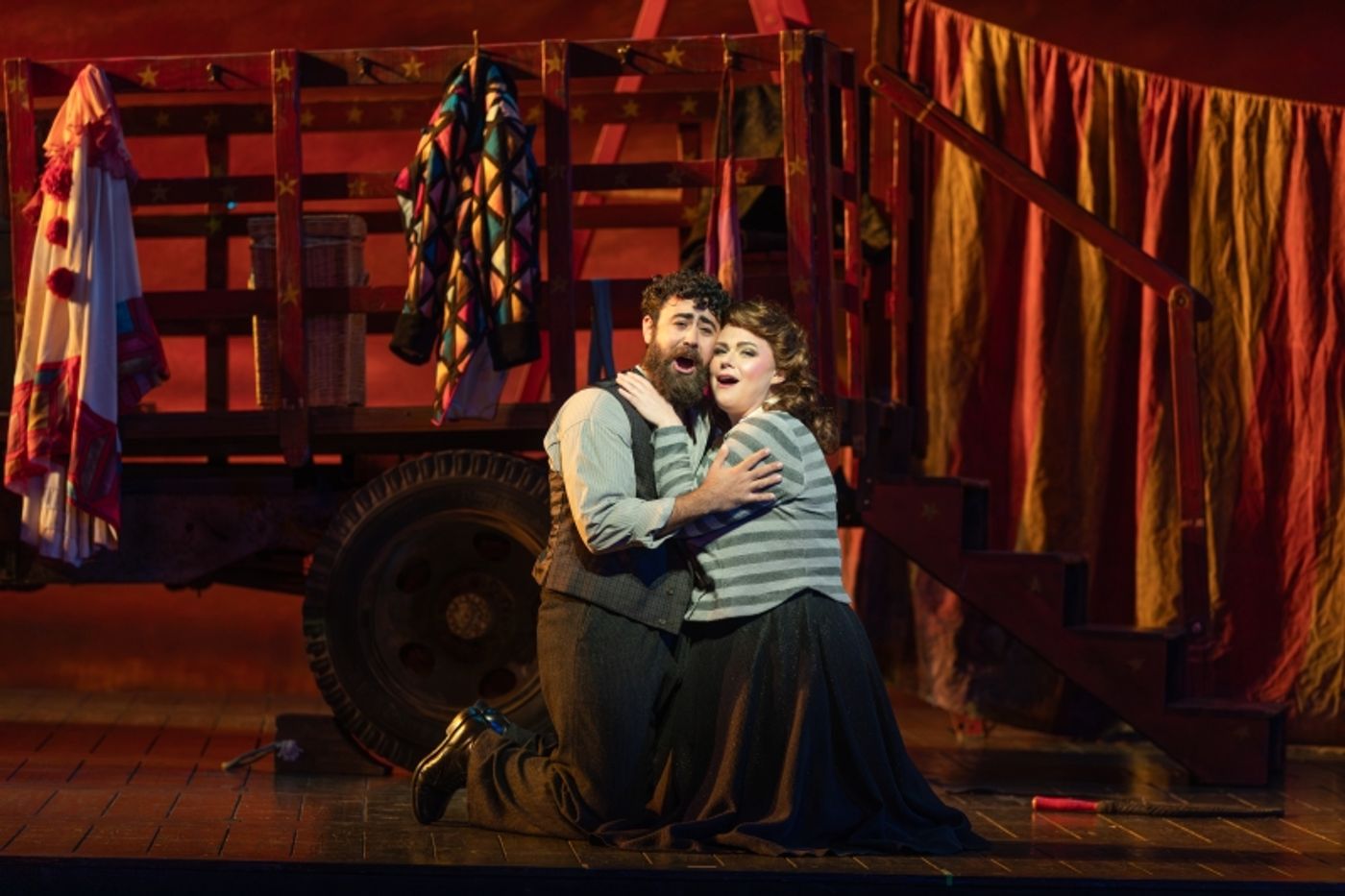
A traveling troupe enters as he leaves the stage. The chorus plays villagers who give an enthusiastic welcome to the troupe’s vanguard of acrobats, a juggler and colorful clowns, one of them Tonio regarbed and soon to be shown to be an Iago-like villain. An old, well-used 1940ish truck carries props and the lead actors. They are Canio (tenor Jonathan Burton) and Nedda (Soprano Hailey Clark). The truck is a nice step up from the company’s 2014 production. The current set and costumes were rented from Portland Opera.
The chorus brought enthusiasm and rising excitement to the villager’s welcoming “bell chorus.” Company manager Canio quiets the crowd and describes the wonders they will see later in the day as the tragicomic play-within-a-play unfolds. His first aria showed why he’s become a favorite choice for the role. This was his sixth Pagliacci production in little more than a year. He sings with attractive strength and passion.
Director Christopher Mattaliano placed the story roughly a century later than the original, which works better for a modern audience. But he makes Canio a truly unlikable character, a serial seducer, rough on his wife, difficult to work for, and without the slightest indication of the sense of humor a clown should have. This puts the audience on the side of Nedda, his competitively unfaithful wife.
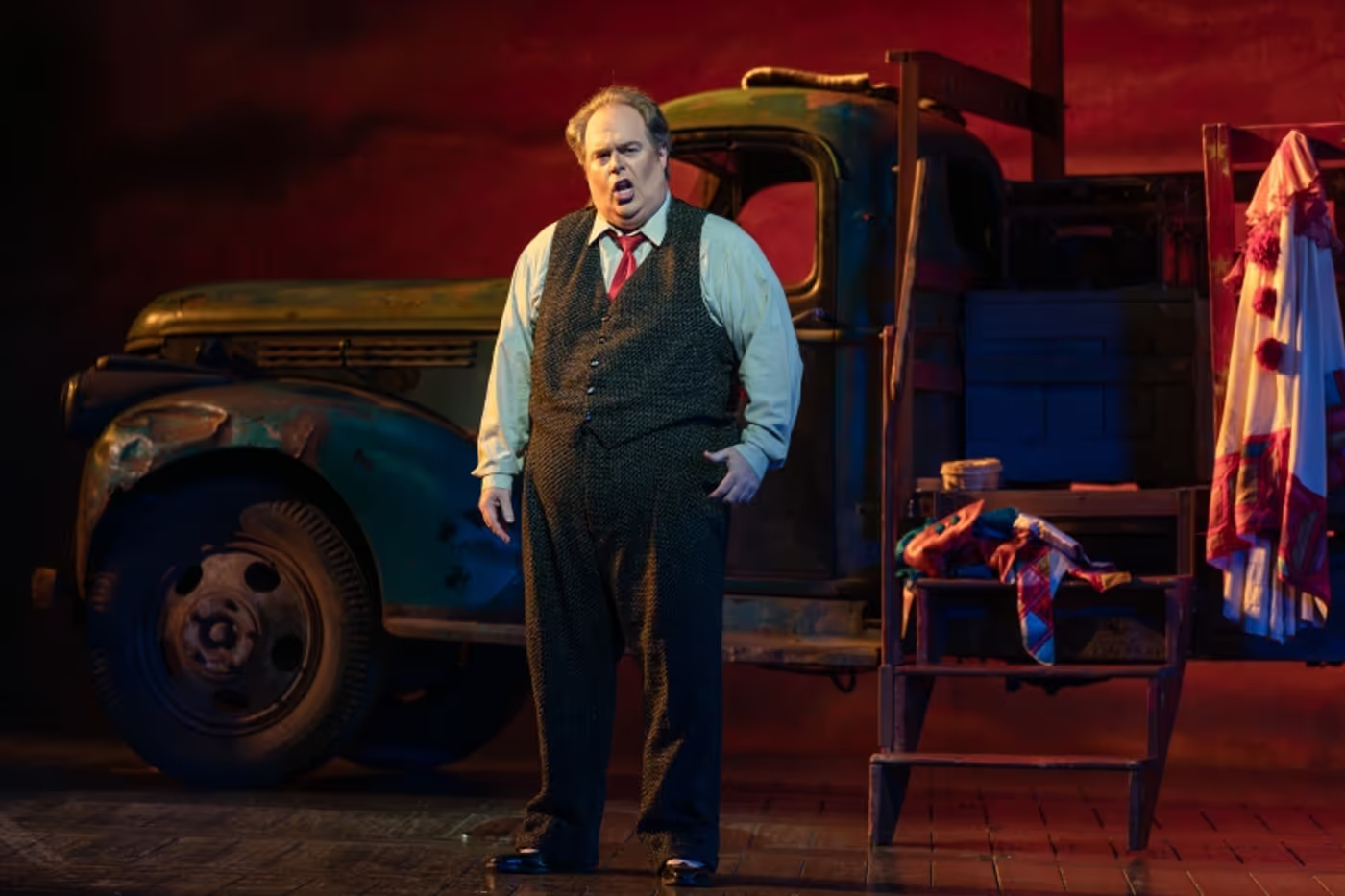
Burton's Canio emphasized his anger and thirst for revenge, reducing audience sympathy for him when he sings “Vesti la giubba,” (put on your costume) the can’t wait-for-it aria at the end of the first act.
Caruso’s version was the first recording to top a million because it thrills as it makes people feel like crying in sympathy. Pavarotti's more recent version does the same. My reaction to this production’s version, though indeed well-sung, was “You deserve it, scumbag,” though I managed not to voice the sentiment aloud.
The brief, and beautifully sad romantic overture to the second act seems misleading in any production. The act begins with another rousing chorus depicting the excitement villagers feel in anticipation of the show beginning. The set has changed to include a small stage, decidedly unimpressive on the Civic Center’s much larger one. A saucy, coquettish Nedda is preparing a supper for her lover.
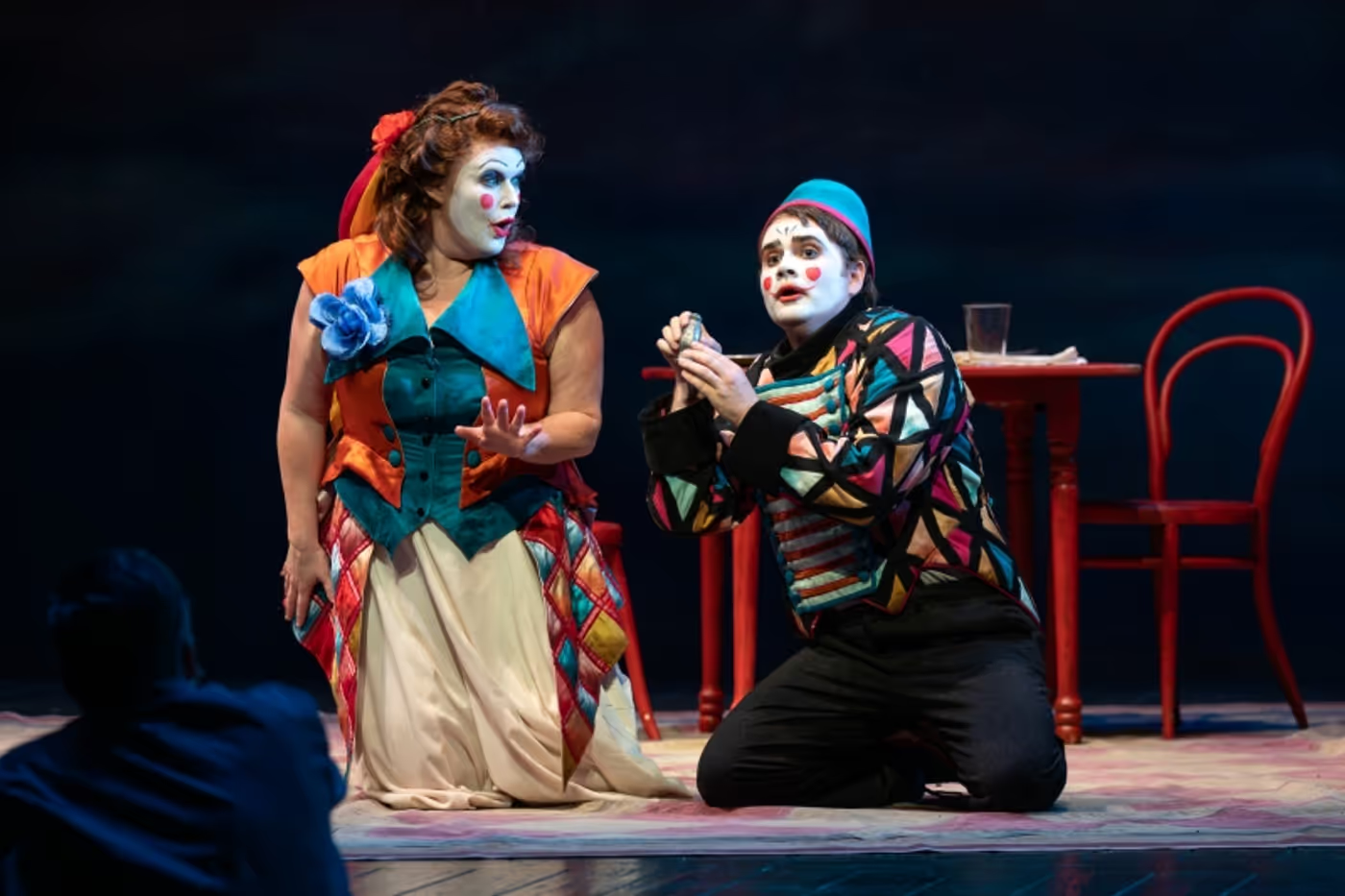
Haily Clark’s playful acting in the inner play was an effective contrast to the foreboding mood her agile dramatic soprano arias created in the first act as she first sang solo and then later in a production-highlight duet with her lover in both of the opera’s plots, Silvio (baritone Eleomar Cuello, an effective last minute change in casting when Timothy Murray was unable to perform).
Arnold Livingston Geis, a pleasing lighter-voiced tenor, played Beppe, a troupe harlequin who tries, but ultimately fails to prevent the troupe’s collapse into murderous mayhem.
Pagliacci, at less than an hour and a half not counting intermission, is usually paired with Cavalleria Rusticana, a short one-act opera by Pietro Mascagni. I headed home earlier than usual from the civic center, content with having seen an attention-holding performance of a good opera and far from needing another hour or so of jealousy and its murderous outcome from Mascagni, though it too deserves its popularity.
I missed opening night, attending the November 1 performance.
Photo credits Karli Cadel
For San Diego Opera's current season calendar, visit here.
Reader Reviews
To post a comment, you must register and login.