


Review: HELL'S KITCHEN at ASU Gammage
The production runs through May 3rd at ASU Gammage in Tempe, AZ.
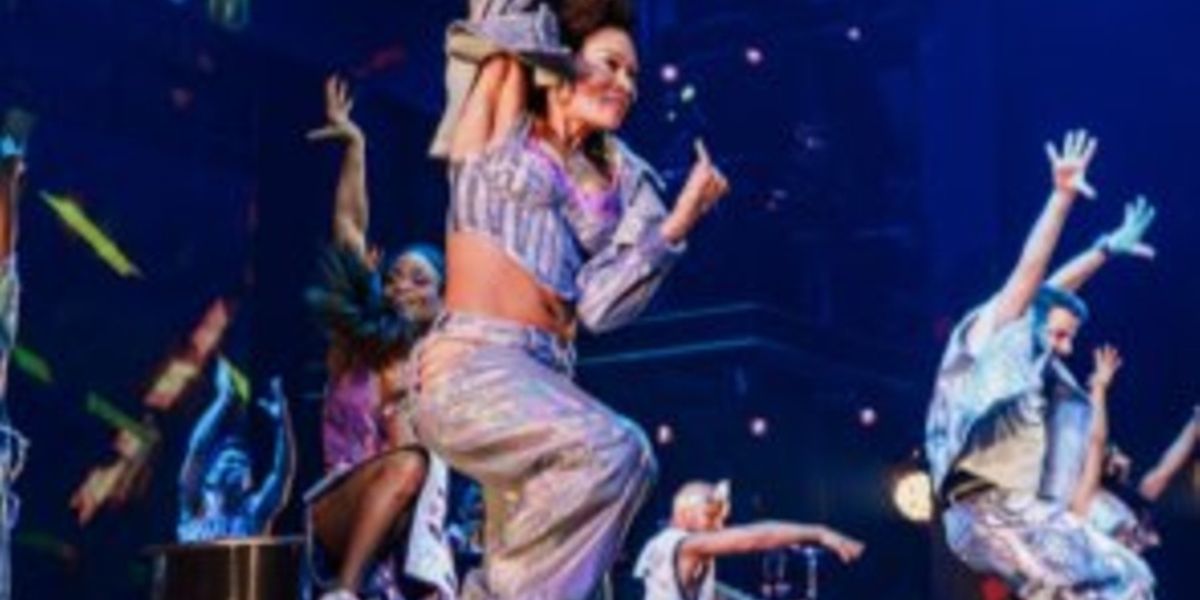
Guest contributor David Appleford’s review of the national touring production of HELL’S KITCHEN at ASU Gammage in Tempe, AZ.
There’s a particular kind of electricity that runs through New York when someone young is about to discover who they are, and HELL’S KITCHEN catches that current almost immediately. The musical begins modestly. A mother and daughter are sitting down to dinner in a cramped Manhattan apartment. Beneath the routine you can feel the pressure building.
The daughter wants the city; the mother wants to keep the city away from her. Somewhere between those two impulses lies the heartbeat of Alicia Keys’s semi-autobiographical musical, a show that tries to capture the moment when a young woman realizes that the world outside her window might be louder and more thrilling than anything waiting safely inside.
Now playing at ASU Gammage until May 3, HELL’S KITCHEN, based on a book by Kristoffer Diaz and Alicia Keys’s music, builds the story loosely from Keys’s own upbringing in Manhattan in the 1990s, and the result feels half memory, half musical fantasia. At the center is Ali (Maya Drake), a sharp-tongued, wide-eyed teenager living with her mother, Jersey (Kennedy Caughell) in Manhattan Plaza, the legendary low-rent artist housing complex in Hell’s Kitchen. Every evening the two sit down to dinner at the same time, a ritual Jersey insists upon with the stubbornness of a woman who knows exactly how unforgiving New York can be. For the mother, the rules are protection. For the daughter, they’re bars on a cage.
Dressed in baggie jeans, crop tops and gold chains, Ali speaks directly to the audience as if confiding secrets in a diary. She dreams about music, freedom, and the intoxicating possibility of independence, and of Knuck (JonAvery Worrell), an older bucket drummer who treats the courtyard of their residence like his personal stage, pounding rhythms out of plastic buckets while the city’s pulse echoes around him.
Under Michael Greif’s fluid direction, the experience of being seventeen is vividly unlocked. With a mixture of impatience and vulnerability, Ali sneaks out, argues, falls into the intoxicating orbit of Knuck, and pushes against every rule her mother tries to impose. The conflict between them is a collision of experience and youthful optimism. The mother understands the dangers the daughter cannot yet see.
The musical broadens its emotional range when reluctantly Ali begins taking piano lessons from a stern neighbor, Miss Liza Jane (Roz White). Because Ali’s estranged father, Davis (Desmond Sean Ellington) is a professional musician, the instrument carries an emotional weight. Yet it’s through those piano keys that Ali gradually discovers the one language capable of expressing everything she cannot say out loud. That language, naturally, is Alicia Keys’s music.
HELL’S KITCHEN is a jukebox musical, but it rarely behaves like one. Diaz and musical arranger Adam Blackstone weave familiar songs you might know into the story in surprising ways rather than dropping them in as decorative hits. When a number like You Don’t Know My Name arrives, it emerges from unexpected characters and moments, giving the music a new dramatic life beyond the radio version FM listeners are used to hearing. Though fans of Girl on Fire, an obvious audience favorite judging by the applause that greets its introduction, may find the interpolated dialog awkward, breaking the song’s momentum and blunting the impact of what should be a major musical peak.
Vocally, the show is an absolute powerhouse. Both Drake as Ali and Caughell as her mother deliver the kind of soaring, emotionally raw vocals that can make the Gammage auditorium feel momentarily like Madison Square Garden. When the ensemble joins in, supported by onstage musicians, the production takes on the texture of a living concert, a tapestry of sound that builds layer by layer.
Camille A. Brown’s choreography pulses with hip-hop swagger and sharp precision, capturing the restless energy of the city. At times the dancing becomes over-elaborate, particularly during more intimate songs such as the sensual Un-thinkable (I’m Ready) where the voices alone might have carried the moment more effectively.
Visually, the production favors suggestion over clutter. Scenic designer Robert Brill constructs the city out of stark black steel frames that echo fire escapes and scaffolding. Projected images slide across the background to locate us in different corners of Manhattan. The effect is minimalist yet evocative, allowing us to fill in the rest of the city with our imagination.
For all its sonic fireworks, HELL’S KITCHEN is ultimately a story about mothers and daughters. It leans into the fragile, sometimes combustible tenderness of that bond: Jersey trying to steer her daughter toward safer ground, Ali insisting on the right to define herself. It’s a dynamic rich with possibility, but the show never quite deepens it enough to carry the full emotional weight being asked of it.
The strain shows most clearly in the book. The central conflict between mother and daughter, stretched across much of Act Two, feels as though it might have been resolved in minutes, even as larger themes such as absentee fathers, over-policing, the pressures facing communities of color in 1990s New York circle at the edges without fully landing. At two and a half hours, these threads begin to thin, occasionally tipping into melodrama or familiar coming-of-age patterns, while secondary characters remain only lightly sketched. Compounding this is a persistent sound issue, with lyrics often buried and even passages of dialogue lacking clarity. What ultimately sustains the evening is the performers’ dynamism and the sheer physical commitment of the ensemble, whose energy propels the production forward whenever the storytelling and the sound begin to falter.
With rhythm, soul, and a great deal of volume, what the show finally celebrates is the exhilarating, sometimes heartbreaking passage between girlhood and womanhood, set against the roar of New York City. For some expecting a stronger narrative, it might not be enough. But for all its bumps, HELL’S KITCHEN leaves you with the sensation that at the very least Alicia Keys has done something instinctively theatrical: she’s turned the noise of her youth into music, and the city that raised her into a stage big enough to contain it.
ASU Gammage -- https://www.asugammage.com/ -- 1200 S. Forest Avenue, Tempe, AZ -- 480-965-3434
Photo credit to Hell’s Kitchen National Tour

|
Proof Temple of Music and Art (9/27-10/17) |

|
Clue Hale Centre Theatre Arizona (12/31-2/06) |

|
Judy Moody and Stink: The Mad, Mad, Mad, Mad Treasure Hunt Actors PLAYground (9/11-9/20) |
|
The Rocky Horror Show Marroney Theatre (10/11-10/25) |

|
Other Desert Cities Theatre Artists Studio (9/12-9/27) |

|
Alison Krauss Pepsi Amphitheater (9/28-9/28) |
|
Rocky Horror Picture Show Original Cast Spooktacular Tour with Barry Bostwick and Patricia Quinn ASU Gammage Theatre (10/09-10/09) |

|
Annie Hale Centre Theatre Arizona (10/09-11/21) |

|
Oklahoma! Hale Centre Theatre Arizona (2/11-3/27) |
|
The Comedy of Errors By William Shakespeare Adapted by Stephen Frankenfield Live Theatre Workshop (9/18-10/11) |

Reader Reviews
To post a comment, you must register and login.