


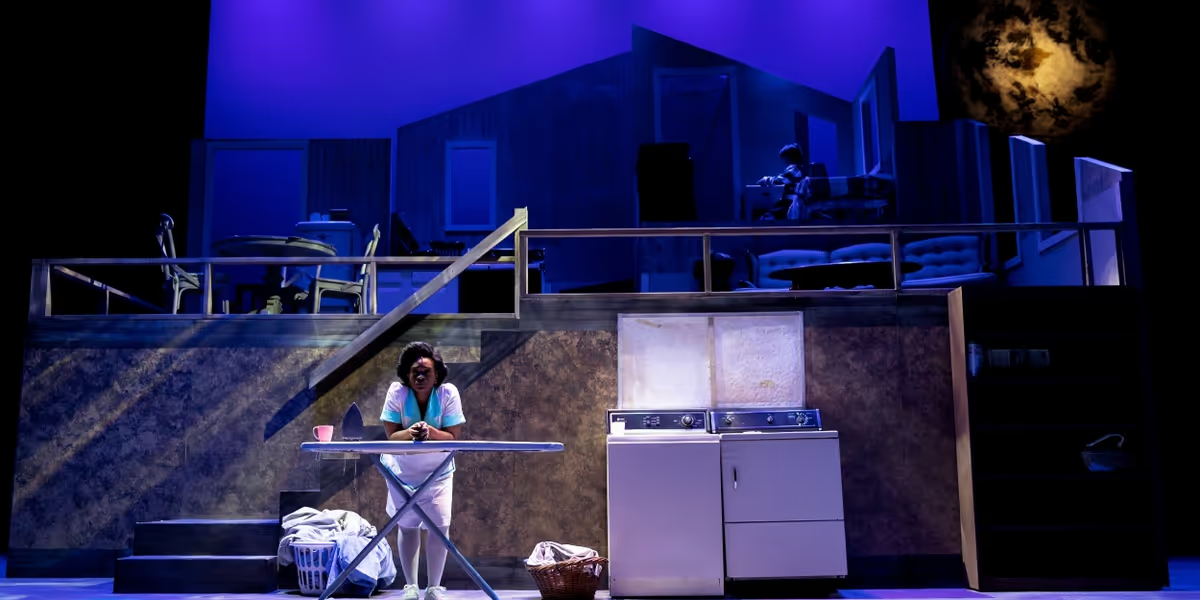
Having never seen the 2003 musical CAROLINE, OR CHANGE, I had a slight panic attack reading the program while waiting for this past Sunday’s matinee to begin at Playhouse on the Square. The program listed 29 songs in Act I and 24 songs in Act II! I thought, “I have to be at work by 8 a.m. tomorrow morning!” Will I make it? The good news is that the show was over in 2 ½ hours. The bad news is that “53 songs” were squeezed into that 2 ½ hours. That’s a lot. With music by “the most prolific and honored female theatrical composer in Broadway history,” Jeanine Tesori (and no, “prolific” isn’t necessarily just referencing this show), and a book/lyrics by Pulitzer Prize-winning playwright, Tony Kushner, suffice it to say the expectations were high!
Set in 1963 Louisiana, CAROLINE, OR CHANGE tells the story of Caroline, a 30-something-year-old maid who almost exclusively works in the basement of her Jewish family employer making $30 a week washing, ironing and longing. You see, there are almost no basements in this part of Louisiana because it’s all under sea level, yet Caroline is forced to work in one because she’s “under water.” She’s stuck--financially, physically and emotionally--with no signs of change. The changes she wants in life never seem to come while the world around her keeps changing dramatically. The only “change” she begins to count on is from the coins left in the pockets of her employer’s laundry.
Her escape from this existence comes in the form of animating the inanimate objects around her (washers, dryers, radios, etc.) through song and dance. Although unusual, the setup for the story is amazing. Unfortunately, the delivery is not. It is often said that characters in musicals sing songs when words alone can’t convey the depth of the emotion. Here, almost none of the songs slow down long enough to allow for any immersion into any emotion. No one (performers or audience) is afforded any time to catch their literal or figurative breath before the plot continues to the next unmemorable song. Practically none of the songs have a chorus or refrain, and there’s not a chance any audience member will leave humming these tunes. This is a play with LOTS of dialogue punctuated with musical notes under each word. It’s almost a stretch to call them songs. Jeanine Tesori has written some masterful tunes in other shows like VIOLET, FUN HOME, and even SHREK THE MUSICAL, but it would appear she’s chosen to give deference to her lyricist, Tony Kushner (ANGELS IN AMERICA) to let the words (not the music) do all the “talking.”
Co-directors Crystin Gilmore and Claire D. Kolheim understandably, but perhaps not wisely, cast a troupe of powerhouse singers for this POTS production. There’s truly not a weak singer in the bunch, but a show like this requires the leading characters to be actors with immaculate diction over singers hitting all the right notes. Perhaps some songs with a chorus or refrain would provide some grace for those performers who place emphasis on the vowels, but with words coming out at a breakneck speed, consonants are an absolute must, and they are too often painfully missing.
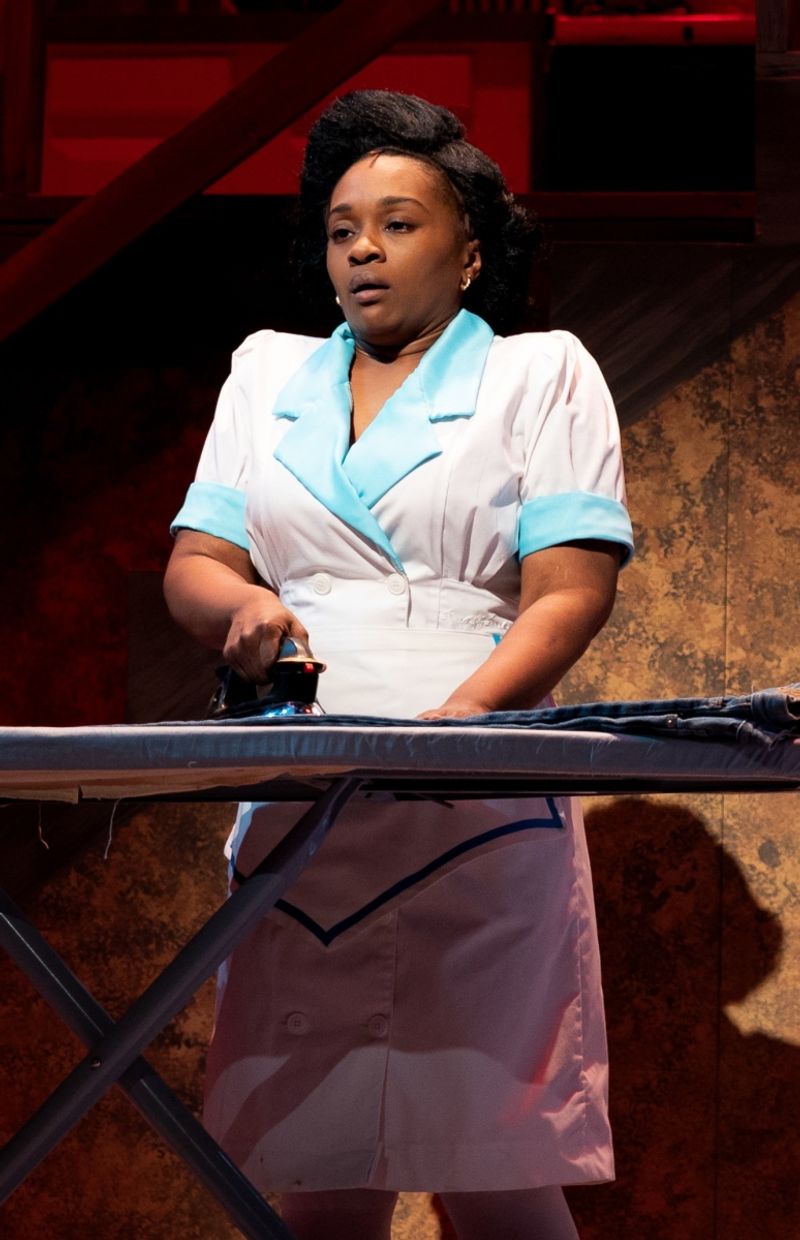
Marissa C. Gilliam as the downtrodden maid, Caroline, has all the demeanor and simmering rage of a woman striving to take care of her children on a measly $30 a week. Her desperation to just survive (let alone thrive) means biting her tongue, enduring constant derision and scampering to find change in the clothes of her family’s laundry to just get by. Her flat affect provides a fascinating counterbalance to her powerful voice, but her lack of enunciation detracts, leaving her devastating plight lost in translation.
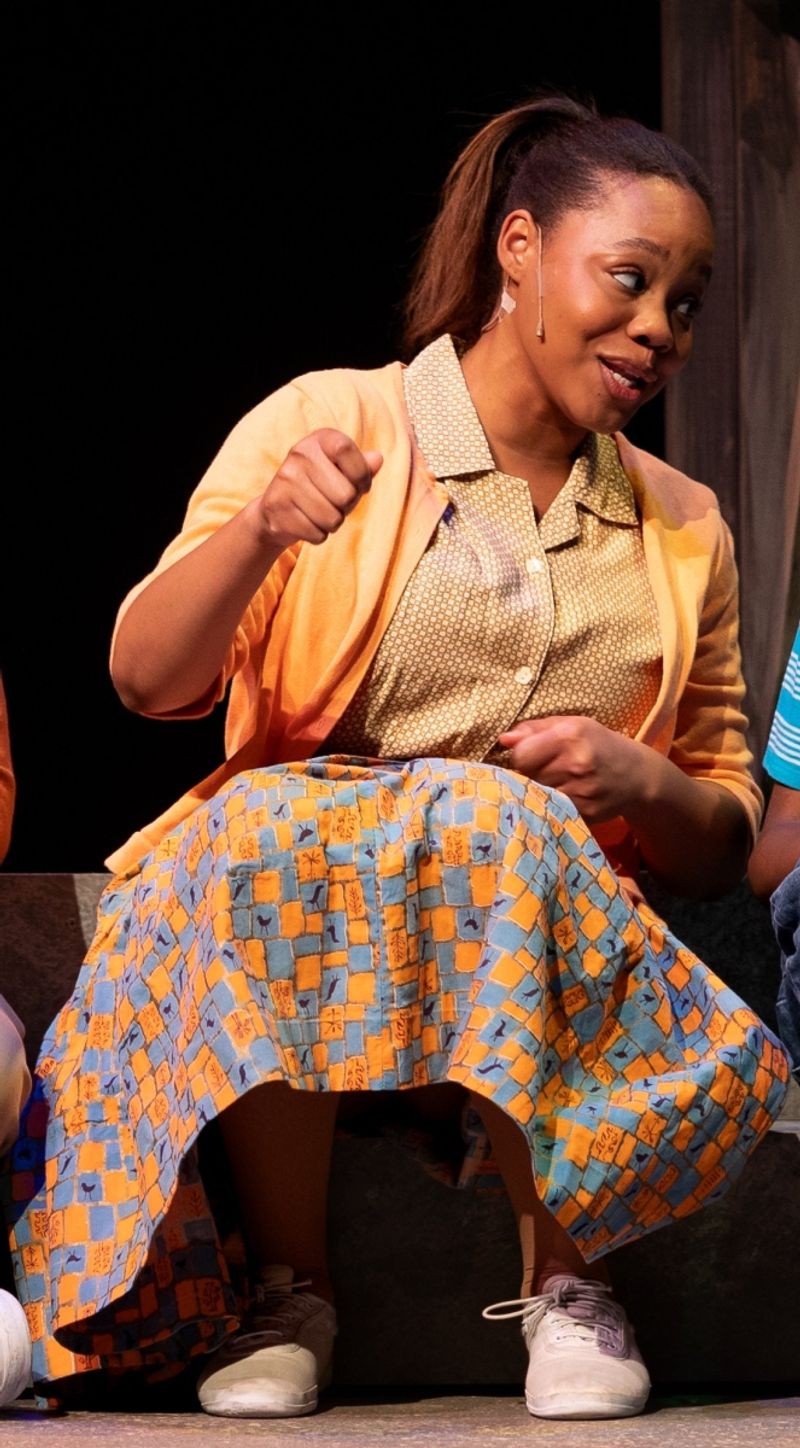
Similarly, Andrea Simpson as Caroline’s daughter, Emmie (the outspoken and opinionated future “change” maker), also has a wonderful voice but leans too much on her vocals at the expense of her message. For example, having to sing a song about a boy named “Roosevelt Petrucius Colesaw” requires an expertise in articulation from start to finish.
As the Jewish family Caroline works for, Atam Woodruff (Stuart Gellman), Brooke Papritz (Rose Gellman) and Drake Shehan (Noah Gellman) portray three lost souls desperately trying to connect with someone or something.
With a gorgeous baritone voice, Woodruff finds solace practicing the clarinet as it offers an escape into the world he used to share with his now-deceased wife—at the expense of connecting with his son and new wife, Rose. He’s floundering in ways he could never admit.
Brooke Papritz offers up another strong performance as the “new” wife trying, but failing, to connect with her stepson and her maid in exasperating fashion. Her idea to have Caroline keep all the loose change she finds in her stepson’s dirty laundry (to teach him a lesson) betrays both of them in spectacular fashion.
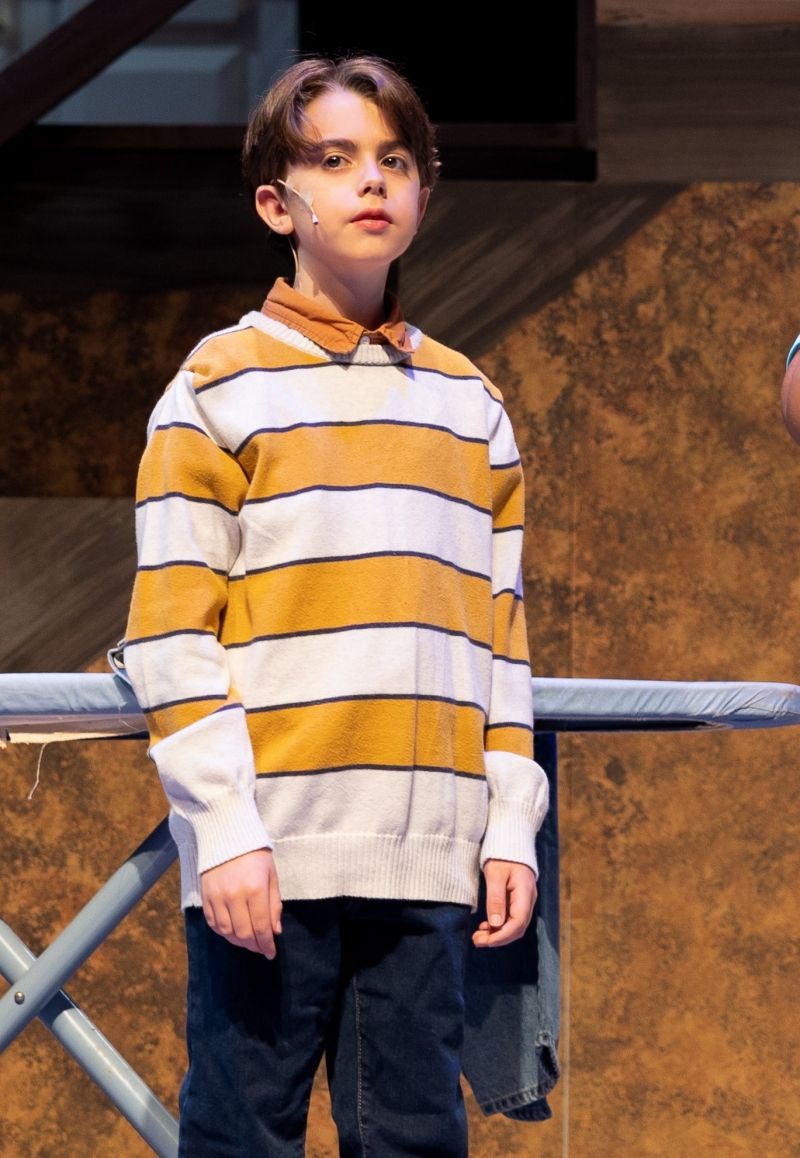
Young Drake Shehan finds his moments to delight and shine--especially in Act II when his anger at the world comes bubbling over onto Caroline, the only adult whom he still respects.
Having people portray inanimate objects through song works surprisingly well here. All of them are strong singers who represent the spectrum of Caroline’s emotions from bondage (washer and dryer) to freedom (the radio and the moon).
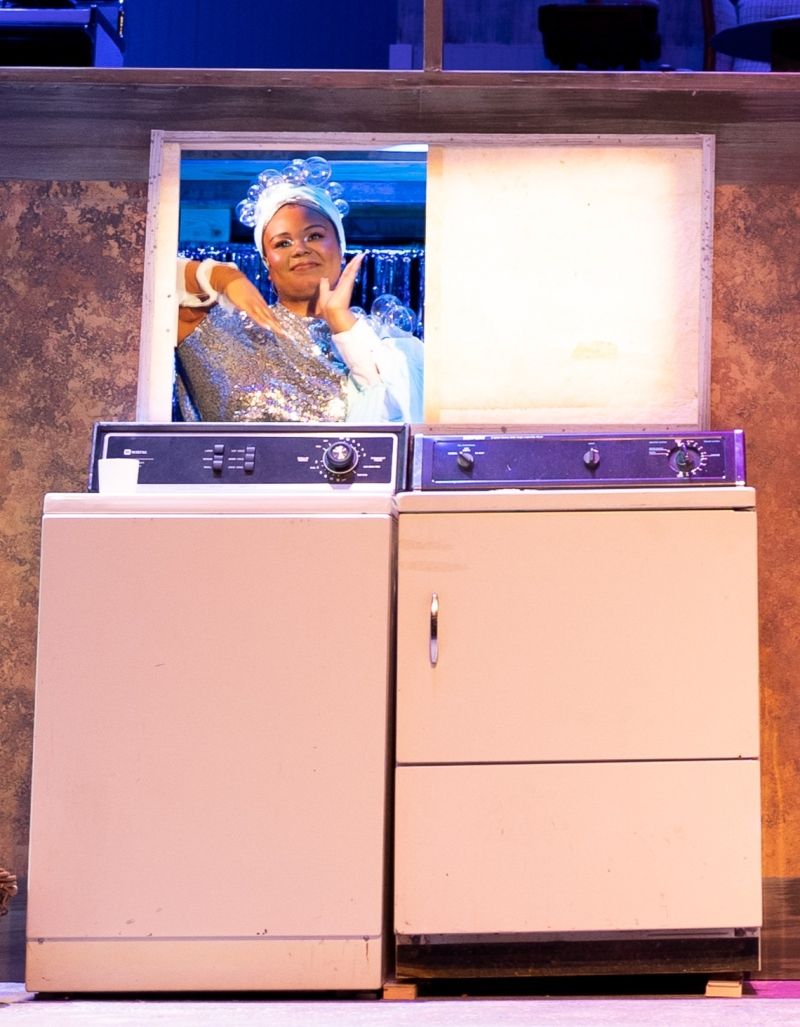
Kylah Hood is an upbeat “bubbly” Washing Machine with a fine voice who is always present and ready to work. Making things clean is a good thing and she provides service with a maniacal smile.
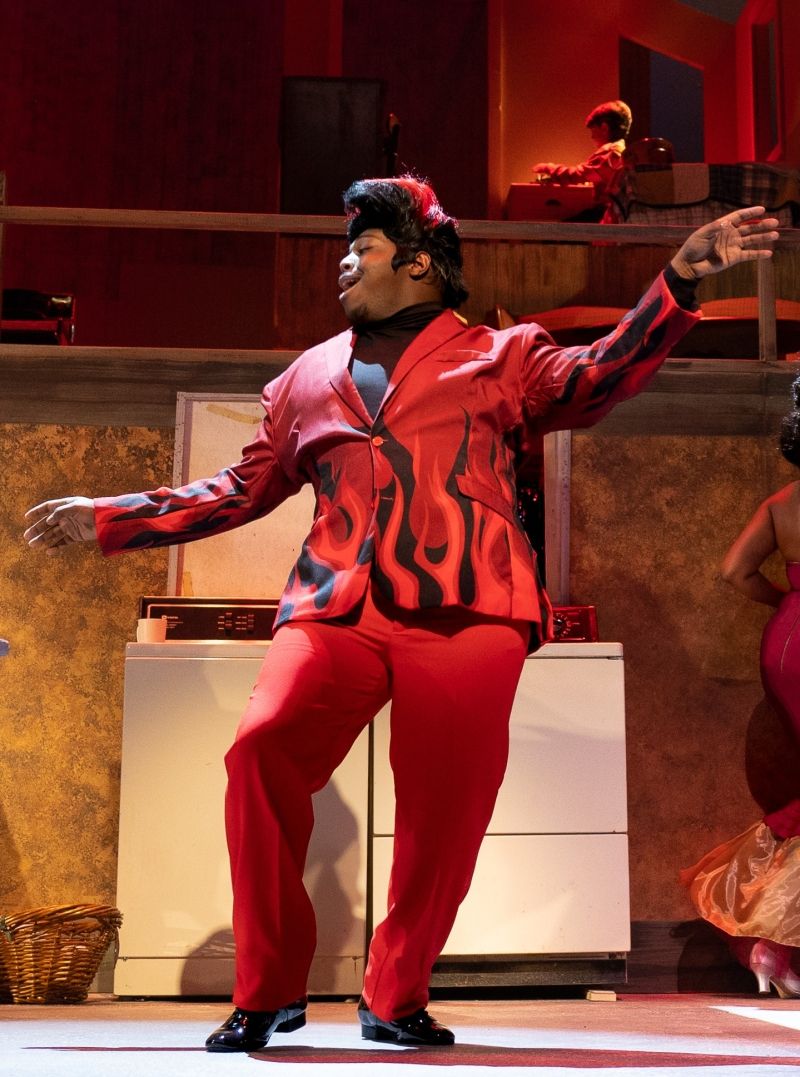
On the other hand, DuValle Henry, Jr. is the devil himself as The Dryer. He represents the oppressive heat that Caroline must endure each day and takes pleasure in pulling out Caroline’s darker, more selfish side. He’s really good at being really bad.
Wyndie (Oh!) Oliver sings amongst the stars as The Moon. Like a guardian angel looking down from above, Oliver offers an omnipresent reassurance that, although things are always changing, all will be well in the end.
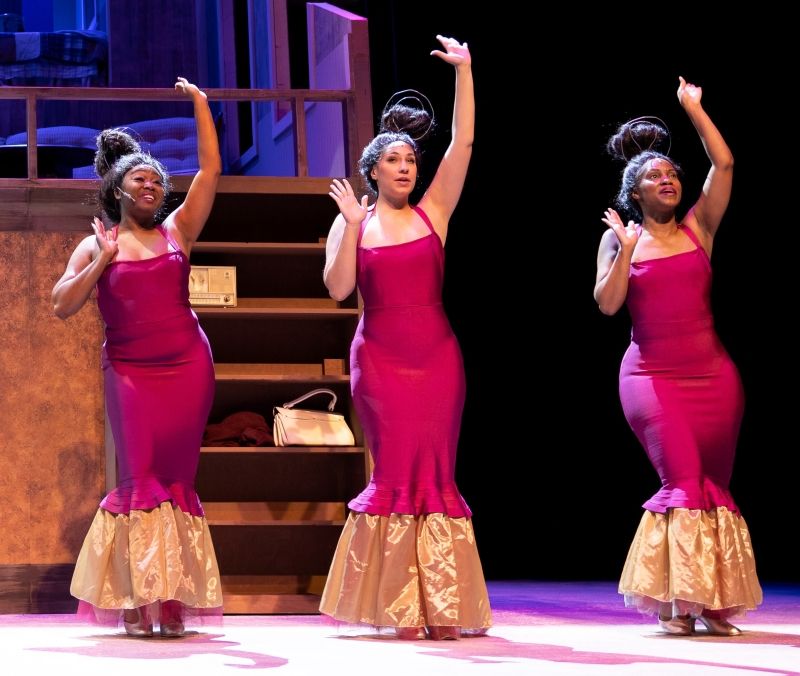
In an ode to female superstar groups like The Supremes, Mads Jackson, Keia Johnson and Brandi Nicole portray The Radio. In stark contrast to Caroline’s stagnant existence, The Radio offers an escape to the glitz and glamour of musical stardom. Karl Robinson’s classic synchronized choreography squarely places everyone in the 1960s.
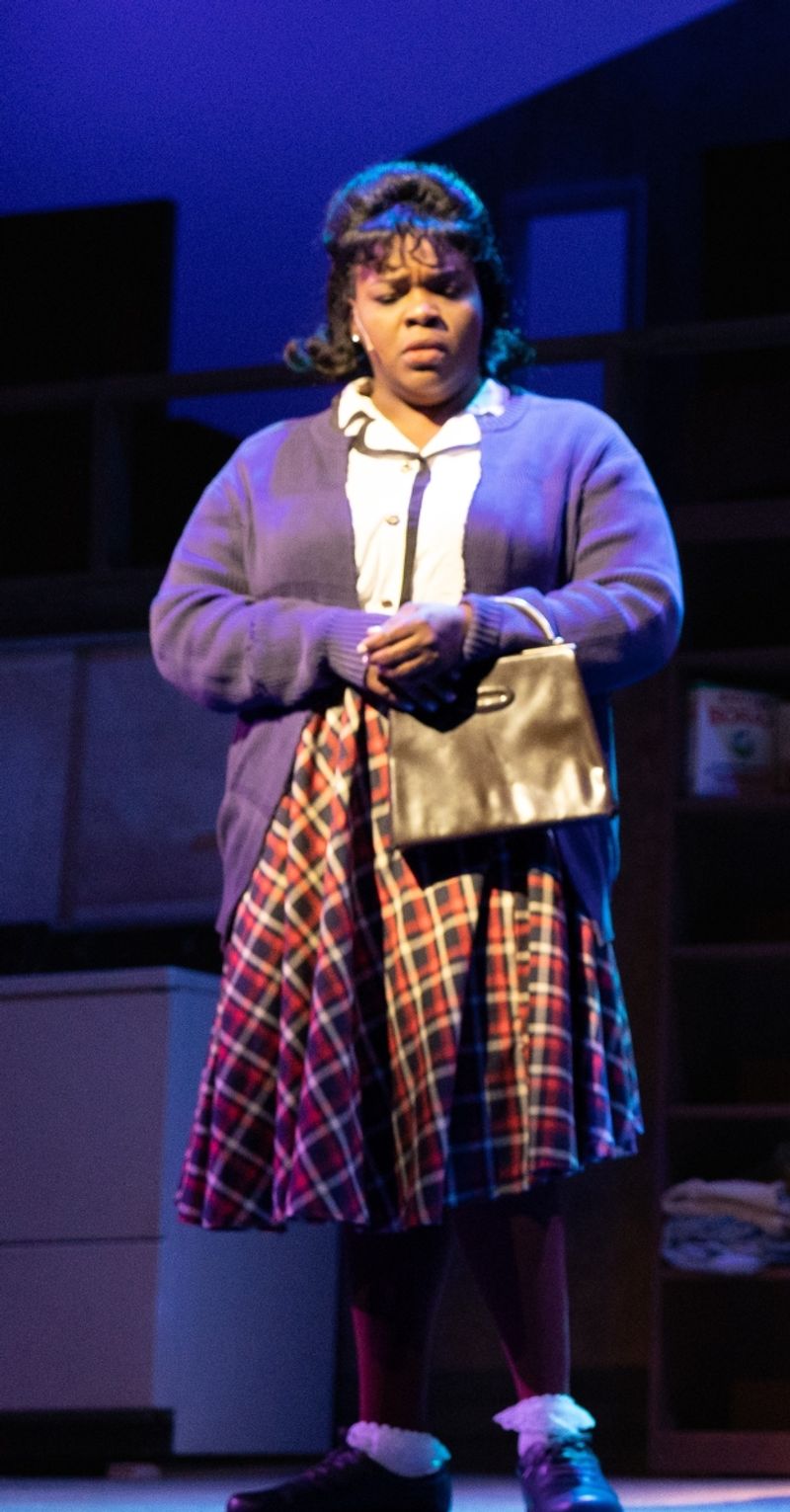
Ultimately though, it’s Arthella Williams-Moore as Caroline’s friend Dotty Moffett who has the voice, acting chops and enunciation to show how it should be done. Although she’s a maid too, she finds a way to still experience joy and make the most of what life has dealt her. Nice job!
Lex van Blommestein’s creation of a 3-story house is impressive and keeps the action visually engaging. Lindsay Schmeling costumes everyone to perfectly reflect the era and Megan Cristoferson’s light design continues getting better and better as the POTS’ season rolls along.
Musically, Tom Johnson has assembled a strong band to churn out A LOT of music in a short period of time and, again, has coached up the entire cast to sound strong in hitting all the right notes.
CAROLINE, OR CHANGE is a play that tries too hard to be a musical. The turmoil of the 1960s in America definitely provided enough fodder for drama and it makes sense to want to “musicalize” the tensions of the decade to elevate all the “feels” even higher, but too much emphasis is placed on exposition instead of disposition. Musicals work best when they take the time to tap into the pathos of being human. 56 songs in one show wholly eliminates any opportunity to hardly think, much less feel. Regretfully, when it comes to all the songs in this show, the only thing guaranteed is change.
Sign up for all the news on the Summer season, discounts & more...

|
An Enemy of the People The Circuit Playhouse (9/11-10/04) |

|
Titanic Department of Theatre and Dance, University of Memphis (4/22-4/25) |

|
Continuum: A Faculty and Guest Artist Choreographed Dance Concert Department of Theatre and Dance, University of Memphis (11/20-11/22) |

|
Rent Department of Theatre and Dance, University of Memphis (10/29-11/01) |

|
American Page to American Stage: New, Classical Play Festival Tennessee Shakespeare Company (3/12-3/20) |

|
Clown Bar Department of Theatre and Dance, University of Memphis (9/24-9/26) |

|
Broadway Gala for Children's Literacy: featuring Musical Star Norm Lewis Tennessee Shakespeare Company (4/10-4/10) |

|
CLUE Orpheum Theatre (9/15-9/20) |

|
Leanne Morgan Thompson Boling Arena (12/12-12/12) |

|
Clue The Orpheum Theatre Memphis (9/15-9/20) |

Reader Reviews
To post a comment, you must register and login.