


Interview: Michael Locher of THE DA VINCI CODE at the Alley Theatre
We talk about designing the Louvre for the Alley's stage!
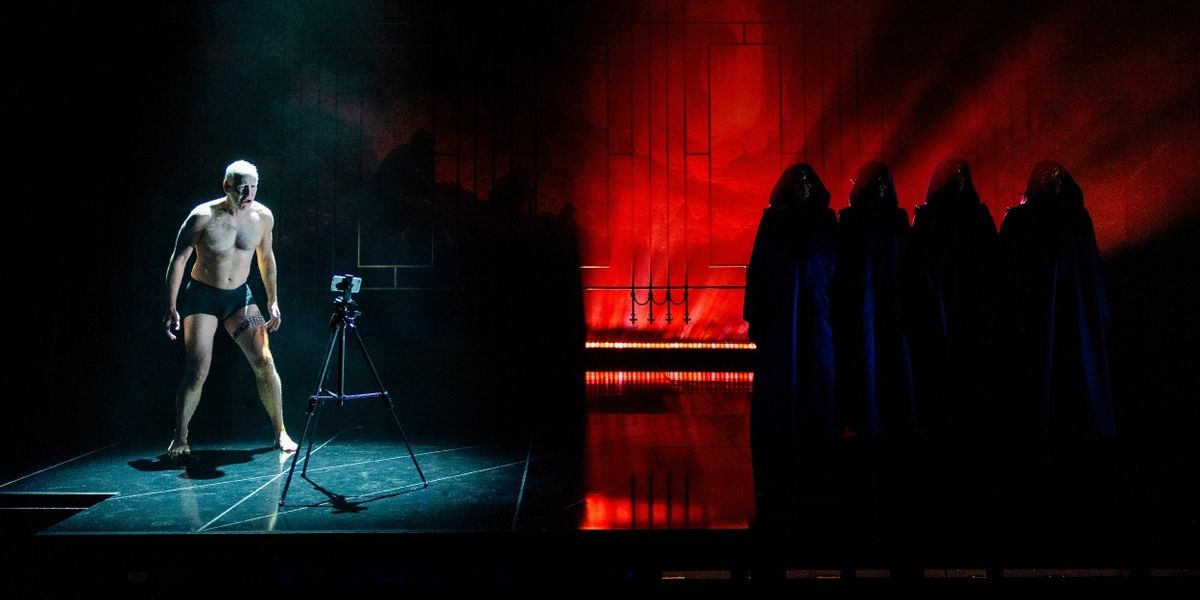
Michael Locher is a scenic designer and the Alley Theatre's Director of Design. And we are talking about an ambitious project the company is taking on, The Da Vinci Code. Now, you probably know about it; it's a famous book by Dan Brown. It was adapted into a very big movie starring Tom Hanks. And books and movies, they are quite different mediums from stage work, so we are here about the challenge of bringing this story to the Alley Theatre. The show opens on September 19th, runs through October 19th, and it's a perfect fall mystery for you. The pre-sale for this one has been so strong that 5 shows have already been added, but we are here to talk about sets and design elements and things like that.
Brett Cullum: My first question is, how many locations do you have to create here?
Michael Locher: You know it's not a good sign when a designer loses track of how many and can't answer that question reflexively. It's a lot, it's a lot. I mean, the obvious challenge about this play is that it has a big cinematic feel to it, and every single one of those locations in Dan Brown's story is a spectacular real-world place. The Louvre, Westminster Abbey, Rosalind Chapel, and part of the joy of experiencing the Da Vinci Code as an audience member is being wowed by those settings. So we knew we needed to find ways to go big and to deliver spectacle, and to deliver those locations.
Brett Cullum: Well, that's the big trick here. Not only are there a lot of locations, but these are locations that people in the audience have probably either seen a million times on photos or TV, or have actually been to. I mean, these are tourist destinations where people just love these places, and they know what the set already looks like. I mean, they know what your inspiration is, so what do you do as a designer? How do you approach that?
Michael Locher: It's so true. I mean, it's a couple-part answer. On one hand, we always start with research. No matter what show you're doing, no matter how abstract or how experimental the project is, you always start with something primary, just to get a sense of what your frame of reference is. And here the frame of reference is not just these real locations, which are iconic locations. As you said, people know what they look like; they've been there, they've taken pictures there. Our director, Rob Melrose, went to these locations on a different trip this summer and took pictures of these places to make sure we knew what we were doing. On the other hand, People have expectations that relate to their experience with this as a pop culture phenomenon, right? It's important for us to remember that theater can be spectacle-driven, but it's not film. And when there are so many big locations in a show that you have to travel between quickly, you need to lean into what theater is better at than movies, which is, I'd argue it's finding clever ways to paint a picture without building the whole cathedral on stage. So what do you show? What do you not show? How does it all work? There's a lot of imagination, right? And sometimes, encouraging audiences' imagination in ways that don't really work in movies is really exciting on stage.
Brett Cullum: Well, let's backtrack a little bit. Tell me how long you've been with the Alley, because this obviously is not your first production.
Michael Locher: I came to the Alley not long after my good friend and longtime artistic partner, Rob Melrose, became the artistic director at the Alley. He joined the Alley in 2019, and by late 2019, I was there as well. So I've been at the Alley about 6 years with this position, the Director of Design. Rob and I are both from Northern California, from the San Francisco Bay Area, and when he took this and announced he was moving, I immediately started thinking about how much time I would be spending in Houston from that time forward, and here I am, living here.
Brett Cullum: Well, your title is Scenic Designer and Alley Theater's Director of Design. How do you define that role?
Michael Locher: That's a great question. I'm still working on that. I'm a set designer by my training, and I've been a set designer and a theater educator for my entire career. It's an interesting role. I'm part of the artistic leadership team at the Alley. I work alongside and very closely with Rob and other members of the leadership team and the artistic leadership, working on things like programming and creative staffing, reading new plays, which I'll say is the fun part of running a theater company. In addition to being involved in all these creative things around the company, I'm sort of the de facto resident stage designer, so I get to design a few key productions at the Alley every season. And I'm deeply involved in creative staffing, so I play a key role in helping to bring other designers into projects, whether I'm designing those shows or not. Building teams of designers I admire or whose work I've envied is a really interesting part of the job as well.
Brett Cullum: So you get a little bit of input into the season choices. Are you ever, like, when they present something, are you like, “Are you kidding me? We can't do this!”
Michael Locher: This is a great example of that, The Da Vinci Code itself. We all read Rachel Wagstaff and Duncan Abel's excellent adaptation and thought, “Well, this is cool! But there's no way we're gonna try and pull this off, right? Zero way!” And before long, Rob started making the case. He said, “This is the kind of challenge we should be giving ourselves. The reason we should be doing this is that it has no business being a play.” And so while we're stretching ourselves, the fun of that is bringing the audience along, of course.
Brett Cullum: I appreciate a good screen-to-stage adaptation. It’s definitely unique for audiences. Who else is on board for this journey from bestseller and Tom Hanks film to the Alley’s stage?
Michael Locher: The lighting designer on this show is an old friend of mine, Tom Weaver, who I thought of immediately when I began designing this show, when I began conceiving the stage pictures that I had in mind for THE DA VINCI CODE. There's a certain style, a certain sort of aggressive spirit, of experimentation in his lighting. It's old, it's noirish, it's never tepid, and I knew immediately that someone like Tom was the right guy for this job.
Brett Cullum: Lights are so critical. I really think that audiences don’t fully realize how much that plays into the mood, and the way that things move through a play, and the way that you tell a story. It's one of those arts that people don't think about as hard as they probably should, because it can affect a performance just as much as the actors out there.
Michael Locher: Absolutely. I mean, the pure physics of it is that you only see what the lighting designer allows you to see, and you only see things the way the actual light hitting the object permits you to see it. And so every set designer knows, and I'm sure every actor knows this as well, that you begin to cultivate an affinity for lighting designers who seem to understand your skin tone, or the kind of design ideas you have as a designer, a beautiful set could be ruined by a lightning designer who doesn't understand what the intention of the set is, and vice versa. The number of times I've come up with something that I'm proud of on stage and a lighting designer has surprised me with how much better they make it look, or how well they understand what we were going for. Those experiences are great, and so it's part of the reason why we have lots of partnerships in theater that come up again and again. Why directors go back to certain actors repeatedly, or why a lighting designer and a set designer may often find themselves working together.
Brett Cullum: In this show, you've got a couple of things. I think that Chris Hutchins, it's his 100th show? Is that right? And he's playing Silas, the villainous monk. So you've got to light him in a way that probably isn't that flattering, because in the book he's described as albino, isn't he?
Michael Locher: There is a description of him being albino in the book, and Paul Bettany, who played him in the film, sort of carries an albino sort of quality. I would say that Chris's performance in this is just terrific so far, and it's also just one of those roles that makes me understand that I'm not cut out to be an actor. The things that he has to do to himself! The way he has to present himself on stage. And this is before we were in the theater with the kind of aggressive lighting he's going to be subject to. It's a pretty remarkable surrender to the craft.
Brett Cullum: Well, I'm definitely looking for that one. That's gonna be a tough character to bring to life. Looking back for a second, was there historically, do you think of one show that technically was just your toughest?
Michael Locher: My toughest, oh boy. Yeah, actually, it's funny, it's an easy answer for me. The toughest would be A CHRISTMAS CAROL. Nobody, and I often say this, no one goes into this field, goes to grad school, studies it, because they want to do A CHRISTMAS CAROL. At the same time, at the same time, once I realized that I was going to be helping to develop and design a brand-new Christmas Carol for The Alley Theatre, replacing a wonderful production that the Alley had mounted for 15 or 16 years. I was thrilled by it. I was absolutely thrilled that I would have a chance to take this familiar chestnut and figure out my own way. My own take on what this… this story that I, that I really adore, would… would be. The challenge was so immense. We were so ambitious. We worked on it for so long. It's a project that we gave ourselves to work on behind the scenes during the pandemic. So we're all sitting around working on digital theater and sort of planning how to reopen the theater, and at the same time, we're having these meetings about this massive production that we're trying to do. It remains one of the largest things the Alley has ever done. It's truly musical theater or Broadway scale in terms of the number of automation elements, the moving set pieces, and the amount of stuff that's on stage. It was just the largest-scale project I'd ever worked on. And it was the kind of project that taught me what my limits were. It taught me what I needed to get better at, and at the same time, it took us a couple of years to fine-tune all of the things on stage. If you saw it in the second year of its run, you may have noticed differences from the first year of its run, because we were still sort of deciding exactly what worked best and what didn't. So that remains the biggest challenge of my career.
Brett Cullum: Well, what do you hope in this current show, THE DA VINCI CODE, design-wise, how do you hope that this, your work, helps to tell the story? What do you hope that the audience catches?
Michael Locher: I would say, first of all, on one hand, the show is packed with technology. We have big moving scenery, and we have cutting-edge lighting equipment. We use powerful projectors. At the same time, I'm really proud that the show is genuine theater. It's not just a movie on stage. It's terrific actors and hands-on stagecraft working live. I would point to something else, another designer on the project's work. We have a brilliant Costume Designer, Helen Huang. When you engage a story that happens to be a pop culture phenomenon, a lot of your audience has expectations, because they know these characters from the book or from the film. At the same time, we have to do more than simply recreate what Tom Hanks wore on screen. And Helen does such a great job of distilling the spirit of these characters down, giving everyone a fresh look, while still telling the story in a way that feels familiar. I'm so proud of her and so impressed with her work at the same time. I think I've done something along those lines as well. I'm excited for people to see how we've created scenery and locations on stage that are big and spectacular, but really, really couldn't be further from a film set, or couldn't be further from just taking these big, iconic locations and brick by brick, putting them on stage. There's a lot of very figurative composition in this piece, from a design perspective. Lots of things ask the audience to fill in blanks with their eyes and with their mind in ways that I think are really elegant and really interesting. So I'm excited for people to come in and see something which is both big and it's spectacle-driven, but also has some really interesting design ideas that lean into, again, what's great about theater, and what's great about how theater and film are different mediums.
Brett Cullum: Do you think the adaptation feels more influenced by the book or by the movie?
Michael Locher: To me, this iteration of THE DA VINCI CODE feels like it leans more towards the book in pure content, but at the same time, you can look at the film and our stage adaptation as sort of accomplishing similar tasks. Both take this story and bring it to life in an exciting way. It feels parallel to or adjacent to the film. It lives alongside the film as another example of taking these words on a page, injecting them, energizing them, and making them real. But again, I think what's so fun about it is the way you can compare these media. You can compare the way the novel looks and feels, and the way the movie looks and feels, and the way our production looks and feels, and really… and really appreciate that it's the same story, and that the through-line between them is Dan Brown's fun ideas about these characters and these locations and history, and that you can experience this movie, this book, this play in three different ways.
Brett Cullum: It's so fun when you get to see somebody like yourself bring this world to life and design it for their own space, so it's very cool. I love the idea of you guys doing THE DA VINCI CODE. The show runs September 19th through October 19th, and I have a feeling that they'll probably add some more in there somewhere, so keep track of it.
Michael Locher: Already added 5 performances due to demand, so if we can squeeze more in, yeah.

|
Company Pasadena Little Theatre (8/14-8/30) |
|
anthropology Theatre Southwest (10/30-11/21) |
|
Drunk Pirates Emerald Theatre (5/14-9/19) |
|
An Old-Fashioned Family Murder Theatre Southwest (9/11-10/03) |
|
To The Bone Theatre Southwest (5/28-6/19) |
|
Mrs. Doubtfire The Musical Theatre Under The Stars (10/13-10/25) |
|
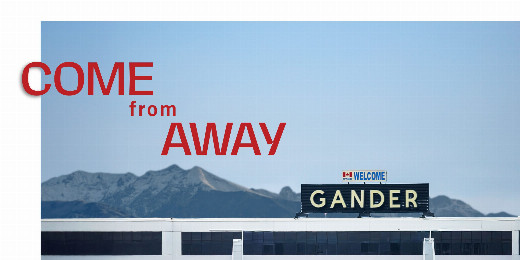
Come from Away Stages (9/18-10/18) |
|
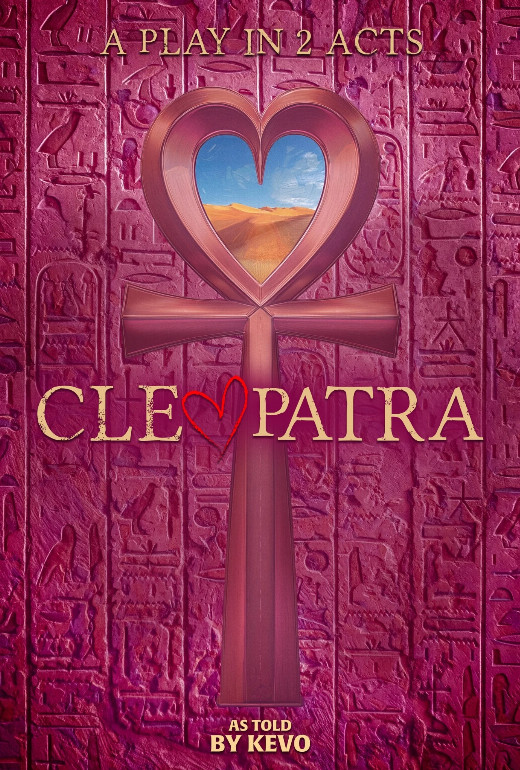
Cleopatra Midtown Arts (10/03-10/03) |

|
Anarkali Reimagined Luxtrium (10/22-10/25) PHOTOS |
|
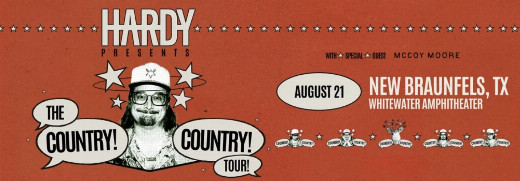
Hardy WhiteWater Amphitheater (11/21-11/21) |