

Season 2, Episode 5: Behind every summer is a community that keeps Fire Island alive. This episode explores the history of the beloved Pines Pantry through the eyes of its iconic Pantry Girls, alongside the volunteer firefighters of The Pines and Cherry Grove who protect the island from fires, hurricanes, beach erosion, and an uncertain future.
Same Show, Different Realities: Actors and Producers on Broadway’s Future
It takes a whole community of people to bring a Broadway show to life. Keeping a show running is where the conversation gets complicated.

There is nothing quite like sitting in a Broadway theater when a performance has everybody leaning forward in their seats. The vocals are vocaling, the ensemble hasn’t missed a beat, and someone nearby has already whispered, “They better get a Tony.” For a few hours, hundreds of strangers have somewhere to be together and something to feel.
It takes a whole community of people to bring a Broadway show to life. Keeping a show running is where the conversation gets complicated.
For audiences, a closing announcement might mean scrambling to buy a ticket. For an actor, it means a job is ending. For a producer, it means confronting the future of a production that may have taken years to bring to the stage. Everyone is connected to the same show, but the stakes can look very different depending on where you stand.
And there is plenty to discuss before anyone posts a closing notice. Celebrity casting. The demands of eight performances a week. Opportunities for working actors. The money it takes to open a show and the money it takes to keep one running. These conversations are happening across Broadway, often in separate circles among people who share the same pressures. I wanted to spend some time with the conversations that follow people home from work and bring them into a shared space.
Actor Ari Groover (TINA: The Tina Turner Musical) had already brought one of these concerns into public view when she posted on social media about how celebrity casting affects her career. When we spoke, she pointed to a larger gap in how the industry addresses its challenges.
“We are talking about it. But we’re not talking about it with each other,” Groover says.
“I really wish there was a roundtable discussion that people could have between the actors, between producers, between stage managers, between theater owners, because I know it takes so many different avenues to make this industry work.”
So I spoke with producers Ken Davenport (SMASH, Once on This Island), Ben Holtzman (How to Dance in Ohio, WANTED), Daryl Roth (Kinky Boots, Liberation), and Rachel Sussman (Suffs, Liberation), as well as LaChanze, whose experience spans Tony-winning work as both an actor (The Color Purple) and a producer (Kimberly Akimbo, Topdog/Underdog). Alongside Groover, I connected with actors Melody Betts (The Wiz, WANTED), Andrew Chappelle (Hamilton, & Juliet, Mama Mia), Aaron Harrington (Little Shop of Horrors, WANTED), and Michael J. Mainwaring (Swept Away, Galileo).
These interviews happened separately. Here, their perspectives share the same space.
What does the producer raising millions of dollars wish the actor understood about the weight they carry? What does the actor preparing for eight shows a week need the producer to hear? And where might they be more aligned than they think?
Start with something everyone recognizes: it costs money to keep showing up.
“It is more expensive than ever to make work on Broadway,” Sussman says. “It’s one thing to raise whatever that capitalization is one time, but it’s these running costs that are just really, really challenging for shows to cover on a week-over-week basis.”
Capitalization provides the initial funding for a production. Weekly running costs keep it operating. Getting a show to opening night does not mean the financial pressure has passed.
For Roth, rising expenses have changed how much time a production has to find its audience.
“The day-to-day budget costs for a show have gone up appreciably. And that adds to the size of the overall capitalization and, more importantly, the weekly running costs,” she says. “It used to be easier to survive until the word of mouth and the momentum built. But financially, that needs to happen more quickly now.”
At the same time, she says, audiences are buying tickets closer to the performance date, making it harder to anticipate what lies ahead. A show may need time for people to discover it, love it, and tell someone else. Time has a weekly price tag.
LaChanze describes the undertaking plainly: “Every show is a startup.”
A producing team assembles people, secures investment, develops the work, and hopes an audience will embrace it. The belief required to begin is considerable. The outcome is uncertain.
“There really is no formula for commercial success on Broadway in my view,” Roth says. “I have always chosen plays and stories because I love them and hope others will, not necessarily knowing what the commercial potential will be. Sometimes we’re surprised. And sometimes you think something’s commercial and it just, for whatever reason, isn’t.”
For Sussman, finding an audience begins with recognizing how a specific story can connect with people beyond its immediate subject.
“I think sometimes the most specific, nuanced pieces of work actually can have the broadest appeal because you can find universality in the humanity and in the storytelling,” she says.

“Suffs is such an American story and it focuses on a particular chapter of our history and women fighting to get the right to vote. But broadly, it appeals to anyone, I think, fighting for what they believe in and how far you’re willing to go.”
For a producer, that belief becomes a question.
“What is the story I’m seeking to tell? And do I believe that there is an audience that is expansive enough to want to experience it?”
Holtzman has also followed projects before their commercial possibilities were clear. With How to Dance in Ohio, he recalls believing in the story and its artist before knowing exactly what the production would become.
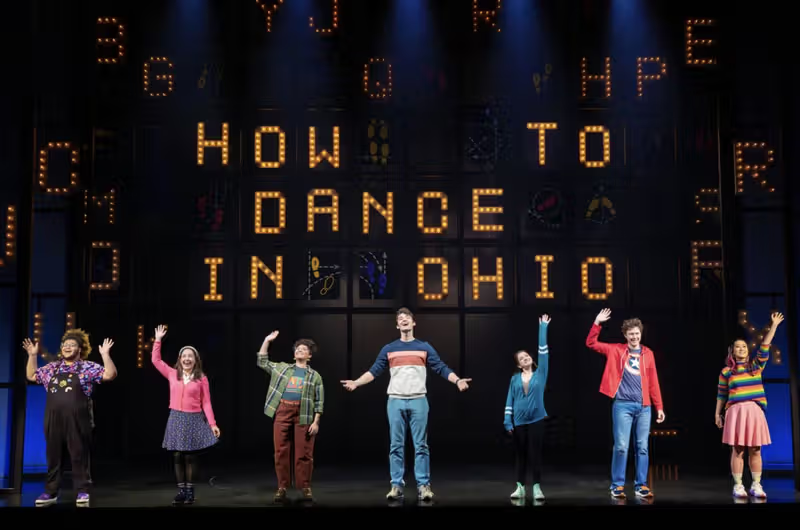
“But I think sometimes you develop things and if they end up not being commercial, then maybe Broadway isn’t the way,” he says. “Maybe you help set it up in a place where the show can actually thrive.”
That raises a question worth holding on to: is getting to Broadway always the same thing as finding the right home?
Chappelle offers another perspective on the startup conversation, this time from the dressing room.
“Every actor is essentially running their own business. Their business is their product that they bring to every production. And like any business, there are costs that you incur to keep your business running. Dance classes, acting classes, headshots, personal training, all of these things go into being the best version of yourself.”
Those expenses continue between jobs. Even during a run, staying prepared for future work can compete with the cost of everyday life.
“There might be a time where you really want to take a dance class or you really want to take an acting class, but you can’t because you need to handle the non-negotiables, which are just the basic living costs,” Chappelle says.
The production has operating expenses. So does the person arriving at the stage door.
Betts has been bringing those realities to union negotiating tables. For her, an increase means little without considering how far behind an actor may already be.
“When we go to these negotiating tables and we are trying to raise those percentages up, we’re already way behind. We’re already behind the mark where we actually should be,” she says. “And that’s problematic because people are still living paycheck to paycheck, and it’s not for lack of proper planning or spending. A lot of actors are going without or living beneath their means, or at least attempting to, so that they can continue to do this job.”
Her goal is straightforward.
“We’re not trying to be rich. We just want to live comfortably.”
Booking Broadway is an accomplishment. Building a life that allows you to keep working there is another undertaking entirely.
“All of us working on Broadway are working on Broadway with the hopes that we can continue working on Broadway,” Chappelle says. “And to continue working on Broadway, we do need to sustain through the lean times. We do need to be able to stash away money for when we don’t have work. We do need health insurance for when we don’t have work.”
Ask Groover what job security looks like right now, and her answer arrives quickly.
“Laughable.”
The humor has a short runway.
“A lot of people are deciding to pivot careers. I know sometimes that I’ve been thinking about that a lot, just for stability,” she says. “There used to be a thing of wanting to book the next gig. Now you’re booking the next gig because you have no choice.”
Mainwaring has found security by developing additional sources of income, including sound design and DJing, while keeping his work connected to his creative life.
“I know I signed up for uncertainty by choosing a career in the arts. The way that I found job security is having multiple forms of income,” he says. “Everything that I’ve done has always lended itself back to theater. And I’ve been very intentional about that in my life.”
Betts reaches a similar conclusion.
“I don’t think job security is a real thing for actors, especially if we’re only acting. There has to be something else because shows don’t last that long,” she says. “Job security looks like planning ahead and making sure that there are other streams of income. And we have to do that individually, figure out how that works out best for us.”
Holtzman recognizes the emotional complication of depending on something so closely tied to identity.
“I think it’s always really difficult when you take the thing that you’re most passionate about and that you love the most and tie it to your livelihood, because then it adds a different layer of need to it,” he says.
He admits producing is also financially and emotionally uncertain.
“Our industry is like the highest highs and the lowest lows,” he says. “When it’s good, it’s really good, and the crashes after can be really difficult. And it can often feel like you’re starting over every time.”
Davenport identifies a connection that can get lost in the distance between the rehearsal room and The Producing Office.
“Actors and producers are employed and unemployed at very similar times.”
Their financial circumstances and responsibilities differ. But the question of what comes next can be on more than one person’s mind while the current show is still running.
Loving that show does not make the bills disappear.
“I don’t understand why it has been made a part of our culture that because we enjoy our job, we should take less for it. That’s ridiculous,” Betts says. “I am not willing to buy into just because I enjoy my job I should just be grateful for whatever it is that I get.”
She sees enjoyment as something audiences benefit from, alongside the full commitment a performer brings.
“If I’m doing it well, you are getting every part of my person. You’re getting my spirit and my soul, what that offers. You’re getting my physical body, what I can offer with that.”
As she puts it: “Yes, we get to play, but this is not a game.”
The question of who gets to play has become its own source of tension.
Holtzman connects celebrity casting directly to the price of admission. When a ticket represents a significant purchase, a familiar name can offer an audience member something they feel certain they will receive.
“I think if we have to charge a certain amount for ticket prices, then audiences want to know what they’re paying for and want to know that they’re making a good investment in buying a ticket,” he says. “And I think celebrities provide that for people because they know at least they’re going to get to see the person that they want to see regardless of what the show is, whereas when there’s not a celebrity, that’s a newer show, we’re asking audiences to take a risk.”
For the performer hoping to get into the room, that calculation can feel personal.
Groover describes the frustration of experienced theater artists struggling to access opportunities because they are less widely known. She understands that popularity can sell tickets. She questions what it says to performers who have spent their lives developing the skills the work requires.
“It may make it popular, but it does not mean that the show is better.”
Chappelle sees both sides of the transaction.
“The good side is it brings people to Broadway. The not great side is that people who ordinarily would have taken those jobs don’t get opportunities for those jobs,” he says. “Everything in this industry is a gamble, but it’s particularly a gamble when you have someone like that in the show because you are hoping that it brings people to see the show, but it’s not a guarantee.”
LaChanze asks that the artist’s abilities remain part of the conversation.
“Oftentimes it’s misconstrued that, ‘Oh, that person was cast because they’re a celebrity.’ Often times they’re cast because they’re just good, and they want to do some theater,” she says. “I really just go for the art first and the artist first, and if that artist happens to be a celebrity, then I’m going to cast them.”
Harrington’s experience at Little Shop of Horrors gives him reasons to understand the appeal.

“I come from an Off-Broadway show that really thrives off of bringing in celebrity actors, and I think there are some shows where it does really well. And it’s a really cool thing to see your favorite movie star or TV star come in and do this iconic role,” he says.
But he worries about the pathway for artists building their careers in theater.
“Broadway used to be in the business of creating stars.”
He sees a balance worth considering in the new Broadway musical WANTED, where recognizable musical artists help draw audiences to a story centered on its twin sisters.
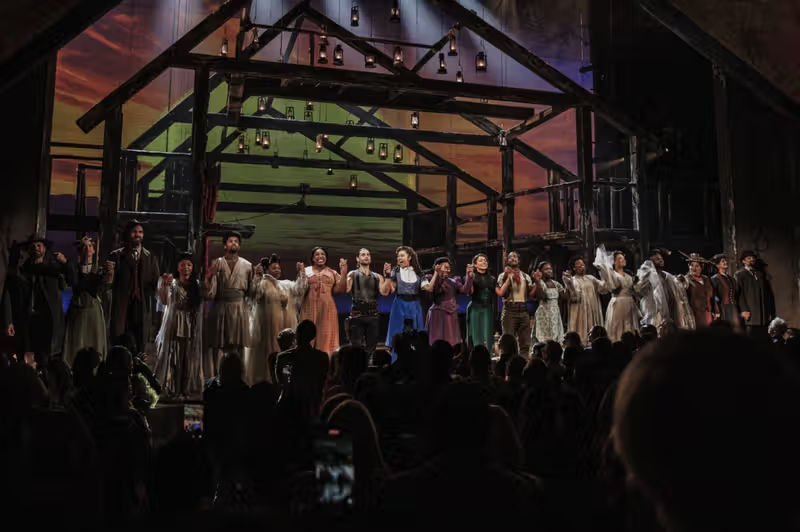
“It definitely helps the production in terms of bringing in this person’s fan base. But they’re not being made the center of the entire show. And I think that is a great formula to be able to help get butts in seats, because, I mean, who are we kidding? That’s very important. We need butts in seats.”
His acceptance of that strategy comes with a larger question.
“I understand how it benefits the show to do that. But we’re talking about a bigger industry problem here: Why is it that we need to bring in celebrities just to get people to come see a show?”
Roth brings another consideration to the table: what happens after Broadway?
“We have to define what success is,” she says. “A show may or may not recoup on Broadway, but a Broadway run can lead to a hugely successful licensing and regional production path if you use just a wonderful cast of actors.”
A celebrity who helps launch a play may never tour with it. The work still needs a life beyond that individual performance.
The discussion keeps returning to the audience. What will persuade someone to try something unfamiliar? What will make them return? And how much can they afford to spend on the discovery?
“I don’t think everyone will come back,” Holtzman says of audiences initially attracted by celebrities. “But if it’s getting new people to come to theater and love coming to theater, that feels like a net positive to me.”
Davenport argues that higher prices for in-demand tickets increase the responsibility to provide other ways in.
“As long as we’re going to continue to drive up the prices for those in demand, I believe that it’s everyone’s responsibility to offer even more alternative options for new audiences that we need for the future,” he says. “Everyone knows that tomorrow’s audience doesn’t become tomorrow’s audience because they’re buying a premium ticket today.”
He knows that from experience.
“I got started seeing a lot of Broadway shows on 2-furs and student rush and all of it. That’s where not only the audience comes from, that’s where the professionals for Broadway come from. So we need to make sure we’re continuing to do that, if not more so.”
The student in the discounted seat may become a regular ticket buyer. They may also become the person writing, performing, designing, or producing the work.
Roth sees audience development as a question of belonging.
“I think the whole idea of building audiences is making people feel welcome in the space and having them understand that there’ll be somebody on that stage that they can relate to and that it will be an experience.”
Holtzman believes those relationships need to begin early.
“Reaching out to the communities that you think are gonna want and love and feel seen by your show the most and starting those conversations as early as possible,” he says, describing the value of bringing the work into community centers, houses of worship, and schools.
He also emphasizes planning affordable seats and finding partners who can help subsidize access. An invitation needs somewhere to lead. Feeling welcome matters. Being able to afford the ticket matters, too.
The people already inside the building have another question about access: how much access do they have to information about their own show?
“I personally would rather it be something that we’re aware of rather than something that just hits us like a train out of nowhere,” Harrington says of a production’s financial difficulties. “In my personal experience, it’s not a very common thing to know anything about what’s going on financially.”
Groover recognizes how difficult that conversation can be.
“It’s not easy to report to your cast and your crew and your creatives that they no longer can sustain the financial responsibility for keeping the show open,” she says. “I give them some grace on having to deliver the bad news, but I really wish they could just be upfront sometimes.”
Several producers pointed to publicly available weekly grosses as a way to follow a show’s sales. But seeing a number and understanding what happens next are different experiences. A sales figure cannot explain every option a producing team is weighing or how much time a company has to prepare.
For Sussman, transparency also means explaining the reasoning behind a decision.
“It’s not just what’s happening that we need to be communicating between parties, which is theater owners to producers and producers to creatives and company members and this whole ecosystem. … Why a certain decision is being made, because it helps to offer the perspective and the context, rather than just, ‘This is what it is,’ but why the decisions are the way they are.”
That distinction matters when people are trying to understand what a production’s financial health means for their own future.
LaChanze has experienced markedly different timelines as an actor. She recalls receiving months of notice from David Stone on If/Then. On another production, notice came on a Friday for a Sunday closing.
The difference affects how someone plans their life.
“I have tried always to be very respectful in giving companies as much notice as I can,” Roth says. “I know that they have rent and childcare and lives and bills to pay and how important the income is.”
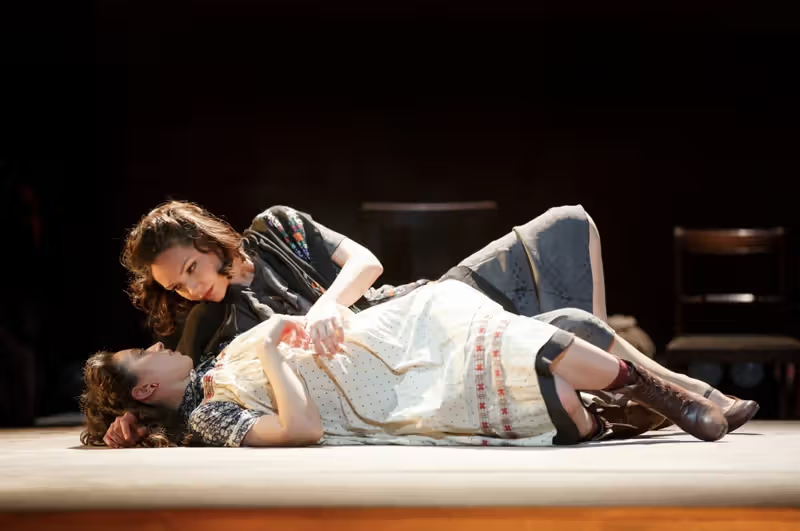
Her experience with Indecent captures the collision between financial responsibility and belief in a piece of work. Facing pressure to close, she posted a notice. Then she went back.
“I couldn’t sleep. I couldn’t live with myself, and I went back the next day, and I actually tore it down,” she recalls.
“I called my partners and I absolved them from any financial loss. I said, ‘I believe this is going to work, and I’m going to cover any losses.’”
According to Roth, the production continued for the remaining six weeks it had access to the theater and made money each week. Cast members appealed to audiences to spread the word, and the company understood what the plan was.
“Everyone knew in the company what the plan was, and so they could plan for the future,” she says. “And we left on a very high note.”
That was a particular decision on a particular production. Not every producer can personally cover additional losses. But her account brings financial commitment and communication into the same story.
Mainwaring has witnessed what a closing does to the people trying to keep a show alive.
“I’ve seen the effect early and unexpected closures have on producers. It affects them so much and so deeply and so profoundly when the show is closing too.”
He recognizes the balance between transparency and discretion. Imagining himself in a producer’s position, he asks how he would show up for the company while also doing the work required to sustain the production.
Holtzman believes some misunderstandings are sustained by the industry’s own habits.
“I don’t think they understand how producers make money. I don’t think they understand how shows are financed,” he says of actors’ knowledge of producing. “And I think some of that is by design. I think the way that the industry functions is there’s a lot of gatekeepers that are holding information from certain people.”
His answer places responsibility on the people holding that information, too.
“I’m all for the democratization of how the industry works. I think we all can work better together if we understand the ecosystem.”
Roth describes financial sacrifices that may happen without company members knowing.
“Producers, despite the work they’re doing every day, 24/7, they’re usually the first to waive their own weekly fees and office expenses when a show is facing difficulties,” she says.
Groover acknowledges that producing involves work actors may never witness.
“It’s a lot of hustle that producers do that I think we don’t take into consideration,” she says. “A good producer does put in a lot of work that I think we don’t necessarily talk about.”
Harrington offers an example of how that knowledge can be shared. He recalls Sammy Lopez making space to explain producing to people interested in learning.
“I think there’s a lot that producers do that actors are unaware of, and I definitely acknowledge that,” he says. “I think we can communicate with each other a lot better. I think everything, all of this comes down to communication.”
Then, simply: “I don’t know all that producers have to do. I would like to.”
There is an opening in that sentence.
There is also one in Roth’s response when asked what producers need to better understand about actors.
“I think that’s a question more for the actors to tell us.”
One answer comes back eight times a week.
Davenport believes reconsidering familiar practices begins with a willingness to question them.
“Let’s for a moment not think about what we’ve done for the last 50 years,” he says. “If ever there was a time to try something different, it’s right now. And it’s natural. It’s human nature to want to continue to do what we’ve done and what also has worked.”
His invitation extends to everyone with a stake in the industry.
“But right now, I think it’s a time for all of us to come together and say, ‘I know that’s precedent. I know that’s the way it’s always been. But maybe right now we try something different and we’ll get a different result for everybody.’”
For Groover, the traditional schedule needs reconsideration.
“We feel like we’re being ran like a factory. And we are human beings. So we need time and care and rest to deliver the best show possible.”
LaChanze approaches the question from a different history.
“The actor in me, I’ve only done eight shows a week, so it’s all that I know. And, you know, I’m old school. I started working as an actor professionally in the ’80s. So it’s just been the way that I’ve been trained to be an actor,” she says.
“As an actor, I’ve been raised on eight shows a week. This is what I know to be what the job is. And as a producer, financially, it is how we are able to continue to maintain the run of our shows by having so many shows in a week.”
She points to standbys, alternates, and swings as ways productions provide coverage while maintaining opportunities for audiences to attend.
Chappelle knows the exhaustion and the satisfaction of getting through a demanding week.
“When you get through those eight-show-a-week moments where you had to push through pain or heartache or whatever you’re going through in your life, you do feel like a superhero at the end of the week,” he says.
“There is definitely a camaraderie with your coworkers when you get through together. We all lean on each other. You lean on your fellow actors, you lean on your dresser, you lean on stage management, and somehow miraculously it all gets done.”
His answer comes with a qualification.
“Sustainable, I think, it depends on how long you’re doing the show, and it depends on the show.”
Mainwaring says eight performances currently work for him, but he would reconsider how they are distributed.
“I might try to reevaluate the five-show weekend,” he says.
He wonders whether shifting a performance and reaching more school audiences during the week could create a healthier rhythm. It is a proposal about how the work is scheduled, rather than simply how many times the curtain rises.
Roth also considers the demands of an individual production. She points to averaging seven performances a week for Sarah Snook in The Picture of Dorian Gray. But fewer performances do not necessarily bring enough savings to offset the lost revenue.

“A general manager would be better equipped to answer this, but my understanding is that usually the amount saved in running costs by reducing the number of performances is still nowhere close to the amount you would lose by cutting a performance,” she says.
Holtzman sees limited room to experiment within the existing structure.
“Because we’ve built a system where every show has to operate the same way, on the same contracts, it sort of doesn’t bring a lot of flexibility,” he says. “It doesn’t feel like we have much wiggle room to explore that unless we’re making it less shows, which is not usually viable for the productions and the way that we budget them.”
Harrington understands that financial demands exist. His question is what the industry will provide if eight performances remain the expectation.
“A lot of us deal with injuries, whether or not it’s to the physical body or to the limbs or to the vocal cords. And there really isn’t much time to recover when you’re doing eight shows a week and you have one day off,” he says.
“If you’re saying we have to do eight shows a week to sustain, great. Then we need to focus on how do we get actors healthy and keep them healthy.”
He calls for resources supporting physical and mental health, alongside intentional opportunities to rest without losing income.
Chappelle has experienced versions of that support.
“I have done some shows that had a special health and wellness stipend that they gave to their performers that could be used for extra physical therapy or massages or personal training,” he says. “When I did have that stipend, that was very helpful because it’s essentially a way to maintain your physical wellness while doing the show without having to come out of pocket as much.”
He also describes “swing-outs,” scheduled opportunities for a swing to perform while an onstage company member rests.
“This is really good for the show because it can allow the swing an opportunity to maybe do a track that they haven’t performed in a long time or haven’t performed ever,” he says. “And then on the other side, it can also allow that performer to not do the show that night but still get paid.”
That possibility depends on having sufficient coverage. When absences require all the swings to perform, the scheduled break may no longer be available. Still, it gives the conversation something concrete to examine: staffing, recovery, healthcare support, and what can be planned before exhaustion becomes an emergency.
Harrington wants care built into the process from the beginning.
“I think it’s less about producers understanding it and more about producers being able to acknowledge and uplift it in a stronger way and not making it something that gets activated when, for lack of better words, shit hits the fan,” he says. “If it’s just looked at and focused on from the beginning, I think that helps a lot.”
Then he brings the financial and physical realities together.
“You can’t produce anything if you have broken talent.”
These are difficult conversations because the work matters deeply to the people having them. A show can be a paycheck, an investment, a professional milestone, a community, and a piece of someone’s identity all at once.
Mainwaring responds to its uncertainty by trying to remain present.
“I try to soak everything in because it is unstable,” he says. “It brings me closer to the moment because I cherish it.”
Chappelle describes approaching a planned departure from a company as “living in the experience and simultaneously grieving it all at once.”
That attachment exists on the producing side, too. Roth talks about choosing stories that mean something to her and helping audiences encounter experiences beyond their own.
What these artists and producers fear is losing the ability to keep doing it.
Harrington imagines more theatermakers seeking affordable spaces outside Broadway. Chappelle worries about shorter runs, smaller casts, and more principal opportunities going to celebrities. Holtzman anticipates continued reliance on recognizable titles and artists, while holding on to the possibility of an unexpected show that reminds everyone what the form can do.
“I think even despite the biggest challenges that the industry has been through, there are still great artists and great stories, and those things will rise to the forefront,” Holtzman says. “Maybe they won’t be able to happen as much or as quickly with things staying the way they are, but I have to believe that those things will remain and people will still make great work.”
LaChanze sees an industry confronting its limits.
“We’ve sort of hit the ceiling, and in order to continue to thrive, we must make some changes.”
The difficult part is deciding what those changes require and who can afford to make them. An actor being asked to give more may already be stretching a paycheck. A producer being asked to absorb more may already be waiving fees or seeking additional investment. Theater owners, unions, designers, crews, and the many people whose labor sustains a production have their own realities to bring to the table.
As Holtzman points out, “There’s a lot of players and a lot of interests, and it’s not always such a straight producer-to-actor relationship. There’s a lot of people in between that make it more complicated.”
Shared affection for theater gives people a reason to return to the conversation. It does not settle what happens there.
Roth puts the common ground plainly.
“We want to have success. We want to have a good run. We want audiences to fill the theater. On that, we all agree. Period.”
Back in the theater, the audience is leaning forward. Someone feels affirmed seeing their likeness onstage. Broadway dreams are coming true for the first time. A dresser is preparing the next change. A swing is ready. Somewhere in the building, someone is hoping tonight’s audience tells five friends.
Everyone making these unforgettable moments possible deserves a voice in shaping what comes next. Broadway’s future depends on how well they listen to one another and turn those conversations into collaboration that sustains both the work and the people who bring it to life.
Broadway news in your inbox
Weekly top stories - unsubscribe anytime.
Weekly top stories - unsubscribe anytime.
Popular episode




Tickets From $70

Tickets From $135

Tickets From $58

Tickets From $67