


Review: SAFE HAVEN, Arcola Theatre
Important story is let down by structural issues in the play
By: Gary Naylor Jan. 20, 2026
 In Gil Scott Heron’s seminal 1971 poem/rap/prophecy, "The Revolution Will Not Be Televised", it finishes with the terrifying line “The revolution will be no re-run, brothers / The revolution will be live”. Over half a century on, it’s there on Youtube direct from the streets of the Twin Cities.
It’s all the more shocking because we’ve grown used to conflicts in distant lands being sanitised in television coverage ever since pictures from Vietnam played a huge role in fueling protests movements worldwide. Governments prosecuting wars know that control of a supine, cowed media is critical to success and, if they can’t stop people filming goon squads outside their own front doors, they sure can deny journalists access to the battlefields of today.
But in 1991, some of the finest journalists in the world were embedded with the US military as it launched Desert Storm to liberate Kuwait from its annexation by Saddam Hussein’s Iraq. The morning after those extraordinary images of immense firepower launched The Gulf War, CNN were the three letters on everyone’s lips, their bullet-proof vested up reporters were heroes and the world looked different. Six weeks later, Kuwait was out from under Saddam’s jackboot, free (or what counts as free in the Middle East).
And then we lost interest.
Well, not quite all of us. The USA wanted the boys home, their leaders, having been there, still scarred by ‘Nam, but the Brits (and some European powers) remembered something deeper in the past. Centuries of bitter experience told them that lines drawn on maps seldom matched peoples on the ground and those blue lines of rivers could easily turn red.
Saddam, smarting, turned his attention to his minority Kurdish population who had risen against a tyrant in the north of Iraq and seized key cities in expectation of his downfall. Western forces, somewhat unexpectedly, did not push on to Baghdad and they were suddenly at his mercy. They fled for refuge in the mountains and died on the goat tracks that led up to those frozen wastelands.
%20Ikin%20Yum.jpg?format=auto&width=1400 "Review: SAFE HAVEN, Arcola Theatre")
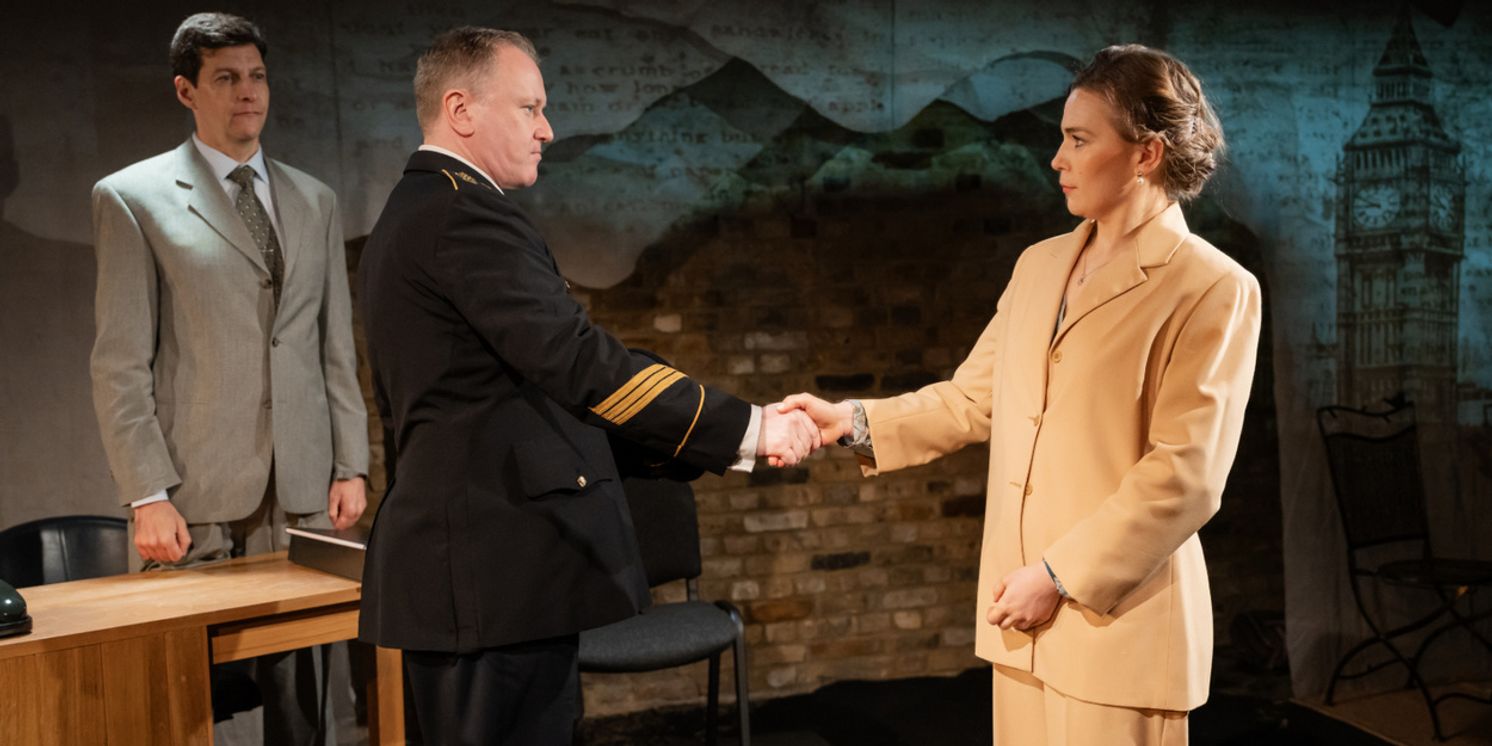
Chris Bowden’s new play tells the story of the diplomatic efforts that resulted in Operation Haven, a UK-led initiative that provided safe areas and humanitarian aid, guaranteed by a No-Fly Zone, that saved many Kurdish lives. Saddam’s statue was to stand for some 12 more years and many, many more deaths would be visited on his country, but, in the grim history of the region, it stands as a monument to international cooperation delivering positive results.
That may be the mother of all introductions to a review and the necessity for it is the first of the play’s problems. Despite lots of exposition and an entirely reasonable simplification of the story, the 105 minute runtime comprises far too much exposition.
Crudely put, there’s a helluva’ lot to explain, despite projections of newspaper headlines and too many scenes that involve characters having conversations that sound more like AI summaries of Wikipedia pages than anything that real people might actually say. Such glibness undermines the drama, though it does return in some pithy exchanges between the Brits and Stephen Cavanagh’s somewhat caricatured US Army General - more of that please!
This is Bowers’s first play and, though the programme lists an experienced director in Mark Giesser and a splendid cast, including the always excellent Beth Burrows as an up and coming Foreign Office assistant and Richard Lynson as a cricket-obsessed career diplomat, it desperately lacks a dramaturg. And the play really needs one to focus its story on to something sufficiently clear for an everyday audience to follow, provide the dialogue a little more zip and, crucially, turn down the “Tell” and turn up the “Show”.
The Civil Service shenanigans that Sir Humphrey Appleby once pulled off to comic effect, are periodically interrupted by a secondary plot concerning a pregnant Kurdish woman and a friend fleeing Iraqi terror squads and suffering in harsh conditions. But the two women are only ever illustrative, too underdeveloped as characters to be more than ciphers, merely embodying a fate already detailed in the main storyline set back in Whitehall. That said, it does give Kurds a voice, though they probably should have a more prominent role in a play that is centred on their existential struggle.
For all its faults, there’s a good play poking through the flawed one we see, but there’s a fair bit of surgery still required to ensure that it blossoms. But maybe that’s not really the point. The real takeaway is that a London theatre can, and does, dare to stage a new play about an important lesson from the past celebrating bold, risky international cooperation at a time when such courage has never been more required.
Safe Haven at the Arcola Theatre until 7 February
Photo images: Ikin Yum
Reader Reviews
Videos