


Review: JITNEY at Black Theatre Troupe
The production runs through February 22nd at the Helen K. Mason Performing Arts Center in Phoenix.
By: Herbert Paine Feb. 07, 2026
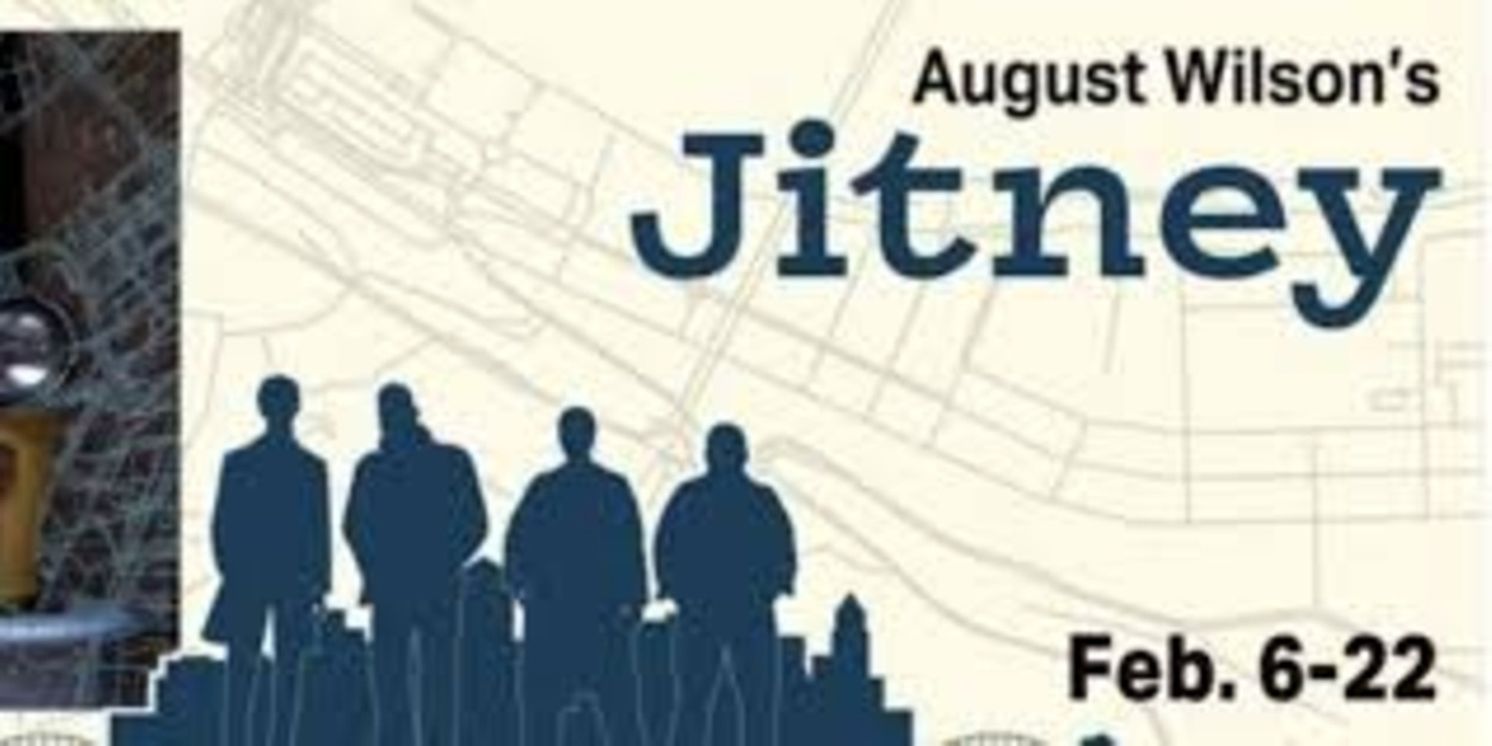
Guest contributor David Appleford offers his perspective on The Black Theatre Troupe’s production of August Wilson’s JITNEY.
August Wilson once set himself an audacious task: to chart the African American experience across the twentieth century, decade by decade, through a cycle of plays that would track not just history but the emotional weather of ordinary lives. He pulled it off.
JITNEY, written in 1979 and first produced in 1982, contains the essential Wilson virtues. It has a generosity of spirit, an ear for the music of everyday speech, and a profound respect for people whose lives are too often dismissed.
Presented by The Black Theatre Troupe, one of the few theater companies in the nation recognized for producing all ten plays in Wilson’s American Century Cycle, the production is now playing at the Helen K. Mason Performing Arts Center in Phoenix through February 22. The play is set in early autumn of 1977 in Pittsburgh’s Hill District and unfolds inside a worn-down, illegal taxi operation—a jitney station. In cities like Pittsburgh, Detroit, and Chicago, a jitney is a private car pressed into service as an unofficial cab, filling the gap left when licensed taxis refused to enter Black neighborhoods. Wilson doesn’t treat this as sociological exposition; it’s a fact of life. The station exists because it must, because the city has quietly decided these residents are not worth the trouble.
However, the production’s physical world doesn’t fully reflect that reality. The set is meant to suggest a jitney station that has seen better days—worn brick, peeling walls, and the residue of hard use—but while the design is efficient and serviceable, the space appears surprisingly well kept, more recently refreshed than weathered by years of use, blunting the sense of hard-earned history the play implies.
The men who pass their time here work under the watchful eye of Becker (Ken Love), the station’s proprietor, a man of ironclad principles and quiet authority. He has rules for the drivers: no overcharging, no drinking, always keep the cab clean, be courteous. Becker believes in order, in dignity, and in holding the line even as the world closes in. Change is coming to the Hill District, and the station is slated for demolition, but Becker refuses to budge. He intends to carry on until someone physically drags him out.
Wilson doesn’t drive JITNEY with a conventional plot. He lets it idle and roam, powered by overlapping conversations and small, accumulating conflicts. The pleasures of the play, directed by Rachel Finley, come from the rhythms of daily life: the arguments, the teasing, the half-confessions that slip out between three and four-dollar fares. These men talk because that’s how they survive. And as they talk, Wilson reveals everything that matters. At times he seems less like a playwright than a composer, someone who writes for voices the way others write for strings and brass. The language is never merely functional, it carries rhythm, repetition, and emotional phrasing. What matters is not always what is being said, but the tune a life has settled into.
The most engaging throughline belongs to Youngblood (Jonathan Davis) and Rena (Kay B. Rose), longtime lovers and parents to a young son. When gossip suggests infidelity, their relationship teeters. Director Finley resists melodrama, letting the tension play instead as tragicomedy. Youngblood’s secret turns out not to be what anyone expects. It’s one of those moments that reminds us intimacy is never simple, but it is often forgiving.
Then there’s Fielding (Calvin Worthen), who at first appears to be little more than the station drunk. The play, though, never settles for surfaces. When Fielding finally gets his moment, the humor drains away and something raw and dignified rises in its place.
The emotional weight rests with the return of Becker’s son, Booster (Rapheal Hamilton), after a twenty-year prison sentence. Booster’s crime, retold with relish by the gossip-hungry Turnbo (Eric L. Banks), carries the scars of its era. While the exchange between father and son is powerfully delivered, this is also where the play occasionally strains, leaning into overt confrontation and raised voices. These are the moments when JITNEY feels least alive. Wilson’s great talent lies elsewhere.
It lies in the pauses, the jokes that go nowhere, the arguments that don’t quite resolve. When these cabbies sit around killing time, the play hums, and this cast does it well. Their casual banter reveals crushed ambitions and small victories. Wilson’s language is colloquial but elevated. You don’t watch these men so much as eavesdrop on them.
The Black Theatre Troupe ensemble makes that eavesdropping a pleasure. Becker carries himself with the weight of a man who has spent a lifetime choosing responsibility over ease. Fielding moves with a sad, almost balletic grace, funny until he suddenly isn’t. Shealy (Jonah B. Taylor) breezes in and out, a gust of nervous energy in a room full of accumulated years. No one is wasted; no one exists merely to fill space. The actors, including Dion Belcher as Philmore, a frequent customer of the car service, and Roosevelt Watts as Doub, one of the most steady and responsible drivers at the station, don’t so much perform at one another as live alongside one another.
There’s something especially fitting about JITNEY’s history. When it premiered in 1982 at Pittsburgh’s small Allegheny Repertory Theatre, Wilson famously took his mother to see it, and they arrived by jitney. Years later, after his later plays had found their way to Broadway, this earlier script was rediscovered and finally given its due, traveling to London in 2001 where it won the Olivier Award for Best Play. That journey, from neighborhood necessity to international recognition, mirrors the play’s own unassuming insistence on worth.
JITNEY may not reach the towering heights of Wilson’s later works. For all its power, the play can feel uneven, a trait mirrored in the production’s pacing. Scene transitions frequently stall in longer than necessary silent blackouts, and the lighting proves oddly overbright for a setting meant to survive on a single bulb. The over-illumination diminishes the sense of a jitney station meant to be perpetually hovering in dusk. Still, the play is suffused with the sympathetic wisdom that defines Wilson’s writing. He looks at lives many would dismiss as small or defeated and finds in them an undeniable nobility.
The result in this flawed but engaging Black Theatre Troupe production, is absorbing, funny, and quietly devastating. It remains bracing to sit in a theater and watch a play not centered on white experience, written without translation or apology, and performed with complete authority. You leave the theater on E. Washington Street feeling as though you’ve spent time with real people, in a place that mattered, just before it disappeared.
Black Theatre Troupe -- blacktheatretroupe.org -- 602-258-8128
Venue: Helen K. Mason Performing Arts Center -- 1333 E. Washington Street, Phoenix, AZ
Graphic credit to BTT
Reader Reviews
Videos