Photos: Pianist David Kaplan to Release QUASI UNA FANTASIA Album
The album features Beethoven's Op. 27 No. 1 and No. 2 paired with compositions by György Ligeti, Louis Couperin, Robert Schumann, and Johannes Brahms.
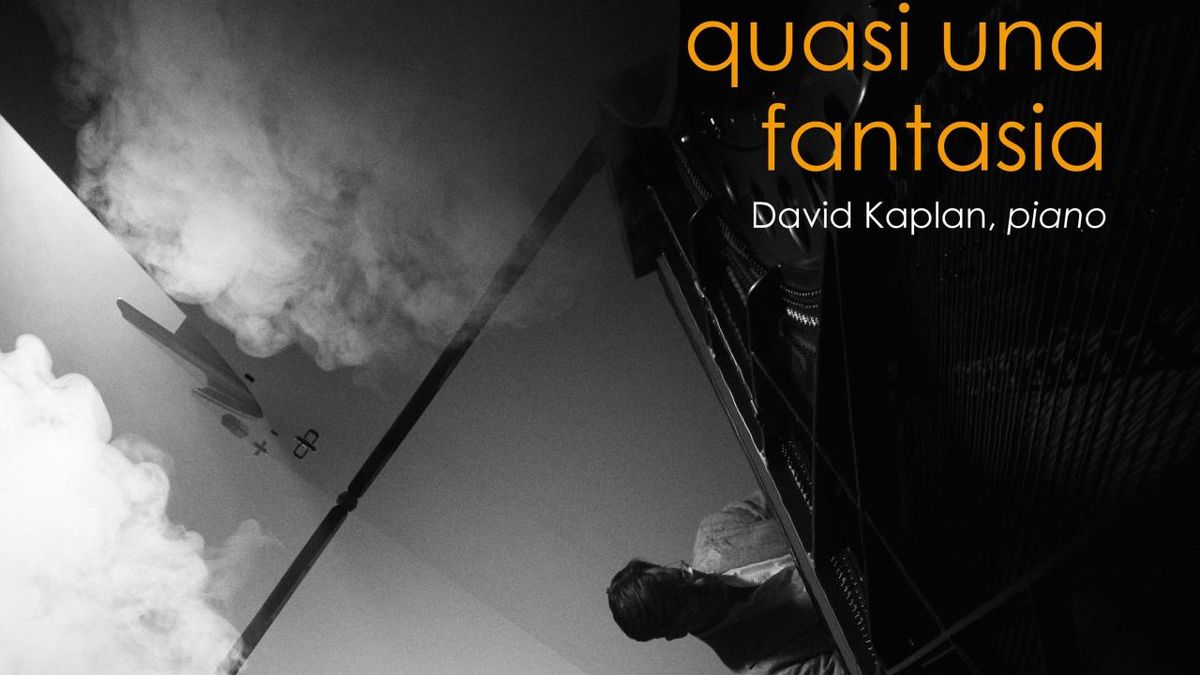
Pianist David Kaplan will release his second solo album, quasi una fantasia ('almost a fantasy'), on November 20, 2026 on Orchid Classics. Quasi una fantasia is centered around Ludwig van Beethoven's Sonata quasi una Fantasia in E-flat major, Op. 27 No. 1 and Sonata quasi una Fantasia in C-sharp minor, Op. 27 No. 2, and explores the elusive boundary between composition and improvisation in both old and new music. Kaplan has surrounded these two sonatas with music by György Ligeti, Louis Couperin, Robert Schumann, and Johannes Brahms, and contemporary commissioned works by Christopher Cerrone, Anthony Cheung, and Andrea Casarrubios. Kaplan's own improvised preludes and transitions connect the works on this intriguing recording.
David Kaplan has been called 'excellent and adventurous' by The New York Times, and praised by The Boston Globe for 'grace and fire' at the keyboard. He has consistently drawn critical acclaim for creative programs that interweave classical and contemporary repertoire, often featuring newly commissioned works.
The theme of quasi una fantasia is a personal one for Kaplan. He writes in the album's liner notes, 'From a young age, extemporizing at the piano came much more naturally to me than sight-reading.' As a young student learning the music of Bach, Mozart, Beethoven, and Schumann, he invented his own sequences and passagework over the composed harmonic progressions, a habit that became what he describes as a private 'party trick.' Recently, Kaplan has brought this aspect of his artistry to the stage, improvising cadenzas in concertos and recomposing passages in reprises, in performance. Kaplan writes in the liner notes that the album is dedicated to his childhood teachers, Miyoko Lotto and Walter Ponce, 'who tolerated countless hours of me playing anything but what was on the page.'
Each of the three new works – by 'the Three Cs,' as Kaplan calls them – captures a different side of fantasia. Cerrone's Passagework (2020) orbits a single driving ostinato, its relentless unity of idea recalling, in Kaplan's words, 'a great solo by the saxophonist Chris Potter or the pianist Keith Jarrett.' Cheung's three-movement Holding Patterns (2020) captures improvisation in two contradictory ways. It calls for improvisation through passages of indeterminate notation, while elsewhere its meticulously notated rhythms and metric modulations are designed to sound like free improvisation. Cerrone's and Cheung's works are also related, each inspired by elements of the other's recent piano concertos. Casarrubios' Sandglass (2022) evokes the states of falling sand – pent-up energy, inevitable cascade, and a final transformation into stillness, 'as we watch time, literally, run out,' as the composer puts it in her note.
The shorter works on the album each set up a larger one. Ligeti's Musica ricercata No. 1, built on a single pitch, prepares the austerity of Cerrone's ostinato in Passagework. Couperin's Prélude non mesuré, notated with pitches but no rhythms, anticipates Cheung's blend of aleatoric and specified notation. Brahms' Intermezzo Op. 76 No. 4 and Schumann's 'Warum?' from the Fantasiestücke, Op. 12 bookend the ruminative romanticism of Casarrubios' Sandglass. Kaplan's improvised transitions, as he explains, serve 'to create the illusion of continuity between disparate musical languages.'
At the heart of the album are Beethoven's two Sonatas quasi una Fantasia, Op. 27, which Kaplan describes as fantasies in opposite ways. In Op. 27 No. 2, the 'Moonlight Sonata,' Beethoven uses simple, stock forms as firm ground on which to 'improvise' surprising materials – an opening movement played without dampers to create a 'song in a deep cave' effect, and an incredibly virtuosic moto perpetuo finale. The Sonata Op. 27 No. 1 in E-flat major does the reverse, combining humble materials with bold form. Kaplan writes, 'The 'fantasia' element manifests in how the music jumps from one simple idea to the next, traversing distant keys, contrasting opposite tempi, and often leaving fragmentary ideas unfinished, hanging in the air.'
Kaplan feels that classical-era scores were never meant as 'sacred tablets intended for eternal posterity.' In the Op. 27 Sonatas, he improvises at a handful of what he calls 'cliffhanger moments,' describing these transitions as 'where a virtuoso would have felt potential energy to be mined in the form of new, unplanned expression and display.' Unlike Frederic Rzewski's famous 20-minute improvisation in the Hammerklavier, Kaplan's goal is 'to bend rather than break Beethoven,' imagining 'what one extra degree of expression, embellishment, excitement, or harmonic invention might have sounded like in 1800 at the hands of a contemporary improvising pianist.'
The album grew out of Kaplan's recital program of the same title, which he premiered as a guest artist of Piano Spheres at Los Angeles' Zipper Hall.
'I hope this album, with its mix of old and new, thorough composition, mock improvisation, and true improvisation,' Kaplan writes, 'manages to bottle just a little bit of the magic of fantasia.'
About David Kaplan
David Kaplan is a New York-born piano soloist and chamber musician currently based in Los Angeles. He has appeared with the Britten Sinfonia at London's Barbican, Das Sinfonie Orchester Berlin at the Philharmonie, and with the Symphony Orchestras of Baltimore, Hawaii, and San Antonio, among many others.
As recitalist, Kaplan has consistently drawn critical acclaim for programs that creatively interweave classical, contemporary, and newly commissioned works. He has performed at the Ravinia Festival, Sarasota Opera House, Music on Main in Vancouver, Strathmore, Washington's National Gallery, and New York's Carnegie and Merkin Halls.
Balancing solo performances with meaningful collaborations, he is a veteran of numerous distinguished chamber music festivals and series, such as Seattle Chamber Music, La Jolla, Bard, the Chamber Music Society of Lincoln Center, Chamber Music Northwest, Bay Chamber, and Barge Music. As a core member of Decoda, the Affiliate Ensemble of Carnegie Hall, he performs and teaches around the world. The ensemble's self-titled debut album was recorded at Tippet Rise Art Center and released in 2024.
Kaplan's acclaimed solo debut album blending Schumann with music by a dozen contemporary American composers, New Dances of the League of David, was released on New Focus Recordings in 2024. He can also be heard on Naxos, Marquis, Bright Shiny Things, Albany Records, and on Nonesuch as part of his longstanding duo with pianist/composer Timo Andres (Shy and Mighty, 2010).
A student of the legendary Claude Frank, Kaplan has served on the faculty of the UCLA Herb Alpert School of Music since 2016. He is a Yamaha/Bösendorfer Artist, and away from the keyboard, he loves cartooning and cooking, and is mildly obsessed with classic cars.
Tracklist
György Ligeti (1923–2006)
1 Musica ricercata No. 1 [2:33]
Christopher Cerrone (b. 1984)
2 Passagework [7:53]
David Kaplan (b. 1983)
3 (improvised prelude I) [1:38]
Louis Couperin (c. 1626–1661)
4 Prélude non mesuré [2:37]
Anthony Cheung (b. 1982) – Holding Patterns
5 I [5:00]
6 II [4:00]
7 III [5:27]
Ludwig van Beethoven (1770–1827) – Sonata quasi una Fantasia in C-sharp minor, Op. 27 No. 2
8 Adagio sostenuto [4:31]
9 Allegretto [1:59]
10 Presto agitato [7:40]
Johannes Brahms (1833–1897)
11 Intermezzo, Op. 76 No. 4 [2:00]
Andrea Casarrubios (b. 1988)
12 Sandglass [6:17]
13 (improvised prelude II) [1:34]
Robert Schumann (1810–1856) – Fantasiestücke, Op. 12
14 'Warum?' [2:10]
15 (improvised prelude III) [0:20]
Ludwig van Beethoven – Sonata quasi una Fantasia in E-flat major, Op. 27 No. 1
16 Andante [5:05]
17 Allegro molto e vivace [2:00]
18 Adagio con espressione [3:07]
19 Allegro vivace – Tempo I (Adagio) – Presto [5:34]
Total time: 71:30
Credits
Recorded December 3–5, 2025 at the Recording Studio of the Evelyn and Mo Ostin Music Center at the UCLA Herb Alpert School of Music, Los Angeles, CA.
Producer: Silas Brown
Engineer: Sergey Parfenov
Additional editing: Ian Striedter
Bösendorfer 280VC piano provided by Yamaha Artist Services, prepared by Sean McLaughlin and Kayako Forrest
Cerrone's Passagework, recorded July 18, 2023, UCLA Recording Studio.
Engineer: Benjamin Maas.
Editing and mixing: Mike Tierney.
Mastering: Silas Brown.
Yamaha D-CFX piano prepared by Sean McLaughlin
Liner notes: David Kaplan, with notes by Anthony Cheung, Christopher Cerrone, and Andrea Casarrubios
Photo Credit: Anna Azarov
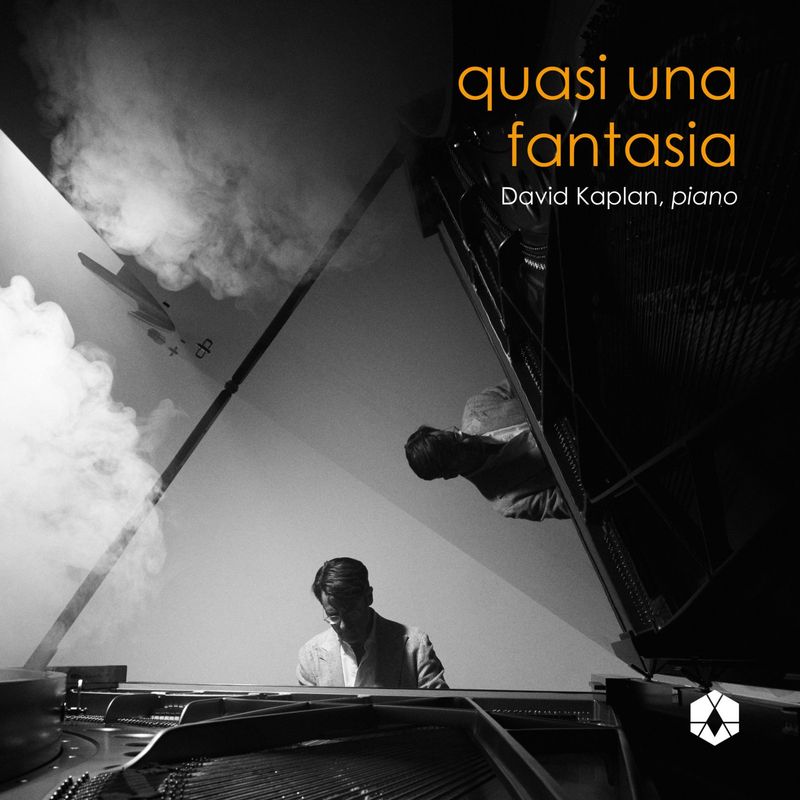
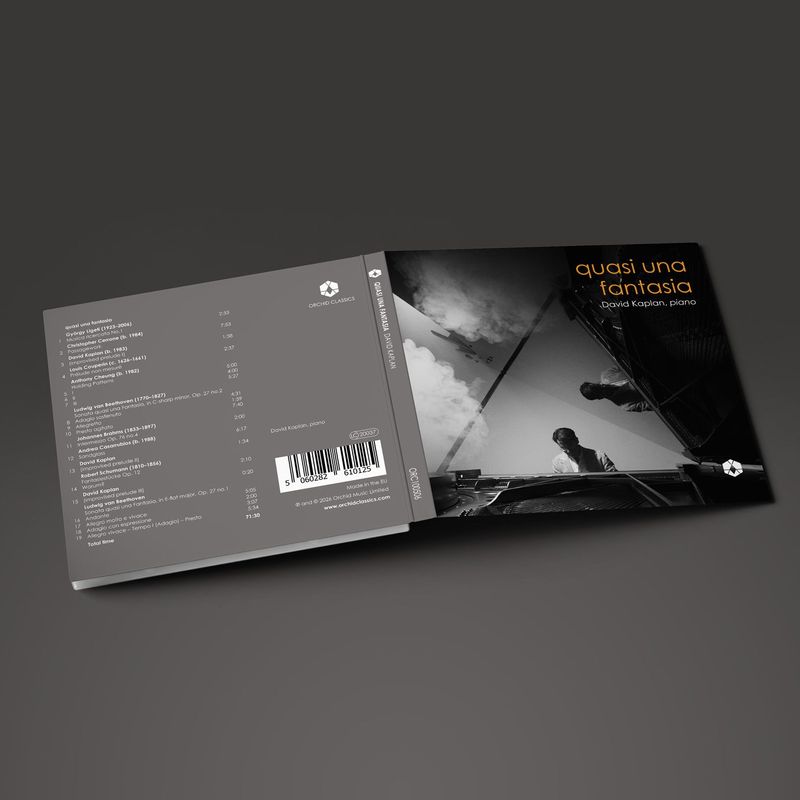
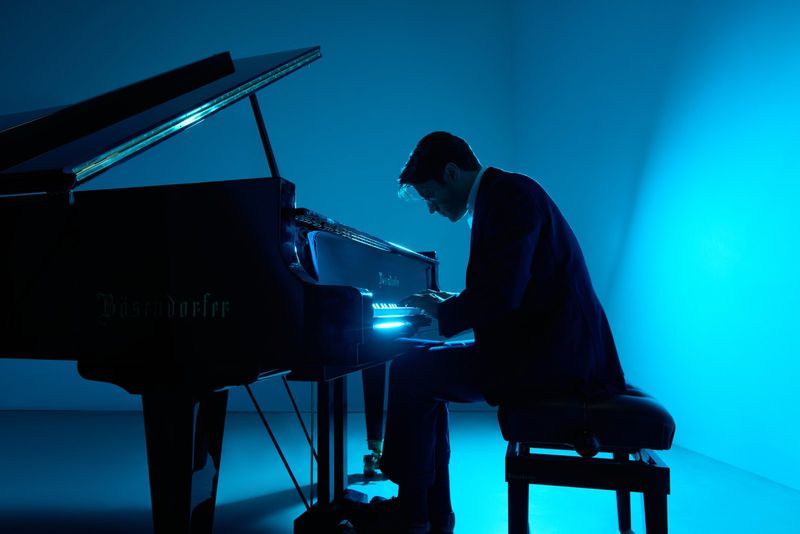
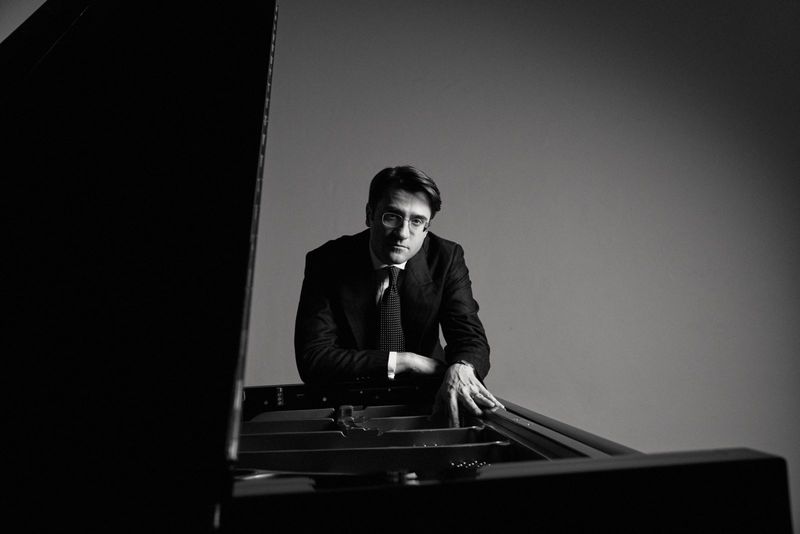
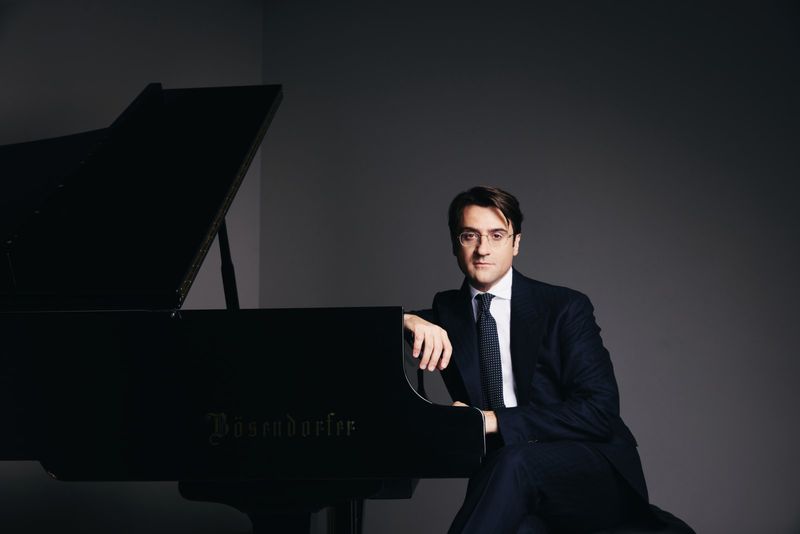
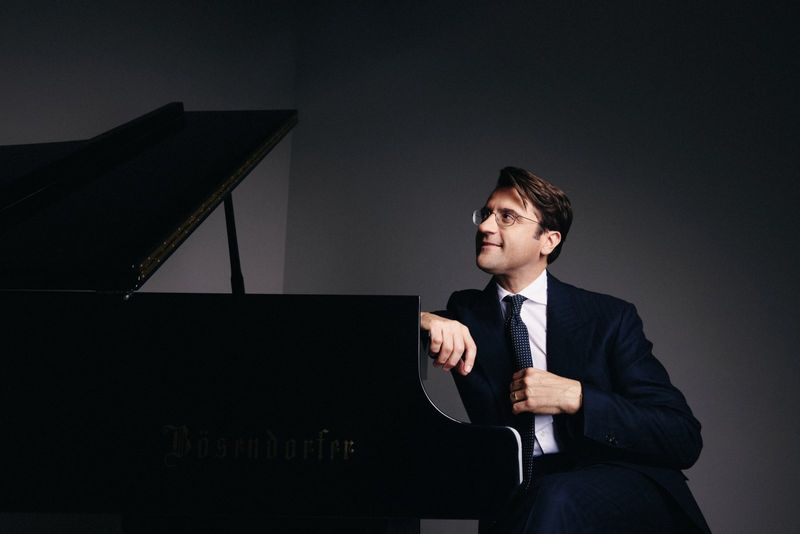
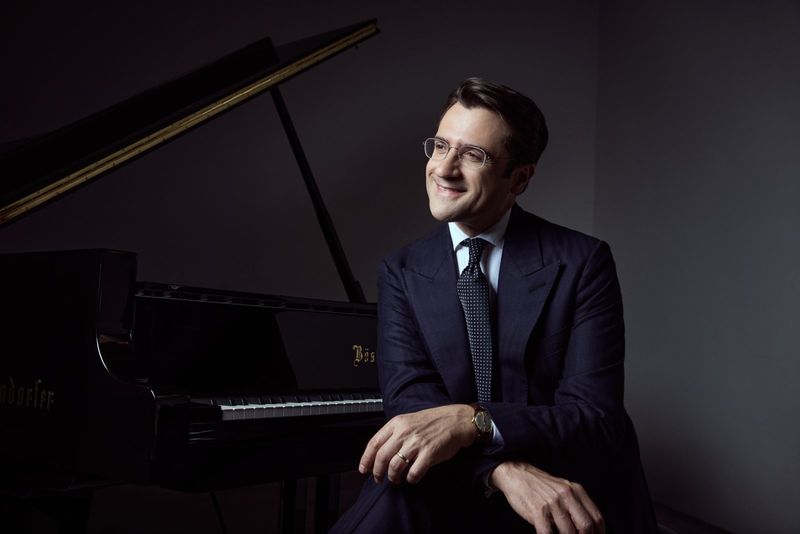
Photo Credit: Anna Azarov


Sign up for all the news on the Fall season, discounts & more...