


Interview: Scott Coopwood of DRACULA at TheatreWorks Silicon Valley
Coopwood plays the title role in Steven Dietz's scary and sexy stage adaptation running October 7th through November 1st in Mountain View
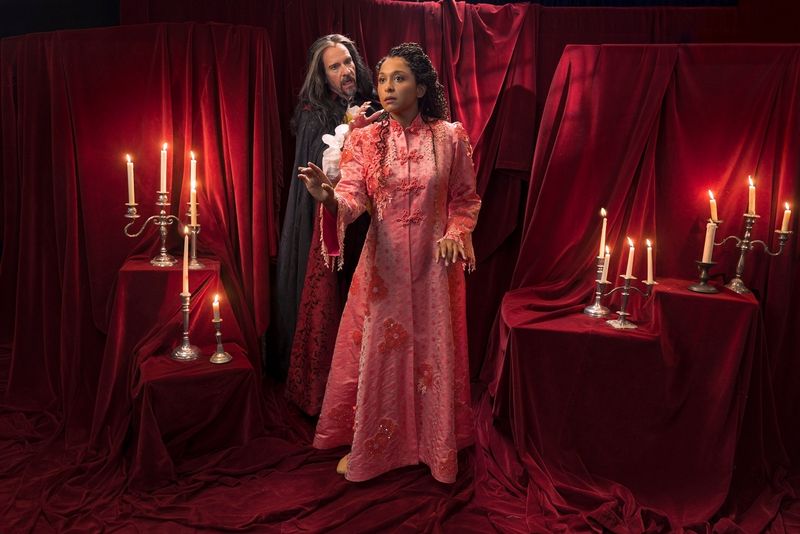
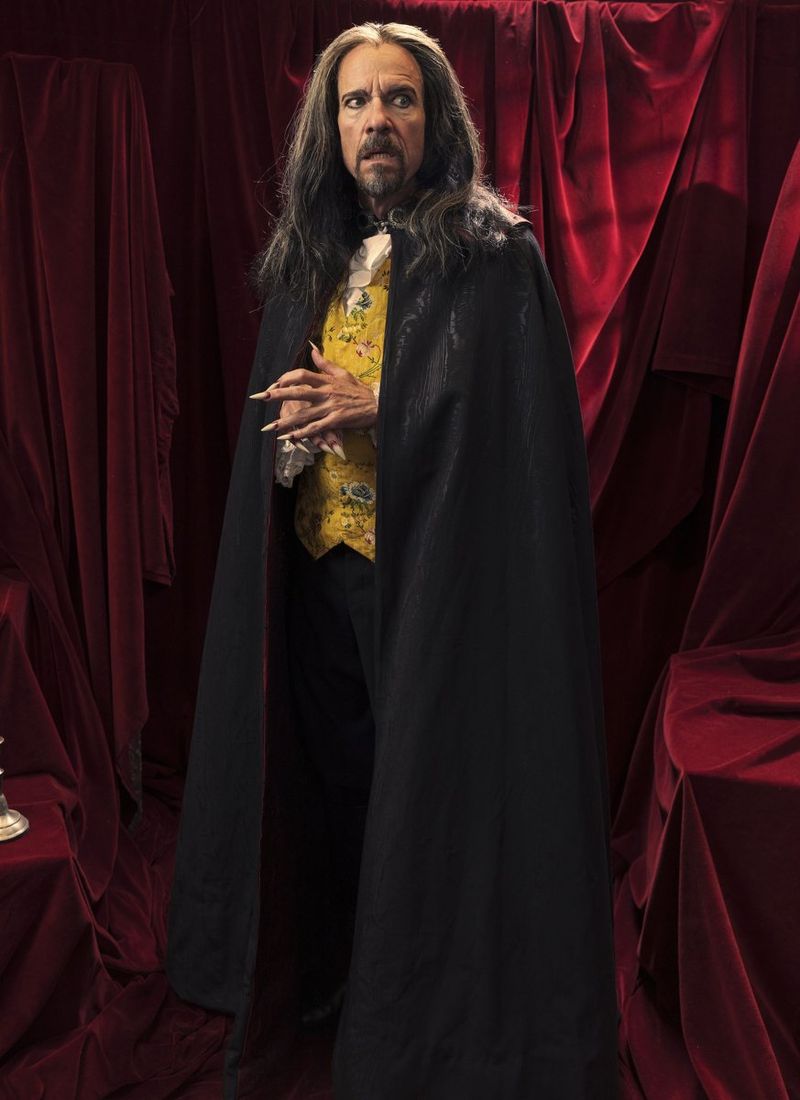
Scott Coopwood has been playing Dracula in some fashion for as long as he can remember. From the time he was a tiny tot, he dressed as the iconic vampire every single Halloween. His brother would be Casper the Ghost or whatever, but young Scott would stick with Dracula again and again, taking a black skirt his mother had kept from her days as a dancer and refashioning it into a cape. All these years later, it feels like destiny that he finds himself starring in the title role of Steven Dietz’s Dracula at TheatreWorks Silicon Valley. He promises this is not a campy take on the classic tale, and that director Giovanna Sardelli’s production promises thrills aplenty.
Coopwood’s theater career has often centered around the works of William Shakespeare, so he comes to the role with a great deal of experience playing complicated, if fatally flawed, characters capable of committing savage acts. And his personal story of how he managed to find a life in the theater is a fascinating and heartrending one. As an avid high school athlete with virtually no theater experience, he attended a student matinee of The Glass Menagerie and that performance didn’t just change his life, Coopwood is convinced it literally saved it. He saw his troubled home life mirrored in the Tennessee Williams play and knew in that moment that he wasn’t alone. So, instead of following his brother’s path in and out of jail, Scott sought refuge in a student production of M*A*S*H where he unexpectedly discovered a different kind of family – and that he had a talent for acting. Coopwood felt he had been given a gift and has made it his goal to give that same gift back to young students struggling to find their place in the world.
I caught up with “Coop” by phone last week while he was in the second week of rehearsals for Dracula, which has so many complicated stage effects that he said it already felt like they were in tech week. I asked him how he approached playing such an iconic character and why that performance of Glass Menagerie had been so transformative for him, then we took a deep dive into how he’s able to get student actors past the intimidation factor that so often comes with Shakespeare. (Any high school teachers out there, please take note. He has a few suggestions for you.) Coopwood struck me as a warm, gritty and slyly funny guy, the kind who can say things like “theater literally saved my life” without sounding the least bit corny. The following conversation has been condensed and edited for clarity.
There have been many different stage adaptations of Dracula. What approach does this one take?
Well, Steven Dietz is one of my favorite playwrights. I did his Lonely Planet years ago and it was one of the best theatrical experiences I ever had, and I got to meet him in Seattle and chat with him a bit. This is his adaptation created for David Ira [Goldstein] down at Arizona Theatre Company, with Patrick Page and Suzanne Bouchard. The cool thing is it’s not campy, funny, silly Dracula; it’s like right out of the novel. It’s gonna be frightening, hopefully, and invigorating and bloody and dark. A couple of times you might leave your seat for a second because with what they’ve got planned, if it comes to full fruition, it’s gonna be pretty kickass. The set’s ridiculous for this, and they’re pulling out all the stops.
One of the things I love about Giovanna Sardelli’s direction is her strong visual sense, so I’m very curious to see how she stages this story.
The first time I worked with Gio (on Archduke in ‘19 right before COVID), the thing I noticed that was jaw-dropping to me, having worked with so many directors over the years, was her ability to get the audience to focus there specifically for this and then back to that, her attention to detail in terms of where the audience needs to be. I felt that during Archduke, but especially in this play where you’ve got something being set up over here that is basically like a magic trick, we need everybody over there, and then that can surprise you. She’s meticulous in that work and that attention to detail, bringing it Day 1 of rehearsal so we all know the ride we’re in for and what our jobs are. She’s the perfect person to be directing this.
Given that you were Dracula for your first decade or so of Halloween Trick or Treats, does it feel like destiny to be playing the role onstage?
Yeah, like coming full circle. And the funny thing is, as a young boy I don’t even remember how I knew of Dracula. Certainly, I hadn’t read the novel, hadn’t seen the Bela Lugosi yet or anything. Maybe it was from Sesame Street with Count whatever? It probably was, but I always just wanted to be Dracula.
This is the epitome of an iconic character. As an actor, how did you start the process of finding your Dracula?
I think the starting place for me is how to not be the cartoon [goes into stereotypical Transylvanian accent] Drah-cu-lah! I mean, he’s not human, but he was human 500 years ago, and he was a good man. He was a warrior and he was respected and honored. Van Helsing says it’s the best souls that are the most deeply corrupted when this stuff happens. It’s just hunger and loneliness. He says, “I must go to England. I’m starving here.” And that’s real, both physically and I think spiritually as well. He’s lonely for companionship and also needs to feed because he’s grown quite old. He still has his powers, but what I think is super cool about this version is you see him when he’s in London, and then we go back in time and you see him before he gets to London.
So, I’m just trying to ground him in reality as much as I can - even though I know he’s undead.
You’ve done a ton of Shakespeare in your career. How has that prepared you to play a character like Dracula?
The best comparison I would have is The Scottish Play in that I’m fighting against what people’s perceptions of this character are and making him as real as I can. That’s where the horror comes from, and that’s why the seduction scenes are so tension-filled but also kind of beautiful in a way. It’s dark, yet he really is yearning for not just the blood but also the contact with life. I think if I stay in that place for as long as I can, then he’s not so villainous. Until people start dying. [laughs]
I discovered that you and I have something in common. We both did the stage version of M*A*S*H in high school. I don’t think I’ve ever talked to anyone who even knew there was a theatrical adaptation of M*A*S*H. Which role did you play and what did you take away from that experience?
Well… I had been doing speech and debate and interp, and I had an issue with an authority figure, yada yada yada. It doesn’t matter what it was, but my guidance counselor was like “You need another hour to tie all this together and keep on track for graduation.” It was my junior year, the same year that I saw Glass Menagerie and it changed my life. I saw the audition notice and thought “Well, that’s one of my favorite TV shows. Let’s go see what this is about.” I auditioned and they didn’t know me from Adam cause I wasn’t in the Drama Department at all, so they just gave me Private Lopez, kind of an amalgam of Klinger and the guy that ran the motor pool. I maybe had ten minutes of stage time, but it was such a revelatory experience, and it wasn’t just the show. It was the environment, the people. I had a bit of a troubled, dark childhood so when I say theater literally saved my life, I mean that. My brother was in and out of jail and basically a junkie for 20+ years. He found drugs to mask his pain and I luckily found the theater. And the experience was more about the people, the telling of story, the communal experience with the audience. I didn’t know if I had any talent and then the next year they invited me to be in Advanced Drama and I did all four shows.
You’ve often spoken about how The Glass Menagerie so profoundly affected you at a young age.
You know, I’m an open book and I’m happy to tell this story. We were taken off to a student matinee. [As an actor] sometimes I don’t like getting up and getting warmed up that early, but I am somebody who student matinees mean a great deal to because one student matinee changed my life. In my younger period at home I just assumed, naturally, cause people didn’t talk as openly as they do now and there wasn’t psychology the way there is now, that everybody else was living the Brady Bunch life. So I didn’t want people over at the house, didn’t want to expose them [to my family], and was very isolated and very alone in that.
So I go into the theater and we’re sitting there, and the character of Tom is trying to manage this dysfunctional home and take care of his younger sister and shield her from overbearing Mom, who is instilling “You’re a cripple. You’re never gonna be anything. You have to find a man.” Then he’d go out on the fire escape and light up a Pall Mall or whatever it was back then and just talk to the audience about his trials and tribulations, and it was like I was the only one in the theater and he was talking directly to me.
At intermission, I’m reading the Playbill, cause like now I want to know more, and see that this play was written in the forties and it was written by a gay man. And I’m like “Wait a second. So this is normal, in some places.” It dawned on me, “Dude, you’re not alone. There is a lot of this out there in the world. You will find family or tribe or however you want to put it. The isolation and the loneliness of what your childhood is now can manifest something better. And you don’t have to be ashamed. It’s not you, it’s not your deal.”
Like I said, I’d only done the little Private Lopez part, I hadn’t had my senior year yet and I’m walking to the bus in the sunshine down in Tucson and literally thinking to myself, “Man, the gift that I have been given today is so profound that if I can give this gift to anyone else, that’s what I want to do.” And then finding the family, the tribe, the theater, the people and the warmth and the teamwork (I was an athlete and my father was a baseball coach so I make analogies to sports all the time) – to find a team that welcomed me with no judgment, that wanted me there, wanted me around, that’s what saved my life.
Cause I could have gone off the rails like my brother. Easily. But I didn’t. And then I learned how to do everything. I was like “I’ll build sets, I’ll cut tape (editing sound back in the day when you had to cut and paste tape). I’ll learn how to swing a hammer. Every bit of the theater, I’ll do it.” I didn’t know what my path would be, if I had any talent as an actor. But I knew that I wanted to be in it, wanted to make that my home. And then, luckily, turns out I’m pretty good at it and for thirty years now I’m making a living.
I’m curious to know how you introduce young actors to Shakespeare. When I was in acting school, I found Shakespeare just so intimidating - the language, the rhythms, the struggle to make those iconic words sound fresh and spontaneous.
Well, for the kids I had in the Scottish Play at Redwood, [teachers] Elena [Wright] and [Erik] Berkow[itz] expected maybe I’d have twelve to fifteen audition and I’m like “Oh, that’s perfect for the Scottish Play. I can manage that.” Well, there were 30 and they were so enthusiastic. I just had ‘em cold read “tomorrow and tomorrow and tomorrow” to get a sense and then as they auditioned I kind of interviewed them and did a little improvisation with each one singly. But the whole group was there, so [I told them] “We’re gonna be vulnerable and we’re gonna share and that’s the way this is gonna work.” And they all jumped in so feet-forward that I was like, “I’m takin’ ‘em all. I’m gonna do The Scottish Play with 30.”
So then I had to find a way to do that in the script, cause I thought it was really important to give everybody a role, not just “Soldier I.” Everybody spoke. I pulled names from medieval Scotland and all the other characters in the play that don’t speak, maybe have a line or two, and I gave every kid a speaking part with a character title so they could say, “I’m playing Angus. I’m playing Menteith. I’m playing …” They all had that. Then I tell them all what a broadsword fight is. I spent a week with them and that’s all we did in rehearsal, we learned how to do it safely and well, and then we went away for Christmas break.
Then we came back and jumped into the text, and all of my leads were girls. Lady MacBeth and Mac and also MacDuff, the three of them were like “Coop, why did you cast me, why did you think I could do this?” And I’m like “I know you can do it because I see it in you, and we’re gonna get it out of there.” And man, I’m tellin’ you – they all gave more than I asked. And none of them were intimidated by it, because of the way I approached it. Like “there’s a whole bunch of other stuff and then we’ve got these words and then we’re gonna do a little table work, but I want to make sure that you guys all know what you’re saying.” And they attacked it with – I mean, the girl who played Banquo, it was like she’s been speaking verse her whole life. It was amazing.
We picked that play for the Lenaea Festival over at Folsom Lake College. There were eleven hundred students from three different states and eighty-five productions and four gold medals, and we got one of them. The kids were so excited. But the coolest thing about that week? We pulled up to Folsom Lake on a Friday at midday and the festival had just started and there were kids everywhere. Immediately, like within 20 minutes, our kids had melded in with all of these other kids from all these other schools. I get all choked up, I get teary when I think about it. Because theater kids oftentimes can be the geeks or the outcasts or the nerds or the freaks, the ones who are questioning their gender identity and all that stuff now, and they’re exploring all of that and kind of learning about themselves. So to see them look in the mirror and there’s fuckin’ a thousand and ninety-nine more of them for three days? That’s a gift. If they go on to be engineers or writers or athletes or whatever they go on to be, that gift of that weekend is so profound. They know they’re not alone. That was the gift that I was given, and they got that in spades over three days. It was remarkable.
I find in the working with them on Shakespeare that the unfortunate thing for some kids at that age – the younger kids, they take to it, they’re not afraid of it, cause they don’t have any preconceived notions cause they haven’t heard about it – but you get to high school and they’re like “Omigod, Romeo and Juliet freshman year.” Teachers are forced to teach it, but it doesn’t mean that they get it, that they care about it, that they like it in any way, shape or form. Oftentimes it is treated as a museum piece, an artifact under glass. If they were to treat it like a living document, like a script – and the simplest way to do that is just to read it out loud. Don’t send ‘em home and say “Read Act I and come back and talk about it.” That’s not gonna work.
But if you have a teacher who is so enthusiastic about it, cause I’ll be honest with you, my freshman year, I fuckin’ hated William Shakespeare. I hated it. Because my teacher was forced to teach it, didn’t get it, and we just kind of went by the numbers until it was over, and it was a painful experience. Luckily, junior year I had someone for Hamlet who was kind of into it, and then senior year the guy that taught Lear, my English teacher, was a freak for Shakespeare. He got it off the page – and Lear is a complicated, complicated play - and I was like “Wait a minute, I gotta rethink this.”
Then I go to college and get cast as Mercutio and I had a really good director and got to learn how to swordfight, got to die onstage. It was manna from heaven! So from that time forward, I’m a freak for it. So I understand the intimidation, but I think you can wash that away. Cause all the sophomores that were doing Mac in school, they came and we did student matinees. And they were so grateful after seeing the show. They’re like, “Oh, wait a minute, that’s what happens?! That’s who these people are? Oh!” So many of those kids that were having to read it in class, now they got to see it and it changed everything.
What I say is, if you see good Shakespeare you’re hooked for the rest of your life. If you see a bad one, you may never come back. And that’s what sticks in my craw about a lot of Shakespeare companies and festivals. If they put on a bad one, man, you’re gonna chase people from Shakespeare for the rest of their lives. And you know the way [Bill] Rauch had all of those people re-write Shakespeare? God, it just makes me so sad that those scripts are out there and they’re getting done so often. I’m on my high horse now about it, but you know it’s not precious to me. It’s living and breathing, and I still think it’s the most magical theatrical experience, for an audience or for me getting to play it. I can’t wait til my next one.
According to the internet, you’ve done 23 Shakespeare plays -
I’ve actually got 24!
Then you’ve still got more than a dozen to go. Among the ones you haven’t done yet, which play is highest on your list?
For me, like realistically… I think Titus. Because that’s something that a non-Shakespeare company or a non-Shakespeare summer festival, could do. And I think you’ve gotta go full grand guignol, like you’ve gotta commit to that blood.
Sounds like the perfect thing for you to do after Dracula!
Exactly, more blood! [laughs]
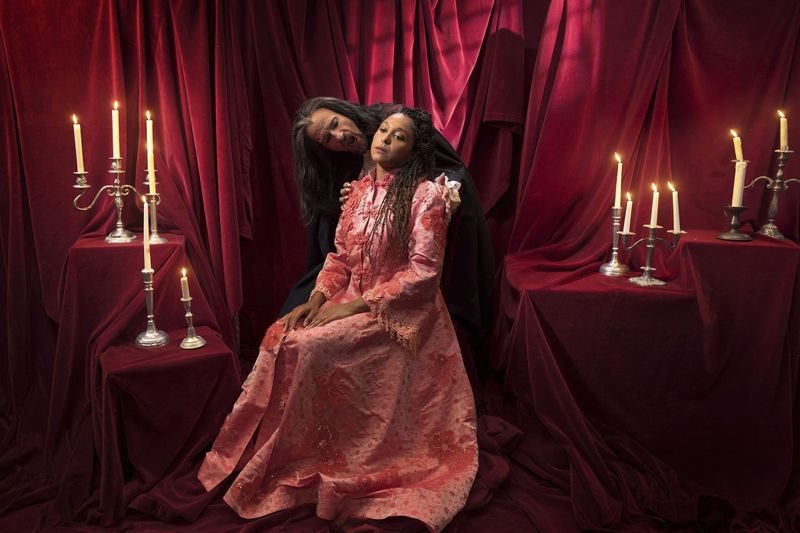
(all photos by Tracy Martin)
---
Dracula performs October 7 – November 1, 2026 at Mountain View Center for the Performing Arts, 500 Castro Street. For tickets and more information, visit TheatreWorks.org or call 877-662-8978.
Sign up for all the news on the Fall season, discounts & more...


|
Gutenberg! The Musical! Hillbarn Theatre (10/08-11/01) |
|
Escher String Quartet Kohl Mansion (10/18-10/18) |

|
“HOME” San Francisco Conservatory of Music, Bowes Center (4/09-4/09) |

|
Liberation Berkeley Repertory Theatre (10/23-11/29) |

|
Eureka Day City Lights Theater Company (9/24-10/18) |

|
The Secret in the Wings Theatre Lunatico (10/10-11/01) |

|
PlayGround Twisted Holiday Festival Potrero Stage (12/04-12/11) |

|
Live At the Orinda - 2026/2027 Concert Season Orinda Theatre (9/22-5/23) |

|
The 2026 GLIDE Holiday Jam: Turn It Up and Turn It Out The Warfield (11/05-11/05) |

|
Come From Away Berkeley Playhouse (2/19-3/21) |
