Exclusive: How Disney Animation Reimagined Classic Songs in American Sign Language
Disney's Songs in Sign Language is now streaming on Disney+.
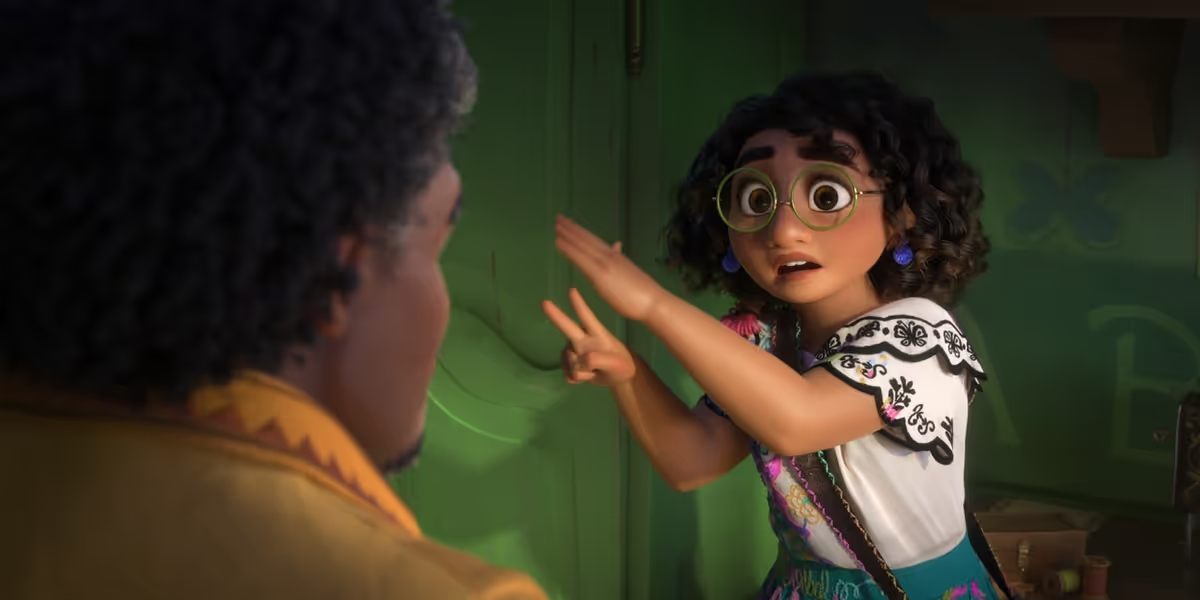
Starting today, Disney fans can experience three fan-favorite songs in a whole new way. In celebration of National Deaf History Month, Disney+ has debuted Songs in Sign Language, a collection of reimagined and reanimated musical numbers from Disney animated films.
A collaboration between Walt Disney Animation Studios and Deaf West Theatre, the release features “The Next Right Thing” (from Frozen 2), “We Don’t Talk About Bruno” (from Encanto), and “Beyond” (from Moana 2). For the project, veteran Disney animator/director Hyrum Osmond led a team of more than 20 animators to reimagine the sequences in American Sign Language. Osmond was excited by the opportunity to explore the differences in genre and tone offered by these three musical numbers.
"We definitely wanted to go with three songs that were different from each other, so we could explore the different emotion and energy," Osmond recently told BroadwayWorld. "'We Don't Talk About Bruno' is very high energy [and there is] a lot of fun you can have with the choreography of the signing within that..."
Osmond says that several animators who worked on the films originally—including himself—returned to the material for this project. Several even specifically requested to be involved. "The crew was just so excited to do something like this that was so special."
DJ Kurs, artistic director for Deaf West Theatre, worked with sign language reference choreographer Catalene Sacchetti and a group of eight performers from Deaf West Theatre to create the new versions of these songs. Because they were working in animation, there were exciting visual and storytelling possibilities.
"One of the cool things about animation is that the camera can move everywhere, essentially. That is great because sign language also has that spatiality," said Kurs. "So if we wanted to show from the back of the person as if the camera was there, we can still see the signs that are being sung. It's fun to be able to play with those possibilities and also to develop signs that really suit the song in those moments."
Sacchetti agrees, noting the flexibility of the language across genres and media. "I think ASL itself already has so much flexibility and it's an elastic language, so it's very easy and malleable. ASL can fit any genre, really," she says. Adds Osmond: "With animation, it's all about the elegance of movement and the beauty of movement. Sign language is just so beautiful, so if there was ever a medium to showcase sign language, it's animation."
To incorporate the sign language, the animators went back and reanimated portions of the sequences, while still attempting to maintain as much of the original as possible, Osmond says. "We wanted to be true to what the moment was in the film... but there were actually several moments here and there where we did change cameras to focus in a little closer on the sign language or maybe pull out a little further."
For the ASL itself, Sacchetti worked to reimagine and choreograph the lyrics, favoring concepts and emotion over word-for-word transcription. This was meant to be reflective of the language, which functions differently from English. "In English, lyrics or a line would last a certain amount of time. ASL has something that expresses the lyrics more intentionally, so we can choose signs that create a certain feeling," she explains.
"The concept and the basic message and tonality are the same, but following the rules and syntax and grammatical structure of ASL, we're able to sort of play with that: the emotionality and the tone of it on top of just the lyrics."
This approach also extended into the characters themselves. Fan-favorite heroines like Moana, Mirabel, and Anna all needed to express themselves through the language, while remaining consistent with the characters we know and love.
"My job, particularly as the reference choreographer, was to watch all of the stories in their original animation and really think about everything that was a part of that song and create a way to find the song's tone, how Moana as a character would express this, how does she express her passion, her motivation, et cetera, and then choose signs and a way of expressing those signs that would meet the character's expression," Sacchetti notes.
"We had authentic Pacific Islanders, deaf people who signed, and we collaborated with those individual talents.... [For] 'We Don’t Talk About Bruno,' we worked with three actors from Colombia. It was really wonderful to be able to keep that cultural perspective and sensibility and add it onto the character as we were creating the sign translation for it."
For Kurs, the project was a true collaboration- not just between Disney and Deaf West, but also the Deaf community in general. "We really couldn't ask for a better process in this, and I think that shows the commitment to representing people authentically. The process itself was hard work to achieve that, but I feel like we did."
Disney's Songs in Sign Language is now streaming on Disney+. Watch a preview below.
Photo Credit: Courtesy of Walt Disney Animation Studios
Prefer BroadwayWorld in Google Search?
Add us as a preferred source so our stories show up more often in Top Stories and Google’s AI answers — for you.
Sign up for all the news on the Fall season, discounts & more...
.jpg?format=auto&width=300)