


Review: GRACE PERVADES, Starring Ralph Fiennes & Miranda Raison
A slow-paced yet charming love letter to theatre
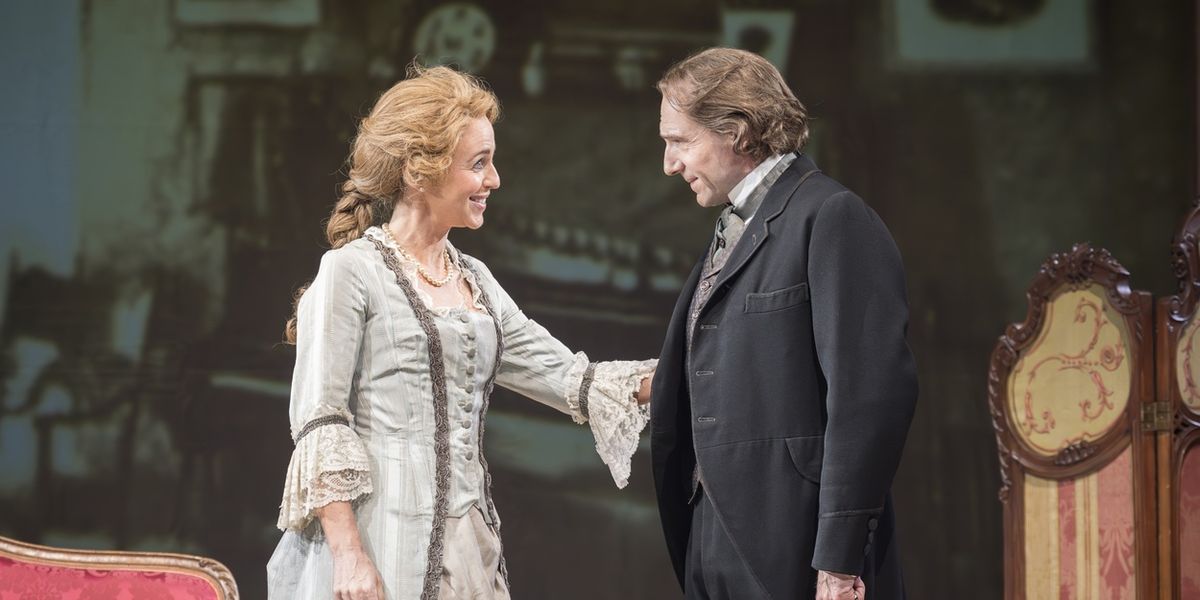
 Following a sell-out run at Theatre Royal Bath, David Hare's play, Grace Pervades, is a love letter to theatre, following the professional and personal partnership of legendary Victorian theatrical duo Sir Henry Irving and Dame Ellen Terry. Together they performed over 27 years, changing the face and status of theatre.
Henry Irving was a Victorian stage legend, ran the Lyceum Theatre in London from 1878 to 1902 and was the first actor to be given a Knighthood. Ellen Terry was one of the highest-earning and leading actresses of her generation. Their relationship was extraordinarily creative, with the pair becoming a theatrical force of nature together. Hare gives life to this partnership; Henry wants to make 'proper' theatre; Ellen yearns to try out Shaw and Ibsen.
Ralph Fiennes and Miranda Raison are beautifully paired as the couple, with Raison's Ellen giving warmth and encouragement to Fiennes's intense and serious Henry. Fiennes is pompous, stiff and stern with the sort of stage magnetism a director must dream of. Pale and drawn through lack of sleep and exposure to daylight, Fiennes gives an air of huge respect for the art of theatre, with an emphasis on Henry's dedication to the craft: rehearsals go on into the small hours, but there are several references to his generosity- paying everyone well and often out of his own pocket. This is nicely nodded to when he provides champagne and oysters to the flagging company at 3am.
%20and%20ensemble.jpg?format=auto&width=800)
Photo Credit: Marc Brenner
Raison radiates life and ambition; her world view is much broader than just the theatre and she reflects that life experience on stage. Her dream is to play As You Like It's Rosalind; a character she sees as fuller and less submissive to the male roles in other Shakespearean plays. She respects Henry, but also sees his flaws: a scene where Ellen encourages him to speak to the other actors, rather than the audience, is wonderfully done by both actors.
“Grace Pervades the hussy” was a line written about Terry by A Contemporary Theatre critic, alluding to her two children “out of wedlock” and her many relationships, including a rumoured affair with the married Irving. Hare never pins down this in explicit terms, preferring to hint at what might have been, which may frustrate some. The script is intelligent and often very funny, but also there are some slow-moving sections to the dialogue, which occasionally comes across as clunky.
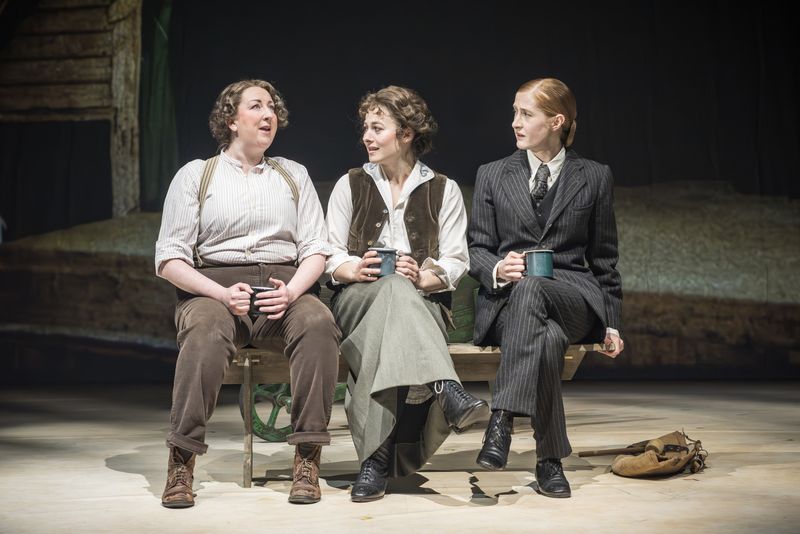
Photo Credit: Marc Brenner
The play spans 1878 to 1966, with time given to Terry's theatrical offspring, Edward Gordon Craig, a theatrical theorist (of sorts), and Edith Craig, who produced radical feminist plays. Jordan Metcalfe and Ruby Ashbourne Serkis both return from the Bath run; Metcalfe is very funny: prim and deluded by his own supposed genius as Edward and Ashbourne Serkis is very engaging as bohemian Edith, who lives in an amiable thruple at her mother's house in Kent.
Yet, you are left wanting more of Fiennes and Raison, and less of the offspring. Yes, the next generation shows the progression of theatrical style and attitude (a scene where Edward debates with Stanislavski is wryly amusing), but cannot compare to the intrigue and interest in the lives of Henry and Ellen.
As much as Jeremy Herrin's direction slickly portrays the back-and-forth between time zones, elsewhere, he maintains a rather static feel to each scene. Characters move around very little and much dialogue takes place across the stage between seated actors.
Bob Crowley's lovely set shows wings cluttered with dust sheets and random props, with a smaller proscenium arch set at the back of the stage where various backgrounds are projected. Peter Mumford's warm lighting relies much on crossing spotlights, constantly reminding us we are in a theatre, watching theatre.
Grace Pervades will not go down as one of Hare's greatest plays, but there is much to enjoy here, not least the real treat of seeing one of our finest actors performing on stage.
Grace Pervades is at Theatre Royal Haymarket until 11 July
Photo Credits: Marc Brenner

|
Powered by

|

.jpg?format=auto&width=365)





Reader Reviews
To post a comment, you must register and login.