


San Francisco Symphony to Present 19th Annual Día de los Muertos Celebration
Conductor José Luis Gómez leads performances of traditional and contemporary Latin American composers, with violinist Francisco Fullana and dancers from Casa Círculo.
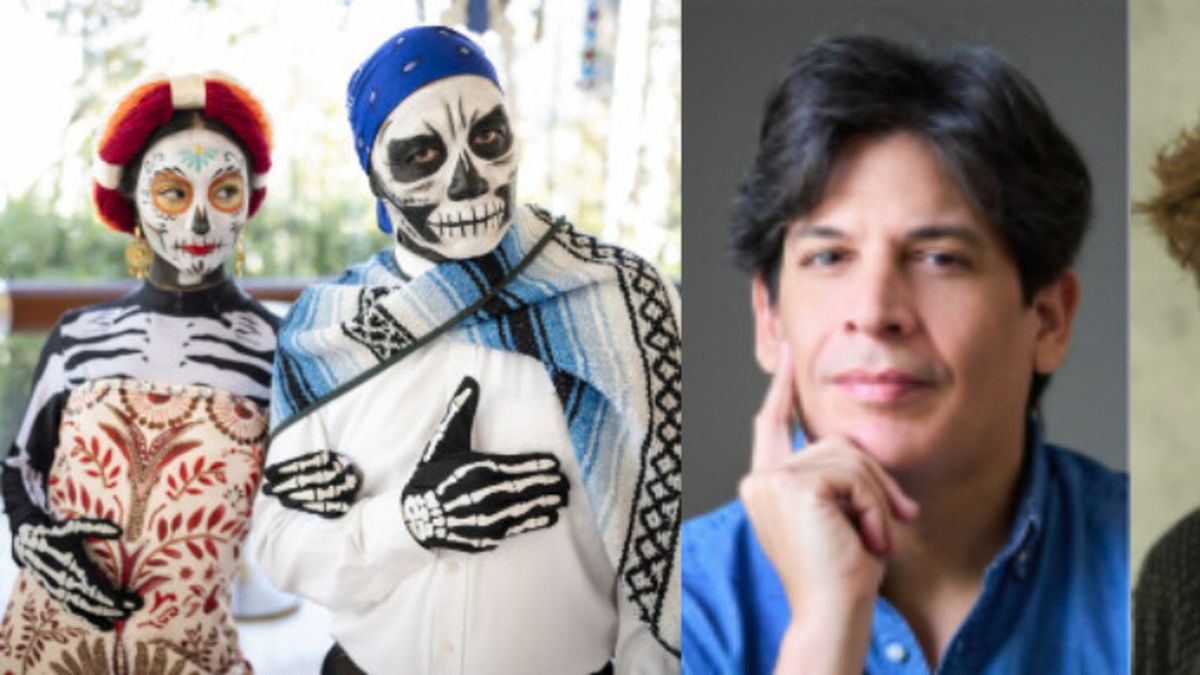
The San Francisco Symphony will present its 19th annual Día de los Muertos (Day of the Dead) celebration at Davies Symphony Hall on Saturday, November 7. The event features a concert program of traditional and contemporary Latin American music, preceded by a festive array of family-friendly activities.
José Luis Gómez conducts the San Francisco Symphony in the concert program, which includes music by Carlos Chávez, Evencio Castellanos Yumar, Arturo Márquez, and José Pablo Moncayo García. Violinist Francisco Fullana joins the Symphony to perform Márquez’s Folia Tropical from Fandango for Violin and Orchestra; salterio players David Hernández Pozos and Claudio Israel Vázquez Herrera from Ensamble Típico del Estado de Tlaxcala perform the world premiere of Luis Farfán Carrillo’s El Baile de la Catrina; and dancers from Casa Círculo Cultural are featured throughout the concert.
Every year leading up to the Symphony’s Day of the Dead celebration, the lobbies of Davies Symphony Hall are transformed with immersive art installations and altars built by local artists to honor the living and the deceased. Curated by longtime SF Symphony collaborator Martha Rodríguez-Salazar, this year’s celebration is dedicated to the Mexican state of Tlaxcala, a land of deep ancestral roots, extraordinary cultural richness, and a worldview in which life and death remain in constant dialogue. The event includes preconcert activities for families, including live catrinas and interactive altars.
Tickets can be purchased online at sfsymphony.org, by calling the box office at 415.864.6000, or by visiting the box office located on Grove Street between Van Ness Avenue and Franklin Street. Tickets are 50% off for children and young adults under 18.
The Día de los Muertos Concert is presented in partnership with the San Francisco Arts Commission. The mission of The San Francisco Arts Commission is to invest in an arts community where all artists and cultural workers have the freedom, resources, and platform to share their stories, regardless of race. The San Francisco Arts Commission believes that art is critical to shaping neighborhoods and the urban environment and for fostering social change to confront and resolve the inequities of the past and present to move towards a more equitable future.
DÍA DE LOS MUERTOS CONCERT
Conductor José Luis Gómez makes his San Francisco Symphony debut in the annual Día de los Muertos concert. Dancers from Casa Círculo Cultural are featured throughout the concert, adding to the immersive experience. Gómez opens the program with Carlos Chávez’s exciting, fast-paced Toccata, and Evencio Castellanos Yumar’s El río de las siete estrellas, inspired by a poem by Venezuelan writer and politician Andrés Eloy Blanco. Violinist Francisco Fullana makes his SF Symphony debut performing Arturo Márquez’s Folia Tropical from Fandango for Violin and Orchestra. The composer writes, “Fandango is known worldwide as a popular Spanish dance and specifically, as one of the fundamental parts of flamenco... I had known this music since I was a child, listening to it in the cinema, on the radio and listening to my father, a mariachi violinist, interpret huasteco and mariachi music.” Gómez conducts José Pablo Moncayo García’s Huapango, inspired by the folkloric music of Veracruz, followed by the world premiere of Tlaxcalteca composer and arranger Luis Farfán Carrillo’s El Baile de la Catrina, performed by salterio players David Hernández Pozos and Claudio Israel Vázquez Herrera from the Ensamble Típico del Estado de Tlaxcala. The salterio is Tlaxcala’s most emblematic musical instrument, whose distinctive sound and tradition has been preserved by generations of musicians and artisans. The program closes with Chávez’s Zarabanda from La hija de Cólquide, a ballet score based on Greek mythology and originally commissioned for Martha Graham, and Márquez’s Danzón No. 2, an extremely popular Mexican contemporary classical work.
PERFORMERS
Venezuelan-born Spanish conductor José Luis Gomez was catapulted to international attention when he won first prize at the International Sir Georg Solti Conductors’ Competition in 2010 in Frankfurt. He quickly earned admiration among the Frankfurt Radio Symphony Orchestra’s musicians and their music director Paavo Järvi, launching his conducting career. Music director of the Tucson Symphony since 2016, Gomez has consistently crafted compelling programs, many of which are juxtaposed with lesser-known composers from South America whom he champions, expanding and enriching the orchestra’s repertoire. He has worked diligently to provide innovative and engaging outreach activities and education projects, as well as new commissions. Recent and upcoming highlights include appearances with the National Symphony Orchestra, Rhode Island Philharmonic, Indianapolis Symphony, Houston Symphony, Phoenix Symphony, Puerto Rico Symphony, New Zealand Symphony, Vancouver Symphony, Orquestra Sinfônica Brasileira, Orquesta Filarmónica de Bogotá, and Orquesta Sinfónica Nacional del Perú.
A native of Mallorca, Spain, Francisco Fullana is a distinguished performer, leader, and innovative educator. As a soloist he has appeared with the Bavarian Philharmonic, Munich Radio Orchestra, and Simón Bolívar Symphony under Gustavo Dudamel. He has also appeared with the Birmingham Symphony, Charlotte Symphony, SWR Deutsche Philharmonie, Pacific Symphony, Buffalo Symphony, Saint Paul Chamber Orchestra, Apollo’s Fire, and Metropolis Ensemble. Fullana is artist in residence of the Chamber Orchestra of Philadelphia and artistic advisor and curator at the Orchestra of San Antonio. Recent and upcoming highlights include appearances with the Tucson Symphony, Florida Orchestra, Phoenix Symphony, Jalisco Symphony, and Indianapolis Symphony. Fullana received the 2023 Darioush and Shahpar Khaledi Prize from Festival Napa Valley and first prizes at the Johannes Brahms, Julio Cardona, and Japan’s Munetsugu Angel competitions. A graduate of the Royal Conservatory of Madrid, the Juilliard School, and USC’s Thornton School of Music, he performs on the 1735 “Mary Portman” ex-Kreisler Guarneri del Gesù violin, on loan from the Stradivari Society of Chicago.
David Hernández Pozos is a salterio player, educator, and advocate for the traditional music of Tlaxcala, with more than 20 years of experience dedicated to preserving and promoting the instrument. Raised in Atltzayanca, he graduated from the Escuela de Música del Estado de Tlaxcala (EMET) as an instrumentalist. His work encompasses both salterio performance and the preservation of traditional salterio-making. Hernández Pozos has worked with children in his community as a musical accompanist at the preschool level and as a teacher of music theory at the Escuela de Salterio. He is currently a member of the Ensamble Típico de la Escuela de Música del Estado de Tlaxcala and the group Salterios de Atltzayanca, through which he promotes salterio music and the transmission of its traditions to younger generations. He has performed at national and international events, including at the Embassy of Mexico in Berlin, as well as festivals such as the Guelaguetza, Festival de las Almas, Festival Mikilis, and Festival de Música Raíz México. He has also accompanied folkloric dance groups from Tlaxcala at performances throughout Mexico. He makes his San Francisco Symphony debut with this performance.
Claudio Israel Vázquez Herrera is a salterio player, educator, and advocate for the traditional music of Tlaxcala. Born in Tlaxcala and raised from an early age in Atltzayanca, where the salterio is part of a multigenerational musical tradition, he began studying the instrument at age 11 with Leonardo Sánchez Valencia. Since then, he has dedicated his career to performing, teaching, preserving, and developing the salterio tradition. In 2021, he graduated with honors from the Escuela de Música del Estado de Tlaxcala (EMET), specializing in salterio. He has participated in concerts, festivals, and cultural projects in Mexico and the United States. His recordings include work with the salterio ensembles Ayer, Hoy y Siempre, and Huellas de Arte, as well as projects featuring traditional and contemporary music for salterio. In 2025, he participated in the International Salterio Festival of Tlaxcala, where he performed two world premieres of contemporary works for the instrument. He is the founder of the Escuela Nacional de Salterio in Tlaxcala, dedicated to academic training in salterio, harp, vihuela, and guitarrón, and currently serves as deputy director of EMET. Through these institutions, he works to preserve, teach, and promote the salterio tradition while supporting new works and artistic approaches for the instrument. He is currently leading efforts to establish the first salterio-making workshop at EMET, scheduled to open in late 2026. He makes his San Francisco Symphony debut with this performance.
Ensamble Típico del Estado de Tlaxcala is a faculty ensemble of Escuela de Música del Estado de Tlaxcala (EMET), an institution with more than 30 years of experience in professional music education. The ensemble is dedicated to preserving, revitalizing, and promoting the traditional music of Tlaxcala and Mexico, creating new arrangements for traditional instruments that have gradually fallen out of common use but remain essential to the region’s musical and cultural identity. In its three years of activity, the ensemble has performed at important venues and festivals throughout Mexico, including the Centro Cultural Los Pinos in Mexico City, Teatro de la Ciudad in San Cristóbal de las Casas, the International Bolero Festival, and the International Book Festival in Xalapa. Its members are accomplished performers and educators who have also brought their music to audiences nationally and internationally through concerts, workshops, and lectures. Through both performance and education, the ensemble contributes to the preservation and transmission of Mexico’s musical traditions while developing new approaches to teaching these historic instruments at EMET.
Casa Círculo Cultural, based in Redwood City, is a grassroots, multidisciplinary arts organization dedicated to celebrating and preserving Mexican culture and the arts. Since its founding in May 2009, it has served as a vital bridge between Mexican traditions and the local community, offering diverse cultural programming that reflects the richness and experiences of Latino communities across the Bay Area. With a strong record of hosting vibrant cultural celebrations, Casa Círculo Cultural produces theater, concerts, visual arts exhibitions, and music classes, and also operates a community radio station. Deeply committed to fostering creativity and opportunity, the organization provides after-school programs and adult classes that empower underserved Latino youth and adults to thrive and contribute to civic and economic life. Believing that social change is achieved through collaboration, art, and community empowerment, Casa Círculo Cultural stands as an essential force for cultural preservation, creativity, and community growth.
Born in Mexico City and trained as a classical flutist and opera singer, Martha Rodríguez-Salazar is a curator, teacher, choir director, producer, and director of musical productions that celebrate Latin-American baroque, classical, and folk culture in the Bay Area. She teaches flute, voice, choirs, and mariachi at the Community Music Center and through the mariachi program at the San Francisco Unified School District. She has curated the San Francisco Symphony’s Día de los Muertos Concert since 2008.
FAMILY-FRIENDLY LOBBY ACTIVITIES
Beginning at 1:30pm, guests can explore altars and installations inspired by the cultural traditions of Tlaxcala and the symbolism of the firefly. Attendees will be greeted by and have an opportunity to take photos with dazzling catrines and catrinas, the iconic image of Día de los Muertos celebrations, presented by Casa Círculo Cultural’s live performers. The members of the Ensamble Típico de Tlaxcala will play traditional Mexican music on Orchestra Level and Bay Area artist Irma Ortiz will demonstrate her process of creating decorated sugar skulls and will have sugar skull decorating activities for children. Additionally, patrons will also enjoy face painting, paper-flower making, mask and votive candle making on the Second Tier, presented by artist César Argueta-Rodriguez. Activities in the Second Tier lobby will close at 2:40pm, 20 minutes before showtime.
IMMERSIVE LOBBY ART
Art installations and altars built by local artists honor the living and the deceased inspired by the Mexican state of Tlaxcala. Curated by Martha Rodríguez-Salazar, this year’s installations feature works by Gloria Aguirre, Adrián Arias, Casa Círculo Cultural, Fernando Escartiz, The Marigold Project with art teacher Mara Brown and the students of Buena Vista Horace Mann Elementary School, Stephanie Ortiz, and Victor-Mario Zaballa.
El Bosque de las Luciérnagas Mágicas / The Forest of Magical Fireflies by Gloria Aguirre is a large-scale interactive Día de Muertos installation that invites you to imagine yourself at the edge of a forest, a place where memory shimmers between the seen and the unseen. Housed within a 12-by-8-foot enclosed box, the work is designed to evoke the mystery and quiet wonder, drawing you into the darkness with a soft, enchanting light. Inviting you in, fireflies—las luciérnagas mágicas—make the forest glow, their beautiful light symbolizing the enduring presence of memories and the spirits of loved ones who continue to illuminate our lives. Marking the boundaries of time with their fleeting light, the glowing insects become guides, inviting you to connect with nature, remember, and reflect on the wonder of life. Patrons are invited to write messages to their loved ones and place them within fireflies.
Luces para el Camino / Lights for the Path by Adrián Arias is an interactive altar installation that honors remembrance as a living connection between past and present. Inspired by the murals of Cacaxtla, the piece brings together ancestral knowledge and symbolic imagery to create a space of reflection and offering. At its center, the firefly represents light in darkness—a guide, a presence, and a reminder that those we have lost continue to accompany us. The guardian figures, drawn from the Mesoamerican cosmology, embody the balance of complementary forces, holding the space between the earthly and the spiritual. Visitors are invited to write messages to their loved ones and place them within fireflies, transforming memory into light. Through this shared gesture, the altar becomes a collective act of remembrance—illuminating the path forward while honoring those who came before us.
Inspired by the murals of Cacaxtla, Fernando Escartiz’s The Windows of Ancestral Memory creates a visual journey through Tlaxcala’s ancestral worldview, where nature, spirituality, life, death, and rebirth form one eternal cycle. Across nine windows of Davies Symphony Hall, images of maize, parrots, skulls, cacaxtles (Nahuatl for “baskets”), warriors, and human figures create a visual journey through Tlaxcala’s history and ancestral worldview. Additionally, Casa Círculo Cultural’s performers bring this story to life through catrinas, catrines, and characters inspired by Camaxtli, the Jaguar warriors, the Red Temple, and the monumental paintings of Desiderio Hernández Xochitiotzin. These figures are more than costumes; they are carefully developed artistic interpretations connecting younger generations and diverse audiences with the richness of Mexican history and culture.
The Gateway of Xochiquetzal, also by Fernando Escartiz, is an archway inspired by the monumental murals of Desiderio Hernández Xochitiotzin in the Government Palace of Tlaxcala, and it is dedicated to Xochiquetzal, the goddess of flowers, beauty, love, fertility, and the arts. Flowers are especially meaningful during Día de los Muertos because they represent the beauty and fragility of life, and their color and fragrance create a path of remembrance, welcoming the spirits of our loved ones and reminding us that they remain connected to us through the memories and traditions we preserve. The arch serves as a symbolic gateway between the world of the living and the spiritual presence of our ancestors. Passing beneath it, the audience enters a space where memory, art, music, and tradition come together. Suspended above the staircase is Camaxtli, the patron deity of the Tlaxcalteca people, who, according to tradition, guided his people to the lands where their civilization was established. His presence represents the ancestral journey of the people of Tlaxcala and honors the generations whose history continues to shape their cultural identity.
The Skeleton Orchestra by Fernando Escartiz is a beloved installation presented annually, returning this year as The Eternal Orchestra of Cacaxtla. These skeleton musicians embody the joy, humor, and musical spirit of this tradition. They remind us that Día de los Muertos is not centered only on grief; it is also a celebration filled with music, color, storytelling, and affection for those who came before us. This year, the bases supporting the skeleton musicians are inspired by two iconic figures from the approximately 1,500-year-old murals of Cacaxtla: the Jaguar Serpent and the Feathered Serpent. These images connect the annual skeleton orchestra with Tlaxcala’s ancestral heritage and create a dialogue between ancient Mesoamerican imagery and the living traditions of Día de los Muertos.
Ephemeral Sand Carpet is a work facilitated by Fernando Escartiz in collaboration with artists from Tlaxcala, Mexico. Sand carpets are ephemeral works of art whose temporary nature speaks directly to the themes of Día de los Muertos: life, death, memory, and renewal. Like the offerings placed on family altars, the work exists for a limited time, reminding us of the beauty and fragility of life. The design draws from the visual language and artistic traditions of Tlaxcala, including imagery connected to the murals of Cacaxtla and other elements of the region’s cultural heritage. Additional imagery associated with Día de los Muertos—such as marigold flowers and the fireflies of Nanacamilpa—contributes to a larger story about life, death, and renewal.
Luminaries can be defined as both a natural light-giving body and a person whose wisdom, presence, or actions illuminate the lives of others. Created by a collaboration between the Marigold Project, art teacher Mara Brown, and the students of Buena Vista Horace Mann Elementary School, this installation celebrates the spirit of hope and joy, alongside children’s lightness, playfulness, and curiosity. Shapes of stars, fireflies, hearts, moon, sun, and organic colors fall gently into two hands that are holding this energy. Luminaries invites viewers to look inside and witness the idea of not only bringing light into this world, but also being stewards of this precious energy.
Luces del Recuerdo by Stephanie Ortiz is a celebration of family, memory, and the traditions that connect us across generations. This altar honors family and community members, as well as beloved public figures who have recently passed. The objects placed on each tier represent the warmth and traditions of home. The three tiers on this traditional altar represent Heaven, Earth, and the Underworld, creating a connection between the spiritual, physical, and ancestral worlds. The firefly-inspired lights are an artistic interpretation of remembrance: Throughout the altar, there are small lights that guide us through darkness, through the different tiers, and symbolize the memories that continue to shine after someone is gone.
Momahuaztli ica Netemachikayotl, Altar of Hope by Victor-Mario Zaballa is an altar that features papel picado (cut paper) and lanterns, essential elements of traditional festivities in Mexico’s Indigenous and rural communities. The lanterns light the way, allowing the souls of our ancestors to find the offerings placed on family altars. This altar seeks to instill in us hope and confidence in the light that our ancestors kindled within our hearts.
VISUAL ARTISTS
Working primarily in visual arts and public installations, Gloria Aguirre works with elders in the community to cocreate projects that uplift stories of human experience, resilience, and connection. In her role as artistic director for Creative Minds at the University of California, San Francisco, Aguirre has dedicated herself to building a nationally recognized arts-in-health program that promotes healthy cognitive aging across the lifespan through active participation in community arts. Aguirre is Cuban from Miami and is greatly inspired by quiet mornings spent waiting for the sun to rise and the enchanting possibilities that the cycles of light, life, and nature offer. She is collaborating on her project with Angelique Madriz, a visual artist studying community resilience and sustainable design.
Cesar Argueta-Rodriguez is a Latino artist and educator born and raised in Oakland. With a background in 3-D game design, he brings a creative and hands-on approach to designing experiences that connect art, culture, and community. He has also spent years working with children and families, including as an after-school mentor creating engaging enrichment activities for first- through third-grade students. For more than a decade, he has participated in his family’s Día de los Muertos traditions, including helping create and decorate sugar skulls.
Born in Peru, Adrián Arias is a U.S.-based visual artist, poet, performer, and cultural organizer whose multidisciplinary practice bridges visual art, language, and community engagement. Working across murals, installations, and performance, his work explores memory, migration, and the poetic dimensions of urban space. Arias has exhibited and performed internationally, with projects presented in Spain, France, Macedonia, Mexico, the Dominican Republic, Chile, Argentina, Peru, and Japan. He is the founder and an active member of the Mission Arts Performance Project. Recent public art commissions include A Sweet Route: A Tribute to Paleteros, a temporary monument supported by the San Francisco Arts Commission and Recreation and Parks, and participation in Art on Market Street, a citywide SFAC exhibition program.
Fernando Escartiz was born in Mexico City and became involved in the arts early in his childhood. An assistant and student of Enrique Miralda, Escartiz is also influenced by his late friend, Mexican sculptor Fernando Pereznieto. He enjoys traveling and encountering new textures, colors, forms, and feelings, all of which inspire his work as a sculptor, painter, and stage designer. In 2021, he founded Escartiz Studio, an artists’ collective that has quickly grown into a hub of creativity and cultural innovation. Now celebrating its fourth anniversary, Escartiz Studio has become known for its large-scale public art, cultural installations, and its commitment to connecting communities through creativity. Over the past four years, the studio has brought bold ideas to life, transforming public spaces and inspiring audiences with art that bridges tradition and contemporary expression. In addition to leading Escartiz Studio, Escartiz also contributes to the nonprofit Casa Círculo Cultural, where he shares his passion for art by teaching and supporting community events in Northern California.
Deni Slehiman, Mara Lea Brown, and Danielle Revives from the Marigold Project are artists and educators whose practices center on community, cultural identity, ancestry, and our relationship to the natural world. Slehiman, from Saltillo, Mexico, creates art and heartfelt spaces inspired by Mexican folklore and cosmology by sharing a message of conscious connection to the land and each other. Brown, a bilingual visual arts teacher at Buena Vista Horace Mann Elementary, explores identity and belonging through expressive portraits and mixed media, weaving in motifs from nature to reflect the essence of the human experience. Revives, a San Francisco-born, Hawai’i-raised self-taught artist, builds contemporary altars rooted in Mesoamerican tradition and her mixed Persian, Hawaiian, and Filipino heritage, using flowers and reclaimed materials to create sacred spaces that bridge ancestors, earth, and community.
Sugar-skull artist Irma Ortiz was born in the state of Querétaro, Mexico. She has been a Bay Area resident for more than 25 years. Her family has maintained traditional arts and crafts for many generations, and she learned from them the art of making sugar skulls and altars for Día de los Muertos. She enjoys demonstrating what she knows of her culture and has passed on her craft to her daughters and grandchildren. Ortiz has been showing her art at the San Francisco Symphony’s Día de los Muertos celebrations since 2011.
Stephanie Ortiz is a Mexican-American artist from Oakland, California, whose creative practice is rooted in family, cultural tradition, and remembrance. Her parents and family are from Querétaro, Mexico, a region deeply connected to Otomí culture and traditions. Born in Oakland, California, she learned the family tradition of making traditional Calaveras de Azúcar sugar skulls from her mother, who learned the craft from a family member and passed it down to her daughters. Through her work, Ortiz honors those who have passed while celebrating the traditions, memories, and cultural heritage that continue to connect generations. Her practice reflects the belief that remembering those we have lost can be both an act of mourning and a celebration of the joy, love, and stories they leave behind.
The fusion of contemporary arts and technology with the living elements of pre-Columbian folk art and the oral traditions of Mexico, where Victor-Mario Zaballa grew up, is the foundation of his work. He seeks to express a vivid, dynamic synthesis of the magical and the concrete, the old and the new realities in which we exist in relationship to the world. Since 1971, Zaballa has explored different means of artistic expression through visual and performing arts. His work synthesizes his interest in science, history, and traditional elements with contemporary mediums such as photography, film, video, and electronic musical instruments. In his performances and exhibits, he blends traditional Mexican altar installations, mural painting, and pre-Columbian musical instruments with electronic music and projected images. He has also been building experimental microtonal string and percussion instruments, as well as traditional clay and wooden musical instruments.
Sign up for all the news on the Fall season, discounts & more...


|
Gutenberg! The Musical! Hillbarn Theatre (10/08-11/01) |
|
School of Rock Hillbarn Theatre (11/19-12/20) |

|
“Hollywood Exiles & Modern Noir” Piedmont Piano Company (1/24-1/24) |
|
“Exile | Banishment | Home” Old First Concerts (11/15-11/15) |

|
Come From Away Berkeley Playhouse (2/19-3/21) |
|
“HOME” San Francisco Conservatory of Music, Bowes Center (4/09-4/09) |
|
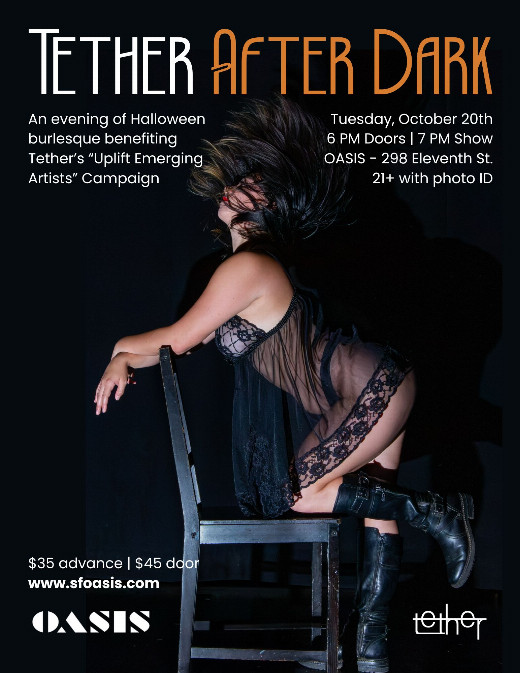
Tether After Dark Oasis SF (10/20-10/20) |

|
The Secret in the Wings Theatre Lunatico (10/10-11/01) |

|
The Jinkx & DeLa Holiday Show Golden Gate Theatre (12/27-12/27) |
|
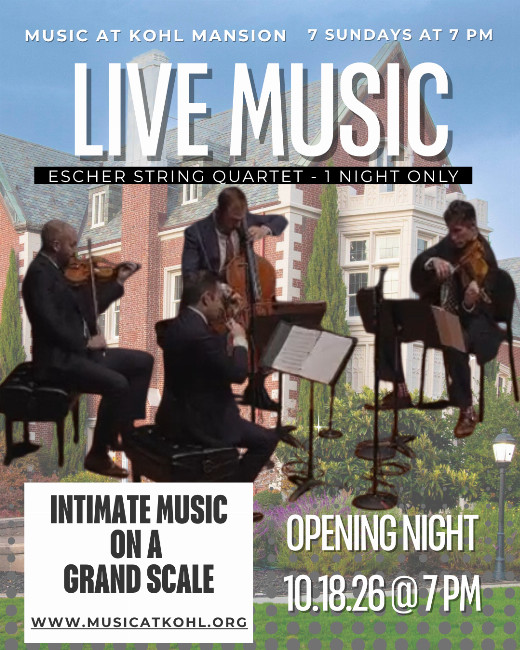
Escher String Quartet Kohl Mansion (10/18-10/18) |
