


Review: TETHER at Lake County Film Festival in September
Following its premiere at Dances with Films, TETHER will continue its festival journey with a September screening at the Lake County Film Festival in Illinois.
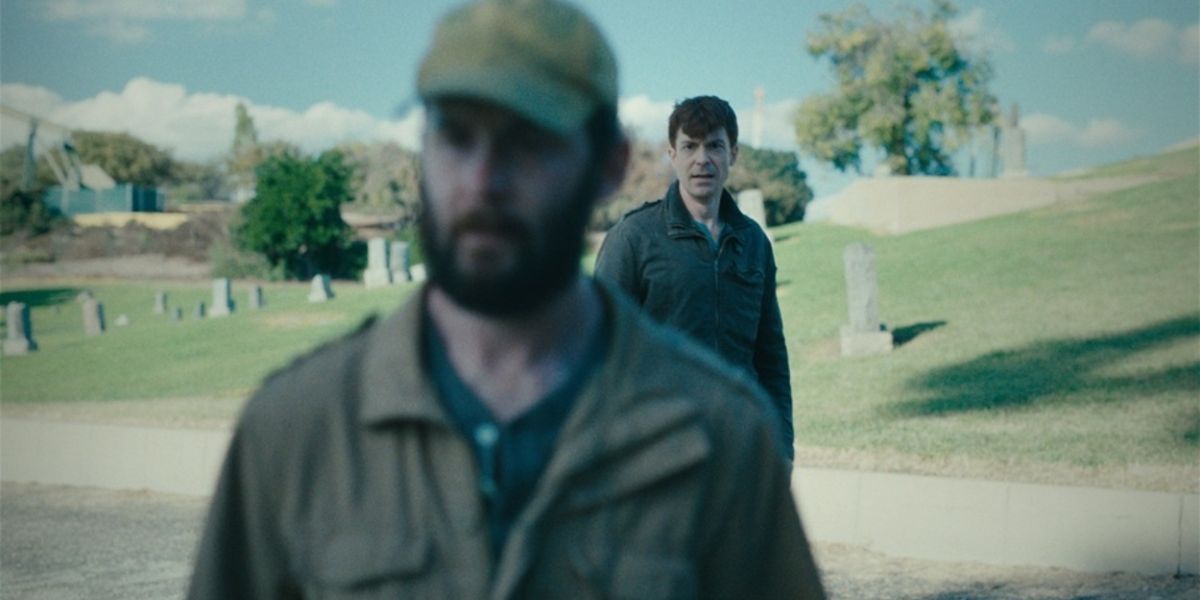
Grief doesn’t always cry out. Sometimes, it implodes.
In Hariharasudhen Nagarajan’s TETHER, silence becomes its own form of testimony. What he and writer Anghus Houvouras achieve is a cinematic meditation on what remains unspoken – on the quiet wreckage left not only by bullets, but by absence. The film doesn’t show us the violence it’s inspired by; instead, it reveals what’s left behind. In this way, TETHER isn’t about the event, but the echo. It’s a film populated by shadows of lost potential, failed interventions, and the aching question of what we didn’t do and what could have been. It takes us to a place where few have been and none hope to go and that the 24/7 media can never adequately impart.
At the film’s center are two characters, each of whom bears the cross of a personal tragedy.
Leonard (played with emotional restraint and intensity by Nick Giedris is a father staggering through the aftershock of his daughter Paula’s death in a school shooting. His grief is a slow suffocation – too quiet for catharsis, too deep for words. Leonard doesn’t lash out. He simmers. He visits a therapist. He clings to a fading dream of reconnecting with Amanda, his estranged wife. His anguish is palpable.
Leonard is not alone in his sorrow. Gerald (played with raw pathos by Ben Burton), is a former school resource officer whose inaction during the massacre has rendered him a pariah – publicly shamed, privately shattered. His guilt is a different kind of burden: less about loss, more about complicity.
The grief of both men shares a common root: the agony of what cannot be undone.
When Leonard and Gerald’s paths intersect, TETHER encounters its deepest question: Can two broken men tether themselves to life by confronting what they’ve each tried to outrun? Their relationship never spills into melodrama. It simmers with mistrust, buried rage, and moments of shared humanity. Their convergence doesn’t promise redemption, but it offers a portrait of solidarity in sorrow.
One of the film’s most quietly powerful forces is Laura Faye Smith’s performance as the therapist whose presence serves as more than just narrative function. She is, in many ways, a bridge between Leonard and Gerald – the film’s moral compass, a grounding force, a patient listener, and a gentle challenger of self-delusion. Like a modern-day oracle, she doesn’t predict futures, but she does reveal the cost of avoiding the past.
This is TETHER at its core. A film about human connection stretched thin but not yet broken. Its title refers not just to the characters’ frayed bonds, but to the fragile threads that keep people from drifting irretrievably into isolation and despair.
Visually, TETHER employs a deliberate palette of cool and warm tones that evoke the emotional topography of grief: the sterile chill of isolation in Gerald’s home, the muted warmth of memory in flashbacks and therapy scenes. The cinematography often frames characters with negative space, placing them against blank walls, wide windows, or empty rooms, visual reminders of the people who are no longer there, and the distance between those who remain.
Rather than rely on narrative momentum, the film opts for emotional excavation. There’s no grand climax, no overwrought confrontation. Instead, the tension is internalized, expressed through the subtleties of relational strain: a daughter’s absence felt in a mother’s detachment, a father’s longing transmuted into guilt. What makes TETHER resonate is precisely this refusal to resolve trauma neatly. It lingers, as it does in life.
And here lies the film’s quiet political power. Inspired by the Parkland school shooting, TETHER doesn’t name the tragedy outright, nor does it enter the fray of debate. It resists political polemic or procedural drama. It’s not about legislation or media cycles. It chooses, instead, to illuminate the private aftermath, the grief that extends beyond headlines and hashtags. In doing so, it offers a rare cinematic glimpse into a kind of moral injury: not simply mourning the dead, but confronting the unbearable weight of surviving them.
It mourns in the margins. It meditates on the aftermaths that don’t make headlines: the living wreckage of guilt, the daily rituals of regret, the unbearable task of surviving what should never have happened. By its simple portrayals of two survivors, the film trusts its audience to find meaning in the silences, in the shadows, in the spaces grief occupies when language fails.
Following its premiere at Dances with Films, TETHER will continue its festival journey with a September screening at the Lake County Film Festival in Illinois.
Photo credit to PSF Productions – L to R: Ben Burton, Nick Giedris
https://www.tetherthefilm.com/contact-us
https://www.hariharasudhen.com/
|
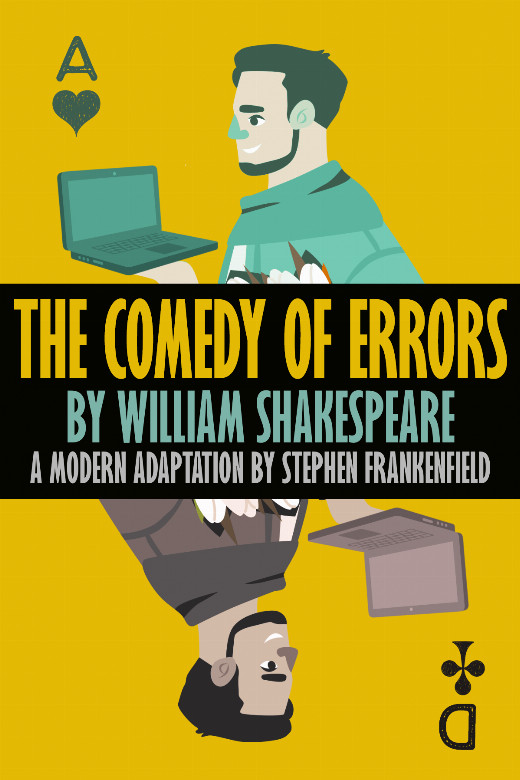
The Comedy of Errors By William Shakespeare Adapted by Stephen Frankenfield Live Theatre Workshop (9/18-10/11) |

|
Drunk Pirates The Rose Theatre (6/10-9/01) |

|
Arizona Improv Shows - TEMPE S D Acting Studio (8/22-8/22) |

|
Gunhild Carling at MIM Musical Instrument Museum (8/27-8/27) |

|
Doja Cat Mortgage Matchup Center (10/29-10/29) |
|
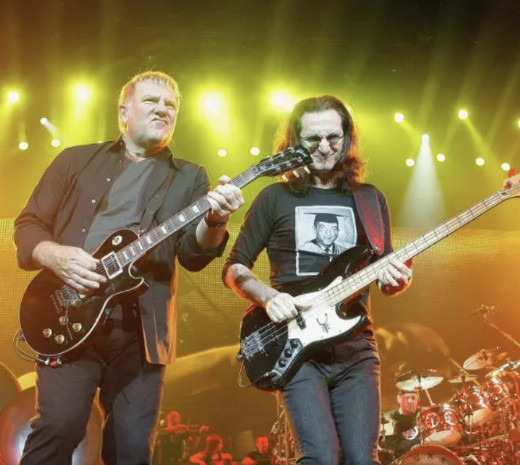
Rush Desert Diamond Arena (12/01-12/01) |
|
Scott Silven Marroney Theatre (11/17-11/21) |

|
BASKERVILLE: A Sherlock Holmes Mystery Don Bluth Front Row Theatre (7/23-8/29) PHOTOS |

|
Much Ado About Dinosaurs Beaver Street Theatre (10/16-10/25) |

|
Rocky Horror Picture Show Original Cast Spooktacular Tour with Barry Bostwick and Patricia Quinn ASU Gammage Theatre (10/09-10/09) |
Reader Reviews
To post a comment, you must register and login.