The Skyscraper Museum continues to honor the 25th anniversary of September 11th, 2001 with an in-person program featuring Museum trustee Bill Baker held at the office of the architecture and engineering firm SOM, at 7 World Trade Center in lower Manhattan. The structural innovations of three brilliant young engineers starting in the 1960s led to a revolution in modern skyscraper design. Bill Baker, the structural designer of the Burj Khalifa, the world's tallest building, will offer his appraisal of three key figures – Leslie E. Robertson, William J. LeMessurier, and Fazlur R. Khan – whose work influenced the development of new systems of structures that made possible both unprecedented height and material efficiency. In commemoration of the 25th anniversary of September 11th, 2001, Baker will focus especially on the structural design of the Twin Towers as conceived by Les Robertson as well as some of the later projects from his long career working on tall buildings around the world. The Museum is grateful for the generous support of Elise Jaffe + Jeffrey Brown for endowing an annual lecture that honors our late trustee, the extraordinary structural engineer Leslie E. Robertson.
The Skyscraper Museum
Museum · Financial District
Location
39 Battery Pl, New York, NY 10280 · Get Directions
The Skyscraper Museum Videos
To mark the 25th anniversary of September 11th, 2001, The Skyscraper Museum will present several programs that reflect on the history of the Twin Towers. We begin with a pair of talks by architectural historian Anthony W. Robins and photographer Stan Ries, both of whom published books on the World Trade Center, before and after its destruction. The first edition of Tony Robins's The World Trade Center was published in 1987, a little more than a decade after the Twin Towers were completed, then in a second, post-9/11 edition in 2012. Robins will revisit his study of the planning and design of the WTC complex—the origins of the Trade Center concept, the search for an architect, the evolution of the design, the urge to build the world’s tallest buildings, the engineering feats required for the towers’ construction, and the critical response. His lecture draws on his original research, which benefited from interviews with figures still then on the scene and archival documents since lost. For nearly thirty years, professional photographer Stan Ries captured sweeping views of the World Trade Center, often from the sky, as he shot the Twin Towers and lower Manhattan skyline for clients such as the PANYNJ and the Battery Park City Authority, as well as for private developers. Ries will share his stunning images and revisit the publication of his 2006 book The World Trade Center Remembered, which pairs his photographs with reflections by eminent New York architects on the Towers' legacy. Ries's photos range from grand panoramic views to dazzling details, which together evoke memories and retrieve "a symbol that will not easily be forgotten."
The nominal “park” of the Park Avenue median from 46th Street to 57th Street has stretched and shrunk over the past century. Created out of thin air from 1903 to 1913 during the electrification and double decking of the New York Central’s railyard, underground, Park Avenue is both a bridge and a tunnel. Above “ground,” it is one of the world’s greatest urban boulevards. Now, the century-old infrastructure of road and bridge is the focus of a lengthy rehabilitation effort by the NYC Department of Transportation (DOT) and the Metropolitan Transportation Authority’s (MTA) Metro-North Railroad, which is responsible for the maintenance and reconstruction of the Grand Central Terminal Train Shed. Over the coming years, as the roof is repaired in phases, Park Avenue’s medians will be widened and the public space redesigned. Working with the landscape architects of Starr Whitehouse, NYC DOT is engaged in the final stages of “putting the ‘park’ back in Park Avenue." The City aims to transform the avenue into a greener, safer, and more pedestrian-friendly corridor. Key elements of the new design include a wider median, pedestrian enhancements, seating, landscaping, and innovative streetscape amenities. This final program in the Museum’s series Park Avenue: Past, Present, Future brings together key members of the Park Avenue team to discuss their process and plans. The panelists include: Laura Starr is a founding partner of Starr Whitehouse Landscape Architects and Planners, the firm that is leading the Park Avenue Vision Plan for the NYC DOT to create a cohesive community-informed redesign for the streetscape of Park Avenue between 46th Street and 57th Street in Manhattan's Midtown East neighborhood. Nicholas Pettinati is the Deputy Director of Urban Design at the New York City Department of Transportation. He has been instrumental in advancing the agency’s design standards through the Street Design Manual, El-space initiative, and multiple capital projects and is leading the Park Avenue Vision Plan for the NYC DOT. Jamie Torres-Springer is the President of MTA Construction & Development and Chief Development Officer for the Metropolitan Transportation Authority (MTA). He is responsible for managing the MTA's expansive capital budget, which includes major subway, commuter railroad, and tunnel infrastructure upgrades. He is leading the MTA's long-term challenge with rebuilding/maintaining the entire infrastructure under Park Avenue.
More in Financial District
More Museums
The Skyscraper Museum News
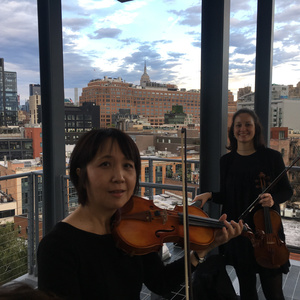
Miolina to Perform SOUNDS OF PARK AVENUE at The Skyscraper Museum
Violin duo Miolina will perform Sounds of Park Avenue at The Skyscraper Museum in NYC, pairing classical and contemporary works with the museum's current exhibition, The Invention of Park Avenue. A Kids' Edition is also scheduled.
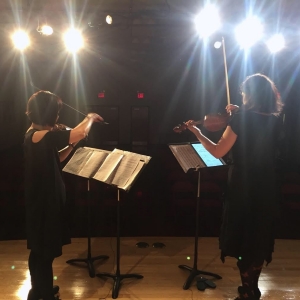
Miolina To Present CONSTRUCTIVISM / DECONSTRUCTIVISM
Violin duo Miolina will premiere a new work by Wendy Griffiths and perform Henryk Górecki's rarely heard 1957 duo at Greenwich House Music School on November 14, 2024.

Miolina Performs Next Month at the Cell Theatre
Violin duo Miolina will present six new and recent works for violin duo by composers Michael Coleman, Dorothee Eberhardt, G. Blake Harrison-Lane, Takuma Itoh, Jesse Jones, & Jessie Montgomery.
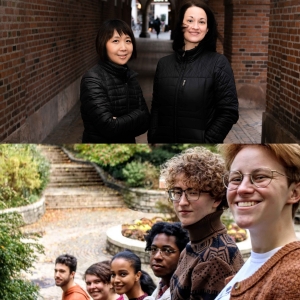
Miolina Join Mosaic Composers Collective In IN TRANSIT: CHANGING NY
Miolina presents Mosaic Composers Collective in a collaborative performance featuring new works and insights into the creative process. Don't miss this unique event at Tenri Cultural Institute in Greenwich Village on February 11, 2024.

Miolina Returns To The Skyscraper Museum With CASTLES & CATHEDRALS
Miolina returns to The Skyscraper Museum with their program 'Castles & Cathedrals' featuring works inspired by these architectural marvels. Join them on October 27 for a free concert. Find out how to get tickets here!
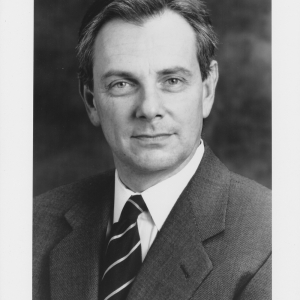
Memorial Service for Jack L. Goldstein, Former Executive Director of Save the Theaters & TDF, to Take Place in September
Join in on September 6th to pay tribute to the life and accomplishments of Jack L. Goldstein, former Executive Director of TDF and Save The Theaters. Don't miss this opportunity to remember his invaluable contributions to the preservation of Broadway theaters.
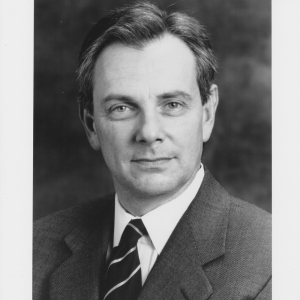
Jack L. Goldstein, Former Executive Director of TDF and Save The Theaters, To Be Remembered in September
A memorial service for Jack L. Goldstein, who organized a successful campaign in the 1980s to landmark over two dozen Broadway theatres, will be held on Wednesday, September 6th, 2023 (5 PM) at St. Mary's Episcopal Church in-the-Highlands, in Cold Spring, NY.
Free Access to Downtown Cultural Institutions at Fourth Annual NIGHT AT THE MUSEUMS 6/20
The Downtown Culturals Group presents the fourth annual Night at the Museums, bringing visitors and locals of Lower Manhattan unique experiences at 15 of the area's most diverse and culturally significant institutions. The event is presented as a part of River To River Festival 2017, Lower Manhattan Cultural Council's annual summer arts festival. Night at the Museums takes place on Tuesday, June 20, from 4:00 p.m. to 8:00 p.m.Admission is free and many of the sites offer special programming and tours.
River To River Festival 2017 Kicks Off June 14-25 Across Lower Manhattan
Lower Manhattan Cultural Council (LMCC) presents the 16th annual River To River Festival, Downtown New York City's completely free summer arts festival, June 14-25. The 2017 edition presents an array of performances and events exploring and celebrating diversity in all its forms-often blurring the lines between genres including dance, music, theater and the visual arts-over the course of 100+ performances and events spanning 17 projects at 31 unique sites across Lower Manhattan and Governors Island. The Festival also offers opportunities for audiences to interact with artists, socialize and experience multiple facets of artists' work and the creative process.
River To River Festival Kicks Off Next Month in NYC
Lower Manhattan Cultural Council (LMCC) presents the 16th annual River To River Festival, Downtown New York City's completely free summer arts festival, June 14-25. The 2017 edition presents an array of performances and events exploring and celebrating diversity in all its forms-often blurring the lines between genres including dance, music, theater and the visual arts-over the course of 100+ performances and events spanning 17 projects at 31 unique sites across Lower Manhattan and Governors Island. The Festival also offers opportunities for audiences to interact with artists, socialize and experience multiple facets of artists' work and the creative process.
3rd Annual Night at the Museums in NYC Set for 6/21
The Downtown Culturals Group presents the third annual Night at the Museums, bringing visitors and locals of Lower Manhattan unique experiences at 15 of the area's most diverse and culturally significant institutions. The event is presented as a part of River To River Festival 2016, Lower Manhattan Cultural Council's annual summer arts festival. Night at the Museums takes place on Tuesday, June 21, from 4:00 p.m. to 8:00 p.m. Admission is free and many of the sites include special programming and tours.
African Burial Ground National Monument Set for 'Night at the Museums' Tonight
Join the National Park Service at African Burial Ground National Monument tonight, June 23, for evening tours of the outdoor memorial as part of Lower Manhattan Cultural Council's 'Night at the Museums.'
African Burial Ground National Monument Set for 'Night at the Museums', 6/23
Join the National Park Service at African Burial Ground National Monument this Tuesday, June 23, for evening tours of the outdoor memorial as part of Lower Manhattan Cultural Council's "Night at the Museums."
Metropolitan Playhouse Receives Victorian Society Award
Metropolitan Playhouse was honored Wednesday night, June 11th, by the Victorian Society New York with an Award for Outstanding Performance Arts Group, in recognition of the company's work 'contributing to the understanding, appreciation and preservation of nineteenth-century heritage in the New York City area.'
Joel Grey, Brooke Shields & More to be Honored as 2013 Living Landmarks on 11/14
Each year, the New York Landmarks Conservancy recognizes distinguished New Yorkers who have made extraordinary contributions to the City and honors them as Living Landmarks at a gala in the fall. This year The New York Landmarks Conservancy will honor Ann L. Buttenwieser, Joel Grey, Robert I. Grossman, MD, William vanden Heuvel (Lew Rudin Award), Mary Wells Lawrence, and Brooke Shields on November 14, at the Plaza. The special celebration will be hosted by Living Landmark Liz Smith.
The Skyscraper Museum Frequently Asked Questions
- What are the closest subway stops to The Skyscraper Museum?
-
The closest subway stops to The Skyscraper Museum at 39 Battery Pl in New York City are:
1. Bowling Green (4, 5 trains): Located just a short walk away from the museum, this subway stop is convenient for visitors coming from various parts of the city. You can check the latest subway updates and schedules at the official MTA website: http://www.mta.info.
2. Whitehall St-South Ferry (1, R, W trains): Another nearby subway stop, Whitehall St-South Ferry provides easy access to The Skyscraper Museum. Be sure to check for any subway service changes or delays before your visit.
While you're in the area, I recommend checking out some other attractions and dining options nearby:
1. Battery Park: Enjoy a stroll through Battery Park, located right by The Skyscraper Museum. This beautiful waterfront park offers stunning views of the Statue of Liberty and is a great spot to relax and soak in the atmosphere.
2. Statue of Liberty and Ellis Island: If you have the time, consider taking a ferry ride to visit the Statue of Liberty and Ellis Island. These iconic landmarks are a must-see for any visitor to New York City. You can find more information and purchase tickets at the official website: https://www.nps.gov/stli/index.htm.
3. Stone Street: For a unique dining experience, head over to Stone Street, a historic cobblestone street lined with restaurants and outdoor seating. It's a great place to grab a bite to eat and enjoy the lively atmosphere.
I hope you have a fantastic time exploring The Skyscraper Museum and the surrounding area!
- What's the best way to get to The Skyscraper Museum by bus?
-
The closest bus stops to The Skyscraper Museum at 39 Battery Pl in New York City are:
1. South End Avenue/West Thames Street - served by the M20 bus. You can check for updates on the M20 bus schedule [here](http://bustime.mta.info/m/index?q=400293).
2. South End Avenue/Albany Street - served by the M9 bus. You can check for updates on the M9 bus schedule [here](http://bustime.mta.info/m/index?q=400291).
These bus stops are conveniently located near The Skyscraper Museum, making it easy to reach the museum by public transportation. Enjoy your visit!
- How much time should I plan to spend at The Skyscraper Museum?
-
The ideal length of time to plan for a visit to The Skyscraper Museum in New York City is approximately 1 to 2 hours. This should give you enough time to explore the museum's exhibits, learn about the history and development of skyscrapers, and appreciate the architectural wonders on display. However, if you are particularly interested in the subject matter or enjoy reading detailed information, you may want to allocate a bit more time to fully immerse yourself in the museum's offerings. Remember, it's always better to have a little extra time than to feel rushed during your visit. Enjoy your time at The Skyscraper Museum!
- Can I bring food and drinks into The Skyscraper Museum?
-
The Skyscraper Museum in New York City does not have a food or drink policy. However, please note that food and drinks are not allowed in the exhibition galleries. If you're looking for a bite to eat or a refreshing drink, there are plenty of restaurants and cafes in the surrounding area where you can enjoy a meal before or after your visit.
- Does The Skyscraper Museum offer luggage storage?
-
The Skyscraper Museum in New York City does not have a luggage storage facility. However, there are several options available nearby where you can securely store your luggage while you visit the museum.
One option is to use a luggage storage service. There are several companies in the city that provide this service, allowing you to drop off your bags at a designated location and pick them up later at your convenience. Some popular luggage storage services in New York City include LuggageHero, Vertoe, and Schwartz Luggage Storage.
Another option is to check if your hotel offers luggage storage for guests. Many hotels in the city provide this service, allowing you to store your bags before check-in or after check-out. It's always a good idea to contact your hotel in advance to inquire about their luggage storage policy.
Lastly, if you are visiting other attractions or museums before or after your visit to The Skyscraper Museum, you can check if they offer luggage storage facilities. Some larger museums and tourist attractions in New York City provide lockers or coat check services where you can store your belongings.
Remember to plan ahead and consider your options to ensure a hassle-free visit to The Skyscraper Museum and other attractions in the city.
- Is The Skyscraper Museum a good place to visit for foreign travelers who are not native English speakers?
-
Yes, The Skyscraper Museum in New York City is definitely worth a visit for visitors from other countries and non-English language speakers. While the museum primarily provides information in English, they do offer free audio guides in multiple languages, including Spanish, French, German, Italian, and Japanese. These audio guides provide detailed explanations about the exhibits and the history of skyscrapers, ensuring that visitors can fully appreciate the museum regardless of their language proficiency.
Additionally, the museum's exhibits are visually engaging and showcase the fascinating evolution of New York City's skyline. From scale models and architectural drawings to interactive displays, there is plenty to see and learn about the iconic skyscrapers that define the city's skyline. Even without understanding the accompanying texts, visitors can still appreciate the impressive visuals and gain a deeper understanding of the architectural marvels that make New York City unique.
Overall, The Skyscraper Museum offers an enriching experience for visitors of all backgrounds, making it a great attraction to explore during your time in New York City.
- What ages are appropriate for The Skyscraper Museum?
-
The Skyscraper Museum in New York City is a fascinating destination for visitors of all ages. While there is no specific recommended age range, the museum's exhibits and displays are designed to engage and educate visitors of all backgrounds and interests. Whether you are a history buff, an architecture enthusiast, or simply curious about the iconic skyscrapers that define New York City's skyline, you will find something of interest at this museum. Families with children can also enjoy the interactive exhibits and learn about the evolution of skyscrapers through fun and educational activities. So, no matter your age, don't miss the opportunity to explore the world of skyscrapers at The Skyscraper Museum!
.jpg?format=auto&width=365)