


Review: Updated FLOWER DRUM SONG Returns to Los Angeles by East West Players
to much applause and acclaim at the Aratani Theatre
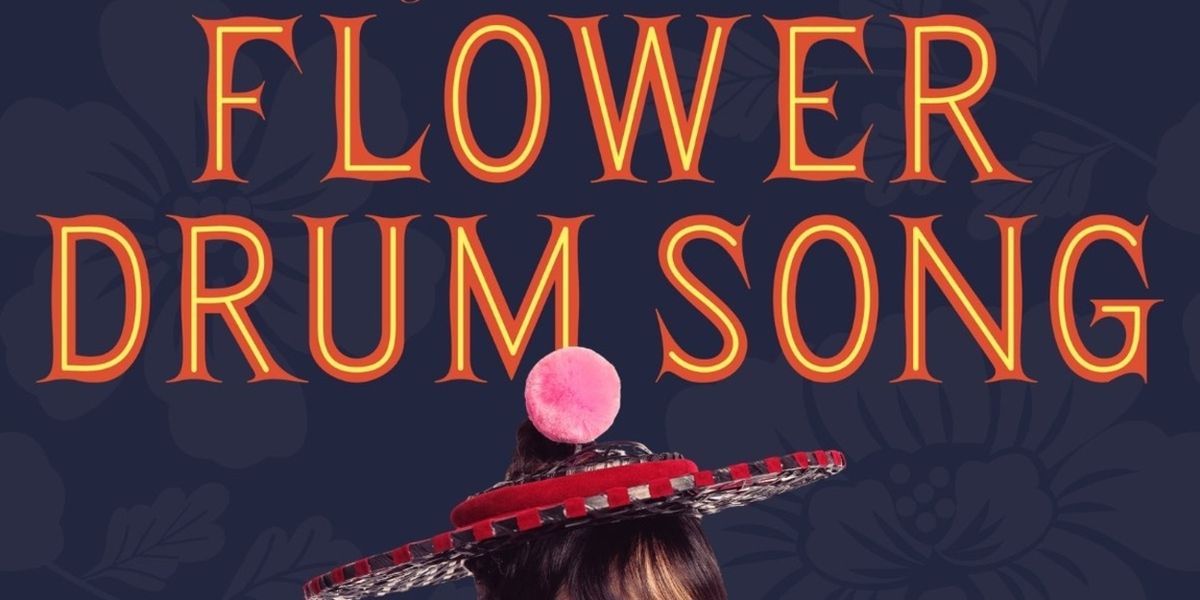
 Click for Tickets!
Rodgers and Hammerstein’s groundbreaking musical Flower Drum Song premiered on Broadway on December 1, 1958, and was based on the 1957 novel by Chin Yang Lee. It was hailed for its vibrant portrayal of life in San Francisco’s Chinatown and directed by Gene Kelly. Due to its popularity the audiences, the production ran for 600 performances featuring a predominantly Asian-American cast. A film adaptation was released in 1961, bringing the world of Grant Avenue’s Chinatown to audiences around the world.
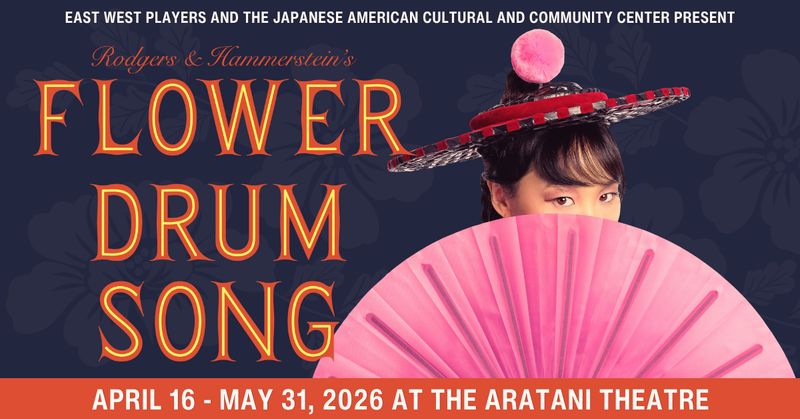
And now, Richard Rodgers and Oscar Hammerstein’s classic songs and beloved characters are making their long-awaited return to Los Angeles for the first time since the premiere of Hwang’s 2001 adaptation of Flower Drum Song at Center Theatre Group’s Mark Taper Forum over twenty years ago.
This highly anticipated world premiere of Tony-winner David Henry Hwang’s newly updated 2026 book for Rodgers and Hammerstein’s Flower Drum Song is being presented by East West Players (EWP) and the Japanese American Cultural and Community Center (JACCC) at JACCC’s iconic Aratani Theatre in historic Little Tokyo, helmed by EWP Artistic Director Lily Tung Crystal, choreographed by Janelle Dote Portman, with music direction by Marc Macalintal. Hwang’s updated book addresses outdated stereotypes and offers a more authentic, nuanced Chinese-American perspective to the story.
At a time when questions of identity, immigration, and cultural preservation feel especially urgent, Hwang’s 2026 reimagining of the book gives all Asian Americans a chance to reclaim this classic, offering a new perspective and story depth while honoring the community’s continuous evolution. Now we see how discrimination within the Grant Avenue community was often split between Chinese-Americans born here and newly arrived Chinese immigrants unfamiliar with the language or American culture who so desperately wanted to fit in but lacked the skills to do so. And if not for the assistance of those already here, assimilation could prove to be much harder than anticipated.
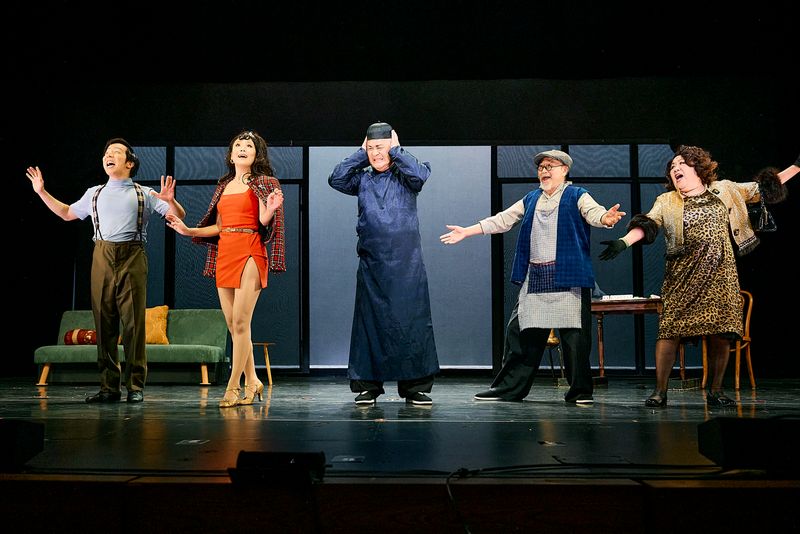
(L-R) Kenton Chen, Krista Marie Yu, Marc Oka, Gedde Watanabe, and Emily Kuroda. Production photos by Mike Palma
But as evidenced by the incredible talent onstage by 19 triple-threat performers of Asian descent in the cast, as well as on the creative production team, the incredibly entertaining 2026 Flower Drum Song musical ending EWP’s 60th Anniversary Diamond Legacy season proves how their mission to nurture Asian-Pacific-Islander artists to work together both onstage and in media has truly succeeded.
For those not familiar with the story, Flower Drum Song is set against the backdrop of 1960s San Francisco Chinatown and explores themes of immigration, assimilation, tradition, and community with renewed urgency and heart. It follows Mei-Li, a young Chinese opera performer fleeing communism as she arrives in America and is drawn into the vibrant world of the Grant Avenue nightclubs - with her main goal to find a husband and start her own family of Chinese-American citizens.
In this updated version, the threat of arrest by Chinese communists looms large from the very beginning when we see Mei-Li (lovely soprano and traditional dancer Grace Yoo) and her father (Paul Wong) attempting to catch a boat from China to San Francisco. But this time, her father is arrested and does not get on the boat with her, leaving Mei-Li and her traditional Chinese flower drum to get to America on their own.
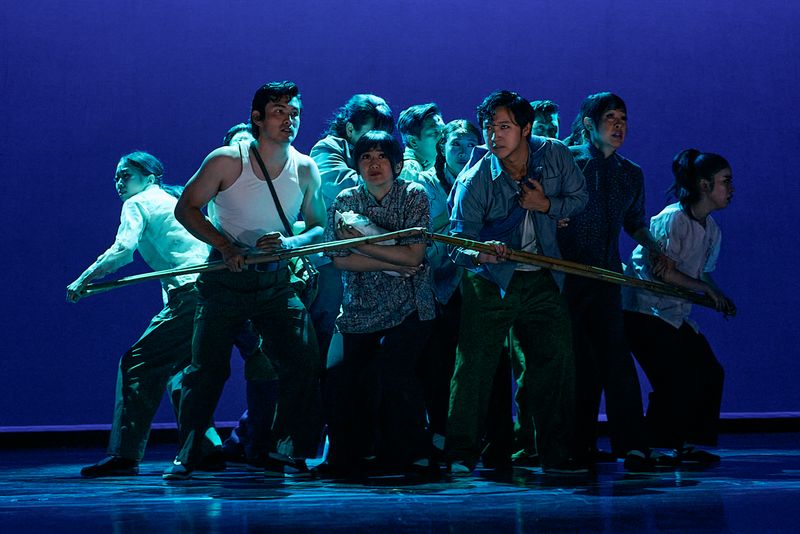
(L-R) Ensemble members Emma Park, Cooper Lee Bennett, Gemma Pedersen, Hillary Tang, Haoyi Wen, Sally Hong, and Ai Toyoshima as immigrants on a boat from China to San Francisco.
An incredibly creative montage directed by Lily Tung Crystal with choreography by Janelle Dote Portman takes place while the orchestra performs instrumental music perfectly coordinated to offset the action. Cast members use bamboo poles to create a bridge to cross the mountains in China to being the rail of the ship where the hungry and desperate immigrants, including Chao (East West newcomer Cooper Lee Bennett) who take Mei-Li under his wing as the ship gets tossed around on the long journey. This attention-grabbing overture to the story sets the tone of hardships endured by all immigrants who risked life and limb to find a better place to call home.
This opening differs from the original version in which Mei-Li and her father stowaway in cargo boxes to get to America, making them illegal immigrants. It also removes her father from guiding Mei-Liu after arriving in San Francisco, giving her more natural intelligence and self-sufficiency than before. This is a more modern woman crafted to speak to today’s challenge of finding your own way in life, although, as it turns out, it still helps to know people to assist in finding housing and employment.
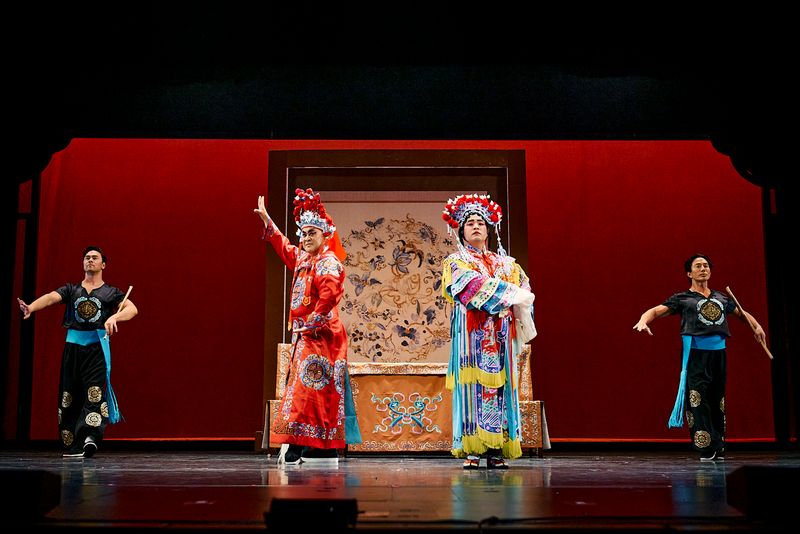
(L-R) Brian Shimasaki Liebson, Marc Oka, Scott Keiji Takeda, and Joven Calloway
We first meet Wang (Marc Oka whose natural stage presence and charm bring a new vibrancy to the character), the owner of a failing Chinese opera company on Grant Avenue, as he and his son Ta (leading man extraordinaire Scott Keiji Takeda) perform a traditional Chinese dance in elegant kimonos designed by Ruoxuan Li who is to be commended for ingeniously crafting more than 150 costume changes for the show. But Ta knows the venue will go bankrupt unless his father updates the show (and releases him from playing all the female roles) to draw in tourists by offering more modern and entertaining shows reflecting Chinatown during the mid-60s “Summer of Love” in San Francisco.
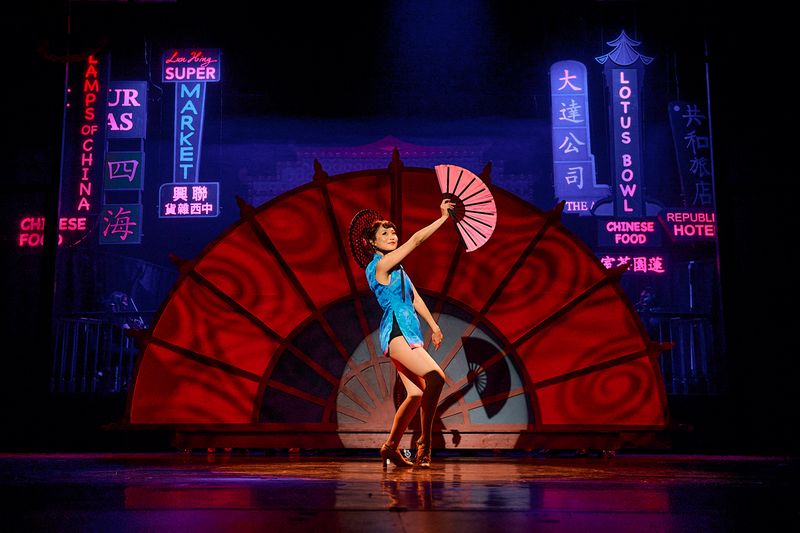
Krista Marie Yu performs "Fan Tan Fanny" as Linda Low
Ta introduces his father to Linda Low (Krista Marie Yu in a tour-de-force performance), a very hip nightclub entertainer at another club he frequents who knows how to use her curves and flirty personality to entertain Americans who bring much needed cash to Grant Avenue business owners. Once she is hired by Wang and the club updated, the large ensemble numbers featuring Linda and her back-up dancers wow audiences given their incredible voices and energetic movement, especially during her “Fan Tan Fanny” number during which dancers of both sexes share their Chinese fan flourishes with sexy allure. It’s easy to see why tourists would be drawn into such a show!
Mei-Li is introduced to Wang and Ta who immediately recognize how she is the perfect person to bring a sense of traditional Chinese culture to the restaurant accompanying their new nightclub. Of course, she immediately falls for the handsome “first son” Ta, with Yoo letting us see how hopeful Mei-Li feels knowing she has found a place to fit in and, more importantly, her perfect future husband, during her lovely rendition of “I’m Going to Like it Here.” But he is smitten with Linda who, of course, is more interested in furthering her career than getting married and settling down.
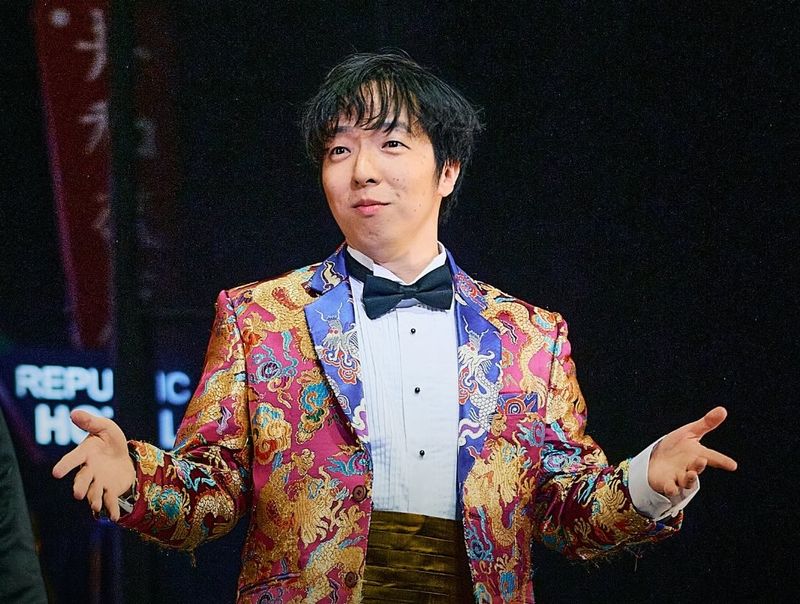
Kenton Chew portrays backstage manager Harvard who longs to be in the spotlight.
A truly heartfelt scene takes place when Mei-Li is introduced to Linda backstage by Wang’s right-hand man Chin (the always loveable Gedde Watanabe) after being more than a bit shocked by Linda’s revealing outfits and dancing during her lively nightclub performance. We also meet the club’s stage manager and wannabe star Harvard (Kenton Chen who steals the show presenting everything that is wonderful about gay men working in show biz) as he tends to Linda’s needs.
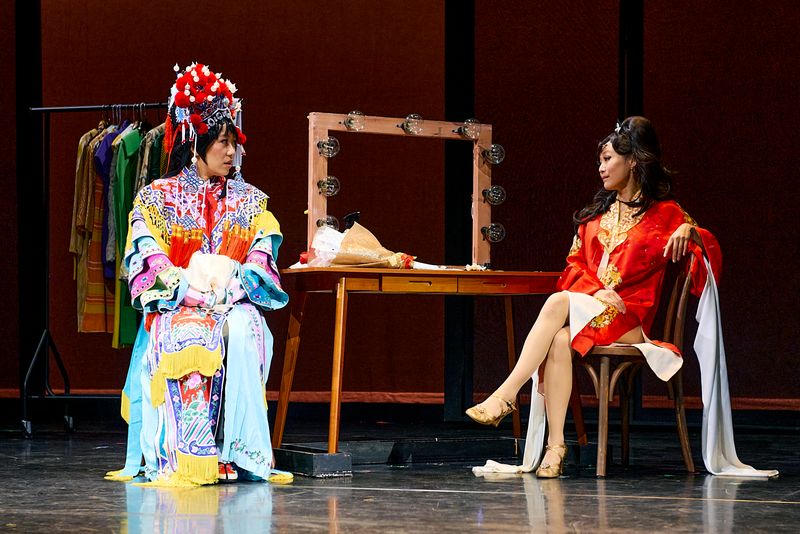
(L-R) Grace Yoo and Krista Marie Yu meet backstage as Mei-Li and Linda Low
And when Mei-Li sits down in traditional Chinese dress for guidance about men from Linda, the scene morphs into the flashy and sparkly “I Enjoy Being a Girl” production number, introduced by Ta as the host of his family’s flashy nightclub. And this is when Mei-Li realizes Ta is infatuated with Linda and she must change her old-fashioned ways to get his attention focused on her instead.
Mei-Li starts to use her innocent appeal to her advantage when she shows Ta her Chinese flower drum, the prize possession given to her by her father when she last saw him prior to escaping China. As they talk, Mei-Li realizes that to find love she must give up what is old to be able to have the new, clearly aiming her sights on Ta.
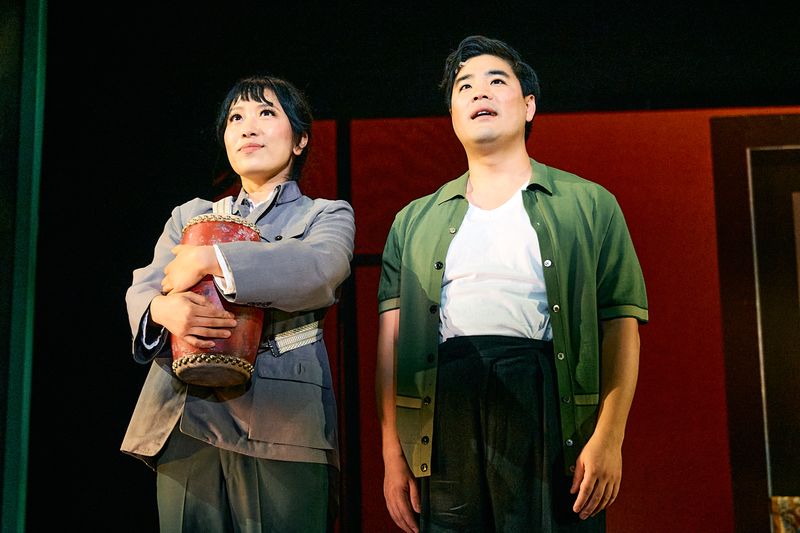
(L-R) Grace Yoo and Scott Keiji Takeda
Yoo and Keiji Takeda’s rendition of “You Are Beautiful” allows to see how Mei-Li appeals to his Chinese heritage when Linda appeals to his American side. “So which am I?” he asks Mei-Li, to which she answers, “You are 100% both.” This leads to their almost first kiss, one every romantic in the audience will be so disappointed about when it doesn’t happen! At least not yet…
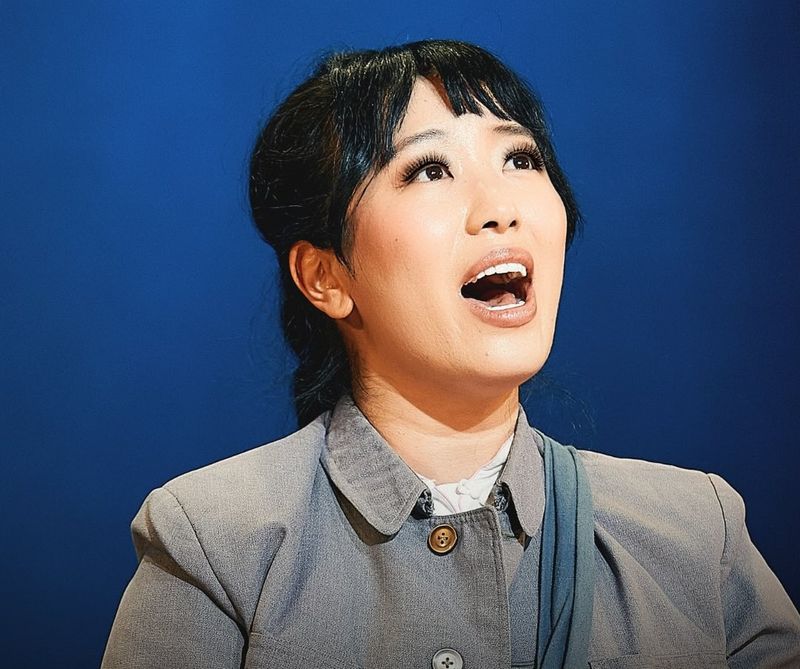
And later when Mei-Li is rejected by Ta, Yoo’s incredibly heartfelt rendition of “Love, Look Away” in a downstage spotlight will bring tears to your eyes as she leaves the nightclub and only man she has even loved.
After she leaves, Mei-Li goes to work at a Chinese Fortune Cookie factory where workers stand on their feet for long hours, inserting fortunes and folding each cookie by hand. It is here when she is convinced by fellow factory worker Chao (Cooper Lee Bennett) to leave San Francisco and move to Hong Kong with him, “as friends” she insists, to start over again in a city ready to explode in population and opportunities.
Along the way, local talent agent Madame Liang (portrayed by director Lily Tung Crystal who brilliantly stepped into Emily Kuroda’s role with script in hand) who meets with Wang, thanks to Ta, to encourage him to create greater success by describing her vision for the future of “Grant Avenue” as a world renown place representing not only the Chinese but also all the tourists looking for entertainment in the evening after shopping there all day. This big production number is astounding with attention-grabbing scenic elements designed by Chen-Wei Liao, lighting designed by Jiyoun Chang, sound designed by Brian Hsieh, properties designed by Naomi Kasahara, and costumes designed by Ruoxuan Li along with hair and wig design by Y. Sharon Peng. Each of these brilliant designers add their amazing talent to the artistic wonder of the entire production.
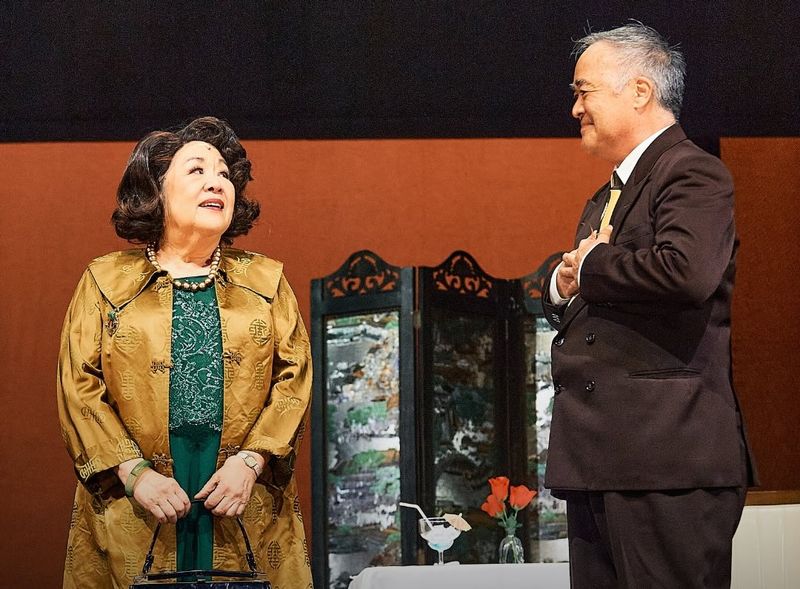
Emily Kuroda (Madame Liang) and Marc Oka (Wang transformed as Sammy Wong) perform "Don't Marry Me."
Madame Liang meets with Wang, now known by his Americanized name Sammy Wong, to attempt stealing lovely Linda away from his nightclub to give her a chance to succeed in Hollywood. These two “older and wiser” characters are given the classically humorous duet “Don’t Marry Me” over dinner in the restaurant, with both convincing the other that life should be fun without commitments. This encounter encourages Wang to forget mourning his late wife and live fully by being happy in the present by being himself and doing what he loves to do – namely entertaining people. Giving the song to these two feels much more natural and appropriate than in the original script (and movie) which givers it to Wang and Mei-Li when she turns to him as a possible husband after Ta rejects her.
Two songs I must mention due to Marc Oka’s outstanding renditions include “Gliding Through My Memoree” which he performs in a much-to-small sailor suit meant for Harvard to wear when performing the song as his first starring number in the nightclub. Roars of laughter greeted his entrance, especially since the entire ensemble acts just as shocked as we are to see him dressed like that singing such a modern song! And as he sings about having a girl in every port, ensemble members strut their stuff dressed as the sexy women from around the globe. And of course, Linda Low is the last one to appear, dressed as the All-American Chinese Girl in red, white and blue!
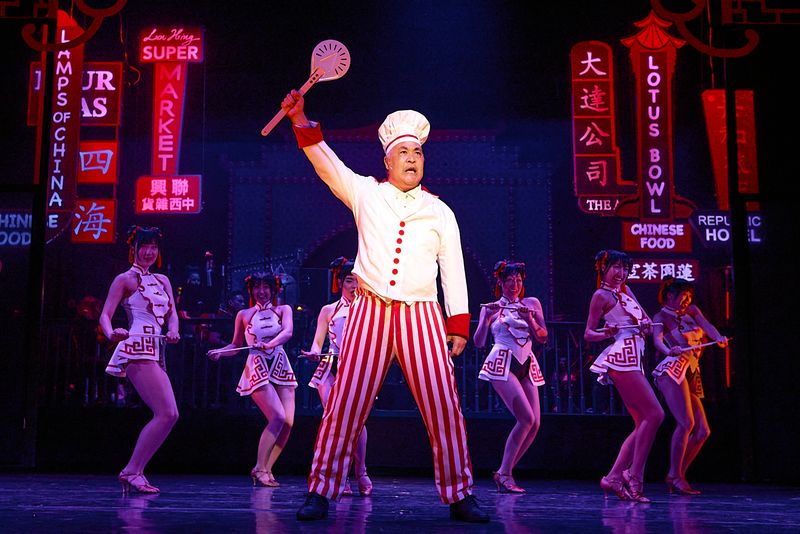
Marc Oka performns "Chop Suey" with ensemble dancers
Marc Oka performs "Chop SueyAct 2 opens at the newly named Club Chop Suey nightclub which continues to garner great financial success. Wang, now known as Sammy Wong, leads the big production number “Chop Suey” with its lyrics identifying the dish as the first truly Chinese-American meal, created by Chinese railroad workers from whatever leftover food was given to them by their white supervisors. Ensemble members dance in and out dressed as various types of vegetables or protein sources normally associated with the dish to great comic effect.
Of course, being a classic “Golden Age” of Broadway musical from Rodgers and Hammerstein, who also gave us Oklahoma!, Carousel, South Pacific, The King and I, and The Sound of Music, everything works out for the best in the end. And the rousing closing number, along with the clever curtain call finale in which Kenton Chen gets to strut his stuff as Harvard singing “I Enjoy Being a Girl” with Linda Low, brings the musical’s magic back to Los Angeles at a time when audiences need this type of classic musical entertainment to forget their troubles and be entertained by the best of the best artists our city has to offer.
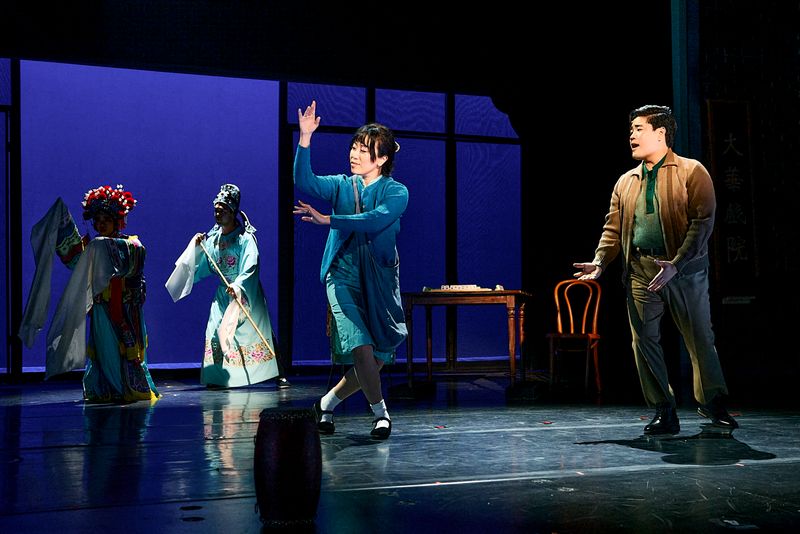
Old ways meet the new on Grant Avenue in San Francisco's Chinatown. (L-R) Ai Toyoshima, Brian Shimasaki Liebson, Grace Yoo, and Scott Keiji Takeda
I guarantee as the biggest show in East West’s 60-year history, Rodgers and Hammerstein’s Flower Drum Song with 2026 book by David Henry Hwang, will also be their greatest hit! So don’t you dare miss it at the Aratani Theatre, located at the Japanese American Cultural and Community Center (244 S. San Pedro St, Los Angeles, CA 90012) in the heart of historic Little Tokyo through May 31, 2026.
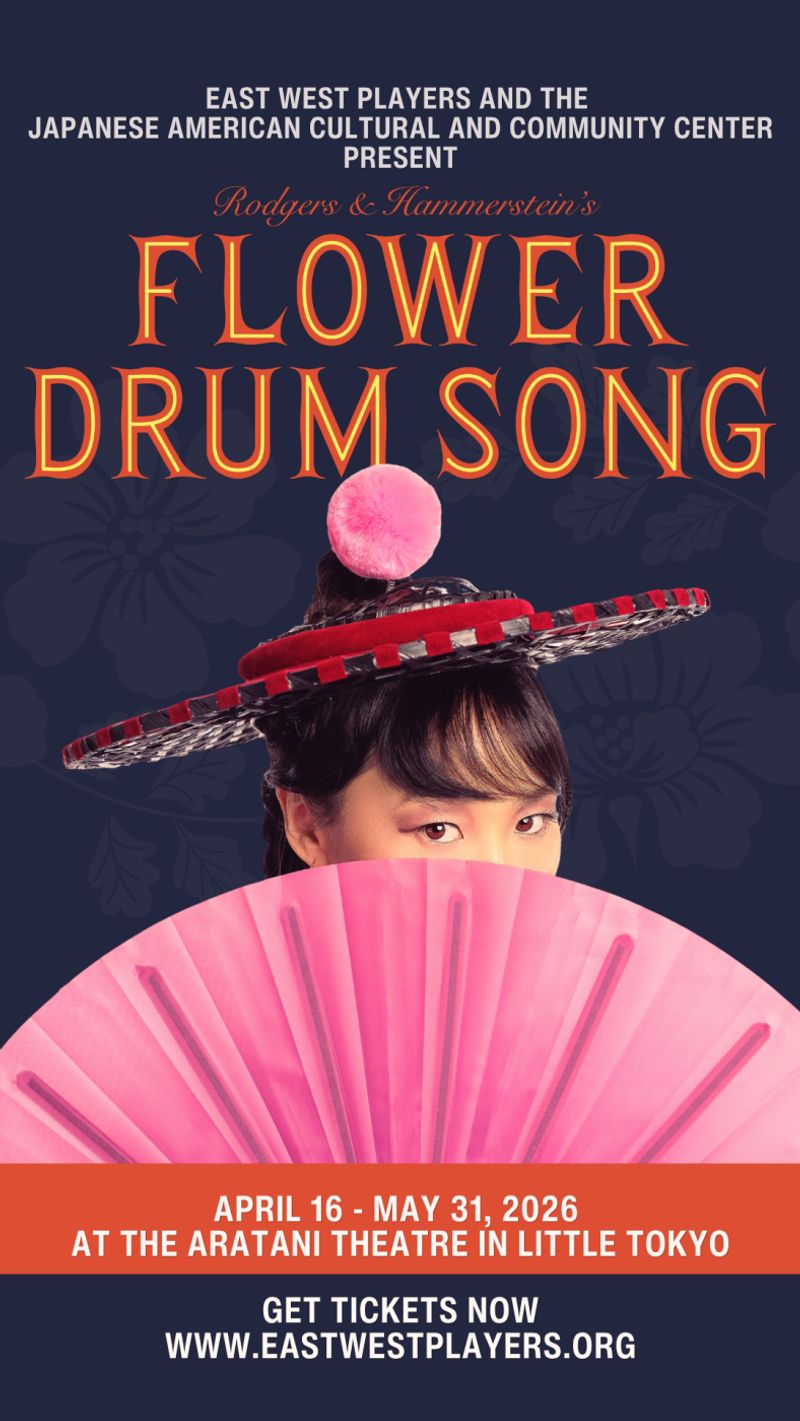
Regular performances take place on Fridays, Saturdays, and Sundays, with additional select weekday shows and matinees on Saturdays and Sundays. All Saturday matinee performances will be designated as “Masked Matinees,” offering a more comfortable environment for patrons who prefer a masked experience. A Pay-What-You-Will performance date will be announced in April 2026.
Future special performances include Student Night on April 30 and community talkbacks on May 1 and May 29. American Sign Language interpretation will be offered at the 8pm performance on Saturday, May 23. All dates and event details are subject to change.
Single tickets start at $99, with group discounts available. Tickets online at eastwestplayers.org, by calling (213) 625-7000, or by emailing boxoffice@eastwestplayers.org.
Sign up for all the news on the Fall season, discounts & more...
|
CLUB27 Jaxx Theatre (10/01-10/30) |
|
Crone Creed El Portal Theatre (9/30-10/17) |
|
Good Night, Oscar North Coast Repertory (9/16-10/11) |
|
A Killer Night in Studio City Vitello's (9/06-10/31) |
|
Catch Me If You Can Colony Theatre (9/17-10/18) |
|
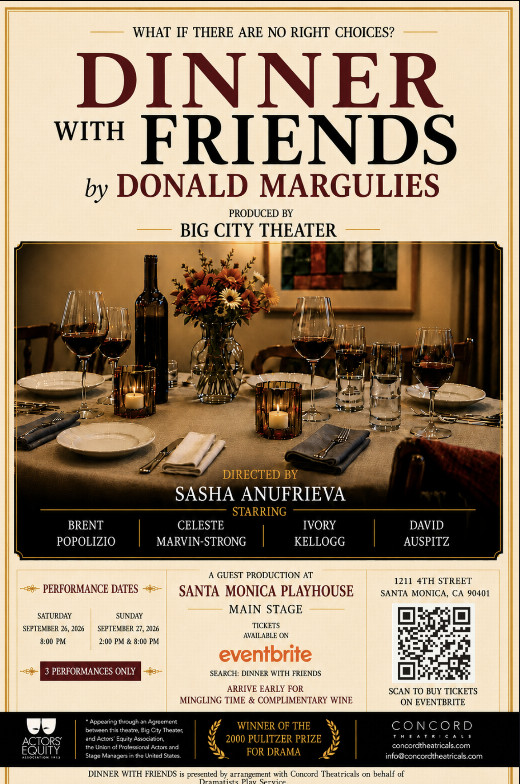
Dinner with Friends Santa Monica Playhouse (9/26-9/27) |
|
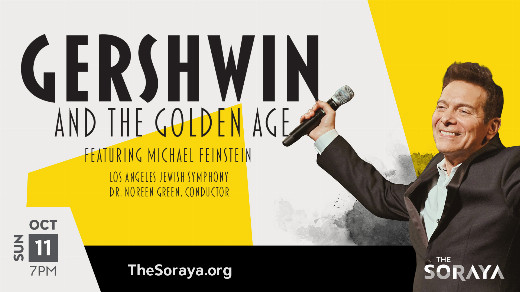
Gershwin and the Golden Age The Soraya (10/11-10/11) |
|
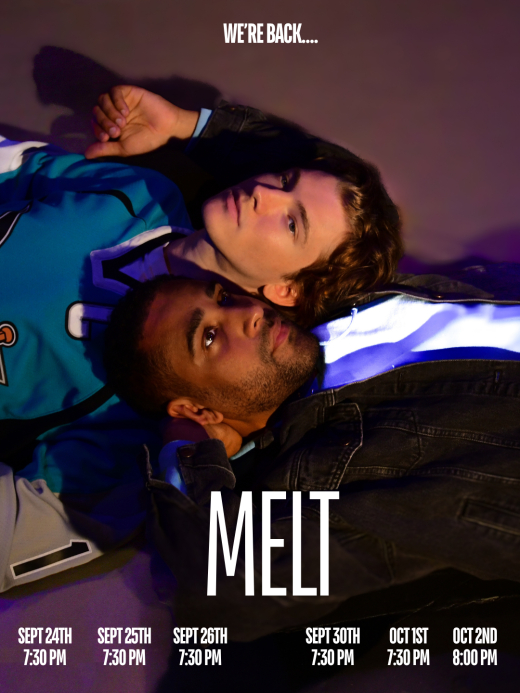
Melt : The Play The Marilyn Theatre at the Lee Strasberg Institute (9/24-10/02) |
|
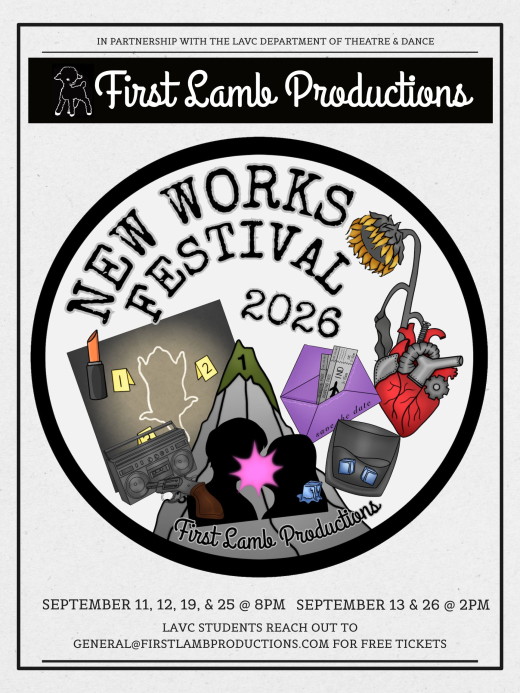
New Works Festival Shoebox Theatre (9/11-9/26) |

|
Worthy The Un-Erasable Solo Festival - Willie Agee Playhouse (9/12-9/25) |

Reader Reviews
To post a comment, you must register and login.