


Review: MASTER HAROLD...AND THE BOYS at Geffen Playhouse
Powerful revival of Athol Fugard's 1982 play at the Geffen Playhouse
 Click for Tickets!
Like a flickering match piercing the blackest most impenetrable abyss, Athol Fugard’s 1982 play “MASTER HAROLD”… AND THE BOYS recounts a story of idealistic hope against what feels like a ton of evidence that no such optimism should ever exist. Bleak times call – no they positively scream! - for counter-arguments, and the South African playwright’s delicate tale about two Black servants helping their white employer’s 17-year-old son negotiate manhood in apartheid South Africa, is positively a tonic. The Southland has had its share of memorable Fugard stagings (more on that presently), and the newly-opened revival of “MASTER HAROLD” at The Geffen Playhouse boasts an impressive roster of artists and creatives – onstage and off – who bring this tale vibrantly to life. Longtime McCarter Theater leader and frequent stager of Fugard’s plays Emily Mann shares co-directing duties with Geffen Artistic Director Tarell Alvin McCraney. Costume Designer Susan Hilferty fronts the technical team and the cast includes the late playwright’s longtime friend, collaborator and co-author John Kani who is a force of nature whenever he performs live. Put it all together and the result is a winning revival in Westwood.
For all its thematic weight, “MASTER HAROLD” is a quiet play – an encounter between two men and one boy over the span of a couple of hours. That kid, Harold, known since boyhood as “Hally,” has learned that his brutish alcoholic father is returning home from the hospital sooner than expected. Sam and Willie, the two servants who run the family’s tea shop, help the young man come to terms. The long-established relationships between Hally and these two erstwhile father figures get exposed, flipped and reworked, possibly for the better. Concurrently, Sam, the older of the two servants, helps Willie prepare for a ballroom dance competition. Because despite possessing an educational level probably equivalent to middle school, Sam knows about quite a few subjects, including the quickstep.
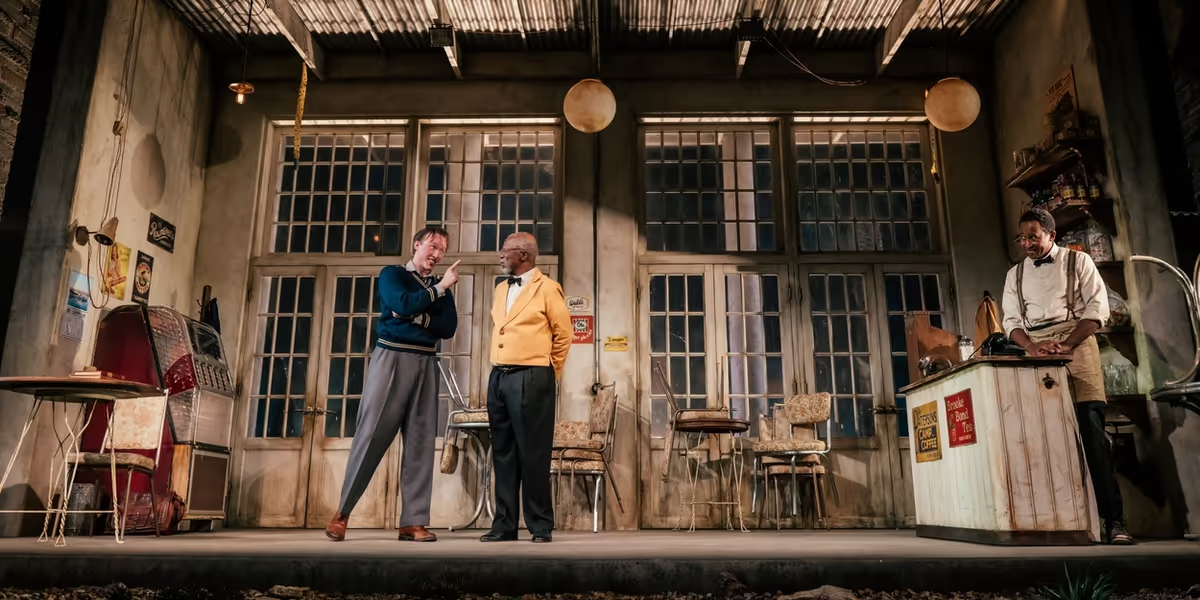
The St. George’s Park teashop, as crafted by set designer Beowulf Boritt, while functional, has probably seen better days. The graying walls could use some fresh paint, maybe some newer chairs. But the various placards are up-to-date and the candy bins behind the counter are filled. We don’t have a view of the jukebox that pipes out the music to which Willie and Sam can practice steps (when they have the money to feed it). But it’s there and it works. A pelting rain is visible courtesy of lighting designers Adam Honore & Spencer Doughtie and sound designers Noel Nichols, Bailey Trierweiler and Daniela Hart of Uptownworks.
Long-time servants, Willie (played by Nyasha Hatendi) and Sam (John Kani) have spent countless hours keeping up this shop over the years. We encounter the pair during what are now off-business hours, with Willie on his knees cleaning the floor and Sam perusing one of Hally’s comic books. Young Hally/Master Harold is due home from school soon, and he’ll need to be fed and brought up to speed about the news of his father. Willie and Sam have known Hally since boyhood and have helped him through boyhood tribulations both expected and institutional. Now a whip smart 17-year old who believes he knows more about the world than he does, Ben Beatty’s Hally is sharing his knowledge with the servants who raised them, helping them read, and discussing the state of the world and historical figures who have made a difference. Hally is kind-hearted with an eye toward correcting injustice. “I oscillate between hope and despair for this world,” he tells Sam. “One day somebody is going to get up and give history a kick in the backside and get it going again.” Who will do this? “They called social reformers.”
As progressive a game as Hally talks, he is still a white South African whose family keeps Black servants and who has been dealt some pretty crappy genetic cards. As the afternoon draws on, the discussion moves away from what the world could be to what it is. When his actual parents failed him or were unavailable, Hally had Willie and particularly Sam to help him through. Hally cherishes a memory of Sam building him a kite after a particularly bad experience, and then watching as he triumphantly got it airborne.
But matters are about to change and the series of events that prompt the transformation of good-hearted Hally to racist, demeaning Master Harold – while understandable in context – are agonizing to watch, particularly a shocking act that forces Kani and Hatendi to tower over Beatty with fists raised, debating whether or not to beat the kid to a pulp. Fugard being Fugard, that dangerous moment defuses and cooler heads prevail as the play pivots toward an act of reconciliation and, sure, hope. And hearing an actor with the gravitas and dignity of a John Kani’s uttering the words “I’ve got no right to tell you what being a man means if I don’t behave like one myself, and I’m not doing so well at that this afternoon” is to get the essence of the values of what this playwright stood for his entire life.
Under Mann and McCraney’s direction, this “MASTER HAROLD” carries us through a series of relationships (seen and unseen) as well as the compelling discussion over what it means to be a “Man of Magnitude.” Dramatic dance partners, Hatendi and Kani have mapped out Willie and Sam’s beats establishing the complex relationship between these two men – longtime friends, servants and racial peers who also know how to push each other’s buttons. Beatty, while looking on the older side to convincingly play a teen, nonetheless nails Hally’s fragility and his innate goodness. Kani, who played Willie in the play’s 1985 TV film adaptation, is 82 years old, playing a man in his 50s. His hair may be gray, but the actor moves gracefully and his power is ageless.
For many years, when the playwright lived and taught in San Diego, the American premieres of several of Fugard’s plays were staged at such Southern California venues as the Mark Taper Forum, the La Jolla Playhouse and The Fountain Theatre, which this summer will hold a Fugard Festival this summer featuring a revival of SIZWE BANSEE IS DEAD and readings of four additional plays. Meantime, this “MASTER HAROLD”…and the BOYS is right where it belongs. It’s home.
“MASTER HAROLD”…AND THE BOYS continues through May 10 at 10886 Le Conte Ave.,
Westwood.
Photo of Ben Beatty, John Kani and Nyasha Hatendi by Jeff Lorch.
Sign up for all the news on the Fall season, discounts & more...
|
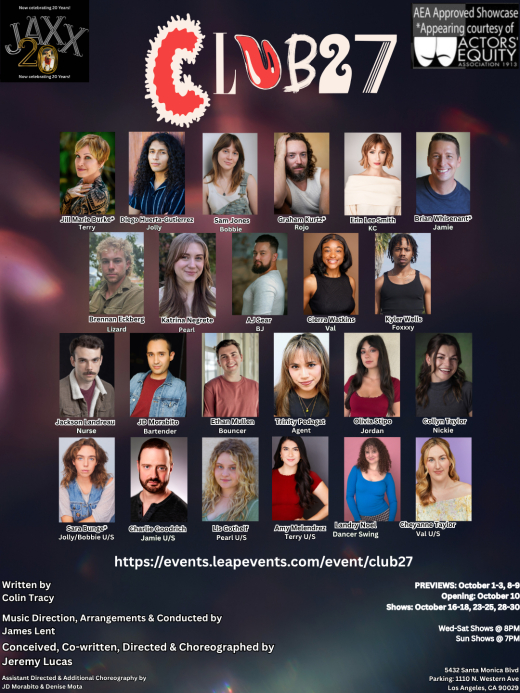
CLUB27 Jaxx Theatre (10/01-10/30) |

|
Crone Creed El Portal Theatre (9/30-10/17) |
|
Good Night, Oscar North Coast Repertory (9/16-10/11) |
|
A Killer Night in Studio City Vitello's (9/06-10/31) |
|
Catch Me If You Can Colony Theatre (9/17-10/18) |

|
Dinner with Friends Santa Monica Playhouse (9/26-9/27) |

|
Gershwin and the Golden Age The Soraya (10/11-10/11) |
|
Melt : The Play The Marilyn Theatre at the Lee Strasberg Institute (9/24-10/02) |

|
New Works Festival Shoebox Theatre (9/11-9/26) |

|
Worthy The Un-Erasable Solo Festival - Willie Agee Playhouse (9/12-9/25) |

Reader Reviews
To post a comment, you must register and login.