


Review: OTHELLO at Cincinnati Shakespeare Company
Jealousy, betrayal, and passion collide in this classic Elizabethan staging of Shakespeare’s timeless tale.


|
|

Othello is arguably Shakespeare’s most controversial show, often called a “problem show,” given its deep explorations into race and misogyny. Putting on a production of Othello is no small feat, but under the direction of Associate Artistic Director Candice Handy, Cincinnati Shakespeare Company, and the entire cast and crew did a fantastic job exploring the intricacies of this infamous show and crafting a production that felt uniquely their own.
One of the more interesting things about Cincinnati Shakespeare’s production of Othello was the staging. It was staged in the round, although in this case the shape more closely resembled a diamond. While this is a neat concept, the audience members that were sitting on stage did seem to have less of the show facing them than the audience in traditional seats did. The lighting also made it so the audience members in the house could clearly see every facial expression of the audience members seated on stage, which was a mix of compelling and distracting.
Given the general perception of Othello, it was somewhat surprising to see how much kissing, how many innuendos, and how many silly jokes there were. (Shoutout to Torrie Wiggins for the flawless intimacy coordination). The sexual humor was very played up through physical comedy, which added comedic relief, but also felt out of place at times, especially when Iago (Billy Chace) was the one delivering it. Iago did a great job when it came to his soliloquies and really engaged the audience by moving through the space and getting up close and personal. Iago and Emilia (Kelly Mengelkoch) also had great chemistry and matched each other’s energies well.
Like any show, there were characters and actors that stole the show. The ensemble (Sara Mackie, Courtney Lucien, Grant Niezgodski) kept things light and showed humor can shine even in a tragedy with their big reactions. Roderigo (Patrick Phillips) fully embodied his role as the comedic relief, which not only captivated the audience but made his ending hurt that much more. Cassio (Cary Davenport) showed impressive physicality with his portrayal of drunkenness as well as his use of crutches. Arguably the most impactful character was the Clown (Montez Jenkins Copeland). Words cannot describe how beautiful his scene at the top of Act 2 was; it just needed more of an acknowledgment at the end of the show to really drive the purpose home.
Of course, the titular character, Othello (Sylvester Little Jr.), was absolutely phenomenal! The dichotomy of how he acted so lovingly and charming with Desdemona (Tess Talbot) in the beginning to how he was after Iago pushed him into a downward spiral was chilling. The character development throughout the play was incredibly strong, and by the end, the audience could really feel Othello’s pain.
While the actors put their all into their performances, what really tied the show together were the technical elements. In terms of set (designed by Charlie Calvert), it was giving Italian villa meets vintage chess set. The main playing space, a platform center stage that resembled a chess board, created a strong echo during the fight sequences (choreographed by Gina Cerimele-Mechley), which added a fun element to the chaos. This set made for some stunning stage pictures, although most of the action took place on the center of the stage and the beautiful staircases were seldom utilized.
One of the best elements of this show were the costumes (designed by Rainy Edwards). They were a classic Elizabethan look, which meant a plethora of intricate wigs (designed by Kayla Cieslinski), different hats, corsets, and of course, one-shoulder capes. Perhaps it’s time for those capes to make a comeback. The costumes also connected back to the chess theme, putting Othello and Desdemona in whites/creams, while Iago and Emilia sported black costumes.
The lighting and sound (designed by Andrew Hungerford and Derek A. Graham) had some unique elements as well. While standard stage lighting was used, there was also a square of decorative bulbs hung right above the ‘chess board,’ making the set look that much more cohesive. The music in transition scenes fit flawlessly with the tone of the show. Iago also had the perfect recurring sound of villainous underscoring. The use of song (as written in the script) was also very well executed in this production. Between the drinking song and Desdemona’s lullaby, it didn’t feel like the audience was stuck listening to singing for too long (as is often the case in Shakespeare productions). Cincy Shakes was able to strike just the right balance.
If you're looking for a chance to see Shakespeare’s most gut-wrenching and controversial plays, Othello at Cincinnati Shakespeare Company is the show to see! Othello runs from March 6–29, 2026. Performances of Othello are on Thursdays, Fridays, and Saturdays at 7:30 p.m., with three Sunday matinees on March 15, 22, and 29 at 2 p.m. CSC offers performances with accessibility resources. Live audio descriptions are available on March 6, and there is a sign language interpreted performance on March 29 at 2 p.m.

Sign up for all the news on the Fall season, discounts & more...
|
Joyful Noise Patricia Corbett Theater, CCM Village, University of Cincinnati (4/01-4/03) |
|
Crossings Corbett Auditorium, CCM Village, University of Cincinnati (11/06-11/06) |
|
Passage Into Spirit Corbett Auditorium, CCM Village, University of Cincinnati (4/24-4/24) |

|
Star Wars X The Planets Corbett Auditorium, CCM Village, University of Cincinnati (4/06-4/06) |
|
DR. SEUSS’S HOW THE GRINCH STOLE CHRISTMAS! THE MUSICAL The Emery Theater (12/04-12/20) |
|
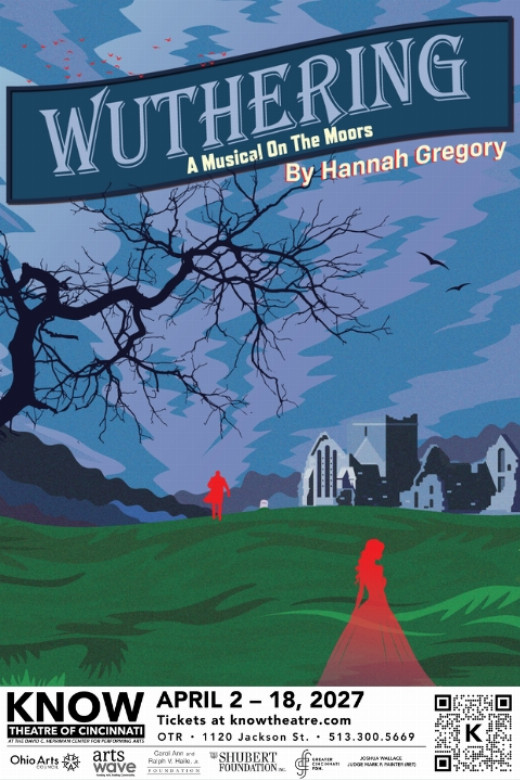
Wuthering: A Musical On The Moors Know Theatre of Cincinnati (4/02-4/18) |
|
Of Land and Sea Corbett Auditorium, CCM Village, University of Cincinnati (3/05-3/05) |

|
PETER PAN JR. The Emery Theater (2/19-3/07) |
|
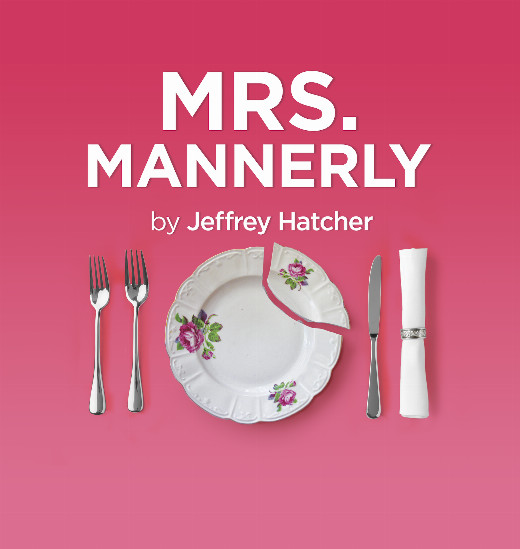
Mrs. Mannerly Ensemble Theatre Cincinnati (10/13-11/01) |
|
Mahler Five Corbett Auditorium, CCM Village, University of Cincinnati (3/10-3/10) |

Reader Reviews
To post a comment, you must register and login.