Interview: How Johnny Galecki Fell in Love With the 'Contradictions' of Playing Tennessee Williams
The Big Bang star opens up about rediscovering his love of acting after seven years away.
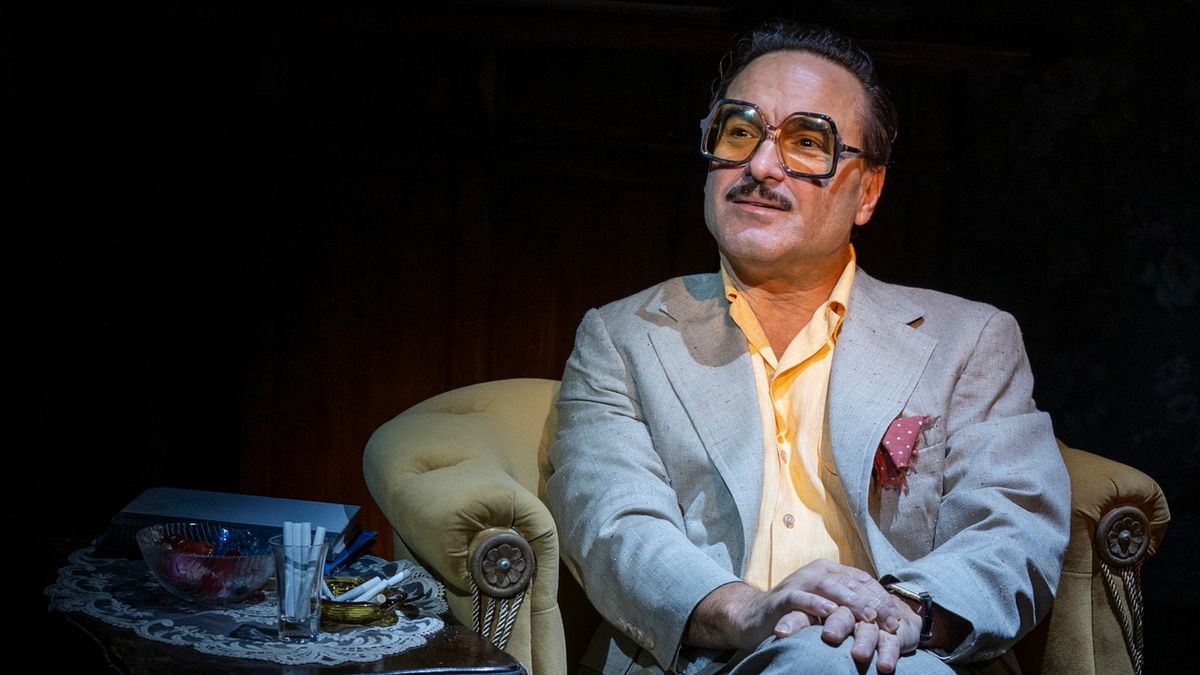
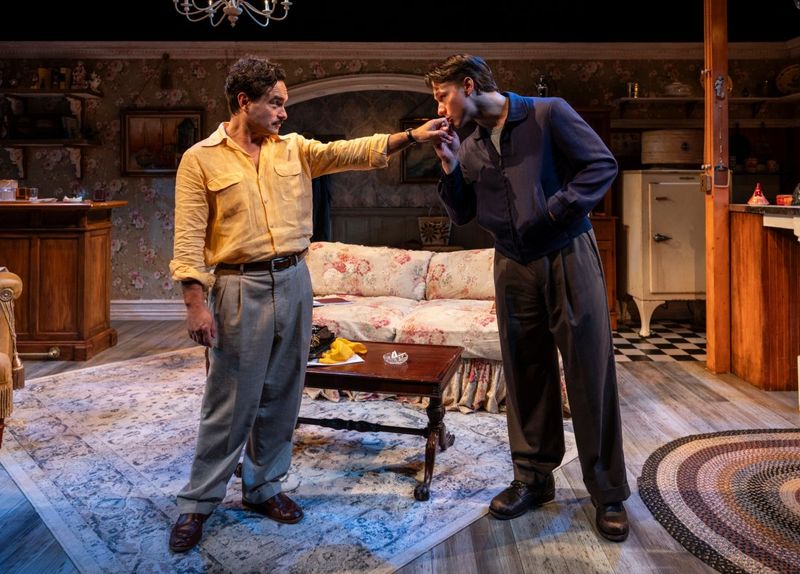
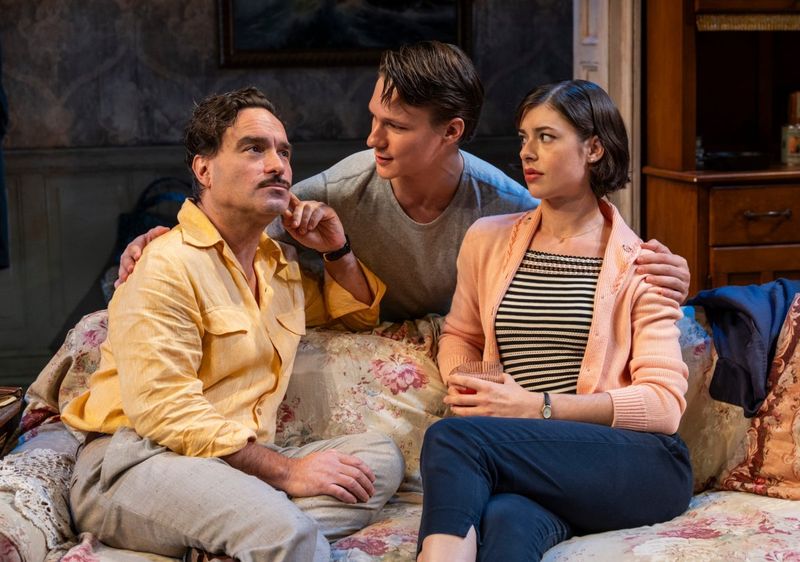
After a seven-year break from acting, The Big Bang Theory star Johnny Galecki has returned to his first love, the stage, taking on the role of legendary playwright Tennessee Williams in Lookingglass Theatre Company's Kowalski. Written by Gregg Ostrin and directed by Colin Hanlon, the play imagines the fateful first meeting between Williams and a young Marlon Brando in 1947, just before A Streetcar Named Desire would change American theater forever.
BroadwayWorld spoke with Galecki about rediscovering his passion for acting, the extensive research that went into portraying one of his artistic heroes, and how his relationship with the stage has evolved after seven years away.
You took a break from acting, I’m curious, what was it about Kowalski—and specifically the opportunity to play Tennessee Williams—that made you feel like this was the time to come back?
I knew I was in a position where I needed to learn if I still loved this work or not, honestly. I was beyond confused, I was concerned that this very first love of mine, and for a very long time my only love, seemed to have left me. And I was very content, but it was a bit of an identity crisis, I suppose. Or lack of knowing where I fit in the world, all of a sudden. I’d been doing theatre since I was seven and acting in various mediums since. And so, I just couldn’t figure it out, why I was entirely bereft of any interest in it any longer.
I knew it needed to be something that would challenge me, something that I couldn’t hide behind, something that I couldn’t blame on it being underwritten, or a thankless role if it failed. And it needed to be the medium that I first fell in love with, and it was all the better that it happened to be in the town, with the Chicago audiences, that helped me discover that love as a young boy.
And then of course, artistically, it’s Tennessee Williams. I’ve known his work more than his life. And so, as soon as I finished reading the script, I looked up some videos, and good lord, that dialect is absolutely friggin delicious. And I just fell in love with his contradictions, and how layered he was. Which was really kind of the basis of his work, I think.
His characters were a multitude of layers in any given moment, which I think is what labeled him a ‘disruptor’ more than anything else. I think people assumed that was the case because of his lifestyle, or proclivities, I suppose, and his writing themes. But there were a thousand other playwrights who happened to be homosexual who wrote about madness, and addiction, and temptation, and desire, and sex and all of those things, and they weren’t labeled disruptors. So, I think it was the fact that he didn’t categorize his characters as good or bad, or mad or sane, or simple or complex. He said we are all a multitude of layers in any given moment. And I thought that Gregg Ostrin had achieved that in his writing of Tennessee.
You decided to see whether the creative fire in you was still there. How do you feel now?
I’m feeling incredible. After the first table reading, I was very emotional, I needed a few minutes. The interest was immediately back. It took a little while for full passion gear to shift in [laughs], but I knew that although it might not be my sole purpose anymore—nor should it be as I’m a father—it is how I participate in this life. And we’re either observing or participating, and I spent seven really lovely years quietly observing, and I’m ready to participate again.
I’m feeling an incredible connection with the crowds every show, and I feel like I have more to offer to a story and to an audience than I ever have. My life has never been fuller. And I have a much more authentic relationship with myself than I ever have, which allows me to be much more honest. And it allows emotions to be much more easily acceptable. And I’m really proud of the work, and very excited to be here.
You’ve described Tennessee Williams as one of your artistic heroes. What has his work meant to you personally over the years, and how did playing him change and deepen your understanding of him as a person and as an artist?
I think the intimidating element of playing one of Tennessee’s characters, and certainly in finding Tennessee himself, is that as an actor, you want to be consistent with your character for your audience. You want your audience to be able to trust who that character is. That’s not how Tennessee wrote. Taking A Streetcar Named Desire, for example, as soon as we categorize or assume Blanche to be a liar, she tells the truth. As soon as we assume Stanley as some insensitive brute, he becomes emotionally alive. Tennessee, like every artist, observed people. He wasn’t ever interested in finding or writing a tidy diagnosis for any of them. He was interested in where their contradictions met. That feels like a real risk as an actor.
Someone asked, me, they said, “I’ve read a bunch of biographies on Tennessee, and some claim he was very tender, and fragile, and others claim he was ferociously ruthless.” And I said, “Yeah! If only would somebody put all that into one biography, we might be nearing something.” His ruthlessness didn’t eclipse his tenderness, and his fragility didn’t forgive his ferociousness. It says a lot about the man, it says a lot about his degree of compassion, and empathy for people, to not want to simplify them. But it asks a certain capacity of an audience, too, that I think is quite rare. And that feels very risky as an artist, and maybe I think that was part of what felt challenging about it.
So, what did your preparation for the role look like? Did you read a bunch of his plays, or biographies of him?
Yes, all of the above. I’ve always been a fan of research, I truly enjoy it. This time around, I approached this whole process less as a return to the work and more of a reorientation. I kind of scrapped all of my previous books for process and research [laughs]. I really wanted it to be much more efficient than I had been before. So, what that really meant on a day to day basis was, if I didn’t pick up a scent going down one road, I would pivot pretty quickly to another. And it served me very well, because it kept my attention in areas that were worthy of my attention. And I got more done than I ever have, and went deeper than I probably ever have.
I spent time down in Key West, I went to his home, I went to his bar, I went to his church, I went to his sister’s home, I read everything I could up until 1947, because that’s when our show takes place, which is probably the only thing that saved me from this research taking years. I integrated myself with things of that time, which I’m a big believer in, for my own process. The music of that time, and the art of that time, and the smells of that time. I found a 1928 Remington Portable No 2 that I had remodeled, which is what he wrote Streetcar on. I really just spent time internalizing.
My wife thought it was very interesting, she said, “You seem to do this ass backwards. You learn the words last.” And I said, “Yeah!” If you think about it like you’re building a wardrobe, you’re searching through these things like, ‘That’s a nice shirt, but it doesn’t belong.’ [laughs]. That’s kind of how I looked at ideas. It’s not a shit idea, but it doesn’t belong here. I could put the hangers on the rods, but I’m just going to take them down once I know what I’m going to put on them. I don’t know what I’m going to put on those hangers, the hangers being the words. So, it was a bit of an anxiety-filled eleventh-hour cram time for me to memorize. But before then I’m just going to have to do it again anyway, once I know what I want the words to mean.
This play imagines this meeting between Williams and Marlon Brando before A Streetcar Named Desire. What is it like building that relationship opposite an actor who is also portraying such an iconic, recognizable figure?
The good news is that both Jacob [Moskovitz] and I realized that you can’t play ‘icon’. At this point, in 1947, Tennessee has tasted a bit of success with The Glass Menagerie, so he’s reveling a little bit in some approval, and some special treatment that he’s never experienced before. At the same time, he’s riddled with anxiety because he’s smart enough to know that arrival threatens movement. And he’s very worried that this will be the end of his career. And that Streetcar will be a sophomore slaughter. So, there’s no real laurels to rest on there.
But other than that, you can’t play ‘icon,’ you can’t play ‘genius’. You just have to recreate the man from which A Streetcar Named Desire was an inevitability. I guess I say that like it’s easy [laughs]. And in a way it is, because we can all relate to those pressures, we can all relate to being thrilled with a victory, and then twice as terrified to possibly fail at repeating that victory than you were in never having a victory in the first place. And that’s very much where Tennessee lives at that time. I don’t want to speak for Jacob on what his challenges were, but they are both young in their iconic legend.
Right, you did research up until when the play takes place.
It’s just as important, if not more important at times, to understand what a character does not know and is unaware of, than what he does know and is aware of. That said, I cheated quite a bit when it came to video interviews, because there were very few, I think the first one was 1951. Post that there are a plethora that are fantastic.
What do you want to tell future audience members who are planning to come and see the show?
Thank you! Thank you, my friends! That’s where I get to be in my life and career at this point. Previously, there was always a bit of a dance that most performers do that kind of continuously, constantly jumps the fence of, ‘I’m desperate for your love and approval’ and ‘F you, I’m resentful of how much your love and approval means to me.’ And at this point in my career, I don’t feel either of those things. Of course, I want them to take this ride for us, and let’s create a wonderful, special event together, because it does require the audience just as much as it requires me. At the same time, desperate need for approval is never good for any connection or relationship. So, to be able to let that go, I literally say it in the wings before I step out, ‘Thank you, my friends.’ I don’t have to carry that desperation with me anymore, we can play on equal playing ground now.
Sign up for all the news on the Fall season, discounts & more...