


Islandia Music Records Releases IT'S ABOUT TIME by Steven Schick
The album is the third installment in Schick's WEATHER SYSTEMS series from Islandia Music Records.
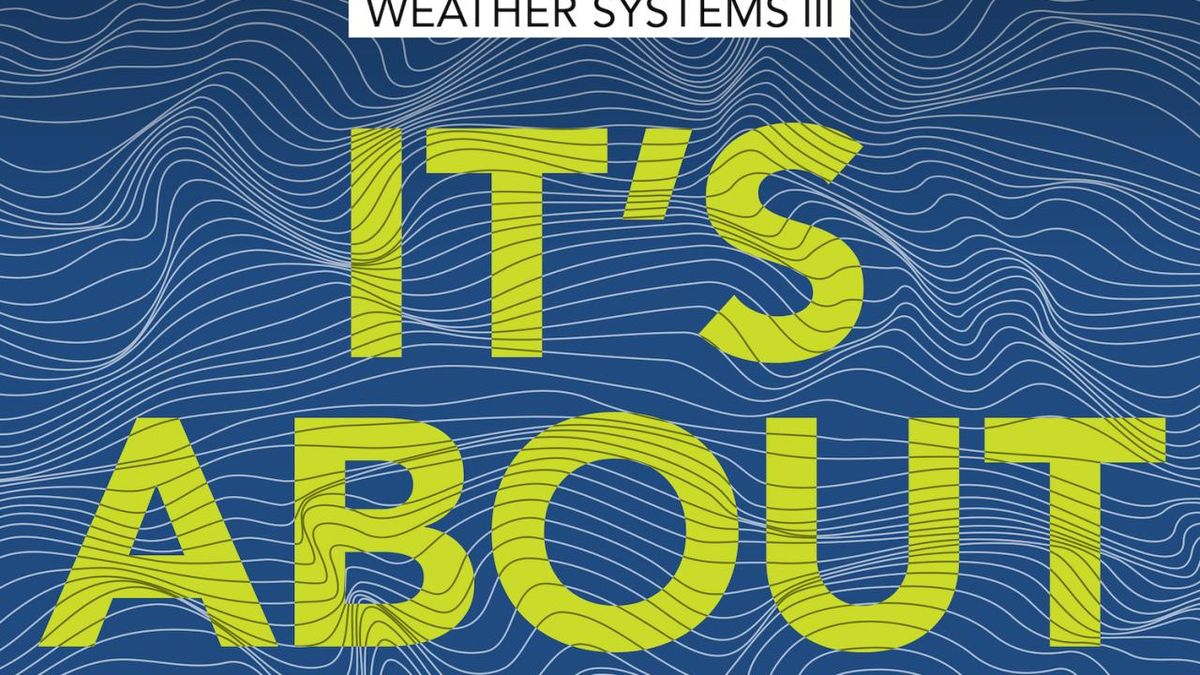
Islandia Music Records has announced the release of Weather Systems III – It's About Time, the final volume in a three-volume series from percussionist, conductor, and author Steven Schick. Weather Systems is a set of recordings of the percussion music that has been most meaningful to Schick, which spans more than 100 years. Weather Systems III – It's About Time will be released on November 20, 2026. A single from the album, David Lang's Unchained Melody, will be released on November 6, 2026.
Percussionist, conductor, and author Steven Schick has championed contemporary percussion music by commissioning or premiering more than one hundred-fifty new works. The title of his series, Weather Systems, and the first album, A Hard Rain (2022), reflect Schick's background growing up in a farming family in Iowa, always having one eye on the weather and in particular, on the rain. The second installment, Soundlines: On Language and the Land (2023), is an echo of Schick's walk up the California coast: a musical changing of perspectives and connection with the world. In his liner notes, Schick writes, 'Each [of these recordings] presents layered emotions in which a humorous façade dissolves to reveal deeper truths.'
This third volume in the series, It's About Time, explores time as both a large-scale concept and a micro-temporal component of music. The 2-CD set features highly contrasting works for percussion by David Lang (Unchained Melody, String of Pearls, The Anvil Chorus), Michael Gordon (XY), Harrison Birtwistle (The Axe Manual), Iannis Xenakis (Rebonds), Brian Ferneyhough (Bone Alphabet), Kaija Saariaho (Six Japanese Gardens), and Rand Steiger (For Robert Erickson). Schick describes the collection as, 'an ode to the reciprocal wisdom between past and present, between pieces I have lived with for decades and the newest of the new.'
Weather Systems is released on Islandia Music Records, the record label of cellist and producer Maya Beiser. Beiser says, 'Steve Schick and I met over 30 years ago, in New York City. Both of us were involved with the Bang on a Can festival; we became founding members of the Bang on a Can All-Stars. Steve is a true virtuoso, possessing a rare artistic force which melds rigorous discipline with mesmerizing, hypnotic performance energy. Over the years we have collaborated on many different projects and remained close friends and artistic confidants. I am so thankful for the opportunity to help bring this monumental project to fruition with Islandia Music Records.'
Schick writes in his liner notes for this release:
'Any retrospective survey such as the Weather Systems series—seven CDs of personally meaningful solo and small-form chamber music that I recorded about the time I turned seventy—risks lapsing into nostalgia, that ill-advised desire to return to, purportedly, better times. But music helps us resist the backward urge. It shows us that the past need not be an anchor; it can be a root system.
The spine of It's About Time consists of music from my decade as percussionist with the Bang on Can All-Stars, from 1992 to 2002. The founders of the Bang collective—composers, Michael Gordon, Julia Wolfe, and David Lang—and my original bandmates, Evan Ziporyn, Mark Stewart, Lisa Moore, Robert Black, and Maya Beiser are not only fearless artistic collaborators, they are life-long friends. This music is heard here in dialogue with canonic works by other composers important to me.'
About the Music
David Lang's Unchained Melody (2002) was, in Schick's words, 'a gift from David when I left the All-Stars' that made the sadness of that departure more bearable. Each pitch of a simple melody played on the glockenspiel is paired with a unique percussive noise, and on this recording Schick teams up with computer musician William Brent, whose 'ludbots' (MIDI-triggered kick-drum beaters) join gongs, bells, and broken cymbals to form what Schick describes in his liner notes as, 'a strange and beautiful grunge gamelan.'
Schick describes Lang's String of Pearls (2006) as 'a single line on a single instrument played out like the long arc of a fly fisherman's line cast onto still water. Harmonies move slowly. The player's hands move fast. And the listener is mesmerized by the beguiling eddies of marimba sound.'
Lang's The Anvil Chorus (1991), now a staple of the solo percussion repertoire, grew out of the image of a circle of blacksmiths all working together around the same piece of metal, carefully counting their blows to avoid striking one another. Scored for metallic instruments (ringing, dry, and a third group Lang once called 'nasty') as well as bass drum and wood blocks, Schick toured the piece with the Bang on a Can All-Stars performing on portable and borrowed instruments. For this recording Schick created what he calls, 'a distinctly non-tour-able version,' featuring large brass bells, the heaviest of which takes three people to lift.
Michael Gordon's XY (1998) transforms five drums into what Schick hears as 'an eloquent chorus,' built from interlocking crescendo/decrescendo phrases that escalate into ever more complex polyrhythms. Schick writes in his liner notes that, 'The music projects the energy and expansiveness of an Elvin Jones solo, but at its core it is a barren aria with the inescapable melancholy of a Beowulf monologue.'
Schick recorded Harrison Birtwistle's The Axe Manual (2000) with pianist Aleck Karis. The complex piece sets independent strands of piano and percussion against one another, often in different meters and tempos. Schick describes the goal as 'organicity.' He writes, 'With each instrument speaking its natural language, the stage is set for a ludic interplay of rhythm and texture; time and harmony.'
Kaija Saariaho's Six Japanese Gardens (1994) was written after an extended visit to Kyoto, and references specific gardens in some cases through field recordings of Japanese music and natural sound. Schick finds that the music remains evocative throughout. He writes, 'The sounds of Buddhist chanting accompanied by the tolling of gongs in the fourth movement, 'The Rock Garden of Ryoan-ji,' is haunting. And the solitary plinks of bell, stone, and triangle notes imitate the ubiquitous sounds of dripping water in the Moss Garden (Saiho-ji), perhaps the greenest place I have ever seen. In a final ingenious sleight of hand, one worthy of a composer of the stature of Saariaho, at the end of the sixth movement, 'Stone Bridges,' she pivots seamlessly to the music of the opening. We are returned to a sonic Urwelt of insects and drums; bells and breath. And we realize that we have not lost contact with the earth at all.'
Rand Steiger's For Robert Erickson (2024), an homage to the co-founder of the University of California, San Diego, explores rhythm at a micro-level through what Schick describes as, 'the frisson of acoustic beating between two vibraphones,' each one with one manual tuned to equal temperament and the other to just intonation. Schick writes, 'As with any Steiger piece, the texture is electric with a lively interplay of rhythm and harmony. And I find that the slow bowed section at the middle of the piece, exploring the delicious differences between tuning systems, is among the most beautiful passages in all the solo percussion repertoire.'
Iannis Xenakis's Rebonds (1989) has become core repertory for percussionists, often performed, in Schick's view, with 'a sense of triumph' as the player 'vanquishes' its considerable challenges. Schick hears something different. He writes, 'But in each Xenakis piece that I know there are moments of true impossibility, designed to thwart the heroic urge. When those impossible passages occur, the player has a simple choice—either stop playing or find a flawed and human solution to an unsolvable problem. Thus, Xenakis transforms a musical problem into an ethical one. Rebonds invites us to jettison the heroic and embrace the human.'
Brian Ferneyhough's Bone Alphabet (1992) is so extremely difficult and dense that Schick learned it at what he describes as, 'the glacial pace of roughly one month of intense practice per minute of music.' That slowness became its own kind of teacher, as Schick learned the piece over a long period of time, which included his father's death in 1991. He writes, 'I began learning Bone Alphabet by trying to show my mastery as a percussionist and ended with a willingness to reveal my shortcomings. . . Try it slower, then faster. Succeed here; let yourself fail there. Play it again. Practice. It might be difficult to imagine being comforted by music as prickly as Bone Alphabet. But without it I would have been lost.'
More About Steven Schick
Percussionist, conductor, and author Steven Schick was born in Iowa and raised in a farming family. He has championed contemporary percussion music by commissioning or premiering more than one hundred-fifty new works. The most important of these have become core repertory for solo percussion. Schick was inducted into the Percussive Arts Society Hall of Fame in 2014.
Steven Schick was artistic director of the La Jolla Symphony and Chorus from 2007 to 2022, and previously, the San Francisco Contemporary Music Players. As a conductor, he has appeared with the BBC Scottish Symphony Orchestra, the Saint Paul Chamber Orchestra, the Milwaukee Symphony, Ensemble Modern, the International Contemporary Ensemble, and the Asko/Schönberg Ensemble.
Schick's publications include a book, The Percussionist's Art: Same Bed, Different Dreams, and many articles. He has released numerous recordings including the 2010 Percussion Works of Iannis Xenakis, and its companion, The Complete Early Percussion Works of Karlheinz Stockhausen, in 2014 (both on Mode). He received the 'Diapason d'Or' as conductor (Xenakis Ensemble Music with ICE) and the Deutscheschallplattenkritikpreis, as percussionist (Stockhausen), each for the best new music release of 2015.
Steven Schick is Distinguished Professor of Music and holds the Reed Family Presidential Chair at the University of California, San Diego. He was music director of the 2015 Ojai Festival, and co-artistic director, with Claire Chase, of the Summer Music Program at the Banff Centre from 2017-2019.
About Islandia Music Records
Islandia Music Records is an independent label founded by cellist and producer Maya Beiser. A home for boundary-breakers and sonic visionaries, it brings together avant-garde musicians, visual artists, sound designers, and technologists to forge new frontiers in art and sound.
Tracklist
Disc I
David Lang: Unchained Melody (2002) (7:13) *
David Lang: String of Pearls (2006) (9:20)
David Lang: The Anvil Chorus (1991) (8:00)
Michael Gordon: XY (1998) (16:02)
Harrison Birtwistle: The Axe Manual (2000) (23:38) **
Disc II
Iannis Xenakis: Rebonds (1989) (12:41)
Brian Ferneyhough: Bone Alphabet (1992) (12:19)
Kaija Saariaho: Six Japanese Gardens (1994) (16:06)
Rand Steiger: For Robert Erickson (2024) (21:06)
*with William Brent, ludbots
**with Aleck Karis, piano
Recording engineers: Samantha Dunscombe (David Lang: The Anvil Chorus; Kaija Saariaho: Six Japanese Gardens; Rand Steiger: For Robert Erickson); Andrew Munsey (Iannis Xenakis: Rebonds; Brian Ferneyhough: Bone Alphabet; Harrison Birtwistle: The Axe Manual; Michael Gordon: XY); Josef Kucera (David Lang: Unchained Melody; David Lang: String of Pearls). All pieces recorded at the University of California, San Diego, Studio A.
Executive producer: Maya Beiser. Label manager: Kristen Loring. Art direction: Denise Burt / elevator-design.dk.
Prefer BroadwayWorld in Google Search?
Add us as a preferred source so our stories show up more often in Top Stories and Google’s AI answers — for you.



Sign up for all the news on the Summer season, discounts & more...
.jpg?format=auto&width=300)
.jpg?format=auto&width=365)




