


Review: ZORRO at Arizona Opera
Following the weekend run in Phoenix (September 27-28), the production moves to the Linda Ronstadt Music Hall in Tucson, Saturday, October 4th.
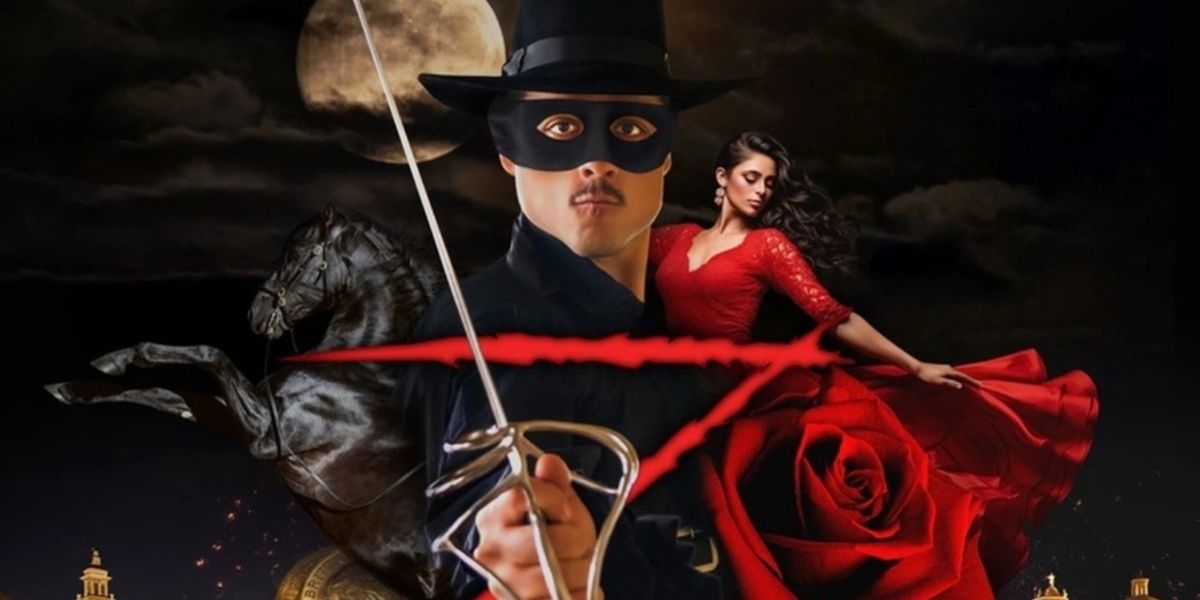
The character of Zorro – the nobleman-turned-vigilante who has captivated audiences for over a century – finds new life in Héctor Armienta’s operatic reimagining. Since Johnston McCulley first introduced the character in his 1919 story "The Curse of Capistrano," Zorro has become an enduring symbol of justice and rebellion against tyranny. Now, this tale of dual identity and defiance receives the full operatic treatment (performed in both English and Spanish) in Arizona Opera’s 2025-26 season opener.
Premiering three years ago with just piano and guitar, the opera has evolved into a richly textured work that fuses bravado and romance into a timely meditation on liberty. Armienta, who wrote both music and libretto, has crafted a score that is at once lushly operatic and unmistakably of the Americas, resonating with a vibrant palette of Latino musical forms. Conductor Anthony Barrese leads the Arizona Opera Orchestra with a sure hand, balancing rhythmic vitality and lyrical expansiveness while keeping the large forces in sync during the opera’s sword fights and crowd scenes. The rhythms and the cadences of ballads intermingle with soaring arias and tender duets.
The plot follows Diego de la Vega, the privileged young nobleman who dons a mask to defend the oppressed under Spanish colonial rule. Yet as the opera unfolds, Diego is not the sole center of gravity. Nor is his dawning awareness of the forces of oppression well-developed.
The first act, devoted to establishing backstory and mapping the intersecting relationships of the villagers of el pueblo de Los Angeles, feels more like a tribute to three women and their distinct aspirations – love, the quest for freedom, and the pull of duty – rather than a straightforward hero’s tale.
María Brea, as the resolute Ana María Soza, gives a moving portrayal of a woman whose moral clarity fuels the revolution. Her warm soprano and commanding stage presence make Ana María the opera’s conscience. Stephanie Sánchez lends sumptuous tone and emotional nuance to Carlota de Obragón, Diego’s childhood love, whose struggle between privilege and justice adds layers of human conflict. The production’s musical highlight comes in the duet “Abrázame” (“Embrace Me”), a tender exchange between Diego and Ana María that Prado and Brea shape with exquisite phrasing and emotional truth.
Sedona Libero brings Toypurina, Diego’s ‘nanny,’ to life with unshakable presence and conviction. Her exhortation that Zorro “must be a symbol of hope, not revenge” is a riveting moment. The character evokes the real Toypurina, an 18th century Tongva medicine woman who led one of the earliest organized Indigenous uprisings against Spanish colonial rule in California.
Xavier Prado takes on the formidable challenge of portraying both sides of Diego’s complex character. The role demands not only vocal prowess but also the ability to convey the differences between his two personas – the fun loving and clumsy gentleman of polite society versus the passionate intensity of a masked avenger in pursuit of justice. Prado delivers vocally, his bright, ringing tenor carrying both lyrical sweetness and dramatic steel. But the arc of the libretto leaves Diego’s transformation dramatically underprepared. His awakening arrives abruptly, well before events that might credibly have spurred him into action: for example, the proclamation of a new caste system establishing a regime of discrimination and oppression against the mestizos or Carlotta’s murder. Instead, almost without dramatic setup, he retreats to his room and has an epiphany: he discovers his purpose. The etched words of his father’s sword in his hand – invoking duty and courage – should carry the weight of revelation, yet the moment never fully ignites.
Indeed, when Diego, at the end of Act I, finally emerges from the ramparts as Zorro – masked and cracking his whip defiantly – the reveal lands with surprising anticlimax. The anticipation for his heroic entrance is high, but the sudden appearance feels more like punctuation than exclamation.
The supporting men provide color and occasional comic relief. Octavio Moreno brings dark authority to Octavio Rivera y Moncada, a villain whose baritone menace is convincing if at times one-dimensional. Armando Contreras is a delight as Sergeant José María Gomez, infusing the shows few comic moments with gusto and investing sweet charm in his light romantic moments with the aspirational Luisa, portrayed with panache by Francesca Herrera.
Director David Radamés Toro marshals the action with an eye for spectacle, aided by a creative team that brings early 19th-century California vividly to life. Liliana Duque-Piñero’s beautifully rendered set captures the essence of a bustling colonial town; Tlaloc Lopez-Watermann’s atmospheric lighting bathes the stage in hues of danger and desire; and Ulises Alcala’s period costumes lend authenticity and elegance. If there is one production element still in need of sharpening, it is the swordplay. The fight scenes occasionally lack the crispness and danger that the narrative demands.
While the opera sometimes unevenly distributes focus and Diego’s arc remains underdeveloped, the performances and the music consistently captivate. Prado’s portrayal deepens as the production unfolds. Beyond the sheer vocal splendor already noted, he shapes Diego’s journey with finely shaded acting. His quiet resolve in the epiphany scene and his effortless authority when the mask finally drops lend the character both gravity and charm. Brea and Sánchez are vocally superb, their distinct timbres and strong characterizations giving the opera a rich emotional palette.
With ZORRO, Arizona Opera affirms its commitment to adventurous repertoire and to stories that speak directly to the diverse communities it serves. Armienta’s masked hero may wield a sword, but his true power lies in the music that celebrates heritage, champions justice, and reminds us that opera, at its best, can entertain while it inspires.
Following the weekend run in Phoenix (September 27-28), the production moves to the Linda Ronstadt Music Hall in Tucson, Saturday, October 4th.
Arizona Opera -- https://azopera.org/ -- 1636 N. Central Avenue, Phoenix, AZ -- 602-266-7464
Venues:
Symphony Hall -- https://www.phoenixsymphony.org/ -- 75 N. 2nd Street, Phoenix, AZ -- 602-262-6225
Linda Ronstadt Music Hall -- 260 S. Church Avenue, Tucson, AZ -- 520-791-4101
Poster credit to Arizona Opera
Reader Reviews
To post a comment, you must register and login.