Kirubel Assefa Announces T.A.B.A. Album
The album draws on Ethiopian music from the 1970s and 1980s, blending the tradition with jazz, funk, and African rhythms.
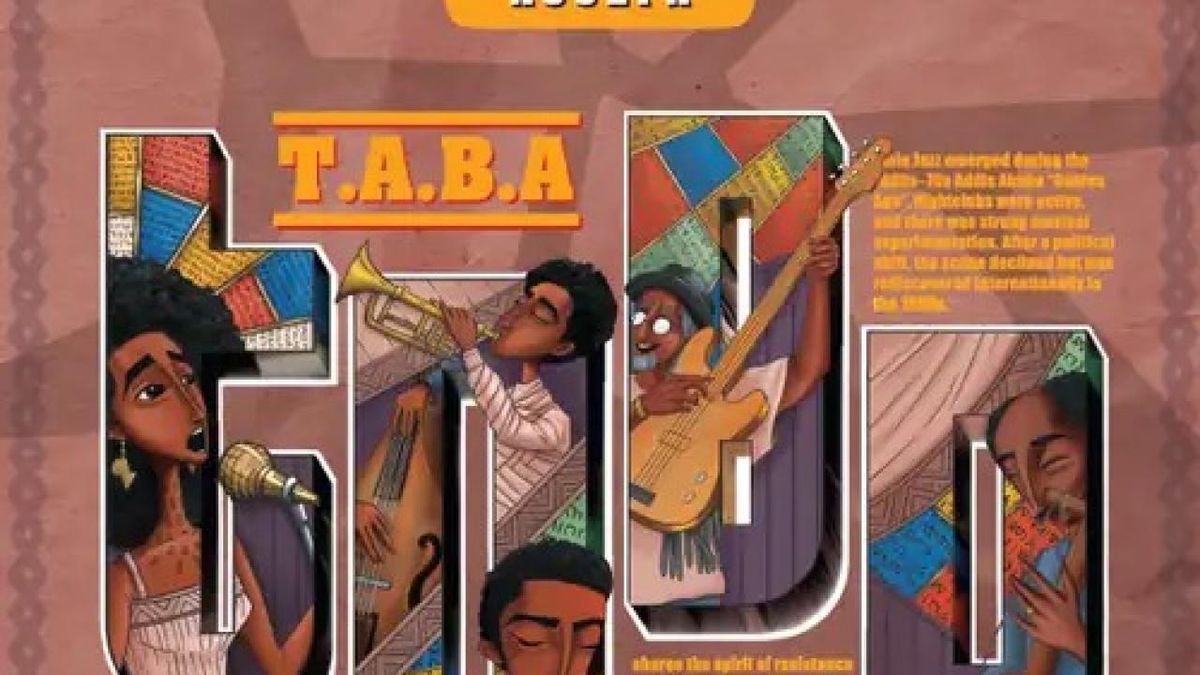
Kirubel Assefa, the Ethiopian composer, bassist, multi-instrumentalist, producer and arranger, has announced T.A.B.A., a new album out November 20 via Ethio Jazz Factory. Its title spells out the four modes that underpin Ethiopian song, and it arrives as the generation that built Ethio-jazz leaves the stage. T.A.B.A. is Kirubel's answer to the question of who carries this music forward.
In Ethiopia, a melody begins with its qenet, a five-note mode that sets the scale, the tuning and the emotional color of a song. Four stand at the center of the tradition, developed and passed down through generations of singers and players. Tizita, whose name means memory or longing, is the mode of Ethiopia's most beloved songs of nostalgia. Ambasel, Bati and Anchihoye complete the set, each with a character of its own. Together they are the grammar of Ethiopian music, and each letter of T.A.B.A. takes its name from one of them.
Ethio-jazz was born when those modes met jazz. In the late 1960s and early 1970s, Mulatu Astatke set qenet against jazz harmony and Latin rhythm, while the nightclubs and big bands of 'Swinging Addis' made Addis Ababa one of Africa's great music capitals. Decades later the Ethiopiques series carried those recordings to listeners around the world, and a new audience fell in love with the sound.
Now the architects of that era are leaving the stage. Dr. Tilahun Gessesse, revered as 'The Voice' of Ethiopia, died in 2009. Alemayehu Eshete, the singer known as the 'Abyssinian Elvis,' died in 2021. And in late 2025, Mulatu Astatke, the father of Ethio-jazz, completed his farewell tour. Kirubel learned this music on the bandstand alongside its masters, as a bassist, musical director and arranger for Tilahun Gessesse, Mahmoud Ahmed and Aster Aweke. T.A.B.A. is not a revival. It is a continuation, written by a musician who carries that lineage firsthand.
Rather than recreate the classic Ethio-jazz sound, Kirubel, who has recorded and worked closely with Kamasi Washington among others, approaches the tradition from the inside. The album draws on the character of Ethiopian music from the 1970s and 1980s and sets the four modes in conversation with jazz, funk, Afro-Cuban, reggae and West African rhythm, played by an international group of musicians. His guiding principle is simple: 'modernizing Ethiopian music without Westernizing its identity.'
'I don't approach Ethiopian music from the outside,' says Kirubel. 'It is the musical language I grew up with, and for more than four decades I have lived it as a musician, composer, arranger and musical director. I've had the privilege of playing onstage and in the studio with artists whose music helped define modern Ethiopian music for generations. Tizita, Ambasel, Bati and Anchihoye are not sounds I discovered later in life; they are part of who I am musically. What I learned was not to preserve this music like something in a museum, but to know it deeply enough to move it forward. That is what T.A.B.A. means to me.
'I can bring in jazz, funk, African and Latin rhythms and still know where home is. The foundation remains Ethiopian. And for me, the final test is always live: the music has to breathe with musicians, stand on its own onstage, and connect with an audience.'
Raised in Addis Ababa, Kirubel began his musical journey at 14, absorbing jazz, funk and West African music alongside Ethiopia's own traditions. Over more than four decades he has worked with some of Africa's most influential artists, including Aster Aweke, Mahmoud Ahmed, Gigi, Tewodros Tadesse, Dr. Tilahun Gessesse and Nigerian reggae legend Majek Fashek.
After his move to America, Kirubel further delved into Afro-Cuban, reggae and Brazilian music. In Los Angeles, Kirubel co-founded Lasta Sound, a project that brought Ethiopian music into dialogue with a new generation of jazz players. The group included Kamasi Washington, Ryan Porter and Chris Gray, years before the city's contemporary jazz movement drew international attention. Their recordings include Lasta Sound and Dimtsepia.
Kirubel wrote all 11 compositions on T.A.B.A. and produced and recorded the album himself. It was mixed by Kris Jackson at Forknspoon Studios and mastered by Raymond Valles at Digital One Studio, both in Los Angeles. Through Ethio Jazz Factory, he continues a mission centered on Ethiopian culture, African ownership of its musical stories, and the belief that a new generation can build on tradition while creating something distinctly its own.


More information is available at ethiojazzfactory.com and on Spotify.



Sign up for all the news on the Fall season, discounts & more...