


Review: THE VILLAGE WHERE NO ONE SUFFERS, Jack Studio
This Ukraine-set play marks the fourth anniversary of the Russian invasion
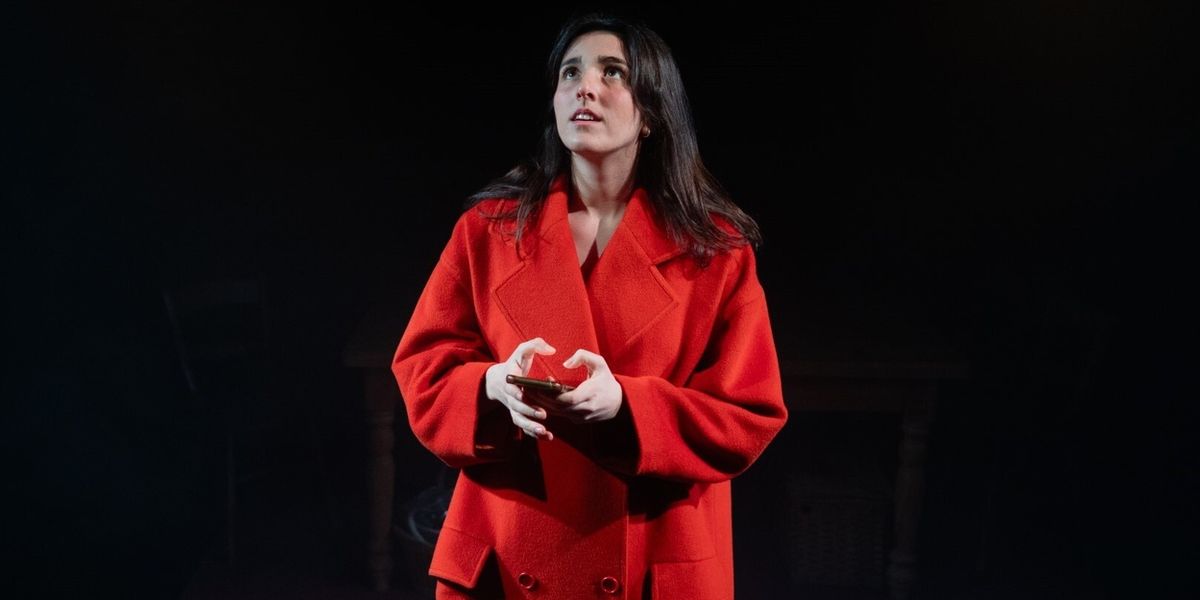
 “We’ve died, we’ve been reborn, but we still have our memories,” a character reflects at one point in The Village Where No One Suffers. He’s talking about the years that have elapsed since the Russian invasion of Ukraine in 2022, and this sense of war as existential, as shaping the very fibres of who we are, is everywhere in London-based Ukrainian playwright Polina Polozhentseva’s understated fable (translated into English by John Farndon and Kseniia Koziievska).
French-Italian actor Sofia Natoli is Lukyana, a young woman who’s been working as a cleaner in Poland since the invasion. She’s been drawn back to Ukraine – and the titular village, completely untouched by the war – after the death of her grandmother, a witchy village healer with the ability to heal wounds with a single touch. It slowly becomes apparent that the only thing protecting the village from Russian missile strikes are these powers – powers that Lukyana herself may have inherited.
This is magic realism in its truest form; the supernatural lurks in every line, but never dominates. Instead, what comes out in the tale of Lukyana’s adjustment to her new reality is a conflict between self-protection and sacrifice, between duty towards one’s homeland and personal freedoms. Scenes either of air strikes or of Lukyana actually using her powers are kept to a minimum – this is her internal battle, and it takes care not to foist a saviour narrative unto its heroine.
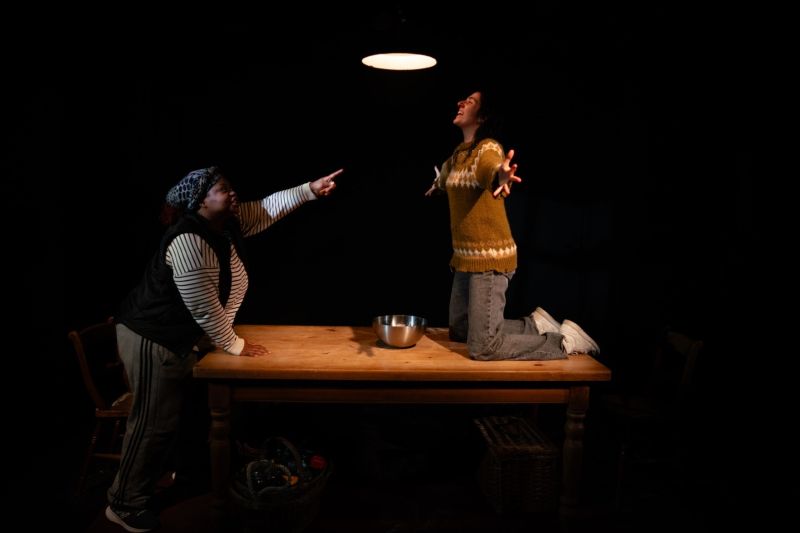
Photo credit: Abbie Sage
Rounding out the cast are Nailah S Cumberbatch, as a friendly neighbour who gradually reveals her guilt surrounding her own difficult relationship with Lukyana’s grandmother; and Christopher Watson as Pasha, an old lover of Lukyana’s who makes a reappearance just as she’s become engaged to another man back in Poland. Pasha is a complex figure who perhaps deserved some more probing, but Watson does a fine job of presenting a man who is by turns emotionally avoidant, cruel, yet deeply attached to Lukyana and the pre-war life she represents.
This is by definition an extremely insular play (though with obvious global significance). In the intimate Jack Studio space, director Valery Reva has created a cosy ode to Ukraine’s rural past, with flour dusted over the carved furniture and some fabulously holey knitwear. At the same time, though, everything comes with a sense of unease, with every character tiptoeing around the expectations and unresolved yearnings keeping them in the idyllic village.
Since the action is so thoroughly restricted between four walls, sometimes Polozhentseva’s script suffers when it strays too far beyond them. Lukyana’s relationship with her grandmother is better explained by her interactions with Pasha and the neighbour than it is by her stilted invocations of her grandmother’s spirit. There are also some awkwardly placed text conversations between Lukyana and her fiance, which only serve to weaken the sense of dread about what lies back in Lukyana’s old life beyond the village.
The ending of The Village Where No One Suffers is abrupt: a decisive choice on Lukyana’s part, but not a quick fix for all the guilt and identity struggles laid bare throughout. With a runtime of slightly under an hour, this play is a tightly written chronicle of how war can make and unmake societies and the individuals who live in them.
The Village Where No One Suffers plays at the Jack Studio until 28 February
Photo credits: Abbie Sage
Sign up for all the news on the Fall season, discounts & more...
.jpg?format=auto&width=300)






Reader Reviews
To post a comment, you must register and login.