


Review: SHiNDORA's HEY OLD FRIENDS Makes Aging Fun, Poignant
On February 7 and 8, 2026, the Japanese-language theater group SHiNDORA presented their latest show at Teater KEcil
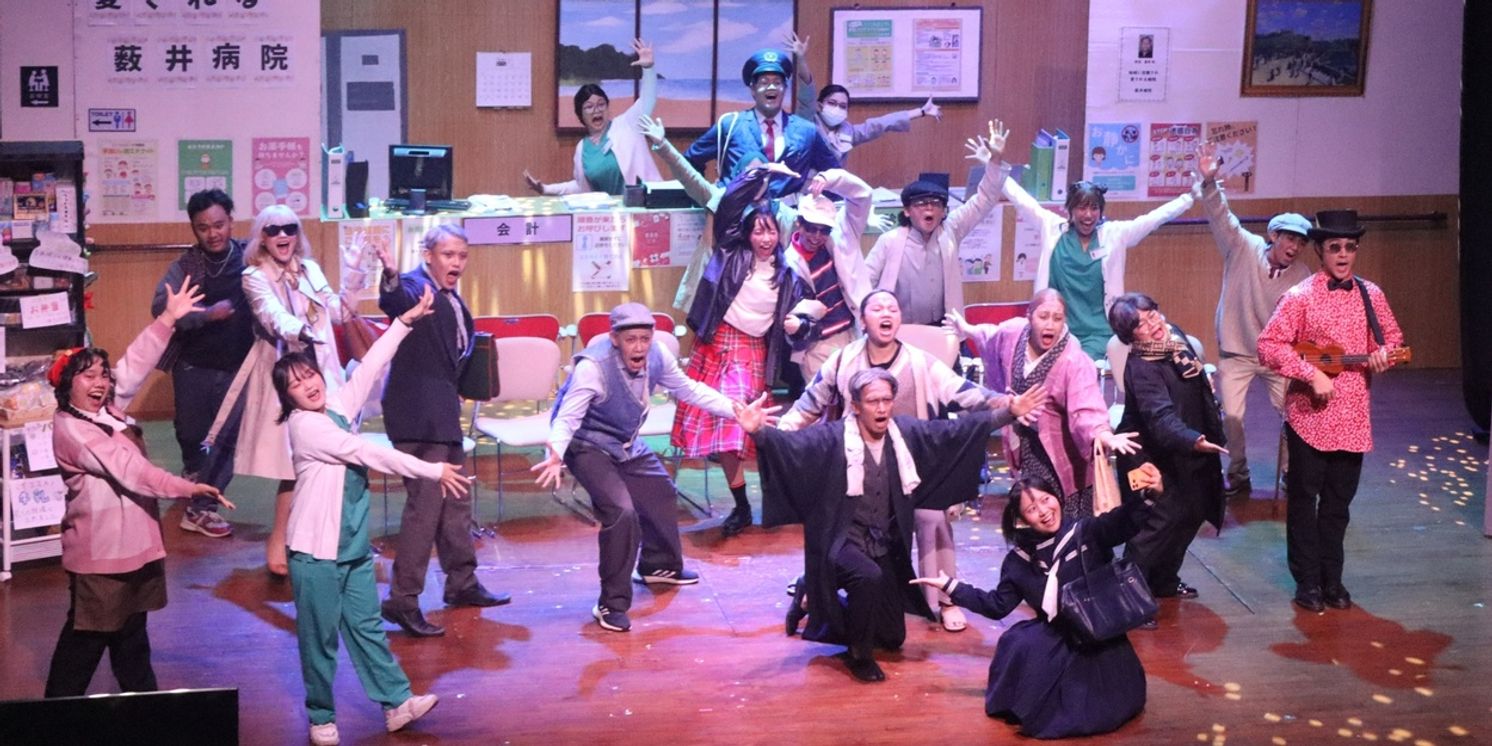
On February 7 and 8, 2026, the Japanese-language theater group SHiNDORA presented their latest show: HEY OLD FRIENDS, LET’S GO TO THE HOSPITAL (or 今日も元気だ 病院集合 in Japanese) at Teater Kecil.
HEY OLD FRIENDS is written and directed by Sugako Kaikiri, with music production by the band “deneb” from Hiroshima, led by Shinji Tachibana. The show’s choreography is credited to Marcia and Fahmi. Ario served as both the acting instructor and as vocal co-instructor alongside Tara.
The show is set in the fictional Yabui Hospital in Kyushu, Japan. Although it’s a regional hospital, it’s bustling with activity. The first song, “Medical Heroes”, introduces the hospital’s many staff members and their commitment to provide the best medical service.
However, the show’s narrative doesn’t resolve around Yabui Hospital’s staff, or even its patients; rather, the main story of OLD FRIENDS concerns a group of elderly men and women who frequently meet at the hospital for coffee, gossip, and companionship.
This gaggle of geriatrics includes Morio (Bimo), who’s there for regular check-ups; Fumiyo (Nanas), there to accompany her aging father; Katsura (Acha), who always dotes on her husband; Genta (Danial), a sushi chef worried about his heir; Keiko (Choya), who’s diligently learning English and volunteering as an interpreter; and Masayuki (Ramzy), an employee of the outsourcing company that works with the hospital. They even have a cheeky name for their group: XKB48.
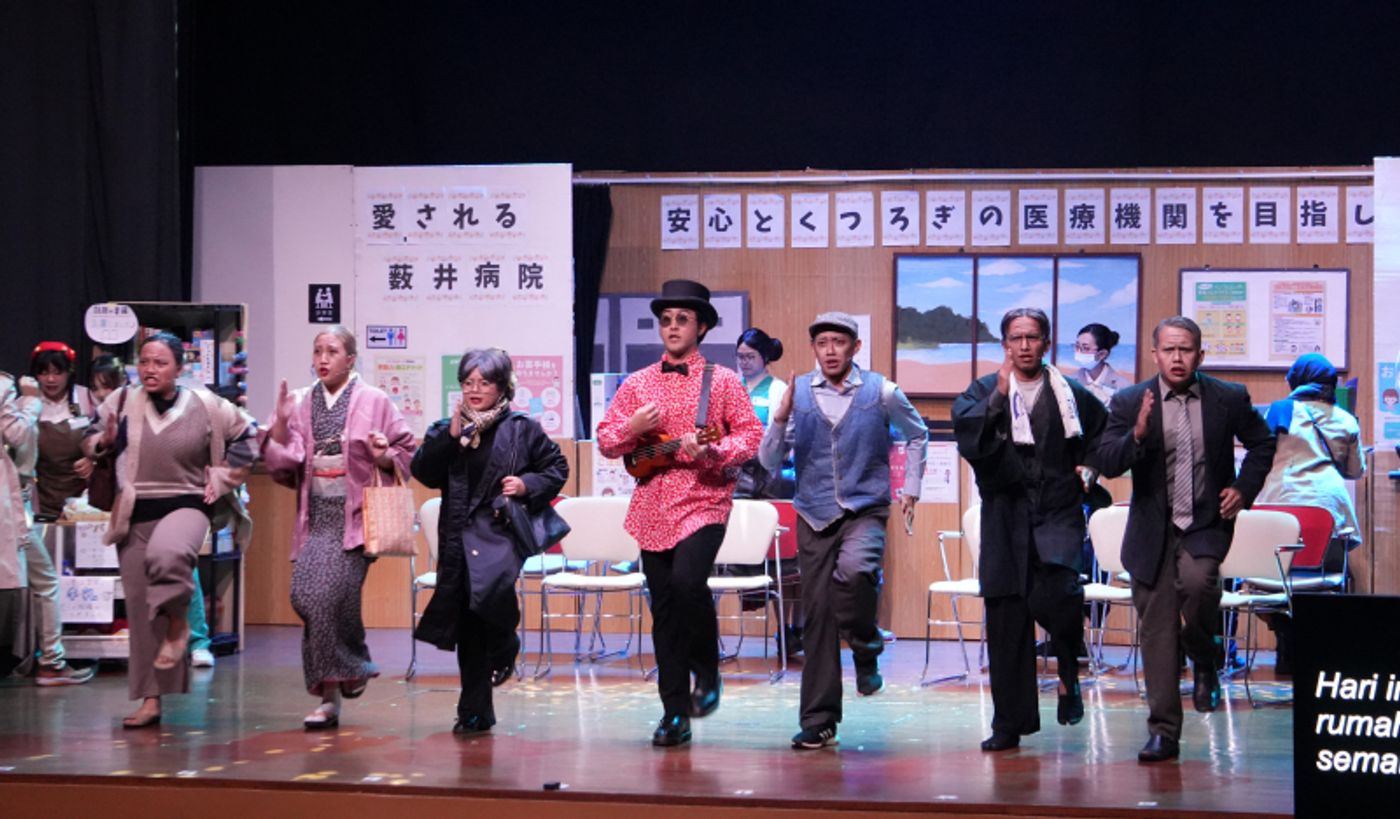
The regular meet ups of these merry elders is shaken when a new staff member arrives: Bien (Jena), a Vietnamese migrant worker and nurse-in-training. The XKB48 members are largely intrigued by Bien, most of them having very little experience interacting with a foreigner. Bien’s earnest and hardworking personality quickly endeared her to the XKB48.
Despite their carefree demeanor, the XKB4 elders are actually grappling with their own problems – health, cultural changes, family matters, and even career aspirations. But they tend to keep these struggles to themselves, not wanting to burden their friends.
One day, the XKB48 finds Bien missing. As it turns out, she has been diagnosed with a serious illness. Not wanting to worry her family back in Vietnam, Bien tries to appear strong, including making an Instagram post with her fellow staff members and the XKB48.
Yet her condition worsens. She is forbidden to leave her room, where she’s getting intensive care. But Bien has one wish: to visit the beach and see the shore, as her family lives just across the ocean.
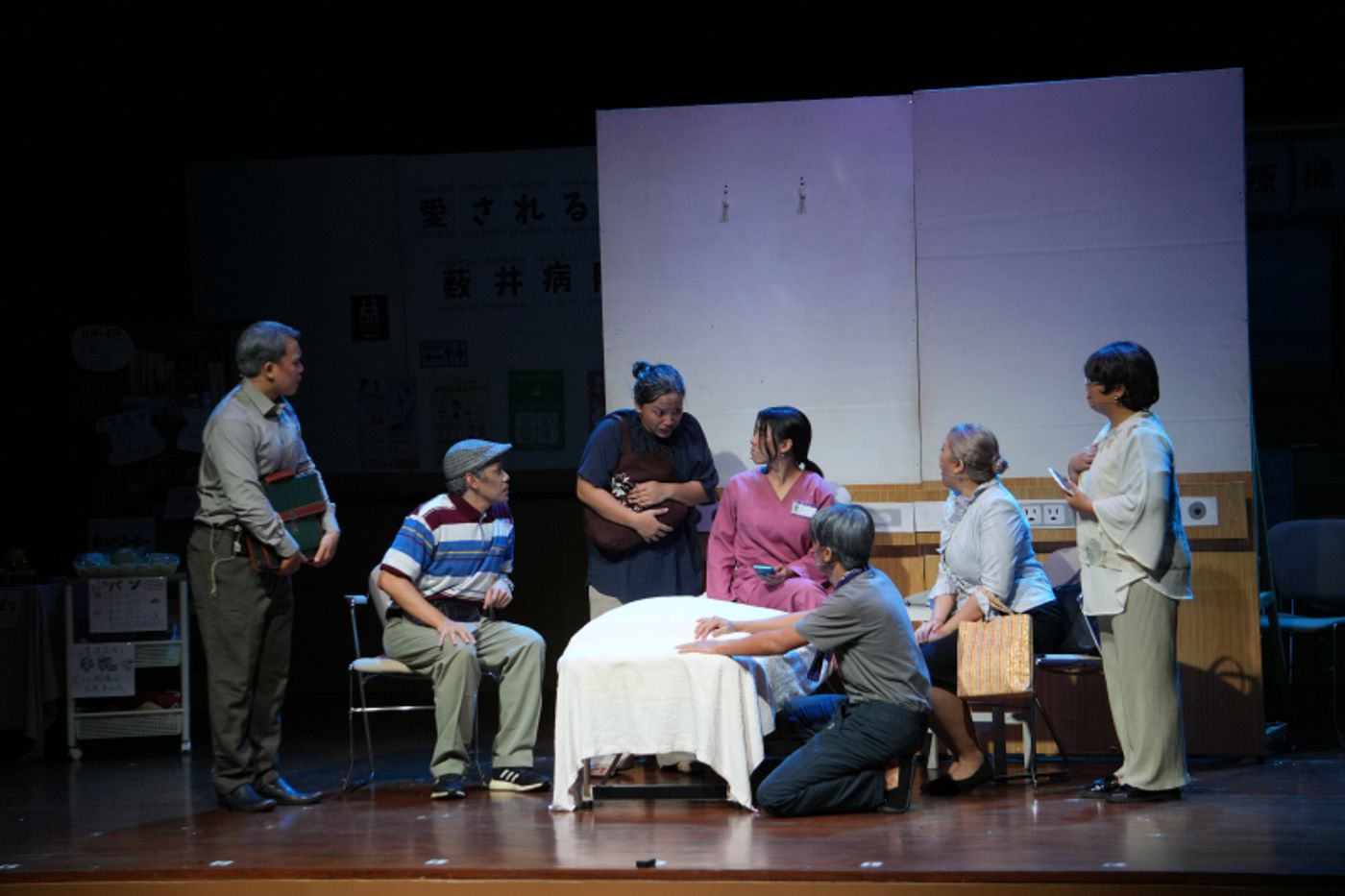
XKB48 agrees to help her sneak out, with the aid of nurse Uehara (Rin) and cafeteria lady Yamazaki (Sawsan). After a short escapade, the elders manage to bring Bien on a wheelchair to the beach, under a starry night. There, Bien calls out to her family at home, expressing just how much she misses them; XKB48 reassures her that her words have surely reached them.
A few months later, we learn that Bien has passed away. But her strength had shown XKB48 that they should be willing to be vulnerable too and face their problems headfirst; the six friends finally opened up and shared their worries, including a big secret that one of them had been hiding throughout the show.
The show ends with the song “Love Thy Enemy”, a bittersweet yet optimistic ode to facing one’s various problems with a smile; they are, after all, inseparable parts of life.
Based on HEY OLD FOLKS and last year’s KANEKO MAMA, SHiNDORA has proven that they have a strong and specific artistic vision. The two shows share many familiar elements: a large ensemble cast, an expansive static set, and a story crafted for older audiences.
If last year’s KANEKO MAMA was set in the 1980’s, HEY OLD FRIENDS is set in the modern day but with a very particular perspective and sensibility. Namely, the show invites us to see the modern world through the lens of older Japanese people.
There are multiple scenes where the older characters come face-to-face with the younger generation: a group of school girls who say that traditional Japanese culture is too outdated, and a group of young workers who believe the conventional corporate culture is too restricting and meaningless.
Although such scenes could easily veer into “generation war” territory, there’s always a balanced view from at least one of the older characters, noting that times have indeed changed and that young people are entitled to their views. These confrontational moments serve as interesting insights into real problems faced by the older generation in Japan, and, by extension, elsewhere in the world; the feeling of being ‘left behind’ by a world that keeps changing.
The character of Bien herself presents an interesting dilemma: Japan is a nation with an aging population that needs assistance from migrant workers, yet the influx of foreigners requires adaptation from the Japanese people as well. As this has been an actual hot topic in Japan in recent decades, it was doubly interesting for SHiNDORA to dissect this subject matter in their show and even take a stand.
Furthermore, although the show doesn’t shy away from difficult topics such as immigration, sickness, legacy, aging, and grief, the presentation is still overall light and enjoyable, with jokes abound – and, therefore, accessible to everyone. The show’s ability to balance its serious and lighthearted moments is second to none; it speaks to a very meticulous yet heartfelt approach in both its scriptwriting and directing.
It should be noted that the many side stories and subplots get different amounts of focus. Overall, this is a prudent approach to keep the show digestible and not overwrought; that being said, HEY OLD FRIENDS has a noticeably bigger cast and, therefore, many more subplots. But without a central figure to tie them together like in KANEKO MAMA, these subplots feel more scattered; a few of the thematically heavier ones could only get a limited amount of time and focus, even though they would be interesting to explore. As a result, HEY OLD FRIENDS feels rather unfocused at times.
Although all the characters and their stories are still thematically coherent, a more judicious editing would have kept the overall narrative tighter by giving more build up and pay off to the weightier side stories.
The music by the band “deneb” is just as unique and fun as their work for KANEKO MAMA. The music is cheery, bouncy, and joyful most of the time, although it can be emotional when needed. Stand out songs include The Pride, a soulful ballad sung by Bien as she stands proud of how far she’s come, and the aforementioned closing song Love Thy Enemy.
The acting performances in HEY OLD FOLKS were stellar. Everyone was on the same wavelength, giving a consistent level of performance, from the major characters to the background actors. The acting was theatrical in approach, a version of elevated and exaggerated reality that’s a true delight to watch, and unmistakably Japanese. This was a result of the director’s and acting coach’s strong vision as well on the cast’s part.
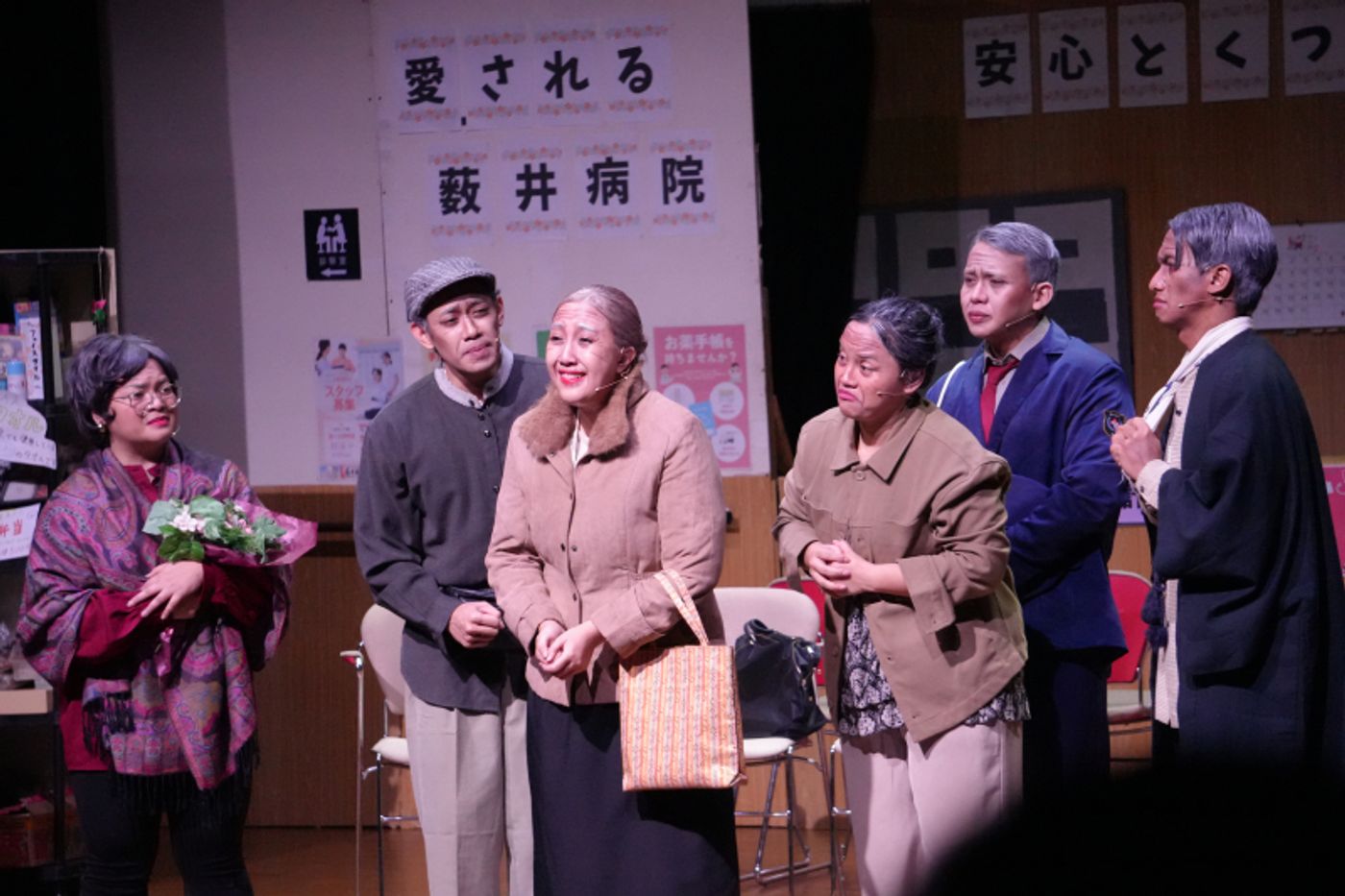
Yet, the cast also excels in the quieter moments, finding truly human and vulnerable moments. One such standout scene was between Genta and his son, Takumi, who had been secretly apprenticing under another sushi chef to become a worthy heir to their family’s sushi restaurant. The acting in the scene was measured, calm, and subtle, yet just as effective and memorable as the louder group scenes that are the bread-and-butter of HEY OLD FOLKS.
Now, the singing was more of a mixed bag; most of the group songs were designed to be able to be sung by performers of various vocal abilities. But there was one stand out vocal performance: Bien herself. Jena’s beautiful, haunting voice made her solo moments all the more poignant.
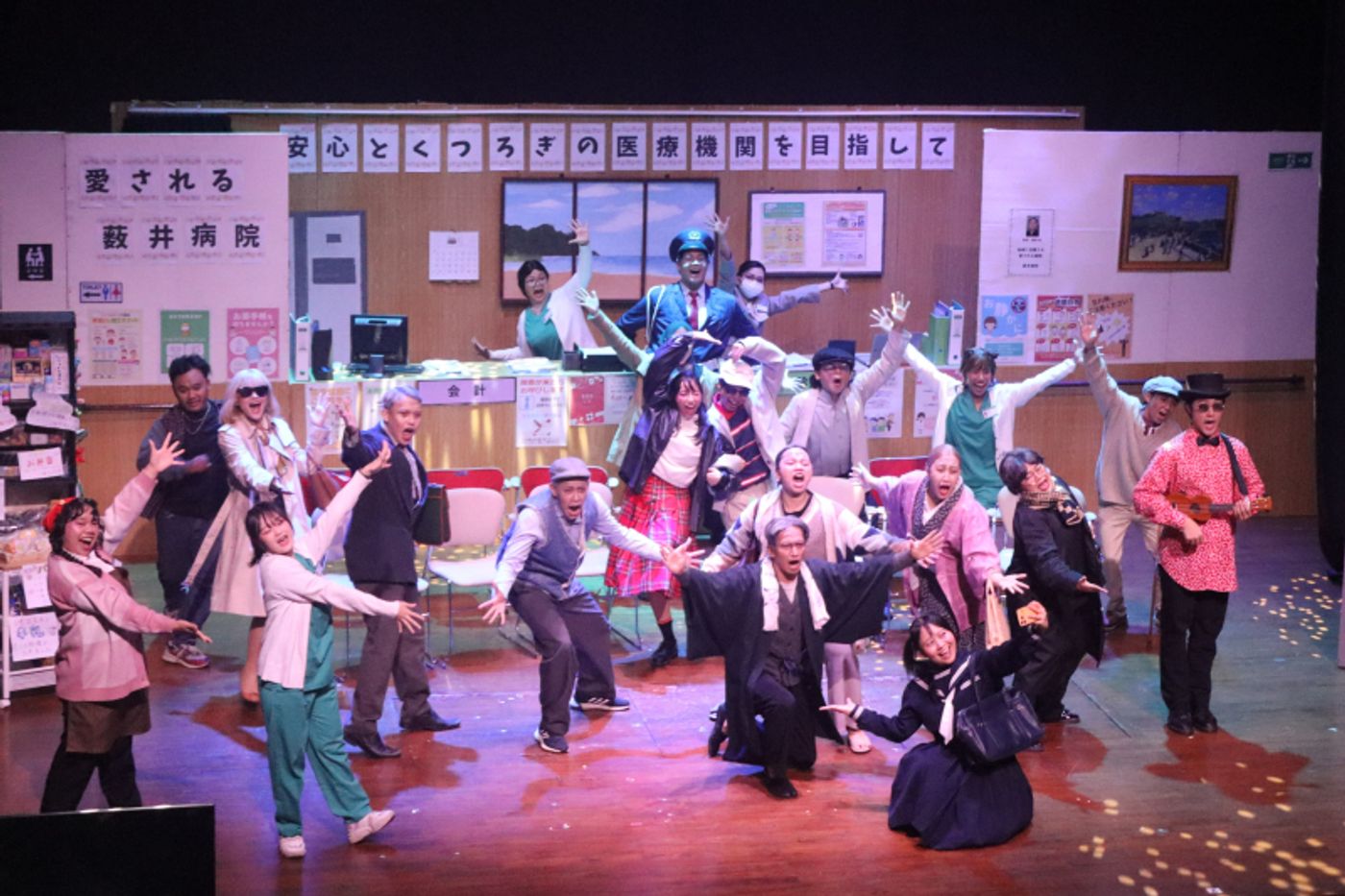
Just like their previous performance, the show was held in the quite small Teater Kecil – meaning that the creative team had to work with limited space. And just like last year, they made the most out of it by constructing a mostly static main set – the lobby of Yabui Hospital. The set is full of delicious details – PSA posters, signage, a faux window, wood paneling – everything you’d expect from a provincial Japanese hospital. Having a set that felt lived in helped tremendously with immersing the audience in the show’s setting.
Another stand out artistic choice was the way HEY OLD FOLKS portrayed the beach near the hospital. With very limited space to maneuver, the team used creative blocking, lighting, and sound design. Blocking-wise, the show set the beach on downstage center as the beach, even spilling out towards the audience, making use of the difference in leveling to portray the change in location. Lighting was then used to wash the flooring in oceanic blue. Simple, yet quite effective in evoking the sea.
Beyond the great production, acting, and story, HEY OLD FRIENDS also sets itself apart by one rare creative decision: having older people as its main characters. This is still a rarity in global musical theater, and even more so in Indonesia. Yet, as the show has proven, it’s a perspective that offers valuable insights.
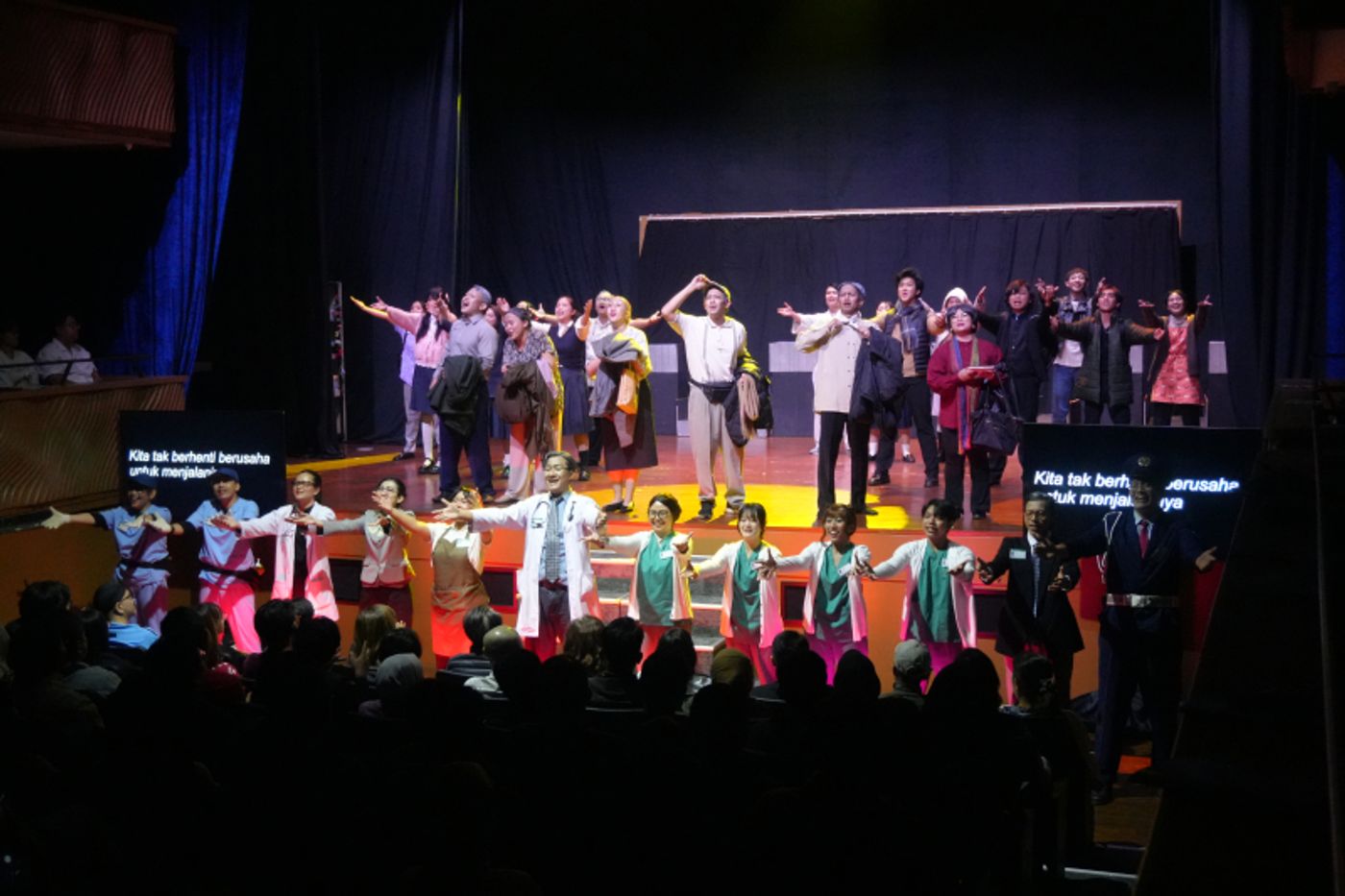
The way XKB48 connected with the younger characters – from the optimistic Bien to the skeptical workers – reflects how we as people see the past, the present, and the future. The past might seem so far away, but they provide us with the wisdom to live our present. The present is fleeting, and what we take for granted might disappear without warning. And the future can be uncertain and scary, yet worrying too much might keep us from appreciating what’s in front of us.
Although it had a bit too many characters and subplots, HEY OLD FRIENDS still brought a story that’s full of heart, laughter, and surprises. Most importantly, it reminds us that aging is not a curse, but an opportunity; after all, not everyone gets to grow old.
Reader Reviews
Videos