


Review: MARY SAID WHAT SHE SAID – ADELAIDE FESTIVAL 2026 at Adelaide Festival Theatre, Adelaide Festival Centre
Avant-Garde theatre comes to the Adelaide Festival.
Reviewed by Barry Lenny, Friday 6th March 2026.
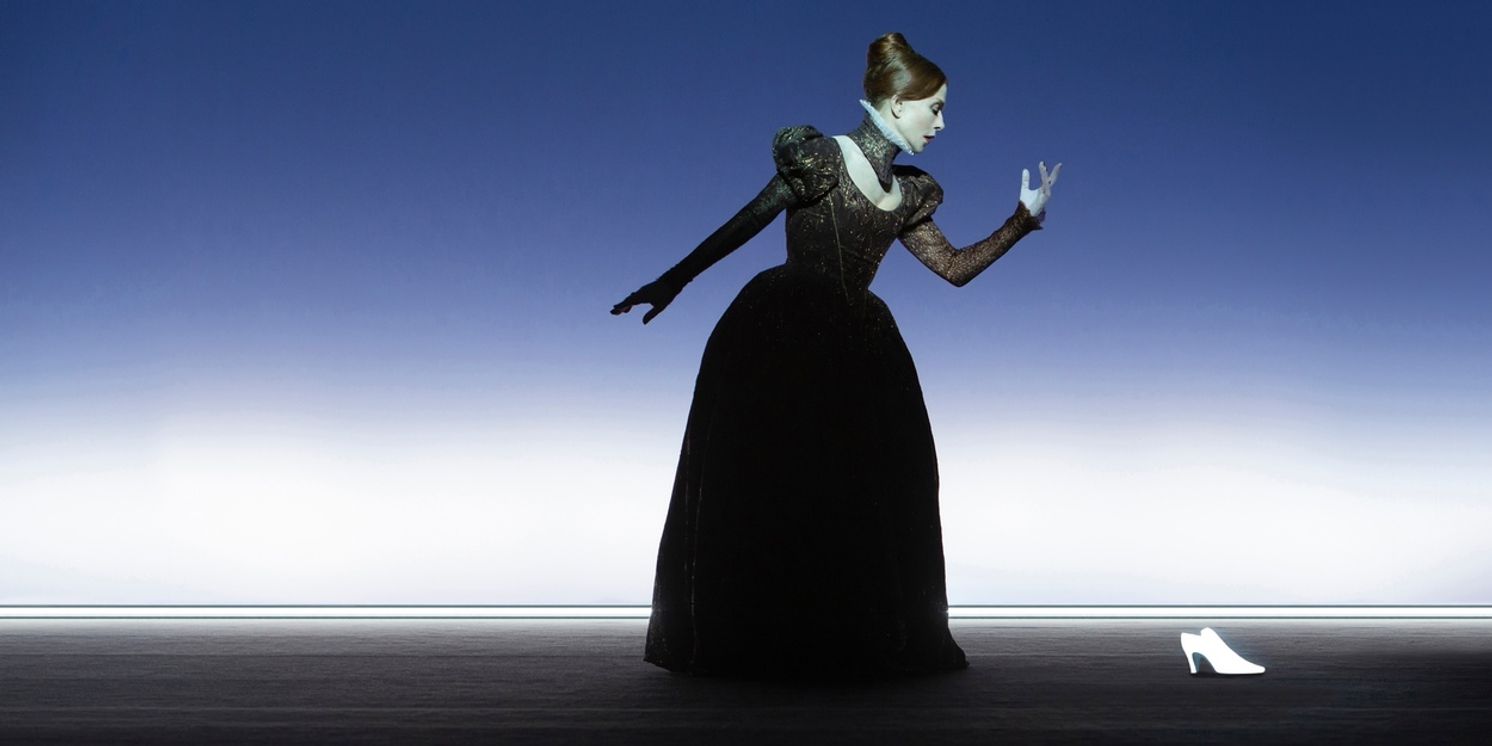
Directed, and with set and lighting designed by the late avant-garde director, Robert Wilson, in collaboration with Théâtre de la Ville–Paris, Mary Said What She Said is a solo performance by Isabelle Huppert as Mary Stuart, Queen of Scots, in the final hours of her life. Written by Darryl Pinckney, drawing from Mary’s letters, it features music by composer, Ludovico Einaudi.
Before the performance begins, a heavy Baroque frame hangs on the curtain, within which is a repeating video of small dog, chasing its own tail. Mary kept many dogs, and carried a small dog with her, hidden in her skirts, when she went to her execution. Between each repeat, the words, “You fool me. I’m not too smart” appear briefly. Then the curtain rises.
It begins with Huppert standing still for an extended period, back to the audience, in silhouette against a bright white background. A baby’s cries remind us that she became Queen of Scotland when only a few days old. By five, she was smuggled to France to avoid a marriage to Edward, the son of Henry VIII. She had three husbands and survived them all, possibly disposing of the second in order to marry the third. Politics and the Catholic religion were a large part of her life. At 44, after being imprisoned for 19 years, Elizabeth I had her beheaded, the drunken executioner taking three attempts to decapitate her.
When Huppert finally turns toward the audience, her face is starkly white, with red lips, and gradually she makes her way towards the audience. It quickly becomes apparent that the rapid-fire monologue, in French, outpaces the ability to watch the action and also read the surtitles that flash on the screens either side and above the stage, and which are sometimes gone before they can be read fully. It became a decision between watching Huppert and having no idea what was going on, or attempting to follow Fabrice Scott’s fast-paced surtitles and try to follow Huppert in peripheral vision, quick glances, and through her vocal inflections. With the remains of my schoolboy French from the mid 1960s being almost nil, I had to opt for the second of these.
Her monologue is a stream of consciousness, thoughts drifting by, leaping from one thing to another, some repeated several times in succession, some reoccurring later in the monologue, the metaphor of the dog chasing its tail coming back to mind. She is sometimes immobile for lengthy periods, at others striding around the stage and, late in the piece, walking to and fro, diagonally down the stage, and returning, walking backwards, with frantic arm movements, like a caged animal. At times, the movement even suggests those of an automaton.
She speaks of the many people in her life, but considerable emphasis is placed on her four maids-of-honour, all named Mary: Seton (her favourite), Beaton, Fleming (the miserable one), and Livingstone, of whom she spoke repeatedly. Her mother was another, Mary of Guise.
For Huppert, this is a massive undertaking, a tour-de-force performance in this surreal, almost bizarre at times, journey into the mind of a Queen who has spent the second of her life incarcerated, awaiting execution. The words are mesmerising as they fly past, creating patterns of sound, matched by the lighting. Einaudi’s rich score adds to and amplifies the dramatic emphasis of the text. Jacques Reynaud’s costuming is particularly effective, the separate high collar covering the vulnerable part of her body that is soon to be severed.
It is a work that placed great demands on Huppert and, at the same time, considerable demands on the audience requiring constant concentration on the many components of the work.
Unsurprisingly, there were mixed reactions. While many were giving a standing ovation, some were pushing past them to leave quickly, without applauding to acknowledge the remarkable work of the performer and the team behind this production. Decide for yourself. It continues nightly until the 8th March.
Photography, Lucie Jansch.
Reader Reviews

Videos