Interview: Pavar Snipe on THE WHOOPI MONOLOGUES and Stopping Othering
The Emmy-nominated comedian, actor, and disability advocate discusses making Off-Broadway history, THE WHOOPI MONOLOGUES, and authentic representation.
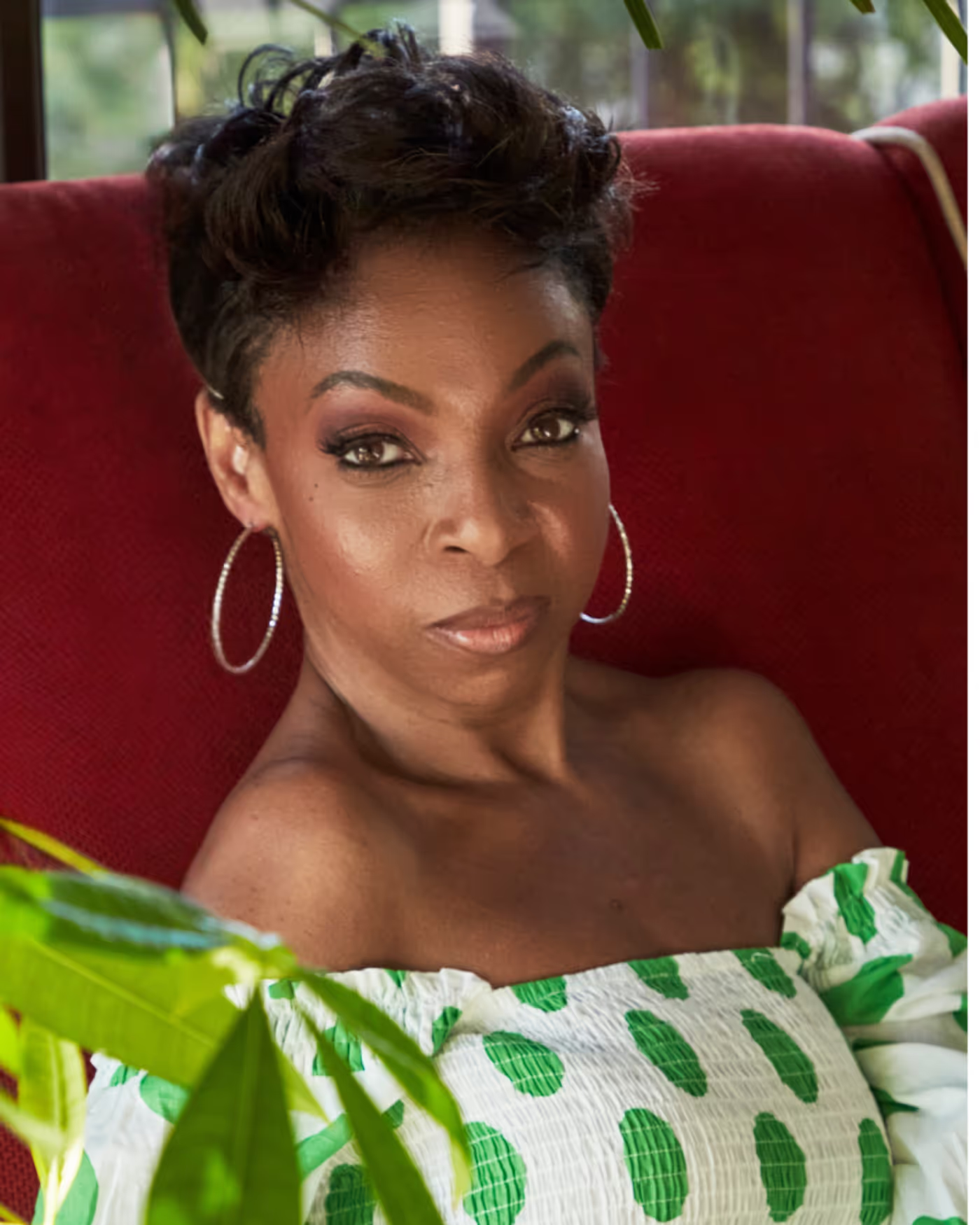
Photo by Patrick Marinello.
It was a sunny August morning in New York City when I sat down to chat with Pavar Snipe about making her Off-Broadway debut in Lincoln Center Theater’s well-received production of The Whoopi Monologues. Our conversation began with a question about Disability Pride Month, but it didn’t stay there for long.
Throughout our conversation, the Emmy-nominated comedian, actor, and disability advocate kept returning to the same idea. It wasn’t representation, visibility, or even disability itself. It was othering.
The concept surfaced when she spoke about becoming one of only a handful of disabled actors to portray a leading role originally written as nondisabled. It resurfaced when she was discussing accessibility, comedy, social media, government policy, and even Whoopi Goldberg's writing. Despite the different topics, there was one palpable throughline.
“It’s the othering,” Snipe boldly states. “Let’s stop the othering.”
That deceptively simple statement captures both her advocacy and her artistic philosophy. For Snipe, making her Off-Broadway debut wasn’t actually about breaking barriers. It was about truly demonstrating what becomes possible when artists are allowed to be seen for their talent before they’re defined by perceived limitations or any other aspects of their identity.
“For me to be a disabled actress coming into this role that’s non-disabled just means so much,” she explains. “It’s just a glimpse at what can happen when people are given the opportunities to fulfill the roles that are there and that don’t have to be disabled.”
“We can just be people who live in the world,” she continues. “And it doesn’t have to be a very special episode or a very special character.”
Snipe's journey to Off-Broadway was anything but traditional. After working in radio and television news in Virginia, she sold nearly everything she owned and moved to New York in 2015 to study comedy at Upright Citizens Brigade. Television work followed, but theater remained unexplored. “You can get there,” she says. “It’s really about sticking with it, being prepared, putting in those 10,000 hours of work, and just staying the path.” That persistence eventually led her to understudy Lurleen in The Whoopi Monologues, a character whose story often intersected with her own experiences.
Lurleen's monologue centers on menopause, a subject Snipe says previous generations rarely discussed openly. “Our generation did not have previous generations talking about the changes that your body goes through or the emotional changes that you feel,” she points out.
That relevance extends far beyond Lurleen. Whether exploring mental illness, addiction, colorism, reproductive rights, immigration, or homelessness, Snipe believes Goldberg “was so ahead of the game. It’s just amazing to see the foresight that this woman had that’s multigenerational.”
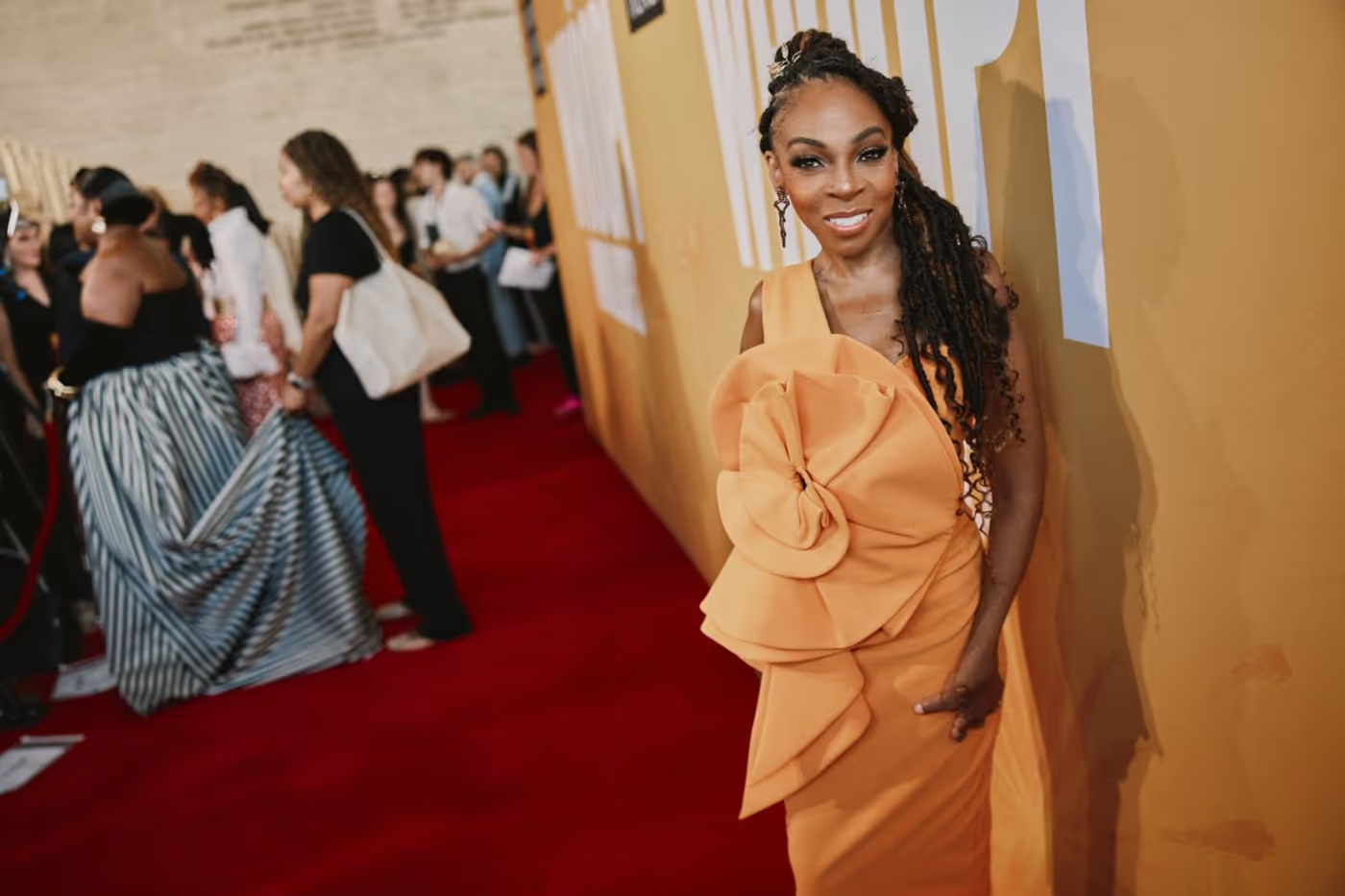
Photo by Emilio Madrid.
That same belief in shared humanity also informs Snipe's comedy. As an instructor at The New School, where she teaches Funny Haha: The Art of Comedy, she encourages students to transform personal experiences into material audiences can recognize in themselves. Whether discussing disability, childhood bullying, or complicated family relationships, comedy becomes an invitation to empathy rather than division. “I think that’s the great thing about comedy,” she imparts. “People can relate to those experiences.”
It’s an approach she continues through Limitless Laughs Productions, the company she founded to create opportunities for disabled comedians and performers. But when Snipe talks about representation, she rarely starts with casting. She starts with accessibility. “We're fighting for things that we shouldn’t have to be fighting for at this point,” Snipe emphasizes. “We shouldn’t be fighting for accessible elevators. We shouldn’t be fighting for accessible taxis.”
To that end, Limitless Laughs Productions prioritizes accessible venues, ASL interpretation, live captioning, and seating that accommodates groups of wheelchair users rather than isolating them. “People with disabilities want to come out. They want to be included. And when they know that a show or venue is accessible, they will come,” says Snipe. Representation, she suggests, begins long before an actor steps into the spotlight. It begins the moment someone decides whether they can even enter the theater.
Living with rheumatoid arthritis has also transformed Snipe's own understanding of visibility. “When I was in my 20s and early 30s, I thought that I had to be behind the camera, I had to be behind the microphone, because I felt like people didn't want to see me,” Since recalls. “I would always feel so anxious before I got on stage [at work events while I was a morning radio personality] because I felt like, ‘What are people going to say? What are people going to think? Are they whispering about me?’”
Moreover, physical limitations brought practical challenges, but they also carried emotional ones, including the shame she felt asking for accommodations she genuinely needed. “There were days where my body just couldn’t, and I felt shame about that,” she remembers. “I wanted to tell them ‘Hey, I can’t lift my arms up today. It hurts.” Unfortunately, as she was breaking barriers her own shame didn’t allow for her to advocate for herself in those moments.
“Now, I am so thankful that I have a place to talk about things like that, be comfortable,” notes Snipe, “and to advocate for my colleagues who are in this world.”
Eventually Snipe stopped listening to her inner-demons, which she labels as shame and embarrassment, and she realized something freeing. “I’m disabled whether or not I’m on stage or I’m off stage. People see me every day whether or not I'm on stage or I'm behind the scenes,” she says. “So why not just go for what I really want?”
“As soon as I did that,” she beams, “things started to open up.”
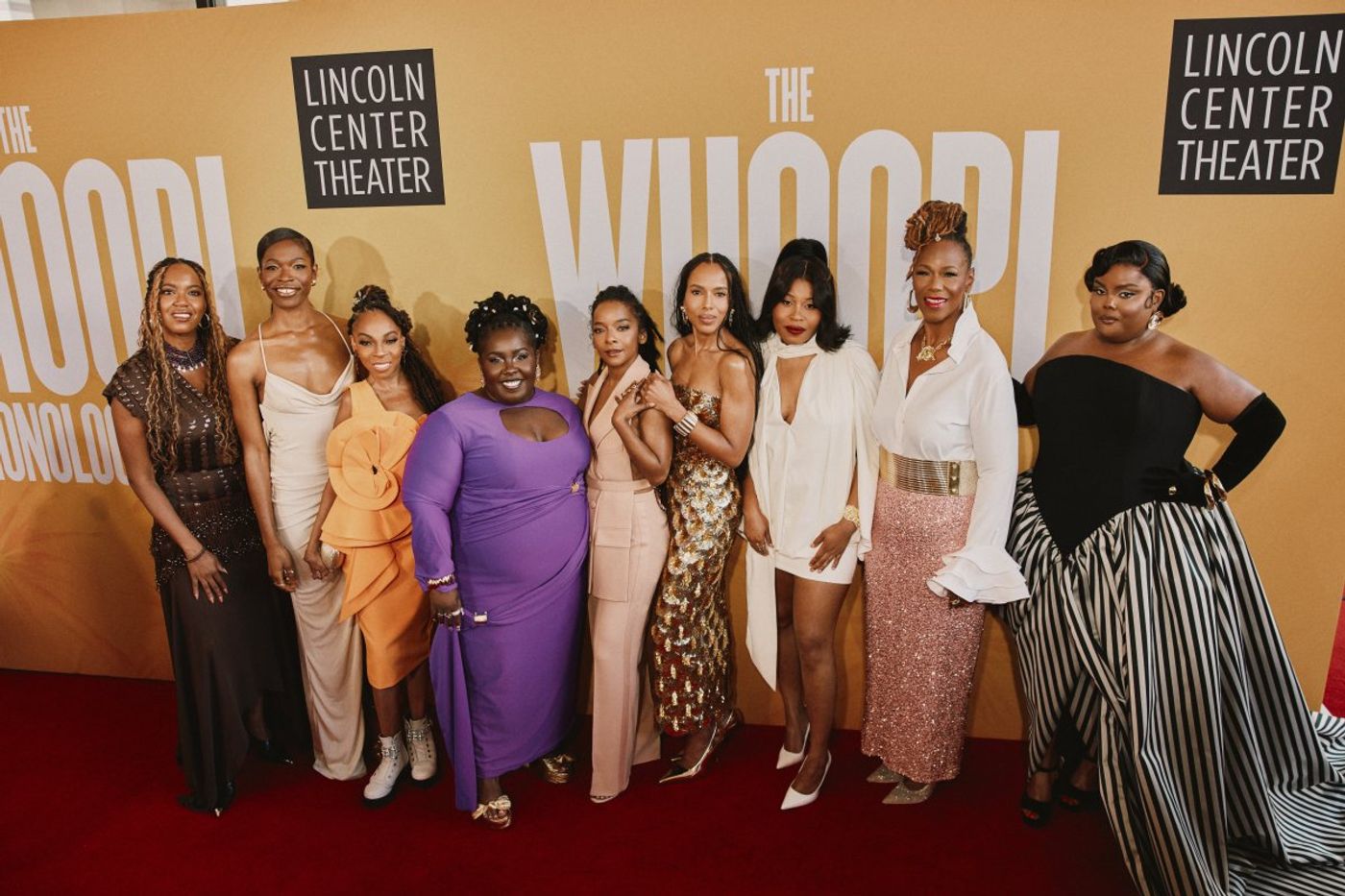
Kerry Washington, Dominique Fishback, Kecia Lewis, and Danielle Pinnock.
Photo by Emilio Madrid.
As for what she hopes audiences take away after seeing her perform, Snipe answers with a single word: “Unstoppable.” Not because she wants audiences to admire her disability, but because she hopes they'll stop thinking about it altogether. “I hope they’re just into the character,” she asserts.
Disability Pride Month may have provided the occasion for Snipe’s historic Off-Broadway debut, but listening to her speak, it’s clear she’s working toward something much bigger than a month on the calendar. “I hope that people walk away from Disability Pride Month with respect for disabled people as being people. And, like I said, not othering them,” Snipe reiterates. “We should be on the same page and want to be inclusive. I hope that’s what people walk away with.”
Lincoln Center Theater’s production of The Whoopi Monologues runs through August 30, 2026 at Lincoln Center Theater’s Mitzi E. Newhouse Theatre.

|
Powered by

|

.jpg?format=auto&width=365)