


Interview: Klara Zieglerova of THE GIRL ON THE TRAIN at ALLEY THEATRE
Toasters, Pop-Ups, and the Opacity of a Thriller!
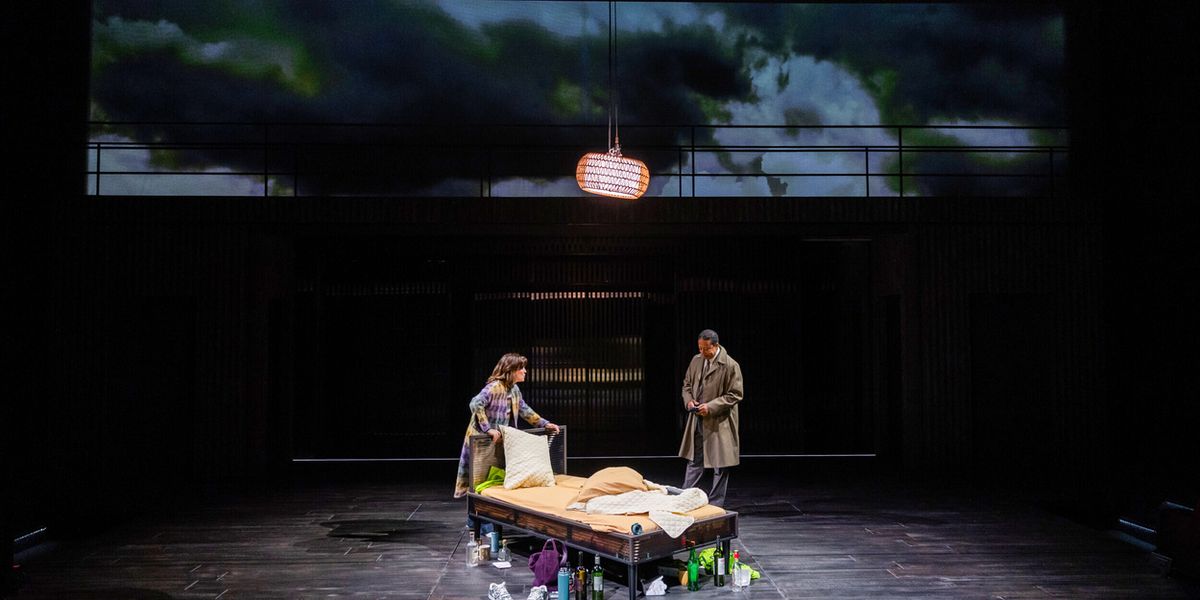
Klara Zieglerova is the scenic designer for The Alley’s SUMMER CHILLS production of THE GIRL ON THE TRAIN. Klara is a Tony-nominated artist who has worked at the Alley before, especially on SUMMER CHILLS. The show opens on July 24th and runs through August 30th. It stars resident company member Elizabeth Bunch (fresh off almost killing and ultimately being killed by her husband, Chris Hutchison, in MISERY). THE GIRL ON THE TRAIN was a 2015 DreamWorks film and a book by Paula Hawkins. BROADWAY WORLD writer Brett Cullum got a chance to talk with Klara about pop-ups, toasters, and the opacity of polycarbonites.
Brett Cullum: Well, the first thing: this is one of the few works that I have not read the book for or seen the movie. Usually, when the Alley does Summer Chills, it's like Agatha Christie, and I've read it 3 or 4 times, so this is gonna be a mystery for me. Tell me, what is THE GIRL ON THE TRAIN about?
Klara Zieglerova: I have to confess, I haven't read the book either, and I haven't seen the film. Probably one of the few people left in the world who hasn’t! We are in the same boat. I'm actually glad I didn't. I start fresh with the story. It's a murder mystery. It's a thriller. It's a modern thriller. The main character, Rachel, is sort of an unreliable narrator. She has a history of substance abuse, and she's kind of trying to figure out what happened, what she witnessed on a train. So she's a commuter, in the UK, into London, and she spends a lot of time on the train, and she's observing what happens in people's backyards, and she witnesses something, or she thinks she witnesses something. She's not sure who she saw, when she saw them, etc. So that's kind of what unravels as the story progresses. Hopefully, it's going to be a pretty wonderful progression, but it's a great story.
Brett Cullum: Well, considering that you've never read the book, and you've never seen the movie. How did you approach the set for this one? Because it's… are you just taking the cues from the script immediately?
Klara Zieglerova: Yeah, absolutely. Basically, there are so many different locations. She's on the train. We are in Rachel's home. We are in multiple other homes. And everything happens in a very quick sequence. So it almost has this filmic cinematic quality. So for me, I think one of my main, sort of, my main job was to, how do you do that with the set, so you go very flawlessly from one scene to another. So that's, especially at the Hubbard theater, which is a thrust, which is a wonderful configuration for the audience, because there's not a bad seat in the house. Everybody has a really good view. But how do you get the furniture? People have to sit; things happen. And it’s onto the middle of the stage. That's always the tricky bit for me. It's modern, it's kind of slick. It's this girl on the train, and you know when you are on the train, and youlook out of the window, I have a very clear view, but then it gets darker, and actually the window turns into a mirror, and you see yourself, and then sometimes you see a little bit of the outside when it's lit, and that whole kind of mystery of what's inside, what's outside. Then, maybe being under the influence of substances, you don't quite know the realities.
So we had a few different evolutions with the director. We were looking at the turntable and bringing it, but it seemed like we were kind of locking ourselves in, because there are so many scene changes, and it felt repetitive. And then we thought, oh, what if we do? And this was funny because I talked to the technical director here. I said, “What do you think about pop-ups? And he replied, “Pop-up what?” And I said, “You know, when something, like, it's a flooring, kind of just comes up, he said, “Oh, you mean toasters!” It's funny how the terminology for theater design is, you know, every region, I guess. So we are doing some toasters, which means the furniture kind of miraculously rises from the floor, allowing for a very smooth appearance, even for all of our larger pieces of furniture.
Brett Cullum: It's so interesting because I feel like Rob Melrose, the artistic director, has structured these seasons to include very filmic pieces. Last season, they had THE DA VINCI CODE; they just did MISERY. It’s all of these things that started not necessarily as plays, and I think that when we have plays, usually you just have one or two locations, it's a very easy kind of set transition from one to the other, it's very convenient. These film versions are just wild! Have you counted how many locales you have in this?
Klara Zieglerova: We actually have eight scenes in Act One, and we have nine scenes in Act Two. That's the most fun part of my job, trying to figure that out. It's easier to design a beautiful set for a single location, but then if you have 17 of them. How? And, you know, they have to go in very quick succession. How do you do that? And that's the challenge. That's the puzzle. Sometimes I feel like there's more drama off stage or under the stage, and hopefully not. I sometimes wish people would see what actually happens off stage to make things happen, or underneath the stage, in our case, with the toasters, not pop-ups. These days, people are also used to very fast-paced things. We all watch Instagram; everything is a few seconds long, so I think also keeping up with that adds to the thrill of it. It's a very important part of my job to help it tell its story without getting in the way of that.
Brett Cullum: Is there a different approach that you take when a show is a thriller, as opposed to a bright, cheery musical, or something like that?
Klara Zieglerova: Yes, for sure, especially this one. We are starting from the very beginning. I think I wanted to have this little bit of shifting reality. I'm using this material I've only used once before, and I'm a little bit nervous. It's polycarbonate, so it's a very structurally stable material.
People built greenhouses out of it. I use it in bronze, so it's not too bright and can go dark. And what I like about the material is that you can see through it when you shine light through it. But also when you light in front of it, it turns into a mirror. And so we've been trying to figure out the right version of how much we want to see through. And that was the exciting part: working with Michelle Fullerton, the head scenic artist. She got the sample of the material, and she said, “Okay, maybe now it's too translucent because maybe the director and I thought maybe it should be very opaque!” And she put a scenic treatment on one side, then sent us a video of someone walking behind it, and there's this eerie, kind of ghostly quality. And we were like, “Oh, that is amazing, amazing!” We thought that's what we're gonna go with. I design the set, but I don't touch anything your audience sees. My design only looks as good as the people who produce it, who actually create it.
Our director, Casey Stangl, is like, “I also want the furniture to be part of her world, because we are in Rachel's head. So, since she is a substance abuser and an unreliable narrator, nothing is that clear to you; you don't know exactly where things are, and it's kind of shifting." And so she's like, "I want the furniture to be a little bit different." And so Scott Groh, who is the props master, said, “I can work with plastic.” I love the collaboration, because sometimes my work ends with the construction drawings. I really appreciate true collaborators, and they're all designers, they have fine arts degrees, and so that's one of the main things I really love about theater, is working with people who are interested and really skilled. It's just a joy to be able to do that.
Brett Cullum: I was gonna ask you about your own journey, too. Obviously, you're very well known for Jersey Boys, Tony-nominated for that, but how did you get into scenic design?
Klara Zieglerova: I always enjoyed the arts. My first degree was in book culture and typography. I grew up in Prague in the Czech Republic. I grew up behind the Iron Curtain. I had done some sculpture as well. I worked on the Expo 100 years ago in Japan, and when I was still a teenager, I had always enjoyed three-dimensional work. And when I wanted to study abroad for a year, it kind of happened to be at a drama school for theater design. And I thought, “Oh, how different can it be?” I never worked with a story, really. And so the first time working with a story, and that's kind of, it's all about what we are doing, right? The storytelling through actors, through speaking, and through visuals. I really, really fell in love with that. I was pretty lucky that after college, I was able to work for Ming Cho, one of the preeminent designers in the United States, and Tony Walton as well; they were big Broadway designers. They were both very supportive of my career and encouraging.
Brett Cullum: It's funny, because when I think back to Jersey Boys, I really feel like that was a musical that had a very filmic quality to it. So, you being on The Girl on the Train, and this cinematic feel, it makes sense in this weird way.
Klara Zieglerova: Absolutely. You know, I actually started because I'm from Central Europe. I thought I was going to do tragedies and everything very dark. I had this notion of American musical as being too frivolous or, you know, not for me, and then the more I learned about the genre, the more respect I have, huge respect for the genre and how difficult it is and how difficult it is to do it well. And so with Jersey Boys being my sort of first, big, sort of Broadway musical. I didn't even have a full script; it was work in development, and it was super exciting, really fast-paced, and obviously a huge success, and everybody thought, I am the woman, I'm the designer who can do all this fast speed. And I love it, to be honest. I love it. And I am, I don't, I think I, I don't remember getting a script in my hand that didn't have like a million different scenes in different locations. And so I really enjoy the technical part of my work as well. I love working with the technical directors. I love the puzzle. I love the technical puzzle, to be honest.
Brett Cullum: Well, what's it like working here at the Alley? What keeps you coming back?
Klara Zieglerova: Well, it's the people, really. It's the people and what they do, what they stand for. I think it's the theatre that's really pretty amazing and unique. There are many great theatres in the United States, but this is definitely one of the very best. And I feel like they're doing it well. I think they have a lot of pride in their work. They treat people well. I think that's what keeps me coming back, and also, as I mentioned before, working with people who are so good at what they do.
THE GIRL ON THE TRAIN opens July 24th and runs through August 30th at The Alley Theatre. It is the Alley’s SUMMER CHILLS production for this year.
Photo provided by Melissa Taylor and features Elizabeth Bunch and David Rainey.


|
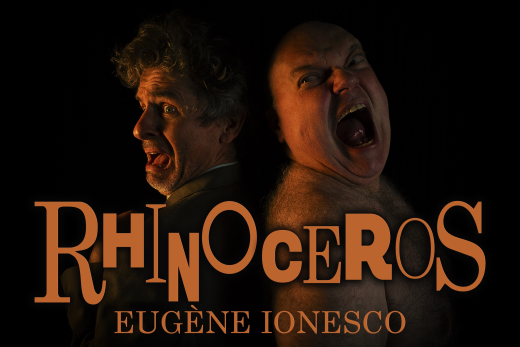
Rhinoceros The Catastrophic Theatre (9/18-10/10) |
|
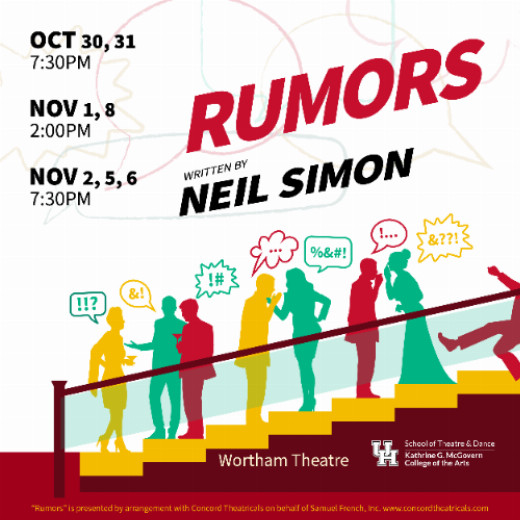
Rumors Lyndall Finley Wortham Theater (10/30-11/08) |
|
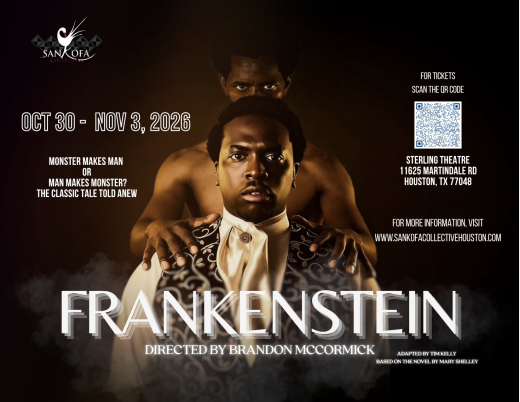
Frankenstein Sterling Theatre (10/30-11/02) |
|
Hänsel & Gretel Moores Opera House (2/04-2/07) |
|
One Flew Over the Cuckoo's Nest Baytown Little Theater (10/09-10/18) |
|
Come from Away Stages (9/18-10/18) |
|
The Rocky Horror Picture Show Spooktacular Tour with Nell Campbell House of Blues (10/23-10/23) |
|
Oh, Mary! Theatre Under The Stars (4/27-5/09) |
|
Thornfield: A Story of Jane Eyre MATCH (9/04-9/13) |

|
Uhuru Alley Theatre (10/16-11/08) |
