


Interview: Helen McKenna of TELL-TALE POE at Ritz Theatre
A One-Woman Theatrical Journey into the Life and Legend of Edgar Allan Poe
“Then, summoning the wild courage of despair, a
throng of The Revelers at once threw themselves
into the black apartment, and seizing the mummer, whose
tall figure stood erect and motionless within the
shadow of the ebony clock, gasped in unutterable horror
at finding the grave cerement and corpselike mask,
which they handled with so violent a rudeness,
untenanted by any tangible form.” – The Mask of the Red Death
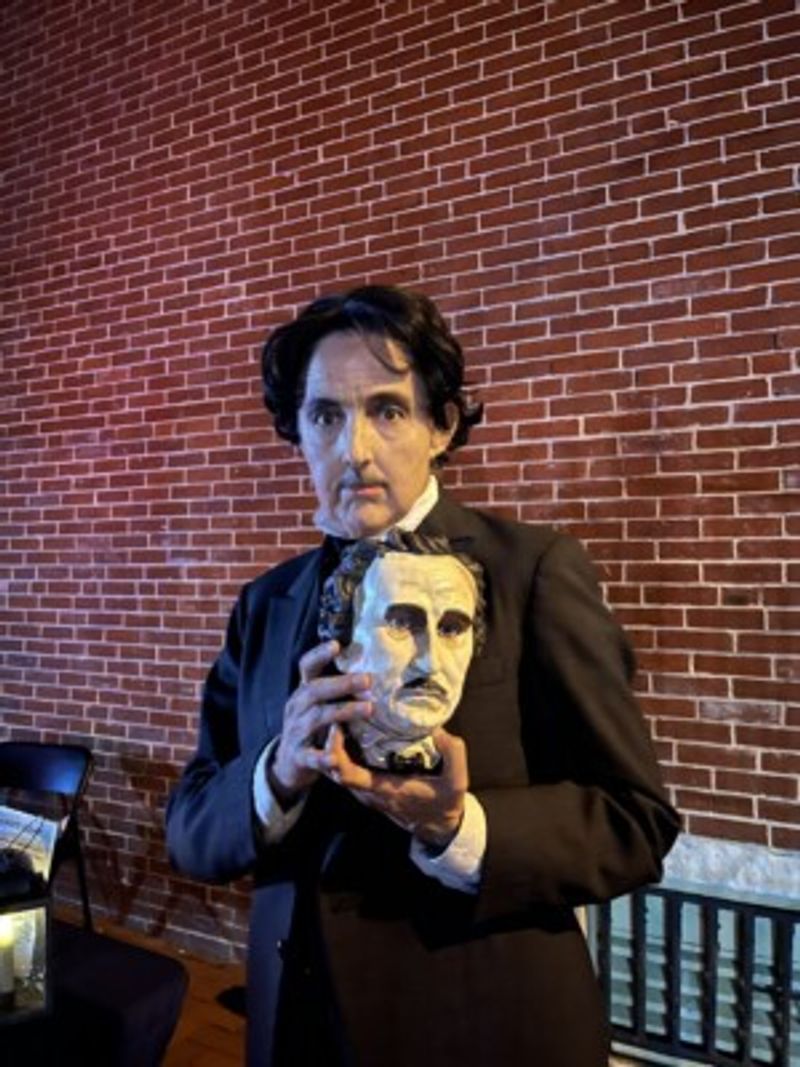
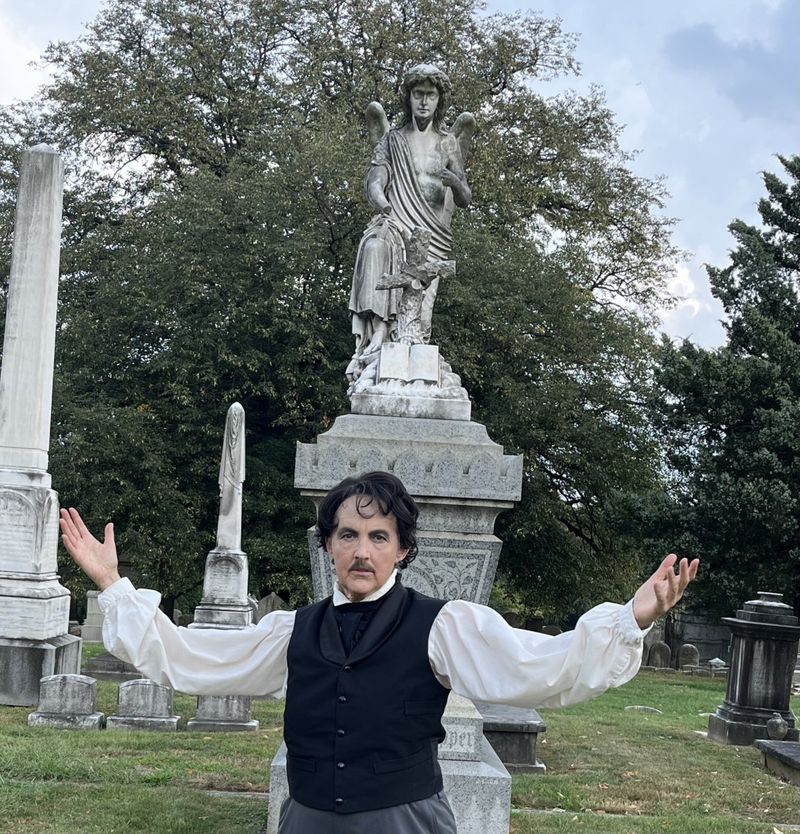
As All Hallows’ Eve approaches when the witching hour will be upon us, there’s no more appropriate seasonal spookiness than Helen McKenna-Uff’s riveting one-woman show at the Ritz Theatre, Tell-Tale Poe, in which she is eerily transformed beyond recognition into Edgar Allan Poe (and Sarah Helen Whitman, a poet who was briefly his fiancée). Poe, celebrated for being the master of Gothic horror and father of the modern detective story, was much more than that and channeling himself into McKenna's body, he is here to tell us all about it. With Poe's very essence and voice seeming to inhabit McKenna-Uff, she keeps audiences spellbound with tales, both fanciful and real, and brilliantly dramatic recitations of iconic poetry. She has been called "chilling, beautiful and haunting." McKenna, a retired interpretive ranger from the U.S. Park Service's Edgar Allan Poe National Historic Site in Philadelphia, has been performing as Poe since 1999 and had also acted in a variety of productions, including The Nerd, Lend Me a Tenor and What the Butler Saw. Although it's been two centuries since Poe came into the world and in spite of his untimely death at age 40, Poe has justifiably remained a part of the popular culture and continues to capture our imaginations with his gorgeously evocative and macabre works such as The Fall of the House of Usher, Hop-Frog, The Black Cat, The Raven and Ligeia. His real life, shrouded as part of it is in mystery, also continues to intrigue. He's so vivid, it's as if he never left. And with McKenna-Uff bringing him to life, he hasn't. Hoag Levins writing for The Gloucester County Historical Society described Poe's stories and poems as "obsessed with death, often exploring not only the physical act of dying but also the kinds of guilt and madness that drive it." McKenna-Uff has been so successful that it was said that "a hundred and seventy-six years after he died a mysterious death in Baltimore, Edgar Allan Poe walked through the door" when she played the Woodbury Friends Meeting House last year.
Q. Tell me about your background, especially as a performer. How did your obsession with Edgar Allan Poe begin and how did "becoming Poe" evolve?
When I was at Holy Cross High School in Delran, I took an acting class. We were assigned to find a monologue to perform. Back then, before the Internet, actors could find monologues in library books that compiled hundreds of monologues. A typical title might be 25 Monologues for Women. None of the ones that I read moved me. When I complained to one of my classmates, she said I should check out this crazy guy Edgar Allan Poe. She was taking typing so she actually typed out The Raven for me.
The rhythm of the poem is what got me. I certainly had no feeling for the middle English words that he used like “quaff” and “nepenthe.” There was a dramatic literary feel to the poem that almost seemed Shakespearean. So that was my first foray into Poe territory.
I then memorized Annabel Lee and The Bells. I performed a few roles at the Ritz Theater in Haddon Township. One of the shows was called Lit Candles put together by Anne Knoll. The show featured highlights from great literary works. I recited The Bells as my audition. Those of us in the show assumed a number of roles. One of my roles was Ahab from Moby Dick so Poe is not the first male character that I portrayed.
I got my undergraduate degree in Theater arts at Rutgers in Camden. For my senior project, I performed Poe stories and poems at local libraries and schools. I was not in character as Poe. I was just an actress, wearing a black gown and a black shawl, trying to look a little goth. In 1998 I was working at the Edgar Allan Poe National Historic Site in Philadelphia. We were getting ready for the 150th anniversary of his death. I wanted to put my acting skills to use, so I compiled a one-act one-woman play called Remembering Poe. This was based on the writings of poetess and critic and one-time Poe fiancée (Sarah) Helen Whitman.
Whitman (not related to Walt Whitman) corresponded with seven different people who claimed to be working on biographies about Poe. Only the one written by John Ingram panned out. He did not know Poe and lived in England, so he relied heavily on Helen’s memory and access to information. Their correspondence has been compiled in a book Poe’s Helen Remembers. Whitman herself wrote a memoir called Edgar Poe and His Critics in which she tried to undo the damage done to Poe’s reputation primarily by Poe memoirist Rufus Griswold. Most of the script comes from those two books and from the correspondence between Poe and Whitman. The correspondence between the two is intensely romantic and literary.
The Philadelphia Poe site decided to offer my play as a way of getting people more intimately acquainted with Edgar. I needed a director. I had worked with Bruce Curless at the Ritz as a director and fellow actor, so hired him to direct Remembering Poe. During the course of our rehearsals, he proposed that I offer my play at the Ritz. This was a dream come true for me. Naturally, as a woman, I felt I had no chance of ever playing Poe on stage. Here was the opportunity of a lifetime! That was 1999 and I have been playing Poe ever since.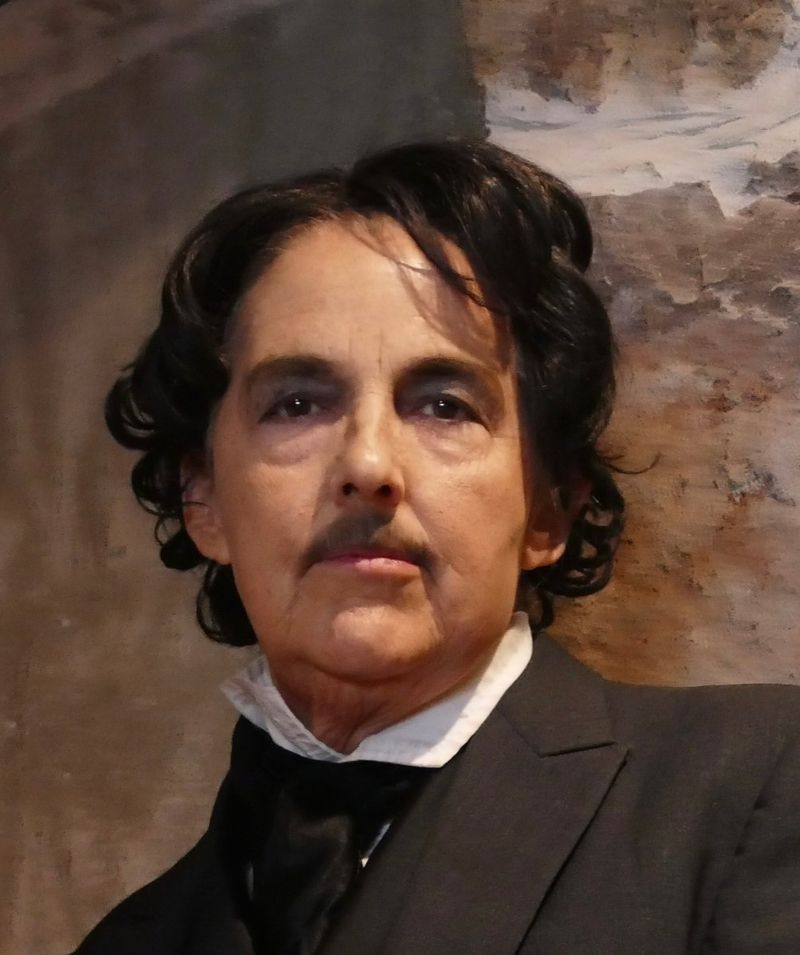
Q. How did you come to work with Cassandra Peterson a.k.a. Elvira, the famous horror hostess?
In 2007 a journalist named Ed Pettit wrote an article for the City Paper called. “We’re Taking Poe Back.” The premise of the article was that the City of Baltimore claimed Poe because they had his body. But Poe actually had his greatest success as a writer during his six years in Philadelphia.
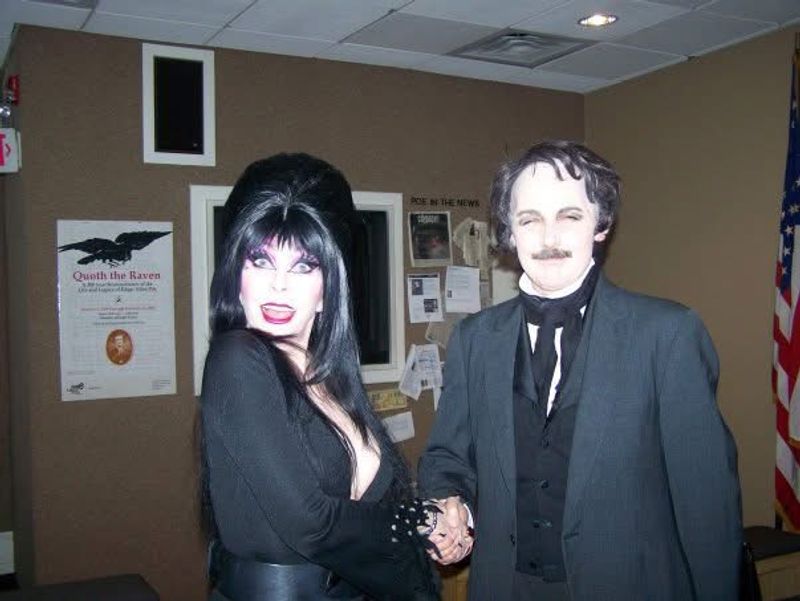
The article gained so much attention that it helped the City of Philadelphia become more interested in celebrating the bicentennial of Poe’s birth in 2009. Someone came up with the idea of finding Elvira and kicking off the bicentennial year in October 2008 with a reading of The Raven by Poe, played by me, and she would assist by saying all the nevermores in the poem. We set up a platform outside of the Poe house at 7th and Spring Garden. The Phillies won the World Series the same day, so traffic was insane.
I met with Cassandra Peterson for probably an hour the day before. Seeing her without makeup was surprising. She has auburn hair and a really sweet face. I think she was 60 at the time but looked much younger. There was certainly a lot of excitement about seeing her, so the property had quite a lot of people on it. After reading The Raven, we got on a trolley and visited Eastern state penitentiary and also took photographs by the rocky statue.
Q. What are some of the most surprising things you learned about Poe in your research? There are probably many people who don’t know Poe served in the U.S. Army from 1827 to 1829 under the alias Edgar A. Perry or that he was an officer cadet at West Point in 1830 but court-martialed in 1831.
If you go online to a website called the Edgar Allan Poe Society of Baltimore, you can find links to Books. One of them is titled The Poe Log which goes through his life chronologically detailing any records found. What we see there is a picture of a man who is constantly hustling. He’s editing magazines, soliciting copy from authors like Cooper, Hawthorne, etc. He’s corresponding with publishers. He’s trying to borrow money from people and conducting romantic literary flirtations. So, he’s a very prolific writer, more than what we think of today. Today we are looking at his poetry and stories. In his lifetime, he was famous for being a harsh literary critic and an editor as well. For all of his known foibles and periods of writer’s block, he still managed to produce a huge body of work.

Q. People may be shocked to learn that Poe married his 13-year-old first cousin Viriginia Clemm in 1836 when he was 27, although critics are divided as to whether the marriage was ever actually consummated. How did her death from tuberculosis affect his life and writing? It's been said that many of his stories reflect his own life's traumas.
At the Edgar Allan Poe house in Richmond, Virginia, I was given a tour by a woman who had been giving those tours for a very long time. Rather new at giving tours at Poe’s home in Philadelphia, I asked her how she approached that subject. Because naturally people are disturbed that Poe married not only a 13-year-old, but also his first cousin.
Her response was brilliant. She said you have to remember Poe was an orphan. He was taken in by John Allan as a foster child and never adopted. His relationship with his foster father became more and more strained. His foster mother was sickly and died when he was barely 20 years old. He and his father had a permanent falling out. By the time he was in his early twenties, Poe had lost two families.
His father’s sister, Maria Clemm, lived in Baltimore where his father had lived -- in the same house, as a matter of fact. She was willing to take him in. For the first time since he was two ½ years old, Poe was living with actual relatives: his aunt, his grandmother, his brother, William, and his two first cousins George and Virginia. Within a relatively short amount of time, his brother died of a combination of tuberculosis and alcoholism. The only reliable source of income the family had, the pension that his grandmother received, disappeared when she died. Poe’s second cousin Neilson, offered to take Virginia into his house to be raised with his wife, Virginia‘s half sister. Poe is now watching the dissolution of his third family, and in desperation, confessed that he was in love with Virginia. By marrying Virginia, he was marrying a family.
Poe had said that he never recovered from the early loss of his mother. In marrying Virginia, his aunt Maria was part of the deal. Both Virginia and Maria (whom they called “Muddy“) were very devoted to him. Even today, in a majority of U.S. states, marrying a 13-year-old is legal, usually requiring parental consent. And in the south, adhering to European sensibility more than northern states, marrying a cousin was actually a smart thing to do. Because then you knew the family you were being married into.
So the benefits for Poe of marrying Virginia was the emotional security of finally having a family of his own. He made sure that she got an education and learned to play piano. A visitor recalls Poe being rather spontaneous and playful. And that he adored his wife.
Virginia’s illness first manifested in 1842 and she was dead five ½ years later in January of 1847. Her illness was a terrible torture for the family and her death was a relief. But Poe needed the stabilizing influence of a loving woman and started to search for one. I’m sure that imagining her impending death brought him more into touch with the emotional vagaries of grief, grief that he was all too familiar with after having lost so many and helped him compose some of his more disturbing horror stories and romantic poetry. His poem Annabel Lee is a beautiful demonstration of the value love brought to his life.
Q. What makes Poe great and iconic, in your estimate?
A great Poe scholar who lived in Philadelphia was named Daniel Hoffman. Hoffman was himself a poet and said that Poe was a genius of compression. Poe knew exactly how much detail was required and how much to pull back on so that the audience becomes engaged in the storytelling. He somehow avoided material that would date him and hit upon what is universal in storytelling: creating feelings in the reader.
Q. What have been some of the highlights of doing your show?
The Big Read, funded by the national endowment for the arts, used to fund community events featuring Poe, so I was flown to various locations. I participated, as Helen Whitman, in the 2009 Poe funeral in Baltimore.
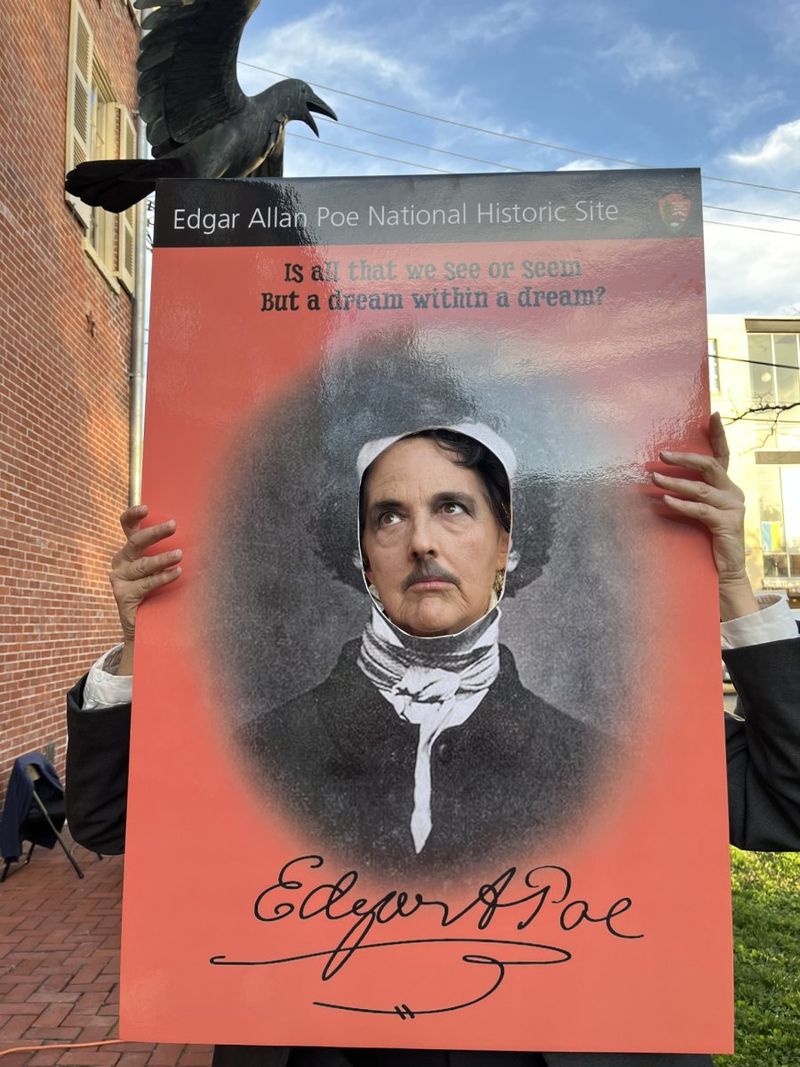
Over the years I’ve become more comfortable playing the character. I found that I was able to take questions and answer them in character. I’ve had very rewarding experiences with small audiences and very large as well. My favorite comment is when people say it seems that I am channeling Poe.
Q. Tell me about some of your current projects. I heard you're writing a novel?
I am writing my first novel. It’s mostly psychological in nature and features a serial murderer, a person who is wrongfully accused, and someone in a mental institution who becomes instrumental in catching the killer.
Tell-Tale Poe is playing on Sunday, November 2, 2026 at 2 p.m. at the Ritz Theatre, 915 White Horse Pike, Haddon Township, NJ 08107.
Sign up for all the news on the Fall season, discounts & more...

|
A Beat of Our Own McCarter Theatre Center (10/07-10/25) |

|
Pipeline Vanguard Theater (10/08-10/25) |

|
Purpose McCarter Theatre Center (1/21-2/13) |
|
Season Finale: Ravel's Boléro with Xian Zhang Richardson Auditorium (6/11-6/11) |
|
The Rocky Horror Picture Show Shadowcast Stockton University Performing Arts Center (10/10-10/10) |
|
Rachmaninoff's Symphonic Dances New Jersey Performing Arts Center (11/22-11/22) |
|
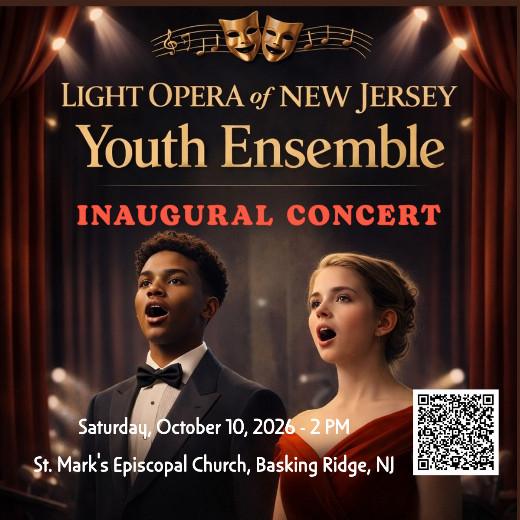
Inaugural Light Opera of NJ Youth Ensemble Concert St. Mark's Episcopal Church (10/10-10/10) |

|
Star Wars: A New Hope in Concert Count Basie Center for the Arts (5/21-5/21) |

|
Season Opener: Red, White, and Blue Mayo Performing Arts Center (11/13-11/13) |

|
Jamaican Jazz Legend Monty Alexander Enlow Recital Hall (11/22-11/22) |
