


Interview: DEATH OF A SALESMAN Is a Happy Homecoming for Ben Ahlers
Ahlers plays 'Happy Lohman' in Death of a Salesman on Broadway.

Fresh off his breakout turn on HBO’s The Gilded Age, Ben Ahlers is stepping onto the Broadway stage for the very first time— and doing it in one of the season’s most talked-about revivals. In Death of a Salesman, Ahlers takes on the role of 'Happy Loman' alongside an acclaimed company under the direction of Joe Mantello, marking a full-circle moment for the stage-trained actor who grew up dreaming of working in the theater world.
He takes the stage opposite three-time Tony Award winner Nathan Lane, two-time Tony Award winner Laurie Metcalf, and Christopher Abbott, with Jonathan Cake, K. Todd Freeman, John Drea, Tasha Lawrence, Jake Silbermann, Michael Benjamin Washington, Joaquin Consuelos, Jake Termine, Karl Green, Jack Falahee, Katherine Romans, Mary Neely, Aidan Cazeau, Charlie Niccolini, Alexis Bronkovic, Erik Kilpatrick, and Brendan Donaldson.
Ahlers checked in with BroadwayWorld to tell us about his journey in the show so far, living up to the hype of one of the best-reviewed shows of the season, and so much more.
Congrats on being in one of the hottest shows of the season. How are you feeling now that you've come off of the high of opening night?
I'm feeling so great. The audiences have been so clearly excited to be there, but also so present with us. This show really hits all the buttons and presents a very familiar and universal side of humanity, especially being an American. It's been really something special to share space with these audiences every night.
There are a lot of people out there that already know you from, you know, a lot of your TV work, but I know that you're a stage animal. Does finally being on Broadway feel like kind of a finish line moment for you?
It actually feels more like a return to both the medium and the sort of training that I spent so much of my youth focusing on. But also it feels like I've just kind of opened up a parallel pathway in my brain and my artistic expression. I'm seeing so many familiar faces around Times Square and revisiting friends and peers from my earlier theater days. So it kind of just feels like a whole other room of my life has sort of opened up. I'm feeling very challenged, but also very held in the sort of familiarity I have with this part of my life. It's been oddly foreign and familiar at the same time.
I'm sure going into a show like this one with the people who are involved, it being your debut, were you feeling an extra pressure just in starting the process?
I mean, I never really thought that I'd be joining such an elite cast of actors that I've admired for so long. Also, Arthur Miller specifically has always been sort of the North Star for me in the theater space. And so to have all those things coalescing with the great Joe Mantello at the helm is... it wasn't necessarily pressure. There was a lot of necessary energy and excitement that came online in order to feel like I could firmly contribute and take my place at the table with these incredible artists. So that took a little bit of acclimating for sure.
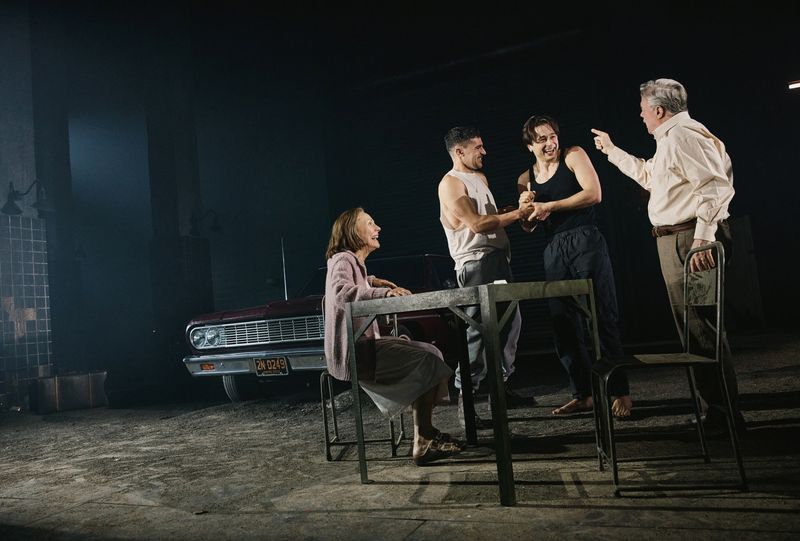
What is it like being in a room with Joe and working with him through the rehearsal process?
Joe is truly a genius and had such an exciting and authentic idea for what this particular production could be. But also, he was so welcoming to our instincts and the way that we related to that vision and was so helpful in expanding and supporting those instincts, while also finding a way to make sure that everybody was moving in harmony towards this very singular version of such a classic play. He really balanced the discovery process with a really gentle and clear guidance towards a unified vision.
I've never heard a bad word said about him...
I mean, he really is the best. His body of work is great evidence of that.
Sharing the stage with people who are such titans of this theater world I'm sure is an experience in itself. Have you learned anything from being around them from the past few months?
I was so excited and inspired by the level of preparation that they all came in with. I think a previous version of me could think that a legend, that legends like this don't have to work hard because it just seems natural, but it's the opposite! It's the reason they've been able to maintain such a long career is because they care so deeply. And so it was really exciting to be sort of included and affirmed in feeling very passionate about this work with them as well.
And then also they're just incredible people. I think that especially for the Lohman family, the amount of love and care and trust we have in each other offstage really translates to all of that onstage. I think that has really also contributed to this show's impact- how we balanced and infused our personal admiration and respect for one another into the show.
Let's talk about 'Happy.' How do you see this guy?
I'm really fascinated about the ways that young men seemingly like to tell themselves these stories of who they're supposed to be and then can try to charade that image externally rather than doing the internal work. So I do I do find that Happy felt a lot of pressure as a young man to try to live up to his father's expectations after growing up in the shadow of his older brother. And then to see that he actually did become that... I think there's a great pride in who he's become, but also a great ignorance to his flaws, which allowed a sort of unapologetic version of him. He doesn't see the problems with the dream that he and his father are living. In fact, he's quite happy [Laughs] about where he's at in his life.
But at the same time, there's this desperation to keep the dream alive, to keep the family together, to keep things feeling right, even if they aren't right. And so then there breeds this sort of unconscious dishonesty and a lack of identity that he and the rest of the family are confronted with when Biff finally levels and makes him confront the truth. So I have great sympathy for him. I do believe that he's really trying his best, but he, like many others, have been so misguided by what it means to be a man and what it means to be successful. He's certainly a cautionary tale like his father, and I think to accomplish that, he has to be fully allowed to embody him without judgment.
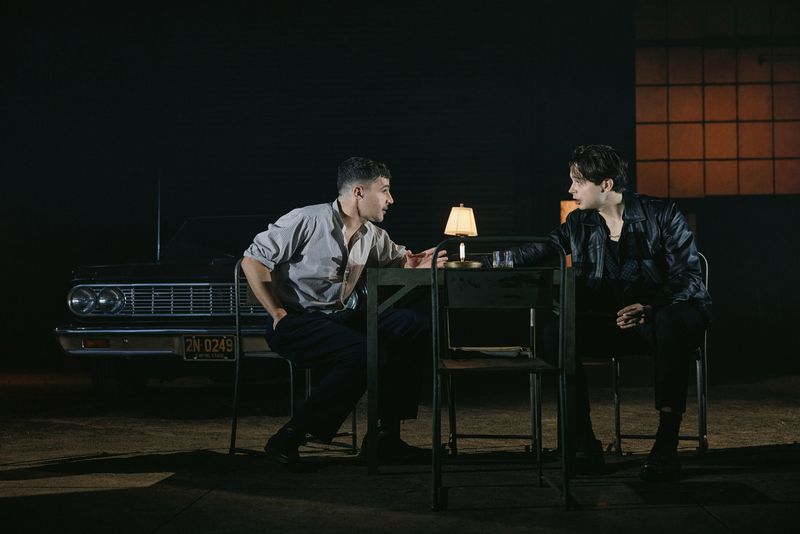
This is obviously a heavy show. I'm sure you feel some kind of weight when you take your bow at the end of the night. What are you doing to release that energy when you leave the theater?
The stage door really helps change the tenor because now you're in dialogue with people who just went through that experience with you. So there's this kind of like group detox after. I try to leave the show in the theater as opposed to taking it home. It definitely weighs on you! It definitely makes me confront my relationship with the truth, my relationship with my family, my relationship with my own ambition. I try to be as relaxed and restored as possible, because not only do you have to do eight shows a week with such heavy material, but I also have to engage with these themes eight times a week. That's not an easy thing to do.
The New York theater community is so small. Have you felt that embrace of the season yet? How does it feel to be a part of this special group now?
12-year-old Ben would be totally freaking out. I have relationships with so many people that I've been so inspired by for a very, very long time. Times Square doesn't feel like a place I visit for vacation, it feels like a place I visit for my work and my friendships and my community. I've been away from it for a while, pursuing other work that I've been fortunate to have over the last eight years or so. And so it really does feel like I'm returning to that 12-year-old dream of being a part of such a creative and supportive and diverse and unique group of people who are all about celebrating both such a rich theatrical tradition in New York, but also the vital role that theater plays in our culture and in our society. I feel so lucky to contribute to it.
Death of a Salesman is running on Broadway at the Winter Garden Theatre.
Photo Credit: Emilio Madrid
Prefer BroadwayWorld in Google Search?
Add us as a preferred source so our stories show up more often in Top Stories and Google’s AI answers — for you.

Sign up for all the news on the Fall season, discounts & more...
Powered by

|
.jpg?format=auto&width=300)
.png?format=auto&width=365)




