


Season 2, Episode 5: Behind every summer is a community that keeps Fire Island alive. This episode explores the history of the beloved Pines Pantry through the eyes of its iconic Pantry Girls, alongside the volunteer firefighters of The Pines and Cherry Grove who protect the island from fires, hurricanes, beach erosion, and an uncertain future.
Greek National Opera Makes New York Debut at Carnegie Hall
Conductor Vassilis Christopoulos led the GNO Orchestra and soloists Anita Rachvelishvili and Maria Kostraki through works including Mitropoulos' CRETAN FEAST.
By: A.A. Cristi
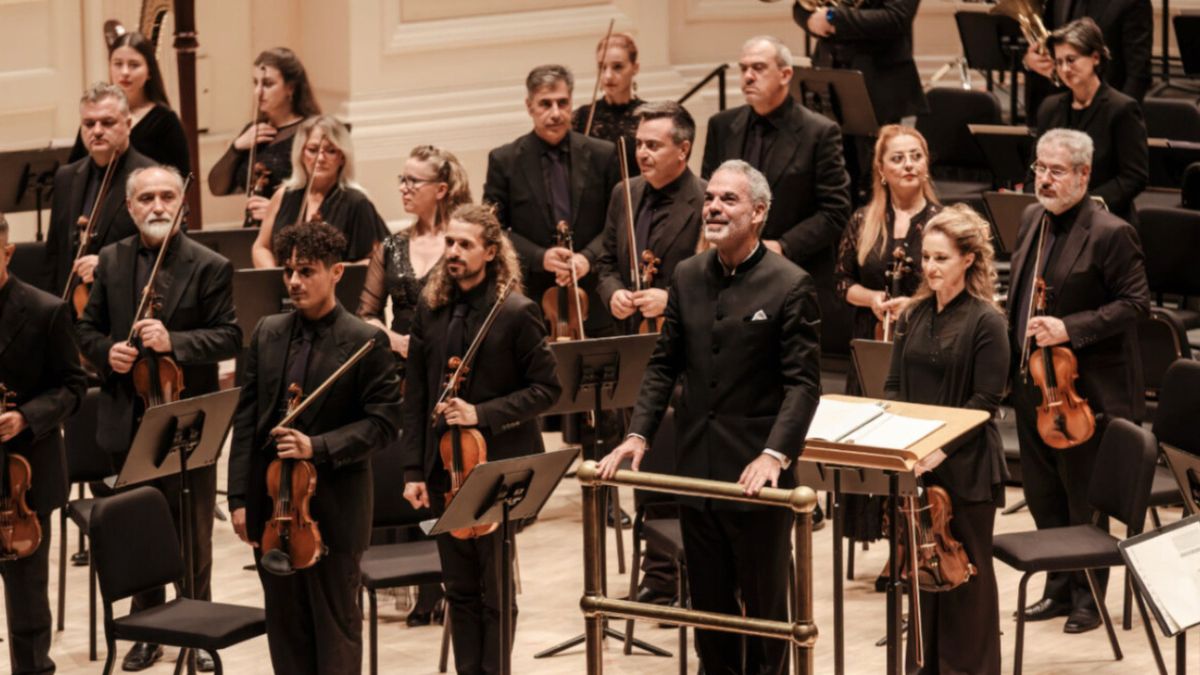
The Greek National Opera made its New York debut at Carnegie Hall on October 15 with Nikos Kazantzakis: An Odyssey in Music.
Conducted by Vassilis Christopoulos, the concert featured the GNO Orchestra, the Manos Hadjidakis Ensemble, mezzo-soprano Anita Rachvelishvili, and soprano Maria Kostraki in music by five Greek composers connected through Kazantzakis and Crete, including Mitropoulos’ Cretan Feast, Skalkottas’ Three Cretan Dances, Koumendakis’ Amor Fati, Hadjidakis’ Captain Michalis, and Theodorakis’ Zorbas.
Classical Voice North America praised the “very stimulating orchestral showpieces that revealed the high quality of the players,” highlighting the “assured ensemble work and well-executed solos” and “two striking vocal soloists.”
The event was held with the support of the Minister of Culture, Lina Mendoni, and financial assistance from the Hellenic Ministry of Culture.
MITROPOULOS: CRETAN FEAST
The concert opened with Dimitri Mitropoulos’ youthful Cretan Feast, orchestrated by Nikos Skalkottas. A friend of Kazantzakis and a former music director of the New York Philharmonic, Mitropoulos drew inspiration from a Cretan folk verse he heard from fellow soldiers while serving in a military band in 1917. Dedicated to the Greek statesman Eleftherios Venizelos, the work combines late-Romantic orchestral writing with the composer’s exploration of new forms of expression.
SKALKOTTAS: THREE CRETAN DANCES
Three Cretan Dances from Skalkottas’ Greek Dances brought the rhythms of pidichtós, syrtós, and pentozális to Carnegie Hall. Skalkottas combined these folk traditions with his own polyphonic and modernist language, preserving their distinct character while exploring the possibilities of orchestral color.
KOUMENDAKIS: AMOR FATI
The first half closed with the U.S. premiere of GNO Artistic Director Giorgos Koumendakis’ Amor Fati. Composed in 2007 to commemorate the fiftieth anniversary of Kazantzakis’ death, the work explores the author’s concept of accepting one’s fate and the composer’s deep connection to Cretan musical identity. It evokes Cretan musical traditions without traditional instruments, incorporating transcriptions of birdsong into abstract orchestral writing. Contrasts between winds and strings reflect the tensions between body and spirit, reason and passion that run through Kazantzakis’ work.
“The evening’s conductor, Vassilis Christopoulos, then led Amor Fati — by GNO’s artistic director Giorgos Koumendakis — extremely well: a rhythmically challenging and fascinating evocation of Crete’s nature and traditions using no traditional folk instruments but rather modern orchestral forces including prominent vibraphones. Here, as elsewhere, the orchestra’s percussion section and its shimmering-toned concertmaster Iordanis Santos Mastralexis, all of 26, shone.” — Classical Voice North America
HADJIDAKIS: CAPTAIN MICHALIS
Maria Kostraki and the Manos Hadjidakis Ensemble opened the second half with Captain Michalis, under Christopoulos’ musical direction. Based on Kazantzakis’ novel and using lyrics drawn from his text, the song cycle explores freedom, sacrifice, and inner conflict in Ottoman-ruled Crete. Hadjidakis draws on Western forms and rebetiko modes, using an intimate instrumental ensemble to convey the lives of the novel’s Christian and Muslim characters.
THEODORAKIS: ZORBAS
The evening closed with selections fro Theodorakis’ ballet Zorbas, featuring Rachvelishvili and bouzouki players Vangelis Trigkas and Paris Perysinakis alongside the GNO Orchestra. Theodorakis’ music for the 1964 film Zorba the Greek, based on Kazantzakis’ novel, introduced “Zorba’s Dance” to audiences worldwide. At Carnegie Hall, the music brought the audience into the performance with rhythmic applause and an extended standing ovation.
Breaking Broadway alerts by text
Get the biggest stories sent straight to your phone.
More on Carnegie Hall
Broadway news in your inbox
Weekly top stories - unsubscribe anytime.
Weekly top stories - unsubscribe anytime.
Popular episode



Tickets From $70
Tickets From $135

Tickets From $58

Tickets From $67