

Exclusive: How a Professional Production Is Traveling to Living Rooms Across New York City
Don’t feel like leaving home to go to the theater? Present Company exclusively tells BroadwayWorld how they bring a show to you.

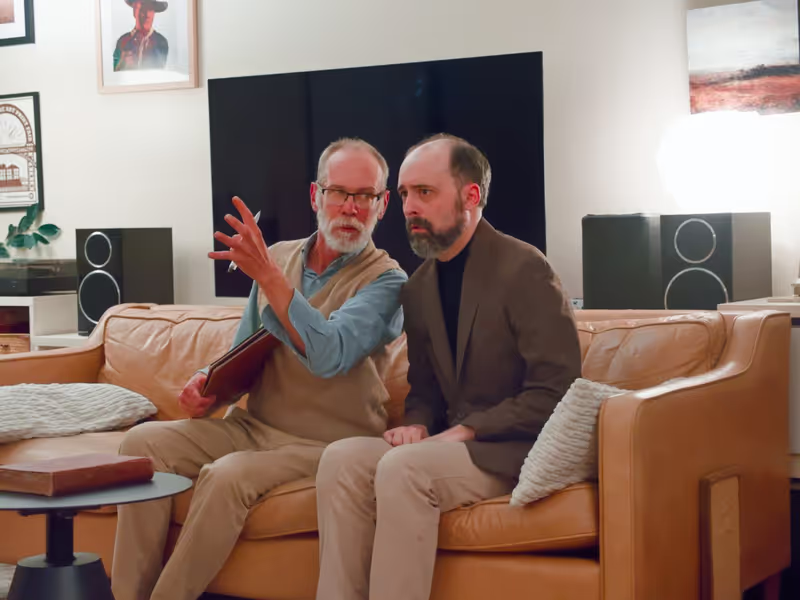
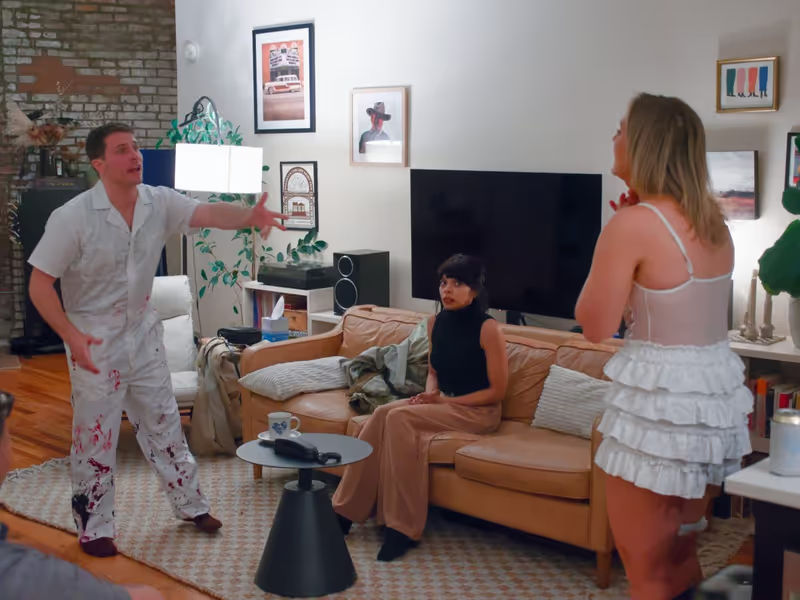
Present Company’s production of John Patrick Shanley’s 1996 play Psychopathia Sexualis had a preview performance earlier this month, but it wasn’t held at a theater. Instead, audience members were invited to a private home in Brooklyn.
Like other get-togethers with friends, drinks were served, and people socialized in the kitchen — but as the time inched closer to 7:30 p.m., everyone began to take their seats for a show.
Both actors and audience occupied the Brooklyn apartment, where the performance happened right in front of you: in the living room, on the couch and at the kitchen island.
“Seeing it up close makes something magical happen,” Psychopathia Sexualis co-director Tara Pacheco exclusively tells BroadwayWorld.
Below, producer Matt Dean and Pacheco, who also portrays Ellie in the five-person play, explain how they travel their show around to homes in New York as part of the Present Company’s inaugural season.

How did Present Company start?
Like many theater artists, married couple Dean and Pacheco are always thinking about new ways to create art. “We were like, ‘There’s got to be a way for us to be able to make theater without the biggest line item being our rental,’” which is sort of where it all spawned,” Pacheco says.
Dean adds that the idea to have theater up-close-and-personal began when he and Pacheco were at his brother and sister-in-law’s bachelor/bachelorette weekend. “We were all together out in the woods in an Airbnb around a fire,” he explains, adding that his brother encouraged everyone to share something with the group — a song, a monologue, etc. “Tara, after some pressure, stood up and gave us two minutes of a Shakespeare sonnet.”
“What was so interesting,” he says, “[was that] they were so incredibly enraptured.” Adds Pacheco: “We realized how compelled people were by theater up close. It’s a little bit like seeing closeup magic.”
From there, they began to set up a company that is able to take a fully staged production with professional actors to people’s homes.

Is it Equity? And how do the actors get paid?
Yes! Present Company began to work with Actors’ Equity Association to hire their performers on an AEA contract.
“Equity was very open to the idea of this,” says Dean, explaining that they’re working on a per-performance contract. The actors are paid hourly for rehearsals as well as per performance that they have. For each week the season runs, the actors will receive payment for one show regardless of whether or not a performance is actually booked (ie: in this six-week season, the Psychopathia Sexualis actors will get paid for six shows).
Actors are asked to hold their nights in the event a show is booked. However, Dean explains, “We owe [the actors] at least a week’s notice, so they could never have a show booked within a couple days or anything like that. And they send us, ahead of time, any super strict conflicts.”
Currently, Present Company doesn’t employ understudies, so all of the actors would need to be available for a performance — but the hope is to grow the company so that coverage can also be part of the cast.
Ideally, Dean says, the group would like to book as many shows “as possible” in an effort to make back their costs. “But for this first season,” he adds, “our goal is to get the word out.”
Despite the unconventional model, the turnout at auditions “was staggering,” says Pacheco, adding that their Equity Principal Auditions were “full.”

How is a traveling show directed?
When it comes to live theater, every performance is different — but for Present Company, each show is truly unique.
Before they kicked off their first season, “we put a test production up just in some friends’ homes,” Dean explains. “So we did lightly test the practicals of: Can you put the show in a suitcase?”
As for staging the show, Pacheco explains, “Blocking becomes a bit of a game of proximity rather than specificity, in terms of where and what you are standing at. We label certain play areas. So when we rehearse, we have ‘tea area.’ We have ‘bar cart area,’ and we’ll shift where those landmarks are during the rehearsal process.”
After a show is booked by a host, the Present Company creative team does a site visit to scope out the space. During that visit, “We draw up a floor plan, and on that floor plan, we will place ‘Actor Holding Space,’ we’ll place ‘Exit Hallway,’ ‘Main Entrance,’” explains Pacheco, adding that they then figure out where the various scenes will take place.
Actors are given the floor plan ahead of time so that they could get a feel for what the space will look like before they show up on the night of the show. While there is no spacing rehearsal on day-of, the performers are able to walk the home when they show up, and they have a fight call and intimacy call for safety purposes.
How do you host it?
Performances of Psychopathia Sexualis can be booked on the company’s website, which notes that they cost around $2,000. The price “can range depending on the specifics of each event,” the website notes. “Every dollar directly supports our artists, and we offer discounts for non-profits.”
During a site visit, “We ask them questions about what kind of event they’re trying to host,” explains Pacheco. “I think that helps inform a lot of how many bodies we can fit. Are you trying to have a classy dinner? Are you trying to have your friends pile over and watch a show? We get a sense of what type of person they are, what they’re trying to accomplish, and then we just help them logistically figure out their home in that sense.”
For Equity purposes, the host will have to sign off on a small checklist of requirements, such as the maximum number of guests they can invite, if there is a bathroom for the actors, if they have a spare room that could be used as a dressing room, etc.
“Otherwise,” Pacheco notes, “our requirements are pretty chill.” And, yes — Present Company is willing to work with just about anyone to make their space fit the show.
What’s next for Present Company?
While the company is currently focused on getting bookings for their current offering of Psychopathia Sexualis, they want to eventually “build a deeper repertoire of plays that we can pull out,” explains Pacheco. “The ideal version of our company is a company that has multiple plays in rep. So you go to our website and say, ‘Let’s see Psychopathia’ or ‘Let’s see their weird four-person Macbeth that they’re trying to pitch.’”
Because Present Company wants to keep things intimate, “We feel very strongly that our cast shouldn’t outnumber the audience, so we try to keep it around four or five, ideally three,” says Pacheco.
While their next season is still in the works, Pacheco and Dean say they’re eager to build momentum and give audiences more time to plan and prepare for a theater party inside their home.
In addition to preexisting plays, they also hope to eventually present new works. “We’ve gotten a lot of positive reactions so far,” says Dean, adding that he’s hopeful theater in people’s New York City homes will “become a thing.”
Photo Credit: Courtesy of Present Company
Weekly top stories - unsubscribe anytime.