Exclusive: How NYC Theater Is Making Audiences Scream This Spooky Season
Skip the haunted hayride — get scared at the theater instead!
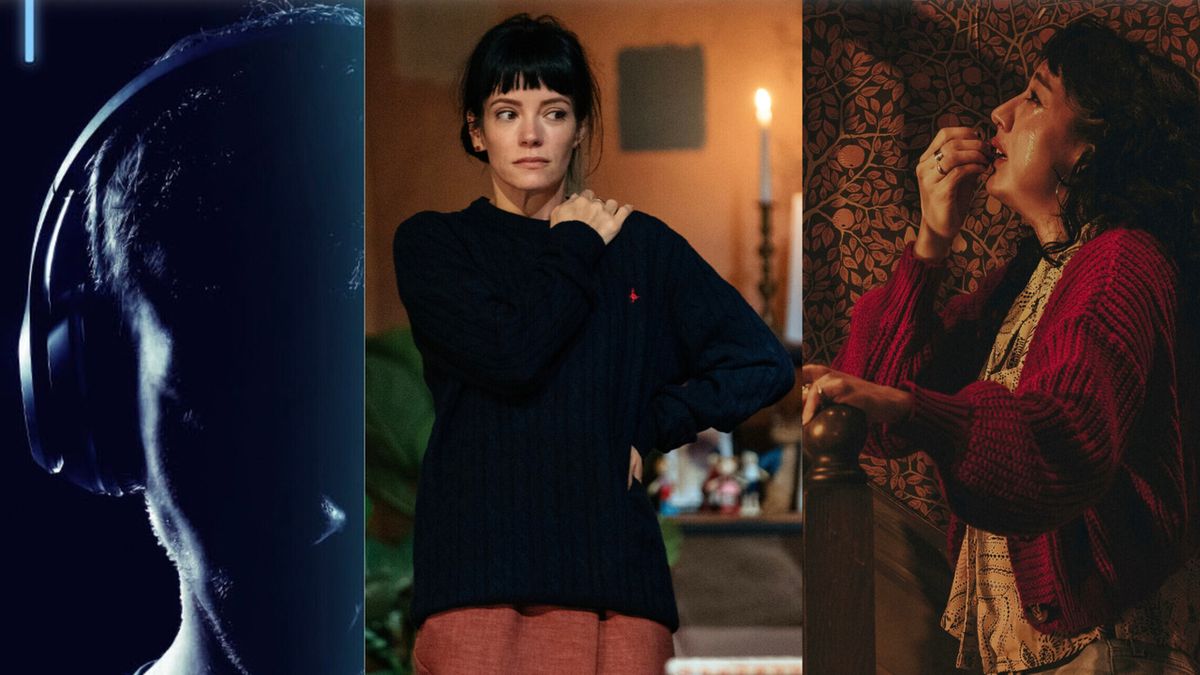
Most Broadway shows are bound to make you laugh. A handful of them may bring you to tears. Then there are some that will have you screaming.
This season, a few plays in New York City — both on and Off-Broadway — have audiences jumping out of their seats… and not just for the standing ovation.
“Fear is contagious, so as soon as that starts spreading around a space, everyone catches it,” Jamie Armitage, writer and director of Off-Broadway’s A Ghost in Your Ear, exclusively tells BroadwayWorld.
“Seeing people jump into each other’s laps or really hold on — people who didn’t know one another… I always love when people would say, ‘I’ve made great friends with the person next to me.’ Why? ‘Well, because I held onto her arm for the whole show,’” he continues. “I had two friends who didn’t know each other who were sitting side by side, and one of them gripped the other’s arm so hard that she broke the skin!”
A Ghost in Your Ear, an auditory experience currently playing at Audible’s Minetta Lane Theatre downtown, is one of this season’s offerings that has audiences totally spooked. It uses binaural sound technology to immerse viewers in a ghost story.
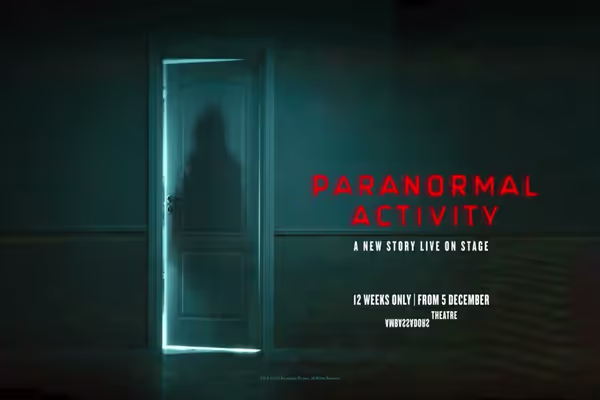
Uptown at Broadway’s August Wilson Theatre is Paranormal Activity, Levi Holloway’s play based on the film series of the same name.
“I really believe that the idea of being frightened at something live is electric. It makes you feel alive,” says director Felix Barrett. “I’ve always been trying to do it, but when Paranormal Activity came along, it was the first time I was explicitly allowed to do horror and do something that’s main objective was to be frightening.”
Later this month, 2:22 A Ghost Story will begin performances at Off-Broadway’s Lucille Lortel Theatre on October 22. While it’s not explicitly a horror, the supernatural thriller is sure to make you scared.
“The more real something has always felt, the more frightening it can be,” says writer Danny Robins. “2:22 takes a very ordinary, recognizable starting point. It’s a dinner party with a group of people — people like you, living in a house like yours.”
.jpg?format=auto&width=800)
“And it’s about a real problem,” he explains. “What do you do when the person that you love doesn’t believe you? If you have a situation where you think there’s a ghost in your house and your husband won’t believe you, what do you do? You fight to try and prove that.”
Barrett, Robins and Armitage were all influenced in some way by the stage play The Woman in Black, a long-running horror that ran in London’s West End from 1989 through 2023 for more than 13,000 performances.
Armitage saw Stephen Mallatratt’s play (adapted from Susan Hill’s novel of the same name) when he was 12, and he says it was “the scariest thing I’ve ever seen in my life.”
“I love how it is so rooted in really clever, but simple, stage trickery,” Armitage explains. “The tricks in that show are just so elegant because they’re not massively high-tech or expensive or anything like that. They’re just very clever examples of misdirection — things appearing from where you don't think they’re going to appear — and that’s something that I wanted to embrace with our scares.”
Barrett, however, was a little bit older when he saw The Woman in Black and admits he was “so underwhelmed because it just didn’t get to me the way that movies did” — so he wanted to push the genre even further.
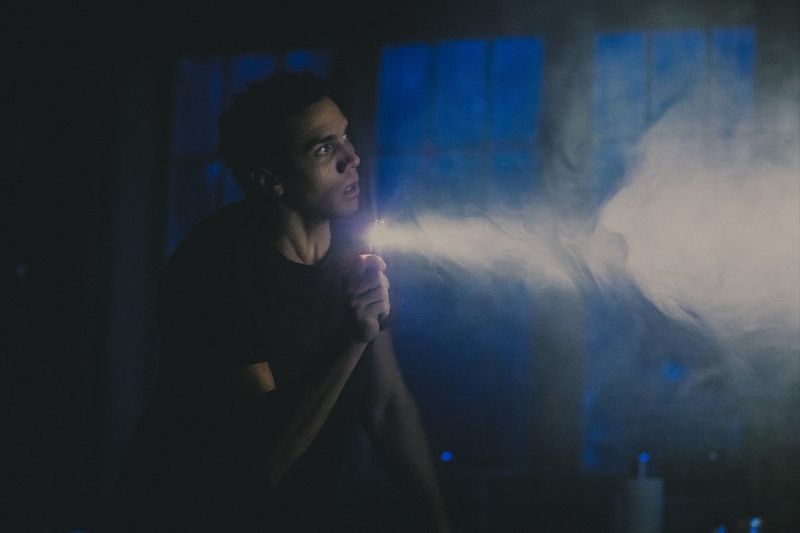
With film, he says, “you can be really specific” by quickly cutting from one shot to the next, causing the viewer to jump. But because that can’t work in live theater, Barrett aimed to create a world in which a scare could come from anywhere.
“We deliberately had a house that was multi-floor,” he explains of what audiences see at Paranormal Activity. “We deliberately have rooms where the lights are off. Deliberately, there’s about 60 percent darkness on stage. So, actually, the audience’s imagination is doing lots of the heavy lifting.”
Getting into the imagination of audiences is key for just about any spooky story. With 2:22 A Ghost Story, playwright Robins wants to get audiences “into the head” of his characters so that viewers can go on the journey with them. The “emotionally driven aspect of this story is so important,” he says, because “if you’re invested in them, then you are rooting for them.”
“When they’re frightened, do you feel frightened?” he wonders.
Making the payoff even greater is that some people think theater couldn’t possibly scare them. However, “When you sit there and you see an audience jump, it’s so powerful and so exciting,” he says. “People grabbing onto each other — spilling their wine! And I’ve got to be honest, I go and see 2:22, and I still jump. I wrote the bloody thing!”
Audio can induce fear in audience members easily. With A Ghost in Your Ear, “there was a huge focus on the sounds of it,” Armitage — who read roughly 250 ghost stories in preparation for his play — explains.
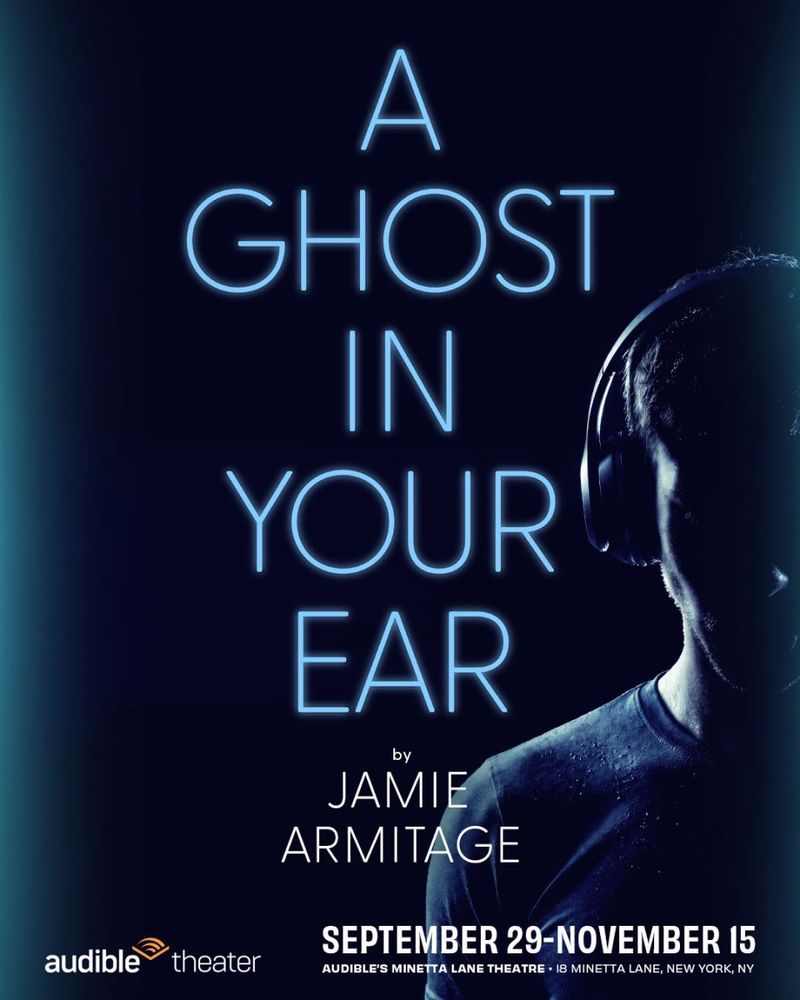
“Even before anything scary happens, when he’s walking along, we’re talking about the mud squelching under his feet,” he says. “I got very visceral with the descriptions of the sounds so that it puts you into this listening space. I always think of it as your ears are on edge, and they're just waiting to be played with.”
While it seems like the New York theater scene is making way for horrors and thrillers, the creatives behind these spooky stories think audiences have always been hungry for pieces that put a pit in your stomach.
“Ghost stories don’t go in and out of fashion,” says Robins. “People are always fascinated by them. I think people love to be scared.”
In fact, Armitage thinks that the genre itself could bring more people to the theater without having to rely on stars to sell tickets.
“There are all these conversations about how [to] reach new audiences, [and this] genre is a way of doing that which isn’t reliant on super high-level star casting because you can just be like: There is a group of people who love horror and hopefully will come and see it,” he says. “A way of reaching them is programming more of this kind of work.”
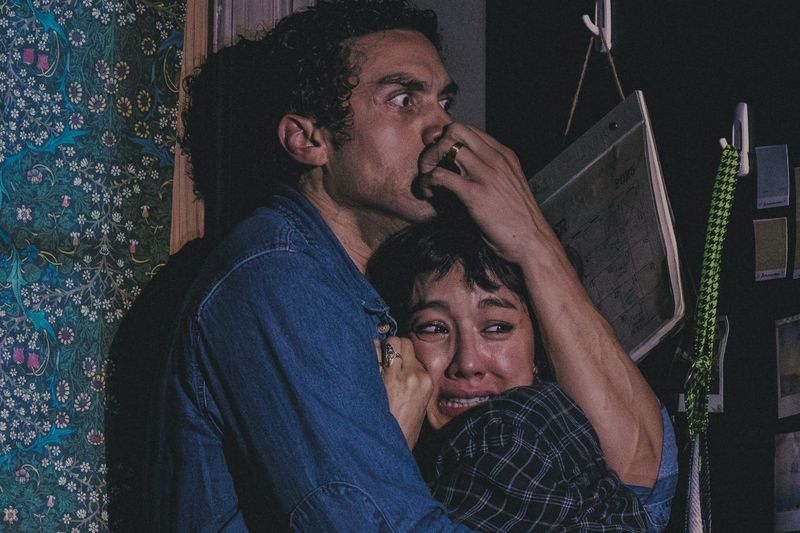
Judging by the theatergoers coming out of the August Wilson after seeing Paranormal Activity, director Barrett thinks there is plenty of room for more horror stories on stage.
“It’s amazing to be there and see the screams come and then the laughter after because everyone feels a bit silly and enjoys the fact that they’ll scream simultaneously,” he explains.
“Seeing an audience stumble out into the New York night with smiles on their faces, I think that’s all you want from a night at the theater, isn’t it?” he points out. “You want to have a spring in your step and go, ‘Oh my gosh, you’ll never guess what I saw last night.’”
Photos Credit: Matthew Murphy, Helen Murray

Sign up for all the news on the Fall season, discounts & more...
BroadwayWorld Merch
Shirts, mugs, phone cases & more

|
Powered by

|