


Exclusive: How Grief and Girlhood Led Lily Houghton to FORBIDDEN FRUITS
Houghton spoke to BroadwayWorld about the new horror comedy and bringing her heightened world to the big screen.
 Click for Tickets
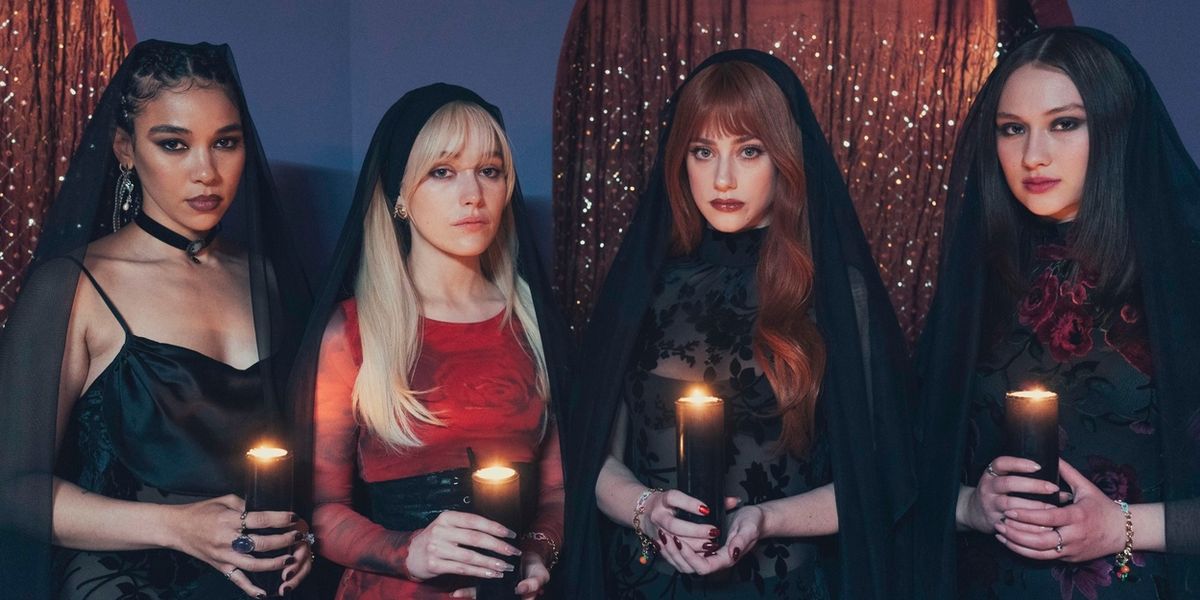
This Friday, a witchy new movie is being summoned to theaters from playwright Lily Houghton and writer/director Meredith Alloway. Forbidden Fruits arrives with a bloody splash, led by some of the biggest actresses in the biz: Lili Reinhart, Lola Tung, Victoria Pedretti, and Alexandra Shipp.
A new cult classic in the making, the movie follows the exploits of a femme coven who practice their magic in the basement of the retail store Free Eden. Apple is the fearless leader, and, alongside fellow fruits Cherry and Fig, they will go to any lengths to protect their coven. But things go awry after Pumpkin joins the group, disrupting the circle and peeling away the layers of their sisterhood, with devastatingly bloody results.
But long before the story would make a splash on the big screen, Forbidden Fruits began its life as the 2019 play, "Of the woman came the beginning of sin, and through her we all die." Houghton, who adapted her play script with Alloway, first penned the piece amid a period of grief while working at "an unnamed retail store" herself.
"I had just lost my dad and I had just graduated from college. I used this windowless basement, [which] was playing a HAIM song on repeat and lit by fairy lights, as a way to retreat into girlhood," Houghton told BroadwayWorld during a recent video interview. "The play started because I was just like, 'What would happen if the world ended?' I was with these women downstairs, and we just created a new society."
Born into a family of theater artists, Houghton wanted her writing to reflect the way she actually spoke. She grew up with playwrights like Horton Foote and Sam Shepard ("I love them deeply. They’re my dusty men"), and didn’t see her own “hyper-fem” voice represented on stage. She also wanted to create better parts for her acting friends.
"I talk in quite feminine patterns. During the hardest times of my life, I sort of use my femininity as a shield or a means of protection, Houghton explains. "I started writing plays in college because my girlfriends just had such shit parts... [These] brilliant women were only getting the bitchy mistress or the bitchy mom or wife. And I wanted to write for that age range. I wanted to write for my friends... and I just never saw the way that I speak in playwriting."
Diablo Cody is a producer on the film, and Houghton credits the Tony-winner as a "guiding light" in her work, noting that "Diablo, and the way that she writes, is the first voice that I saw on screen that looked like me or sounded like me." That feminine sound, which Houghton and Cody share, is on full display here.
"Tonally, Meredith and I really wanted to not change the girliness of it, not change the heightenedness of it, to make people feel more comfortable. We wanted to lean into it, but show it’s boiling underneath..."
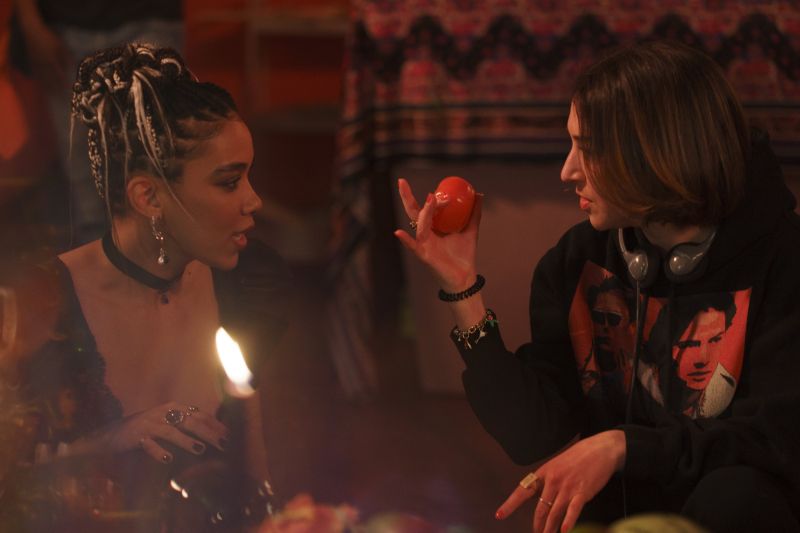
As a play, the work first premiered at the Medicine Show Theatre in New York City in 2019, but it wasn't until a few years later that work began on the screenplay. For cinematic purposes, there are a few differences between the iterations. The setting, for one, has been moved from New York to a mall in Texas, which allows the characters more space to move as opposed to the stage show, which took place in one room.
"I tend to write plays that are just one set the whole time. There's something I find really interesting about that. I grew up with theater parents who couldn't afford a babysitter, so I was just always on theater sets, and that was kind of a playground," Houghton shares. But between the location and the addition of blood-filled violence, the identity of the work has remained unchanged.
"If you look at the actual script of the play and the script of the movie, all the girls' monologues are practically identical. And some of the scenes are directly lifted, which is really interesting with the [difference] between emotional versus physical violence that we were exploring," says Houghton.
Beyond its witchy exterior, the movie explores deep issues of systemic and societal barriers, which can (and often do) end in violence. "I really think that all the characters in this have really good intent and are trying to create this safe space for one another. But the resources and the society around them are absolutely working against that, so there's no way to."
It also tackles themes of family and grief, and serves as an extension of Houghton's own bouts with loss, first with her father and, later, her mother. "I started writing the movie a month after my mom died... and I kind of used that as a way to process," she remembers. "It is kind of interesting that it was these two bookends of grief, because I really do think the movie is about all forms of grief... It's a film that I wish I had when I was grieving."
Forbidden Fruits opens in theaters on March 27th from Independent Film Company and Shudder.
Photo Credit: Courtesy of Sabrina Lantos
Sign up for all the news on the Fall season, discounts & more...

.png?format=auto&width=365)




